
Nov
The effects of weed can feel dramatically different from one person, or one evening, to the next. You might feel relaxed and unusually interested in the texture of your couch. Someone else may experience a pounding heart, spiralling thoughts, or the unnerving sense that everyone knows they’re high. Both reactions are possible because cannabis isn’t a single, predictable experience.
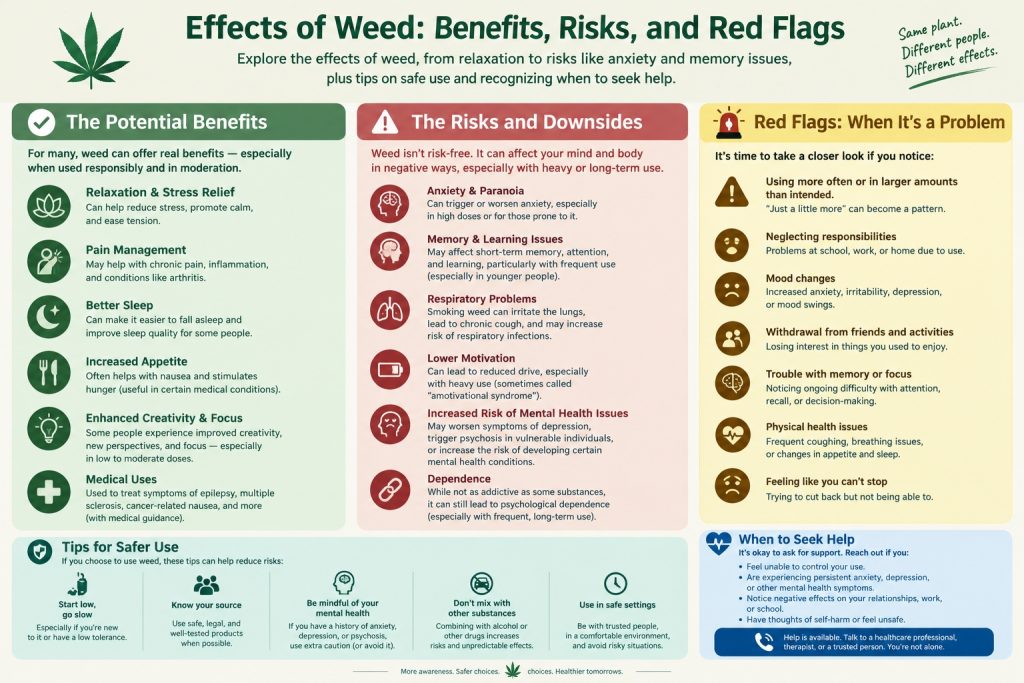
This evidence-based review explains what cannabis can do in the short and long term, why THC potency and consumption method matter, and which warning signs deserve medical attention. “Weed” here means cannabis products containing tetrahydrocannabinol (THC), including flower, vapes, concentrates, edibles, and drinks. Intoxicating cannabinoids such as delta-8 THC, often sold as “hemp-derived” in the US, are treated as cannabis under Canada’s Cannabis Act. They can pose similar, and sometimes less predictable, risks, but they haven’t all been studied equally.
You’ll also find practical harm-reduction guidance, information about dependence and withdrawal, and a balanced look at medical cannabis. This article does not assume every person who uses cannabis will be harmed. Risk depends on your age, health, frequency of use, product, dose, and circumstances. At the same time, “natural” doesn’t mean harmless. Modern concentrates can contain far more THC than older cannabis products, while labels and serving sizes aren’t always reliable.
A quick transparency note: this review is published by Kush Station, an online cannabis retailer. It’s general education, isn’t a substitute for personal medical care, and doesn’t recommend any product. Research remains limited by changing products, self-reported use, and legal barriers. Where evidence shows an association rather than proven causation, that distinction matters, and you’ll see it called out.
Key Takeaways
- The effects of weed vary greatly depending on dose, THC potency, consumption method, individual sensitivity, and environment.
- Short-term effects of weed include relaxation, altered senses, increased appetite, but can also cause anxiety, paranoia, and impaired memory and coordination.
- Long-term high-THC use, especially starting in adolescence, may impact memory, mental health, and increase risk of psychosis, particularly in vulnerable individuals.
- Consuming edibles leads to delayed onset but longer-lasting effects, making careful dosing critical to avoid unpleasant experiences.
- Cannabis use disorder is possible, with symptoms like craving and difficulty controlling use; withdrawal symptoms typically peak in the first week after quitting.
- To reduce risks, avoid driving while impaired, start with low THC doses, use products made under the Cannabis Act, and keep cannabis away from children and pets.
What Are the Short-Term Effects of Weed?
Short-term effects usually involve mood, perception, thinking, movement, and appetite. THC can also increase heart rate and cause dry mouth or bloodshot eyes. The experience may range from pleasant relaxation to intense distress, particularly after a large dose.
Your surroundings matter too. A small amount used at home may feel different from the same amount taken at a crowded concert. Although a fatal overdose from THC alone is considered unlikely, cannabis intoxication can still contribute to falls, crashes, panic, aspiration, or dangerous decisions.
Commonly Reported Effects: Relaxation, Euphoria, Altered Senses, and Increased Appetite
Many people report calmness, laughter, euphoria, and stronger sensory experiences. Music may sound more detailed, food may taste unusually vivid, and time may appear to crawl. THC can also stimulate appetite, the classic “munchies”, although responses vary.
Other common effects include:
- Sleepiness or, occasionally, restlessness
- Increased sociability
- Reduced inhibition
- Distorted time perception
- Temporary pain relief
Pleasant doesn’t necessarily mean unimpaired. You may feel more creative or focused while reaction time, judgment, and working memory have actually declined. That mismatch is one reason driving after cannabis is risky.
Unwanted Effects: Anxiety, Paranoia, Dizziness, and Impaired Memory and Coordination
Too much THC can produce anxiety, panic, suspiciousness, nausea, dizziness, or confusion. You may forget the beginning of a conversation before reaching the end, an awkward little mental disappearing act. Balance, coordination, divided attention, and reaction time can also deteriorate.
High doses sometimes cause hallucinations, delusional thinking, or temporary psychosis, especially in vulnerable people. Standing quickly may worsen lightheadedness because cannabis can affect blood pressure. If symptoms are mild, they often ease with time in a quiet setting. Severe confusion, chest pain, breathing difficulty, seizures, collapse, or inability to wake requires urgent help.
How Weed Works and Why Its Effects Vary
Cannabis contains more than 100 cannabinoids plus aromatic compounds called terpenes. These chemicals interact with biological systems, but product marketing often runs ahead of evidence, particularly claims that a named strain will reliably create one precise mood.
Your experience reflects the chemical profile, dose, delivery method, previous exposure, biology, and setting. Even two gummies from different batches may not feel identical. Translation: your friend’s “perfect amount” isn’t automatically yours.
THC vs. CBD: How Cannabinoids Affect the Brain and Body
THC activates cannabinoid receptors, particularly CB1 receptors in the brain. This alters neurotransmitter release in networks involved in memory, reward, appetite, movement, pain, and perception. THC is chiefly responsible for intoxication.
Cannabidiol (CBD) doesn’t produce the same high and interacts with the body differently. Evidence supports prescription CBD for certain seizure disorders, but non-prescription CBD isn’t a universal antidote to THC. Products may contain inaccurate CBD amounts, unexpected THC, or contaminants.
CBD can also interact with medicines metabolized by the liver. If you take blood thinners, antiseizure drugs, sedatives, or other regular medications, ask a pharmacist or clinician before treating an untested CBD oil like harmless herbal tea.
How Dose, THC Potency, Tolerance, and Individual Sensitivity Change the Experience
A higher THC dose generally increases both intoxication and the likelihood of adverse effects. Concentrates such as wax, shatter, and some vape oils may contain 60%–90% THC, whereas flower is typically less concentrated. Label accuracy varies by market.
Frequent use can create tolerance, so you need more THC to produce the previous effect. But tolerance doesn’t eliminate impairment or protect your lungs and heart. After a break, tolerance may fall quickly: returning to an old dose can be unpleasant.
Sensitivity also depends on body chemistry, age, sleep, food intake, medications, anxiety, and prior experiences. Beginners should be especially cautious because they lack a reliable reference point. “I don’t feel it yet” is not evidence that an edible failed.
How Long Do Weed’s Effects Take to Start and Last?
Timing depends heavily on how cannabis enters your body. Inhaled THC reaches the bloodstream rapidly, while swallowed THC must pass through digestion and the liver. Dose, meal timing, metabolism, and tolerance create additional variation.
| Method | Typical onset | Strongest effects | Approximate duration |
|---|---|---|---|
| Smoking/vaping | Seconds–10 minutes | 15–30 minutes | 2–4+ hours |
| Edibles/drinks | 30 minutes–2+ hours | 2–4 hours | 6–12+ hours |
These are broad ranges, not countdown timers. Impairment can persist longer after high doses.
Smoking and Vaping: Onset, Peak Effects, Duration, and Route-Specific Risks
Smoking or vaping produces effects within minutes, making dose adjustment somewhat easier than with edibles. Yet rapid delivery can also make a large inhaled dose hit hard. Coordination and judgment may remain impaired after the noticeable “high” fades.
Smoke contains irritants and many combustion chemicals also found in tobacco smoke. Cannabis vaping avoids combustion but isn’t risk-free. Unregulated cartridges may contain pesticides, residual solvents, heavy metals, or additives. The 2019 US outbreak of vaping-associated lung injury was linked to vitamin E acetate in illicit THC cartridges. Canada also reported cases of vaping-associated lung illness, but the Public Health Agency of Canada says vitamin E acetate hasn’t been found in any Canadian case.
Avoid deep inhalation and breath-holding: they increase exposure to irritants without reliably improving the experience. Never use a cartridge from an unknown or informal source.
Edibles and Drinks: Delayed Onset, Longer Effects, and Accidental Overconsumption
Edibles are responsible for a familiar mistake: one brownie seems ineffective, a second follows, and then both arrive like overdue buses. Effects may not begin for two hours or longer, particularly after a meal. Liver metabolism also creates 11-hydroxy-THC, an active metabolite that can produce strong, prolonged intoxication.
Package serving sizes require careful reading. A chocolate bar may contain ten servings even though it looks like one snack. Under the Cannabis Act, legal edibles and cannabis drinks are capped at 10 mg of THC per package. New or sensitive users should avoid high-dose products and wait several hours before considering more.
Keep edibles locked away in original, clearly labelled packaging. Gummies and baked goods are easily mistaken for ordinary treats by children, visitors, and pets.
Lingering Impairment vs. Drug-Test Detection: Why They Are Not the Same
A positive drug test doesn’t prove you’re currently high. THC metabolites can remain detectable after impairment has ended because they are stored and released differently from alcohol. Detection varies with the specimen, cut-off, frequency of use, body composition, and dose.
Urine tests may detect metabolites for days after occasional use and substantially longer after frequent use. Blood and oral-fluid windows are generally shorter, while hair tests can reflect past exposure over months. None provides a simple impairment clock.
Conversely, feeling “mostly normal” doesn’t guarantee safe driving. After a large edible dose, sleep disruption and subtle cognitive effects may extend into the next day. When safety matters, build in more time, not optimistic math.
What Are the Potential Long-Term Health Effects?
Long-term outcomes are shaped by how often you use cannabis, when you started, THC strength, route, and existing health conditions. Daily or near-daily high-THC use carries more concern than occasional low-dose exposure.
Research is complicated because people may also use tobacco or alcohol, product potency has changed, and randomized long-term exposure studies would be unethical. Still, several patterns are consistent enough to guide sensible decisions.
Memory, Attention, Learning, and Everyday Functioning
THC acutely interferes with working memory, attention, and learning. With frequent use, some people report persistent brain fog, reduced motivation, missed deadlines, or difficulty retaining new information. These problems can affect school, work, relationships, and seemingly simple tasks, like remembering why you opened the refrigerator.
Performance often improves after sustained reduction or abstinence, although recovery differs by age, exposure, and underlying conditions. Evidence about permanent cognitive change is mixed, with greater concern when heavy use begins during adolescence.
A practical test is to track function rather than debate labels. Are grades falling? Are you repeatedly late? Do ordinary responsibilities feel manageable only after using? Patterns in daily life may reveal more than whether you consider yourself a “heavy user.”
Mental Health: Anxiety, Depression, and the Link With Psychosis
Cannabis may temporarily reduce anxiety for some people but worsen it for others. High THC doses can trigger panic and paranoia. Frequent use is associated with depression and suicidal thoughts, although shared risk factors and self-medication make cause and effect difficult to separate.
The psychosis evidence is more concerning. Cannabis use, particularly frequent use of high-potency products, is associated with an increased risk of psychotic disorders and earlier symptom onset. Risk appears higher among people with genetic or personal vulnerability. Cannabis can also worsen outcomes in people who already have psychosis.
If you hear or see things others don’t, develop fixed paranoid beliefs, or become severely disorganized, seek professional help promptly. Don’t try to “sleep it off” alone.
Physical Health: Lung Irritation, Heart Rate, and Cardiovascular Risks
Regular cannabis smoking commonly causes cough, mucus, wheezing, and bronchitis-like symptoms. Stopping often improves these complaints. Evidence linking cannabis alone to lung cancer or chronic obstructive pulmonary disease remains less conclusive than the evidence for tobacco, but smoke exposure is still not benign.
THC can temporarily raise heart rate and alter blood pressure, increasing cardiovascular workload. Observational research has linked cannabis with heart attack and stroke, particularly around recent use, though exact individual risk and causality remain under study.
If you have coronary disease, rhythm problems, previous stroke, or uncontrolled blood pressure, discuss cannabis with your clinician. Chest pain after cannabis should be treated seriously rather than dismissed as “just anxiety.”
Digestive Health: Repeated Vomiting and Cannabinoid Hyperemesis Syndrome
Cannabinoid hyperemesis syndrome (CHS) causes recurring episodes of severe nausea, abdominal pain, and vomiting, usually after prolonged, frequent cannabis use. Hot showers often provide temporary relief, a peculiar clue, but not a cure.
Repeated vomiting can cause dehydration, electrolyte disturbances, kidney injury, and, rarely, dangerous complications. Emergency treatment may include fluids, anti-nausea strategies, electrolyte correction, and monitoring. Symptoms commonly return when cannabis use resumes.
The lasting treatment is stopping cannabis. Because CHS can resemble infections, pregnancy-related nausea, or surgical abdominal conditions, you still need medical assessment. Tell clinicians honestly how often you use: that detail may prevent unnecessary tests and shorten a miserable visit.
Reproductive Health, Pregnancy, and Breastfeeding
Cannabis may affect sperm count, movement, and reproductive hormones, although findings aren’t fully consistent. More importantly, major medical organizations, including the Society of Obstetricians and Gynaecologists of Canada, advise avoiding cannabis during pregnancy and breastfeeding. THC crosses the placenta and enters breast milk.
Prenatal cannabis exposure has been associated with outcomes including lower birth weight and possible developmental or behavioural effects, but separating cannabis from tobacco, socioeconomic factors, and other exposures is difficult. That uncertainty isn’t proof of safety.
Cannabis isn’t a proven safe remedy for pregnancy nausea. If morning sickness is severe, ask an obstetric clinician about better-studied treatments. If you’ve already used cannabis while pregnant, don’t panic or hide it, stop if you can and seek nonjudgmental medical guidance.
Can Weed Cause Dependence or Withdrawal?
Yes. Cannabis can lead to cannabis use disorder (CUD), a clinical pattern in which use becomes difficult to control and continues despite harm. The risk rises with frequent use, younger initiation, and high-THC exposure.
Dependence isn’t a moral failure, and it doesn’t require dramatic “rock bottom” scenes. It can look quieter: repeatedly planning a week off, then finding yourself using by Tuesday.
Tolerance, Frequent Use, and Signs of Cannabis Use Disorder
Tolerance and withdrawal can be part of CUD, but clinicians consider the broader pattern. Warning signs include:
- Using more or longer than intended
- Repeated unsuccessful attempts to reduce use
- Strong cravings or substantial time spent obtaining, using, or recovering
- Neglecting work, school, family, or hobbies
- Continuing despite relationship, psychological, or physical problems
- Using in hazardous situations
One sign alone doesn’t establish a diagnosis. Still, if cannabis organizes your schedule, budget, sleep, and social life, it deserves an honest look. A primary-care or addiction professional can assess severity confidentially and help you choose moderation or abstinence goals.
Withdrawal Symptoms and Timeline: Sleep Problems, Irritability, and Cravings
After frequent use stops, withdrawal commonly includes irritability, anxiety, low appetite, restlessness, depressed mood, headaches, vivid dreams, and insomnia. Symptoms generally begin within one or two days, peak during the first week, and improve over one to two weeks. Sleep disruption can last longer.
Withdrawal is usually uncomfortable rather than medically dangerous, unlike withdrawal from alcohol or benzodiazepines. But severe depression, suicidal thoughts, or major psychiatric symptoms require immediate support.
A planned quit date helps. Remove products and equipment, warn trusted people that you may be cranky, reduce evening caffeine, and protect your sleep routine. Exercise and scheduled meals sound almost offensively basic, but they genuinely make the first week easier.
Who Is More Vulnerable to Harm From Weed?
Cannabis risk isn’t evenly distributed. Age, genetics, heart health, pregnancy, medication use, and psychiatric history can turn a seemingly ordinary dose into a much riskier one. Product potency adds another layer: a concentrate dab isn’t simply “a bit more flower.”
If you fall into a higher-risk group, avoiding THC may be safer than trying to engineer the perfect dose.
Teens and Young Adults: Cannabis and the Developing Brain
Brain development continues into the mid-20s, including systems involved in planning, impulse control, and learning. Starting cannabis young, especially frequent, high-potency use, is associated with poorer educational outcomes, CUD, cognitive difficulties, and greater mental-health risk. In Canada, the minimum age to buy and use cannabis is 19 in most provinces and territories, 18 in Alberta, and 21 in Quebec.
Not every teenager who tries cannabis experiences lasting harm. But early use may interfere with learning at precisely the stage when academic and social skills are being built. It can also become woven into routines before healthier coping tools develop.
For parents, interrogation usually works worse than curiosity. Ask what the teen likes about cannabis, where products come from, and whether it’s being used for sleep, anxiety, pain, or belonging. The answer points toward a more useful solution.
People With Heart Conditions or a Personal or Family History of Psychosis
People with cardiovascular disease may be more vulnerable to THC-related changes in heart rate, blood pressure, and oxygen demand. Older adults can also face medication interactions, dizziness, and falls, especially when combining THC with sleep aids or blood-pressure drugs.
A personal history of psychosis, schizophrenia, or bipolar mania is another major warning sign. A close family history may indicate increased vulnerability even if you’ve never had symptoms. High-potency products and daily use are particularly concerning.
Discuss cannabis candidly with the clinician managing your condition. If you feel judged, find another clinician, not another internet forum. Personalized risk assessment is more useful than blanket reassurance from someone selling the product.
People Combining Cannabis With Alcohol, Other Drugs, or Medications
Alcohol and cannabis can amplify impairment, nausea, dizziness, and poor judgment. Mixing them makes driving especially dangerous. Cannabis combined with opioids, benzodiazepines, sleep medications, or sedating antihistamines may increase drowsiness and accident risk.
THC and CBD may affect medication-metabolizing enzymes. Potential interactions involve anticoagulants, antiseizure drugs, transplant medicines, and other narrow-therapeutic-index treatments. Evidence varies, so a pharmacist is often your best reality check.
Before combining substances, ask three questions: Could both make you sleepy? Could either affect heart rate or blood pressure? Does your prescription have a warning about alcohol, grapefruit, or liver metabolism? When in doubt, don’t improvise pharmacology in your kitchen.
What to Do If You Have Taken Too Much Weed
An unpleasant cannabis experience can feel endless, but most uncomplicated intoxication improves with time and supportive care. Your priorities are preventing injury, reducing stimulation, and recognizing a genuine emergency.
If a child or pet consumed cannabis, don’t wait for symptoms. In Canada, call your local poison centre at 1-844-POISON-X (1-844-764-7669), or 1-800-463-5060 in Quebec; Nunavut isn’t covered by that number, so contact your local health centre there. For pets, call a veterinarian or animal poison service.
For Mild Symptoms: Stop Using, Stay Somewhere Safe, and Seek Support
Stop consuming cannabis, alcohol, and other substances. Move to a quiet, familiar place and sit or lie down if dizzy. Ask a sober, trusted person to stay with you. Slow breathing, longer exhale than inhale, may ease panic.
Sip water, but don’t force huge amounts. A light snack may help you feel grounded, though it won’t instantly “sober you up.” CBD, black pepper, cold showers, and coffee are frequently promoted as fixes, but none reliably reverses THC intoxication: caffeine may worsen a racing heart.
Don’t drive yourself anywhere. If you need care, use emergency services or have a sober person arrange transportation.
When to Seek Urgent Help: Chest Pain, Trouble Breathing, Severe Confusion, or Unresponsiveness
Call 911 or your local emergency number (Nunavut has no territory-wide 911) for chest pain, breathing difficulty, seizures, collapse, severe agitation, repeated uncontrollable vomiting, dangerous behaviour, or inability to wake the person. Place an unresponsive but breathing person on their side and monitor breathing. Begin CPR if they aren’t breathing normally and follow dispatcher instructions.
Seek urgent help for hallucinations, extreme paranoia, or confusion that creates a safety threat. The same applies if cannabis may have been contaminated or mixed with another drug.
Tell responders what was taken, how much, when, and by which route. Honesty helps treatment: guessing games don’t. Keep packaging available if doing so is safe.
How to Reduce Cannabis-Related Risks
The lowest-risk option is not using cannabis, particularly if you’re pregnant, underage, prone to psychosis, or living with significant heart disease. If you do use, a few choices meaningfully reduce, not eliminate, harm.
Avoid synthetic cannabinoids sold as K2 or Spice. Their chemistry and potency can be unpredictable, with reported seizures, kidney injury, severe psychosis, and death. Also avoid delta-8 THC or similar products when testing and labelling are unclear; Health Canada says data on these intoxicating cannabinoids is very limited.
Avoid Impaired Driving, High-THC Products, Premature Redosing, and Accidental Child Exposure
Use this practical checklist:
- Don’t drive or operate machinery while impaired. Arrange a ride before using: Health Canada says there’s no standard waiting time, and drug-impaired driving is a criminal offence.
- Choose lower THC. Avoid concentrates and products marketed mainly around extreme potency.
- Start low and wait. With edibles, delayed onset makes early redosing a common route to panic and vomiting.
- Don’t mix substances. Alcohol adds impairment rather than sophistication.
- Use products made under the Cannabis Act. Check serving size, THC content, and the label.
- Store cannabis locked and out of sight. Child-resistant packaging is not child-proof.
- Avoid smoking indoors. Second-hand smoke exposes other people to irritants.
- Set boundaries before using. Decide the amount and stopping time while sober.
Does Cannabis Have Medical Benefits? Evidence-Based Uses and Limitations
Cannabis-related medicines have legitimate uses, but “medical” doesn’t make every retail cannabis product evidence-based. In Canada, Health Canada has authorized purified prescription CBD for specific seizure disorders and nabilone, a synthetic THC-like medicine, for severe nausea and vomiting linked to cancer treatment. These standardized medicines differ from retail flower, gummies, and vapes.
Evidence suggests cannabis-based products may offer modest benefit for some chronic or neuropathic pain and multiple-sclerosis spasticity symptoms. Benefits must be weighed against dizziness, sedation, impaired attention, psychiatric effects, and dependence. Evidence for insomnia, anxiety, post-traumatic stress disorder, and many other promoted uses is limited, mixed, or product-specific.
| Goal | Evidence snapshot | Important limitation |
|---|---|---|
| Certain seizure disorders | Strong for prescription CBD | Requires medical monitoring |
| Chronic neuropathic pain | Modest benefit for some | Adverse effects are common |
| Chemotherapy nausea | Some approved cannabinoid drugs help | Not always first-line |
| Everyday anxiety or sleep | Inconsistent evidence | THC can worsen both |
If you’re considering cannabis medically, define a measurable goal: fewer migraine days, longer uninterrupted sleep, or better walking tolerance. Use the lowest effective dose, review interactions, and stop if function worsens. A product that dulls symptoms while derailing your mornings isn’t necessarily a win.
What Can Improve After Cutting Back or Stopping, and Where Can You Get Help?
Cutting back or stopping may improve morning alertness, memory, motivation, cough, spending, and emotional steadiness. Sleep can worsen briefly before improving. If cannabis has become your default response to boredom, stress, meals, and bedtime, expect routines, not just chemistry, to protest.
Start with a one-week log: record when you use, the amount, trigger, and next-day effect. Then choose one concrete change, such as no weekday use, lower-THC products, or a 30-day break. Replace the ritual rather than leaving an empty hour: schedule exercise, gaming with friends, a shower, tea, or anything that doesn’t quietly become another dependency.
Professional options include cognitive behavioural therapy, motivational enhancement therapy, and contingency management. No medication is currently approved in Canada specifically for CUD, though clinicians can treat sleep, anxiety, or co-occurring conditions appropriately.
In Canada, Health Canada’s Get help with substance use page lists free, confidential services, including Drug Rehab Services at 1-877-254-3348. For suicidal thoughts or an immediate mental-health crisis, call or text 9-8-8, the Suicide Crisis Helpline. You don’t need to wait until life falls apart to ask for help.
Sources and Evidence Limits: What Research Shows and What Remains Uncertain
Understanding the effects of weed requires some humility. Controlled studies can establish short-term impairment, but decades-long randomized trials aren’t ethical. Observational studies must account for tobacco, alcohol, mental health, income, genetics, product strength, and inaccurate self-reporting. Today’s high-potency concentrates also aren’t equivalent to the lower-potency cannabis used in older research.
This review draws on public-health and clinical guidance from Health Canada, the Public Health Agency of Canada, Canada’s Lower-Risk Cannabis Use Guidelines, the Canadian Centre on Substance Use and Addiction, and the Society of Obstetricians and Gynaecologists of Canada. The National Academies’ cannabis evidence review provides additional context, although fast-changing products leave important gaps.
The clearest practical conclusion is not that cannabis is universally disastrous or perfectly safe. Risk rises with younger age, frequent use, high THC potency, impaired driving, pregnancy, psychosis vulnerability, and certain cardiovascular conditions. If cannabis supports a specific medical goal without eroding daily function, review it periodically with a clinician. If it’s creating anxiety, dependence, memory problems, vomiting, or unsafe behaviour, act early. A small course correction now is much easier than wrestling with a deeply rooted habit later.