
Blog 2026
Weed for Nausea: Does It Work or Make Things Worse?
Nov
Nausea can turn an ordinary day into a slow-motion negotiation with your stomach. When ginger tea, crackers, and sitting very still aren’t helping, weed for nausea may sound like a practical next step, especially when friends or dispensary staff describe near-instant relief.
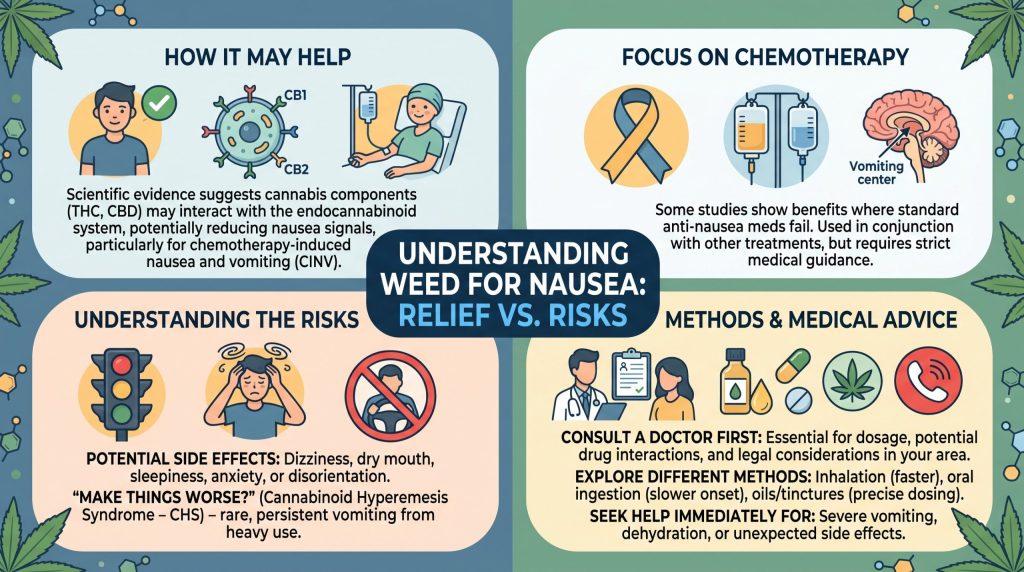
Cannabis can suppress nausea and vomiting in some circumstances. The strongest evidence involves prescription cannabinoids for chemotherapy-induced nausea and vomiting that hasn’t responded adequately to standard medication. Evidence is much thinner for stomach viruses, migraine, motion sickness, medication side effects, and other everyday causes. Cannabis can also create new problems, including anxiety, impairment, drug interactions, and, among some frequent users, cannabinoid hyperemesis syndrome, or CHS.
This is an evidence-focused review of cannabinoids for adult nausea, not a recommendation to smoke or self-treat an unexplained symptom. It compares THC, CBD, prescription cannabinoid medicines, dispensary products, and common consumption methods. It also covers warning signs that deserve medical attention. Cannabis is legal across Canada, but legal age and retail rules vary by province and territory, so local rules still matter.
No cannabis company, dispensary, or product manufacturer sponsored this review. Specific products are mentioned only to clarify differences between regulated medications and retail cannabis. Because research is evolving and individual risks differ, use this guide as preparation for a conversation with a qualified clinician, not as personalized medical advice.
Key Takeaways
- Weed for nausea, especially THC-containing cannabinoids, can help reduce nausea in chemotherapy patients when standard treatments fail.
- Cannabis is less effective and riskier for common causes of nausea like motion sickness, migraines, or stomach viruses, and may even worsen symptoms or cause cannabinoid hyperemesis syndrome (CHS).
- Different cannabis consumption methods affect onset and duration: inhalation acts quickly but risks lung exposure, while edibles have delayed effects and overdose potential.
- CBD lacks strong evidence for nausea relief and can cause side effects and drug interactions; the THC-to-CBD ratio in products matters for effects and intoxication.
- Always consult a healthcare professional before using cannabis for nausea to ensure safety, assess potential drug interactions, and rule out serious underlying conditions.
- If nausea is severe, persistent, or accompanied by warning signs like blood in vomit or severe pain, seek immediate medical care rather than self-treating with cannabis.
Does weed for nausea actually work? The Short Answer
Yes, weed for nausea may help some people, but the answer depends heavily on why you’re nauseated, what product you use, and your health history.
THC-containing cannabinoids have demonstrated anti-nausea effects, most convincingly in chemotherapy care. But, modern first-line antiemetics are generally better studied, more predictable, and less intoxicating. Dispensary flower, vapes, gummies, and concentrates aren’t interchangeable with prescription cannabinoid drugs used in clinical trials.
The frustrating wrinkle? Cannabis may reduce nausea at one point and contribute to severe recurrent vomiting later, particularly with frequent long-term use. Relief after using cannabis doesn’t establish that it’s treating the cause.
How Cannabinoids Affect the Brain’s Nausea and Vomiting Pathways
Vomiting is coordinated through a network involving the brainstem, vagus nerve, digestive tract, and chemical messengers such as serotonin and substance P. Your endocannabinoid system also helps regulate nausea, appetite, pain, stress, and gut movement.
THC activates CB1 cannabinoid receptors in the brain. That activity may dampen signals involved in nausea and the vomiting reflex. This mechanism helps explain both THC’s potential benefit and familiar effects such as intoxication, altered coordination, memory problems, and increased appetite.
Cannabinoid biology isn’t a simple on/off switch, though. Dose, prior exposure, genetics, other medications, and the underlying illness can change your response. The digestive tract contains cannabinoid receptors too, and heavy exposure may disrupt normal regulation in susceptible users.
THC vs. CBD: Differences in Evidence, Effects, and Risks
THC has stronger direct evidence for suppressing vomiting, but it also causes the “high,” slowed reaction time, dizziness, anxiety, and, in larger amounts, paranoia or confusion. Nabilone (Cesamet), a synthetic cannabinoid related to THC, is approved by Health Canada for severe nausea and vomiting associated with cancer therapy, and is generally used when conventional treatments have not worked adequately. Dronabinol, a prescription form of synthetic delta-9 THC, is approved in the US but is no longer marketed in Canada.
CBD isn’t intoxicating in the same way, but claims that it reliably treats nausea run ahead of clinical evidence. High-dose prescription CBD can cause diarrhea, sleepiness, appetite changes, liver-enzyme elevations, and significant drug interactions.
| Cannabinoid | Evidence for nausea | Main concerns |
|---|---|---|
| THC | Moderate in refractory chemotherapy-related nausea: limited elsewhere | Impairment, anxiety, dependence, CHS |
| CBD | Insufficient direct evidence for routine nausea relief | Interactions, variable retail quality, liver effects at prescription doses |
| THC plus CBD | Being studied: no universally proven ratio | Still intoxicating when meaningful THC is present |
What Research Shows About Cannabis for Different Causes of Nausea
Nausea is a symptom, not a diagnosis. A treatment that helps chemotherapy-related vomiting may do little for appendicitis, pregnancy, food poisoning, migraine, or an adverse medication reaction.
Research quality also varies. Prescription cannabinoids have been tested in controlled studies with known doses. Much of the evidence for dispensary cannabis comes from surveys, retrospective records, or self-reported symptom-tracking apps. Those reports are useful for spotting patterns, but they can’t reliably separate drug effects from expectation, spontaneous improvement, or selection bias.
Chemotherapy-Related Nausea: Prescription Cannabinoids vs. Dispensary Cannabis
Older trials found cannabinoids such as dronabinol and nabilone could outperform some antiemetics available at the time. But cancer care has changed. Current regimens may combine drugs such as ondansetron, dexamethasone, olanzapine, and an NK1 antagonist, selected according to the chemotherapy’s vomiting risk.
Guidelines generally reserve prescription cannabinoids for refractory symptoms, nausea or vomiting that continues despite appropriate standard therapy. They aren’t usually the first move.
Dispensary cannabis presents extra uncertainty. A brownie labelled “10 mg THC” and inhaled flower containing 25% THC deliver different exposure, while labelling accuracy and contaminants vary across markets. If you’re receiving cancer treatment, involve your oncology team. Cannabis may worsen sedation, affect medication metabolism, complicate symptom assessment, or be unsafe during certain procedures.
Migraine, Motion Sickness, and Stomach Illness: Where Evidence Is Limited
For migraine-associated nausea, small observational studies suggest some patients report relief, but well-controlled evidence remains limited. Cannabis can also cause dizziness, cognitive fog, or medication-overuse patterns that make the overall picture messier.
Evidence for motion sickness is weaker. Because THC can alter balance, attention, and spatial perception, using it before driving or boating creates an obvious safety problem, even if your stomach feels calmer.
For gastroenteritis or food poisoning, cannabis doesn’t eliminate the virus, bacterium, or toxin. It may mask worsening symptoms while dehydration develops. Likewise, nausea from gallbladder disease, bowel obstruction, ulcers, or appendicitis needs diagnosis rather than aromatic improvisation.
If nausea is new, severe, recurrent, or unexplained, identify the cause first. Your stomach isn’t sending cryptic messages for fun.
Reports of Rapid Relief: What Observational Studies Can and Cannot Prove
Some cannabis-app studies report meaningful symptom improvement within minutes after inhalation. That reflects real user experiences and deserves attention. Yet participants choose their own products, doses, and reporting times: there’s often no placebo group or objective measure.
People who dislike cannabis may stop using the app, while satisfied users remain. Nausea can naturally fluctuate, and inhalation rituals may reduce anxiety independently of cannabinoids. Product labels may not match laboratory content either.
So, observational findings can answer, “What happened among these users?” They cannot prove, “Cannabis caused the improvement” or “This product is safe for you.” Controlled trials are especially needed for specific causes of nausea, standardized THC-to-CBD ratios, dosing, long-term outcomes, and comparisons with established antiemetics.
Can Weed Make Nausea Worse?
Absolutely. A large THC dose may cause dizziness, panic, low blood pressure, or sensory distortion that feels like, and sometimes triggers, nausea. Edibles are frequent culprits because their effects arrive late. Someone takes more after 45 minutes, then both doses appear at once like unwanted party guests.
Cannabis smoke can also provoke coughing or throat irritation. Mixing cannabis with alcohol intensifies dizziness and vomiting risk. Most importantly, repeated use can cause cannabinoid hyperemesis syndrome.
Cannabinoid Hyperemesis Syndrome: Repeated Vomiting, Abdominal Pain, and the Need to Stop Cannabis
CHS typically occurs after prolonged, frequent cannabis exposure, although there’s no single use threshold that predicts it. Common features include cycles of intense nausea, repeated vomiting, abdominal pain, and temporary relief from very hot showers or baths. That shower behaviour is a clue, not a definitive test.
Many people understandably use more cannabis because it helped earlier nausea. With CHS, that can perpetuate the cycle. The durable treatment is complete cannabis cessation, not switching strains, reducing THC slightly, or replacing flower with concentrates. Symptoms often improve after stopping, but recurrence is common when cannabis resumes.
Emergency clinicians may provide IV fluids, electrolyte replacement, and symptom-directed medication. Topical capsaicin or certain prescription medicines are sometimes used under supervision, but they don’t replace cessation.
When to Seek Urgent Care: Dehydration, Blood in Vomit, Severe Pain, or Persistent Vomiting
Get urgent medical help if you have:
- Blood, dark “coffee-ground” material, or bright-green bile in vomit
- Severe or worsening abdominal pain, chest pain, confusion, fainting, or a rigid abdomen
- Inability to keep fluids down, very little urine, extreme thirst, or marked weakness
- Vomiting after a head injury or with a severe headache, stiff neck, or neurological symptoms
- Possible poisoning, overdose, bowel obstruction, or diabetic ketoacidosis
- Persistent vomiting during pregnancy
Call emergency services for trouble breathing, unresponsiveness, seizures, or suspected life-threatening poisoning. Children can become seriously ill after eating THC gummies: contact emergency services or your poison centre at 1-844-POISON-X (1-844-764-7669; in Quebec, 1-800-463-5060) promptly. Don’t wait for the “high” to wear off.
Smoking, Vaping, Edibles, or Oils: Comparing Cannabis Formats for Nausea
Delivery method changes onset, duration, dose predictability, and risk. It does not turn an uncertain treatment into a proven one.
| Format | Typical onset | Typical duration | Key drawback |
|---|---|---|---|
| Smoked or vaped | Minutes | Roughly 2–4 hours | Lung exposure: rapid impairment |
| Edible or capsule | 30 minutes–2+ hours | Often 6–8 hours or longer | Delayed, sometimes unexpectedly strong effects |
| Sublingual tincture | About 15–45 minutes when absorbed under the tongue | Several hours | Technique and formulation alter absorption |
| Swallowed oil | Similar to an edible | Several hours | Food and digestion make timing variable |
These are broad ranges, not appointments your body has agreed to keep. Individual effects can fall outside them.
Inhaled Cannabis: Faster Onset Does Not Mean Lower Risk
Smoking or vaping may feel attractive during acute nausea because effects can begin within minutes and users can stop after one inhalation. But rapid onset also means rapid impairment. Smoking exposes your lungs to combustion products, while vaping has risks tied to device temperature, concentrates, additives, and unregulated cartridges.
Avoid informal THC cartridges and modified devices. The 2019 EVALI lung-injury outbreak in the US was strongly associated with vitamin E acetate in illicit-market THC vaping products, illustrating why the supply chain matters.
Inhalation may also trigger coughing, chest discomfort, or vomiting. If you have asthma, lung disease, cardiovascular disease, or an upcoming procedure, discuss those risks with a clinician. And never drive because you “only took one hit.” Feeling functional isn’t the same as having normal reaction time.
Edibles and Capsules: Delayed Effects, Longer Duration, and Overconsumption Risk
Edibles avoid smoke, but they’re not automatically safer. Swallowed THC passes through the liver, which converts some of it to 11-hydroxy-THC, a potent metabolite. Effects may be stronger and last much longer than expected.
The classic mistake is early redosing: no effect after an hour, another gummy, then an unexpectedly intense evening. Nausea may worsen alongside panic, racing heart, confusion, or vomiting. Commercial serving sizes also vary. One package may contain multiple servings even when the brownie looks emotionally committed to being eaten whole.
Store edibles in child-resistant packaging, locked away from children and pets, not beside ordinary candy. If a clinician approves oral THC, follow the prescribed or discussed amount and waiting period rather than improvising. Capsules offer consistent units in regulated systems, but delayed absorption remains.
Oils and Tinctures: Why Absorption and Onset Vary
“Tincture” is used loosely. A product held under the tongue may undergo some absorption through oral tissues, producing an earlier effect. If you swallow it immediately, it behaves more like an edible. Oil composition, droplet size, dose concentration, recent meals, and your metabolism all influence timing.
Read the label in milligrams per millilitre, not merely milligrams on the front of the bottle. A 30 mL bottle containing 300 mg THC provides 10 mg per mL: a quarter-millilitre is 2.5 mg. Droppers aren’t always accurately marked, so guessing by “a few drops” can go sideways.
Avoid homemade oils with unknown strength. Choose legally regulated products with batch testing where available, and don’t assume “full spectrum” means medically superior.
Is There a Best Weed Strain or Product for Nausea?
There is no clinically established “best strain” for nausea. Names such as Blue Dream, Granddaddy Purple, or Sour Diesel can describe different chemical profiles depending on the grower, harvest, and laboratory. A recommendation based only on a colourful strain name is closer to retail folklore than precision medicine.
When comparing legal products, cannabinoid content, serving size, contaminant testing, and manufacturing consistency matter more than branding. Even then, a clean laboratory report doesn’t prove effectiveness.
Indica vs. Sativa: Why Strain Labels Do Not Reliably Predict Relief
“Indica” is often marketed as sedating and “sativa” as energizing. Those labels have botanical history, but they don’t reliably predict a modern product’s chemistry or your response. Crossbreeding has blurred categories, and two packages carrying the same strain name may contain notably different cannabinoid and terpene profiles.
Your response also depends on dose, tolerance, setting, anxiety level, and other substances. A product described as relaxing may make a THC-sensitive beginner feel trapped on a mental roller coaster.
Instead of shopping by indica versus sativa, look for clearly stated THC and CBD amounts per serving, a recent certificate of analysis, and screening for pesticides, microbes, heavy metals, and residual solvents. Better labelling reduces uncertainty: it doesn’t eliminate biological risk.
THC-to-CBD Ratios, Terpene Claims, and Independent Product Testing
Lower-THC or balanced THC-to-CBD products may be less intoxicating than high-THC concentrates, but CBD doesn’t reliably cancel THC impairment. Ratios such as 1:1 describe relative amounts, not total strength. A 1:1 product containing 2.5 mg of each cannabinoid is very different from one containing 25 mg of each.
Terpenes including limonene, myrcene, and beta-caryophyllene are frequently promoted for nausea or relaxation. Preclinical findings are interesting, but persuasive marketing isn’t the same as human clinical evidence. Don’t pay a premium expecting a terpene profile to function like a Health Canada-approved antiemetic.
Favour products tested by licensed independent laboratories. Check the batch number, test date, potency, and contaminant panel. Skip products making disease-cure claims or providing only a decorative QR code with no verifiable report.
Safety Considerations Before Using Cannabis for Nausea
Before using cannabis, ask a basic question: Could this nausea signal something that shouldn’t be masked? Review the symptom’s cause, your medications, pregnancy status, mental-health history, cardiovascular risks, and pattern of cannabis use with a healthcare professional.
Legality isn’t a safety certification. Likewise, “natural” doesn’t mean harmless, poison ivy remains stubbornly natural.
Dosing Uncertainty: Why There Is No Universal Dose and Why Early Redosing Is Risky
No universal cannabis dose treats nausea. Clinical studies use different cannabinoids, routes, and populations, while retail products vary dramatically. Prior cannabis exposure changes tolerance, and the same oral dose can affect two people very differently.
Higher doses don’t necessarily provide better relief. They may instead increase anxiety, vomiting, sedation, or cardiovascular symptoms. New users and older adults can be especially sensitive.
If a clinician considers cannabinoid therapy appropriate, follow that professional’s product-specific plan. Don’t translate a prescription nabilone dose directly into flower, gummies, or delta-8 THC. With oral products, wait the full recommended interval before considering more. Keep a simple log of product, dose, time, food intake, benefit, and adverse effects: memory gets unreliable once THC enters the meeting.
Side Effects, Impaired Driving, Dependence, and High-Potency THC
Common short-term effects include dry mouth, red eyes, increased heart rate, dizziness, poor coordination, slowed reaction time, memory impairment, anxiety, and sleepiness. High-potency THC concentrates can produce more intense intoxication and increase the risk of panic, paranoia, or psychotic symptoms in susceptible people.
Don’t drive, cycle in traffic, operate equipment, or supervise risky activities while impaired. There’s no dependable “I feel fine” test or universal waiting period that guarantees safe driving, particularly after edibles.
Regular use can lead to cannabis use disorder. Warning signs include unsuccessful attempts to cut back, needing more for the same effect, continuing despite harm, and organizing daily life around use. If cannabis is becoming necessary to eat, sleep, or feel normal, discuss that pattern honestly with a clinician.
Interactions With Alcohol, Sedatives, Antiemetics, and Other Medicines
Cannabis can compound sedation and poor coordination from alcohol, opioids, benzodiazepines, sleep medicines, sedating antihistamines, and some anti-nausea drugs. Combining substances may turn mild dizziness into a fall, or an unsafe drive home.
THC and CBD may also affect liver enzymes involved in processing prescription medicines. Clinically important interactions are possible with blood thinners, seizure drugs, immunosuppressants, and other medicines with narrow therapeutic ranges. CBD is not interaction-free simply because it doesn’t produce the typical high.
Bring your clinician or pharmacist a complete list: prescriptions, over-the-counter drugs, supplements, THC, CBD, delta-8 products, and alcohol use. Don’t stop essential medication to “make room” for cannabis. Your pharmacist can often identify interaction concerns quickly and without the awkward lecture you may be imagining.
Pregnancy, Breastfeeding, Adolescence, and Health Conditions That Require Extra Caution
Major medical organizations advise avoiding cannabis during pregnancy and breastfeeding. THC crosses the placenta and can enter breast milk: cannabis isn’t considered a safe treatment for morning sickness or hyperemesis gravidarum. Persistent pregnancy vomiting needs prompt obstetric care.
Adolescents and young adults face additional concerns because the brain continues developing into the mid-20s. Earlier, frequent, high-potency use is associated with greater risks involving dependence and mental health.
Extra caution, or avoidance, is warranted with a personal or family history of psychosis, bipolar disorder, severe panic, substance use disorder, significant heart disease, fainting, or unstable blood pressure. Older adults may be more vulnerable to confusion and falls. People with recurrent unexplained vomiting should be assessed for CHS before considering more cannabis.
Alternatives to Weed for Nausea Relief
The best alternative depends on the cause. Mild, short-lived nausea after a rich meal calls for a different response than chemotherapy-related vomiting or severe abdominal pain.
Begin with low-risk supportive care when symptoms are mild and no warning signs are present. If nausea persists, a clinician can match treatment to the likely mechanism rather than playing medication roulette.
Hydration, Small Meals, and Other Supportive Measures
Take small, frequent sips of oral rehydration solution, diluted juice, broth, or another tolerated fluid. Gulping a full glass may trigger vomiting. Oral rehydration solutions such as Pedialyte, or properly prepared generic equivalents, replace sodium and glucose more effectively than plain water during significant fluid loss.
Try small portions of bland or familiar foods when you’re ready. Dry toast, rice, bananas, soup, or crackers are common choices, but there’s no requirement to survive on beige food for days. Avoid alcohol, heavy meals, and strong odours if they trigger symptoms.
Ginger may modestly help some forms of nausea, though products and study results vary. Fresh air, an upright posture, acupressure bands, and slow breathing are low-risk experiments. Rest, but avoid lying flat immediately after eating if reflux is involved.
Standard Antiemetics and Treating the Underlying Cause
Clinicians choose antiemetics according to cause and risk. Options may include ondansetron, prochlorperazine, promethazine, metoclopramide, antihistamines such as meclizine, or, in chemotherapy, multi-drug preventive regimens. Each has side effects and contraindications: “standard” doesn’t mean suitable for everyone.
A quick comparison:
| Situation | Common approach to discuss |
|---|---|
| Motion sickness | Behavioural measures: meclizine or dimenhydrinate when appropriate |
| Migraine nausea | Migraine treatment plus a selected antiemetic |
| Gastroenteritis | Hydration: evaluation if severe or prolonged |
| Chemotherapy | Guideline-based preventive antiemetic regimen |
| Reflux-related nausea | Meal changes and treatment of reflux |
| Suspected CHS | Cannabis cessation and medical supportive care |
Treating the source, an infection, migraine, medication reaction, pregnancy complication, or obstruction, usually matters more than temporarily muting the symptom.
What to Ask a Clinician About Cannabis, Treatment Options, and Local Laws
A useful appointment starts with specifics. Note when nausea began, how often you vomit, what you can keep down, associated pain, pregnancy possibility, recent travel or foods, and every cannabis product you use. Include gummies and delta-8: your body doesn’t recognize marketing loopholes.
Ask:
- What’s the likely cause, and do I need testing?
- Which proven treatments fit that cause?
- Could cannabis interact with my medicines or health conditions?
- Could my symptoms represent CHS or withdrawal?
- If a cannabinoid is reasonable, should it be a regulated prescription product?
- Which side effects mean I should stop or seek care?
- How do provincial and federal laws affect possession, employment, travel, and driving?
In Canada, the federal Cannabis Act makes adult use legal, but provinces and territories set the legal age and the rules on where you can buy and use cannabis. Legal status doesn’t erase employer policies or impaired-driving laws. Never carry cannabis across international borders: taking it into or out of Canada is illegal, even to or from a place where it’s legal. If your clinician isn’t comfortable advising on cannabis, ask for a pharmacist, oncology specialist, addiction-medicine clinician, or licensed medical-cannabis professional who will evaluate evidence rather than sell you a product.
Frequently Asked Questions
Short answers are helpful, but your underlying diagnosis and product type still control the details. If vomiting is persistent, severe, or accompanied by red flags, skip experimentation and seek medical advice.
How Quickly Can Cannabis Affect Nausea, and How Long Might Effects Last?
Inhaled cannabis may be felt within minutes, with effects commonly lasting a few hours. Edibles often take 30 minutes to two hours, or longer, to become noticeable and may last six to eight hours, sometimes well beyond that. Tinctures vary depending on whether they’re absorbed under the tongue or swallowed.
Onset isn’t the same as reliable nausea control. Rapid intoxication can arrive before meaningful relief, while delayed edible effects encourage accidental redosing. Food, dose, tolerance, body composition, liver metabolism, and product formulation all change the timeline. If symptoms worsen after cannabis, don’t assume another dose will fix them.
Does Taking an Edible on an Empty Stomach Change Its Effects?
It can, but not predictably enough to use as a dosing strategy. An empty stomach may produce a faster onset for some people. Meals, especially high-fat meals, can increase cannabinoid absorption and potentially strengthen or prolong effects, even if onset feels slower.
That variability is precisely why chasing a faster effect with extra THC is risky. Follow the product-specific clinical guidance, don’t redose early, and avoid combining an edible with alcohol. If you’re already vomiting, oral cannabis may not stay down or absorb consistently. A healthcare professional may recommend a better-studied antiemetic route based on the cause and severity.
Can Stopping Regular Cannabis Use Temporarily Cause Nausea?
Yes. Cannabis withdrawal can occur after frequent or heavy use stops abruptly. Symptoms may include irritability, anxiety, poor sleep, reduced appetite, abdominal discomfort, sweating, headache, and nausea. They commonly begin within a day or two, peak during the first week, and then improve, although sleep or mood changes may last longer.
Withdrawal and CHS can overlap but aren’t identical. CHS usually involves recurrent severe vomiting during ongoing cannabis exposure and improves with sustained abstinence. Withdrawal begins after reduction or cessation.
Don’t restart cannabis automatically to settle withdrawal nausea, particularly if CHS is possible. A clinician can assess dehydration, exclude other causes, and offer supportive treatment. Help is available if cutting back feels harder than expected.
References and Medical Review
This review draws on guidance and evidence from the National Cancer Institute’s cannabis and cannabinoids summary, Health Canada’s information for health care professionals on cannabis and cannabinoids, Health Canada’s overview of the health effects of cannabis, the Society of Obstetricians and Gynaecologists of Canada, and peer-reviewed literature indexed through PubMed.
Medical information should be reviewed periodically because cannabinoid formulations, evidence, and laws continue to change. Before publication, a licensed physician, pharmacist, or other appropriately qualified clinician should verify dosing language, interaction guidance, and local practice recommendations. This article does not replace diagnosis or individualized care.
The practical conclusion on weed for nausea is nuanced: THC-based medicines can help selected patients, particularly when chemotherapy-related symptoms resist standard treatment, but retail cannabis is less predictable, and evidence for everyday nausea remains limited. Cannabis may also worsen nausea or cause CHS.
If your symptoms are mild, start with hydration and cause-specific care. If they’re recurrent, severe, or unexplained, get evaluated before masking them. And if hot showers, frequent cannabis use, and cyclical vomiting sound uncomfortably familiar, stop using cannabis and seek medical help. That recognition can save months of miserable trial and error.