
Cannabis
Weed vs Tobacco: Which Is More Harmful and Why?
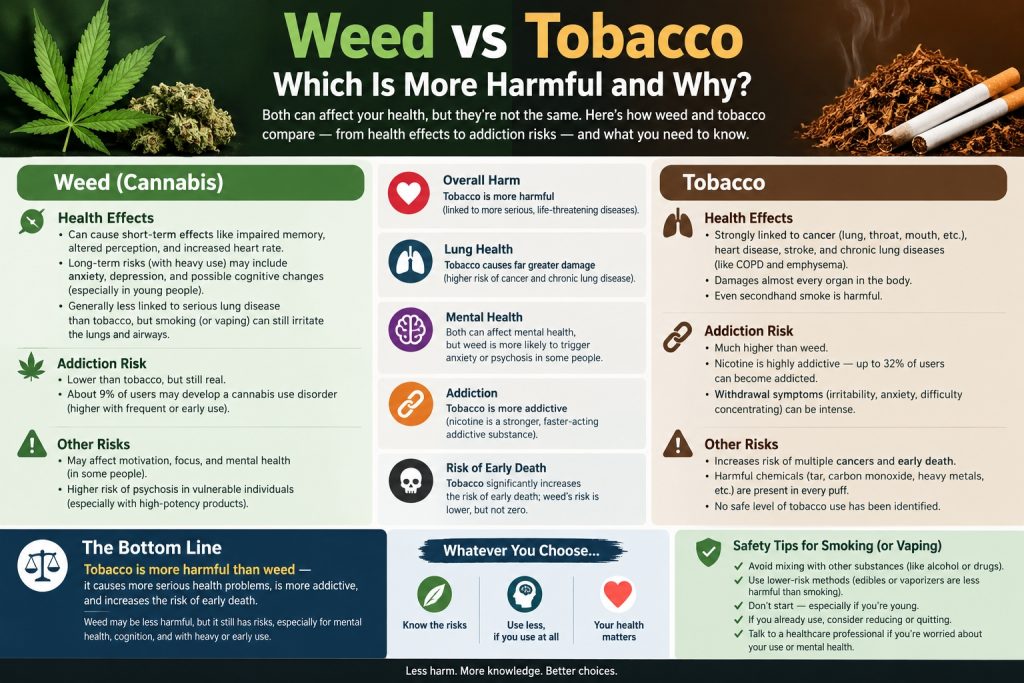
Nov
A cigarette and a joint can look similar from across the room, but your body doesn’t experience them the same way. Tobacco primarily delivers nicotine, while cannabis can deliver THC, CBD, and dozens of other cannabinoids. The patterns of use differ, too: someone may smoke 15 cigarettes throughout the day but use one joint at night, or take a high-potency cannabis concentrate and inhale no smoke at all.
That makes the weed vs tobacco question more complicated than declaring one “better” or “worse.” Tobacco has a vast, decades-long evidence base linking it to cancer, chronic obstructive pulmonary disease (COPD), cardiovascular disease, and premature death. Cannabis smoke contains many of the same toxic combustion products, yet its long-term health effects are harder to measure because cannabis use is often less frequent, products vary enormously, and many users also smoke tobacco.
This evidence review compares smoked cannabis with smoked tobacco while also examining addiction, second-hand exposure, vaping, edibles, pregnancy, mental health, and mixing the two. It doesn’t evaluate whether cannabis should be legal or dismiss legitimate medical uses. Instead, it focuses on what happens when these products enter your body, and where the science remains unsettled.
The shortest honest answer? Neither kind of smoke is safe. Tobacco’s long-term harms are more firmly established and substantially increase the risk of several deadly diseases. Cannabis brings a different set of concerns, particularly impairment, mental-health effects, cannabis use disorder, and respiratory symptoms. Your actual risk depends on what you use, how often you use it, how you consume it, and whether you combine products.
Key Takeaways
- Weed and tobacco deliver different active compounds—THC and CBD in cannabis, nicotine in tobacco—resulting in distinct effects and health risks.
- Tobacco smoking has a well-established link to severe diseases like cancer, COPD, and heart disease, while cannabis smoking is associated with respiratory irritation and potential mental health concerns, but its long-term effects are less definitive.
- Neither weed nor tobacco smoke is safe; both contain harmful combustion products that damage lung and cardiovascular health and pose risks to others via second-hand smoke.
- Cannabis can impair memory, coordination, and driving ability, especially with high-THC products, while tobacco’s primary risk is strong nicotine addiction and related chronic illnesses.
- Mixing tobacco and cannabis (e.g., blunts, spliffs) increases exposure and complicates addiction and quitting efforts due to intertwined dependence mechanisms.
- Switching to non-combustible forms like vaping or edibles reduces smoke toxin exposure but introduces other risks and does not eliminate addiction or impairment concerns.
Weed vs Tobacco at a Glance: Side-by-Side Comparison
Here’s the quick comparison, useful when you need the map before hiking through the scientific underbrush.
| Factor | Weed/cannabis | Tobacco |
|---|---|---|
| Main active compounds | THC, CBD, other cannabinoids | Nicotine |
| Intoxicating? | THC products can be | Not in the way cannabis is, though nicotine affects mood and attention |
| Dependence risk | Cannabis use disorder can develop | Nicotine is strongly addictive |
| Smoke contents | Fine particles, carbon monoxide, tar, irritants, carcinogens | Fine particles, carbon monoxide, tar, irritants, numerous carcinogens |
| Established lung effects | Cough, phlegm, wheeze, bronchitis symptoms | COPD, emphysema, chronic bronchitis, lung cancer |
| Driving | THC impairs reaction, coordination, and judgment | Nicotine doesn’t produce comparable acute impairment |
| Major long-term evidence | Less complete: products and use patterns vary | Extensive evidence of cancer, heart disease, stroke, and respiratory disease |
| Second-hand smoke | Potentially harmful: can expose others to THC and particulates | Proven cause of disease and premature death |
| Pregnancy | Avoid: THC can reach the fetus and breast milk | Avoid: linked to severe maternal and infant harms |
This table compares typical categories, not every individual product. A low-dose edible, blunt, nicotine pouch, and pack of cigarettes create very different exposures.
What Are the Main Differences Between Cannabis and Tobacco?
Cannabis and tobacco come from different plants and are generally used for different effects. Cannabis may be used recreationally or medically for intoxication, relaxation, nausea, or pain relief. Tobacco is usually consumed for nicotine’s stimulating and reinforcing effects.
The overlap is combustion. When plant material burns, it creates a chemically messy aerosol containing carbon monoxide, fine particulate matter, volatile organic compounds, and cancer-causing chemicals. Water pipes and “natural” rolling papers don’t magically scrub that mixture clean.
THC, CBD, and Nicotine: Different Compounds and Effects
THC is cannabis’s principal intoxicating cannabinoid. It can alter perception, appetite, memory, coordination, and time judgment. Effects depend heavily on dose and tolerance: a beginner taking 10 milligrams orally may feel far more impaired than an experienced user taking the same amount.
CBD doesn’t produce the characteristic THC high, though it can cause side effects and interact with medications. Store-bought CBD products may also be mislabelled or contain THC.
Nicotine increases alertness and triggers dopamine-driven reinforcement. Its effects wear off quickly, encouraging repeated dosing and making cigarettes remarkably efficient dependence-delivery devices. Cannabis can also become compulsive, but THC and nicotine produce different intoxication, withdrawal, and behavioural patterns.
Joints, Cigarettes, Blunts, and Spliffs: What Each Contains
Names matter because they reveal what you’re actually inhaling:
- Joint: Cannabis rolled in paper, ordinarily without tobacco.
- Cigarette: Processed tobacco wrapped in paper, usually with a filter.
- Blunt: Cannabis inside a tobacco-leaf or cigar wrapper: nicotine exposure is possible even when the filling is cannabis.
- Spliff: Cannabis and loose tobacco mixed together.
Regional language varies. In much of Europe, “joint” may casually describe cannabis mixed with tobacco, while many Canadian and US users mean cannabis only. If you’re tracking exposure or talking with a clinician, describe the contents rather than relying on the nickname. A blunt isn’t simply a bigger joint, it can quietly turn occasional cannabis use into repeated nicotine exposure.
How Does Smoking Weed Compare With Smoking Tobacco for Lung Health?
Your lungs care less about a plant’s cultural image than about hot particles and combustion chemicals. Both cannabis and tobacco smoke irritate airway tissue. Cannabis smokers often inhale deeply, hold smoke longer, and use unfiltered products, which can increase particulate deposition per puff. That doesn’t prove that one joint equals several cigarettes: it shows why appearance and product count are poor measures of dose.
Tobacco’s respiratory record is unequivocal. Cigarette smoking is a leading cause of COPD, lung cancer, and preventable death. Regular cannabis smoking is consistently associated with cough, mucus production, wheezing, and bronchitis symptoms, but evidence for COPD and lung cancer remains less conclusive.
That uncertainty shouldn’t be translated as safety. It means researchers have less precise long-term evidence, not that smoke has received a botanical hall pass.
Smoke Exposure, Cough, and Chronic Bronchitis Symptoms
Frequent cannabis smokers commonly report morning cough, sputum, wheezing, and episodes described as bronchitis. These symptoms may improve after stopping, suggesting that ongoing smoke exposure, not merely a permanent diagnosis, is driving at least part of the problem.
Imagine you smoke a bowl nightly and start clearing your throat through every morning meeting. That’s not necessarily COPD, but it is feedback from irritated airways. Tobacco can produce the same early symptoms before more serious disease becomes obvious.
Seek medical advice if you have persistent cough, recurrent chest infections, shortness of breath, unexplained weight loss, chest pain, or blood in mucus. Don’t assume symptoms are “just weed,” especially if you’ve used tobacco, worked around dust or fumes, or have asthma.
COPD and Emphysema: Established Tobacco Risks and Emerging Cannabis Evidence
COPD includes chronic bronchitis and emphysema that cause persistent airflow limitation. Tobacco smoking is its dominant preventable cause, and risk generally rises with cumulative exposure. Damage can progress quietly for years before climbing stairs starts feeling like an unwanted fitness test.
For cannabis alone, studies haven’t shown the same clear, consistent COPD relationship. Some find airway resistance, hyperinflation, or respiratory symptoms: others don’t find substantial airflow obstruction after adjusting for tobacco. Heavy lifetime exposure remains understudied, and newer high-potency products haven’t been followed for decades.
If you smoke both, you can’t assume cannabis offsets tobacco or vice versa. Co-use may increase total smoke exposure and makes symptoms and study findings harder to untangle.
Lung Cancer: What Is Proven and What Remains Uncertain?
Tobacco causes lung cancer. This conclusion rests on extensive epidemiology, laboratory evidence, and dose-response patterns across decades. Risk falls after quitting, though it doesn’t immediately return to that of someone who never smoked.
Cannabis smoke contains carcinogens also found in tobacco smoke. But population studies haven’t established a comparably clear lung-cancer relationship, partly because many cannabis users have lower cumulative exposure, younger populations haven’t reached peak cancer ages, and tobacco co-use confounds results. Evidence concerning testicular germ-cell tumours has raised concern, but it doesn’t settle the lung-cancer question.
So, “not proven” is not “proven harmless.” If avoiding cancer-related smoke exposure is your priority, avoiding combustion is more defensible than betting on an evidence gap.
How Do Weed and Tobacco Affect the Rest of the Body?
The comparison extends well beyond your lungs. Nicotine and tobacco smoke affect blood vessels, clotting, metabolism, and nearly every organ. Smoking causes coronary heart disease, stroke, type 2 diabetes, reproductive problems, and multiple cancers, not only lung cancer.
Cannabis’s acute effects are more visible: intoxication can change attention, coordination, perception, and heart rate within minutes. Longer-term outcomes depend on age, dose, frequency, THC potency, underlying health, and individual vulnerability.
A crucial distinction is between the drug and the delivery method. THC can impair you without smoke, while tobacco smoke can damage cardiovascular tissue beyond nicotine’s effects. Switching formats changes the risk profile: it rarely erases risk altogether.
Heart Rate, Blood Pressure, Heart Attack, and Stroke Risk
THC can temporarily raise heart rate and alter blood pressure. Standing up quickly may bring dizziness: exertion may feel unexpectedly intense. Observational studies associate cannabis use, especially recent use, with heart attack and stroke, but determining causation is difficult because dose, tobacco use, and other factors aren’t always measured well.
Tobacco’s cardiovascular harms are firmly demonstrated. Cigarette smoke damages vessel linings, promotes inflammation and clotting, and reduces oxygen delivery. Even low levels of smoking carry meaningful cardiovascular risk.
If you have heart disease, arrhythmia, uncontrolled blood pressure, or previous stroke, discuss cannabis and nicotine with a clinician. Call 911 for chest pressure, sudden weakness, facial drooping, severe shortness of breath, or trouble speaking. Don’t wait for the high to pass.
Memory, Mental Health, Reaction Time, and Driving Impairment
THC can impair short-term memory, divided attention, coordination, and reaction time. You may feel cautious while still responding too slowly to a cyclist, red light, or child stepping into the street. Combining cannabis with alcohol can intensify impairment.
High-THC products can provoke anxiety, panic, paranoia, or psychotic symptoms. Frequent use, particularly beginning young or among people with a personal or family vulnerability, is associated with a higher risk of psychotic disorders. Cause and individual susceptibility remain active research questions, but the warning is serious.
Nicotine doesn’t cause the same high, yet dependence can worsen stress cycles: withdrawal produces irritability and poor concentration, then another dose briefly relieves them. Neither THC nor nicotine is a reliable mental-health treatment without clinical guidance.
Risks During Adolescence, Pregnancy, and Breastfeeding
Adolescent brains are still developing, and starting either product young increases the likelihood of dependence. Frequent adolescent cannabis use (the legal age is 19 in most provinces and territories, 18 in Alberta, and 21 in Quebec) is associated with learning, attention, and mental-health concerns, while nicotine can quickly establish lasting addiction. High-potency disposable vapes make both substances easier to conceal, helpful for no parent ever.
During pregnancy, tobacco increases risks including placental complications, restricted fetal growth, preterm birth, and sudden infant death syndrome. Cannabis is also discouraged: THC crosses the placenta, and prenatal use may affect birth outcomes and neurodevelopment. THC can enter breast milk and persist because it is fat-soluble.
If you’re pregnant or breastfeeding, don’t swap cigarettes for cannabis, or use cannabis for nausea, without medical advice. Ask for nonjudgmental support: hiding use makes safer care harder.
Is Weed or Tobacco More Addictive?
Nicotine is generally considered more dependence-forming, particularly when delivered rapidly through cigarettes. A person may smoke soon after waking, dose repeatedly all day, and experience strong withdrawal within hours. Cigarette design and routine (the coffee, the porch, the work break) reinforce the cycle.
Cannabis can also cause addiction, clinically termed cannabis use disorder (CUD). Risk increases with frequent use, earlier initiation, high-THC products, and underlying mental-health or substance-use problems. The key question isn’t whether cannabis is “as addictive” as tobacco. It’s whether your use has become difficult to control or continues despite harm.
Nicotine Dependence and Cannabis Use Disorder: Signs and Risk Factors
Possible dependence signs include:
- Using more or longer than you intended
- Repeatedly failing to cut down
- Spending substantial time obtaining, using, or recovering
- Needing more for the same effect
- Experiencing cravings or withdrawal
- Continuing despite breathing, relationship, school, work, or money problems
- Giving up activities because use has taken priority
For nicotine, smoking within 30 minutes of waking and struggling through smoke-free settings suggest stronger dependence. For cannabis, daily use, “wake and bake” routines, increasing potency, and relying on THC to sleep or manage every uncomfortable feeling deserve attention.
This isn’t a character flaw. Dependence is a learned biological and behavioural loop, and learned loops can be changed.
Withdrawal Symptoms, Cravings, and Typical Timelines
Nicotine withdrawal can begin within hours. Irritability, anxiety, restlessness, low mood, increased appetite, and poor concentration often peak during the first several days, then ease over two to four weeks. Cue-triggered cravings may return longer.
Cannabis withdrawal commonly begins one or two days after stopping frequent use. Symptoms can include irritability, insomnia, vivid dreams, reduced appetite, anxiety, depressed mood, headache, and stomach discomfort. They often peak during the first week and improve over roughly two weeks, although sleep disruption may linger.
A practical move: schedule fewer demands during your first quit week, remove supplies, and tell one trustworthy person. Withdrawal is usually uncomfortable rather than dangerous, but severe depression, psychosis, chest symptoms, or thoughts of self-harm require urgent professional care: call 911, or call or text 9-8-8 for suicide crisis support.
How Do Second-Hand Weed Smoke and Tobacco Smoke Compare?
Second-hand tobacco smoke is proven to cause lung cancer, heart disease, stroke, respiratory illness, and sudden infant death syndrome. There is no safe level of exposure, according to Health Canada’s second-hand smoke guidance.
Second-hand cannabis research is smaller, but the smoke contains fine particles and many toxic chemicals found in tobacco smoke. It can also contain THC. Exposure in a poorly ventilated room may produce detectable cannabinoids and, under extreme conditions, subjective effects in nonsmokers.
Opening a window, running a fan, or smoking in another room doesn’t adequately protect others. Smoke outdoors where local rules allow, away from doors and windows, but remember that outdoor smoking still doesn’t make your own inhalation safe. Keep homes and cars completely smoke-free, especially around children, pregnant people, and anyone with asthma or heart disease.
What Happens When You Mix Weed and Tobacco?
Spliffs and blunts can expose you to THC, nicotine, and combustion products at once. Nicotine may make the ritual more reinforcing, while THC adds impairment. Users sometimes report that tobacco changes the intensity of the high or reduces cannabis-related sluggishness, but subjective chemistry isn’t a safety test.
Mixing also complicates quitting. You may think you crave cannabis when your body is asking for nicotine, or light a cigarette because it triggers memories of getting high. One ritual becomes two dependence loops braided together.
If you want to separate them, track each ingredient for a week: time, amount, setting, and feeling before use. Then stop using tobacco wraps and mixed products. You may still need dedicated nicotine treatment rather than willpower alone. And if cannabis use remains problematic after nicotine is removed, address it directly rather than assuming the job is finished.
Does Vaping or Using Edibles Change the Comparison?
Yes, substantially, but “different” doesn’t mean harmless. Noncombustible products generally avoid many toxins created by burning plant material. They can introduce other hazards, including concentrated dosing, contaminants, accidental poisoning, and device-related lung injury.
Product regulation matters. A licensed, laboratory-tested cannabis oil isn’t equivalent to an unverified cartridge bought through social media. Likewise, a nicotine vape that meets Canada’s federal rules (including the 20 mg/mL nicotine limit) and an illicit disposable may differ in manufacturing quality. You still need to consider dependence, youth access, and unknown long-term inhalation effects.
Cannabis Vapes vs Nicotine Vapes: Different Risks, Neither Harmless
Nicotine vapes can sustain or create addiction and expose lungs to aerosols containing ultrafine particles, flavouring chemicals, and metals (Health Canada on the risks of vaping). For adults who smoke cigarettes, completely switching to a regulated vape may reduce exposure to many combustion toxins, but dual use preserves cigarette risk, and nonsmokers shouldn’t start.
Cannabis vapes can deliver very high THC concentrations, increasing intoxication, anxiety, tolerance, and CUD risk. The 2019 US EVALI outbreak was strongly linked to vitamin E acetate in illicit THC products, illustrating how a contaminant can transform a cartridge into a medical emergency. Canada also had cases, but the Public Health Agency of Canada did not identify a specific cause and has not found vitamin E acetate in any Canadian case.
Avoid modified devices and informal products. Seek urgent care for chest pain, worsening cough, breathing difficulty, or fever after vaping. “It tastes like mango” is, regrettably, not quality control.
Edibles and Other Non-Smoked Cannabis Products: Less Smoke Exposure, Different Risks
Edibles avoid lung exposure to smoke, but their delayed onset invites the classic mistake: I don’t feel it, so I’ll take more. Effects may begin after 30 minutes to two hours, peak later, and last considerably longer than inhaled cannabis.
Start with a low labelled THC dose, wait long enough before considering more, and don’t drive. Even 10 milligrams can overwhelm an inexperienced user: some people should begin below that. Keep gummies locked away in original, child-resistant packaging: beside ordinary candy, they’re nearly impossible for a child to distinguish. If a child eats one, call 1-844-POISON-X (1-844-764-7669; in Quebec, 1-800-463-5060), or 911 if symptoms are severe.
Tinctures, capsules, and topicals have different absorption patterns. Topical THC typically doesn’t intoxicate unless designed for transdermal delivery. Medical users should ask a clinician or pharmacist about dosing and drug interactions.
Why Research Cannot Give a Simple Overall Harm Ranking
A clean “weed versus tobacco” winner would make a satisfying headline and poor science. Harm can mean cancer mortality, dependence, impaired driving, panic, pregnancy complications, or chronic cough. Tobacco dominates several long-term disease categories: cannabis can create greater immediate cognitive and driving impairment.
Research also carries historical baggage. Cannabis prohibition limited study, while rapidly changing legalization created products that older studies never tested. Meanwhile, tobacco cohorts often include decades of consistent, high-frequency exposure. Comparing those records directly is like comparing a few seasons of weather with a century-long climate archive.
Dose, Potency, Frequency, Smoking Technique, and Tobacco Co-Use
Risk changes with:
- Frequency: Monthly use isn’t daily use.
- Duration: Two years isn’t 30 years.
- Potency: A 5% THC flower and 80% concentrate aren’t interchangeable.
- Inhalation: Puff size, breath-holding, filters, and device temperature alter exposure.
- Product quality: Contaminants add unpredictable hazards.
- Co-use: Tobacco, alcohol, and other drugs can change outcomes.
- Personal factors: Age, genetics, heart or lung disease, pregnancy, and medications matter.
Self-reported use is also imperfect. People remember “a joint” more easily than milligrams of THC or grams consumed. That measurement problem can blur true dose-response relationships.
Why One Joint Cannot Reliably Be Equated With a Fixed Number of Cigarettes
Claims that one joint equals a specific number of cigarettes usually compress several separate measurements into a catchy but misleading equation. A joint varies in size, potency, paper, filter, puff count, and how many people share it. Cigarettes are more standardized, yet smoking behaviour still varies.
A laboratory might find greater tar deposition or carbon monoxide exposure under one cannabis-smoking pattern. That doesn’t mean every joint creates the same lifetime cancer or COPD risk as a fixed cigarette count. Toxicant exposure, disease probability, and number of products are different measures.
The useful takeaway isn’t a magic conversion. It’s this: deeply inhaling and holding unfiltered smoke can produce substantial exposure, even when cannabis is smoked less often than tobacco.
How to Reduce Exposure and Get Help Quitting
If you’re not ready to quit today, you can still reduce risk. Don’t mix cannabis with tobacco, don’t share smoke with others, and avoid inhaling from homemade plastic or metal devices. Lower frequency and lower THC potency can also reduce certain cannabis-related harms.
For tobacco, cutting down may be a bridge, but complete cessation brings the greatest health benefit. A quit date, medication, counselling, and follow-up work better than trying to white-knuckle every craving in silence.
Avoiding Combustion, Protecting Others, and Not Driving While Impaired
Use this short safety plan:
- Keep your home and car smoke-free.
- Never use around children or during pregnancy.
- Don’t drive, bike in traffic, operate machinery, or supervise swimming while impaired.
- Don’t combine cannabis with alcohol or sedatives.
- Store cannabis, nicotine liquids, and medications locked away from children and pets.
- Avoid taking deep breaths or holding smoke: this increases toxicant exposure without reliably improving effects.
Switching away from combustion may lower smoke exposure, but it can’t remove THC impairment or nicotine dependence. If you use medical cannabis, ask your clinician whether a standardized non-inhaled product could meet the same treatment goal.
Tobacco Cessation Medications, Cannabis Treatment, and Support for Quitting Both
Tobacco treatments approved in Canada include nicotine replacement products, patches, gum, and lozenges, plus prescription varenicline and bupropion. Combining a nicotine patch with a short-acting product can help manage steady withdrawal and sudden cravings. A clinician can check contraindications and tailor treatment.
There’s no medication approved in Canada specifically for cannabis use disorder. Helpful approaches include cognitive behavioural therapy, motivational enhancement, and contingency management. Sleep, anxiety, or depression may need separate treatment rather than being masked with THC.
For free tobacco support in Canada, call 1-866-366-3667 to reach your provincial or territorial quitline, or use its online quit tools. For cannabis, Health Canada’s Get help with substance use page lists free provincial and territorial helplines. If you’re quitting both substances, decide whether simultaneous or staged quitting suits you, then plan for linked cues such as drinking, gaming, or certain friends.
Frequently Asked Questions About Weed and Tobacco
Quick questions often reveal the biggest misconceptions. Here are two that regularly shape purchasing and health decisions.
Does Weed Contain Nicotine?
Cannabis naturally contains cannabinoids, not nicotine. A plain joint made only with cannabis shouldn’t contain nicotine.
But you can still encounter nicotine when cannabis is rolled in a tobacco-leaf blunt wrap, mixed with tobacco in a spliff, or used alongside a nicotine vape. Cross-contamination or inaccurate labelling is also possible in unregulated products. If avoiding nicotine matters to you, check the wrapper and ingredient list rather than asking only whether the filling is “weed.”
Is Weed Safer Because It Is Natural or Has Medical Uses?
No. “Natural” describes origin, not safety. Poison ivy is natural: your skin remains unimpressed. Burning natural plant matter still creates toxic chemicals.
Cannabis does have accepted or emerging medical applications. In Canada, approved cannabinoid medicines include Epidiolex for certain seizure disorders and nabilone for chemotherapy-related nausea, while Health Canada hasn’t authorized cannabis products themselves to treat any specific disease. That doesn’t mean every dispensary product treats disease, every route is equally safe, or smoked cannabis is risk-free.
Medical value and potential harm can coexist: opioids and radiation therapy make that point rather dramatically. If you use cannabis for symptoms, define the goal with a clinician, choose a measurable dose, monitor side effects, and periodically ask whether it’s actually helping.
Bottom Line: Neither Smoke Is Safe, but the Risks and Evidence Differ
In the weed vs tobacco comparison, tobacco has the clearer and more devastating long-term record. Cigarette smoking is proven to cause COPD, cardiovascular disease, multiple cancers, pregnancy complications, and premature death. Nicotine also creates powerful dependence that can lock users into frequent exposure.
Cannabis shouldn’t be treated as harmless. Smoking it can irritate your lungs and cause cough, phlegm, and bronchitis symptoms. THC can impair driving, memory, coordination, and judgment: high-potency or frequent use may contribute to anxiety, psychosis risk in vulnerable people, and cannabis use disorder. Long-term evidence for COPD and lung cancer is less definitive than for tobacco, but uncertainty isn’t permission to ignore combustion.
Your most useful next step is personal, not theoretical. Write down what you use, how much, how often, and what problem it seems to solve. Then choose one concrete move: make your home smoke-free, stop mixing tobacco with cannabis, book a cessation appointment, or call a quitline. You don’t have to solve the entire debate before reducing your exposure today.
References and Evidence Sources
- Health Canada: Health Effects of Smoking: Diseases and Conditions
- Health Canada: Health Effects of Cannabis
- Health Canada: Addiction to Cannabis
- Health Canada: Risks of Vaping
- National Academies: The Health Effects of Cannabis and Cannabinoids
- Canadian Task Force on Preventive Health Care: Tobacco Smoking Cessation in Adults (CMAJ, 2025)
- Heart & Stroke: Cannabis, Heart Disease and Stroke
- Health Canada: Cannabis Before and During Pregnancy
- Health Canada: Vaping Products Regulations
- Health Canada: Get Help With Substance Use
Weed vs Tobacco: Frequently Asked Questions
What are the main differences between weed and tobacco in terms of active compounds and effects?
Weed contains cannabinoids like THC and CBD, which can intoxicate and affect perception, while tobacco contains nicotine, a stimulant causing strong addiction. THC impairs coordination and judgment, whereas nicotine primarily impacts mood and attention without intoxication.
How does smoking weed compare to smoking tobacco regarding lung health?
Both irritate airways and produce harmful combustion chemicals. Tobacco smoking is definitively linked to COPD, lung cancer, and chronic respiratory diseases. Smoking weed commonly causes cough and bronchitis-like symptoms, but long-term effects like lung cancer remain less clear.
Is weed or tobacco more addictive?
Nicotine in tobacco is generally more addictive, with strong dependence developing quickly and withdrawal symptoms appearing soon after quitting. Cannabis can also cause addiction (cannabis use disorder), especially with frequent, high-THC use, but its dependence pattern differs from nicotine.
Can second-hand weed smoke affect others like tobacco smoke does?
Yes, second-hand weed smoke exposes others to toxic chemicals and THC, potentially causing harm and impairment, especially in poorly ventilated spaces. Tobacco second-hand smoke is a proven cause of serious diseases, but no level of exposure to either is considered risk-free.
Does vaping or using edibles make weed or tobacco safer?
Vaping and edibles avoid combustion toxins but carry other risks like concentrated dosing and device-related injuries. Nicotine vapes sustain addiction, and unregulated cannabis vapes were linked to the 2019 US lung injury outbreak. Edibles delay effects, increasing risks of accidental overdose and impairment.
How does mixing weed and tobacco impact health risks?
Mixing exposes users to both nicotine and THC along with smoke toxins, increasing addiction risk and complicating quitting. Tobacco may enhance cannabis ritual reinforcement, and combined use intensifies exposure and health harms compared to using either alone.