
Blog 2026
Weed Withdrawal Symptoms: What to Expect and Do
Nov
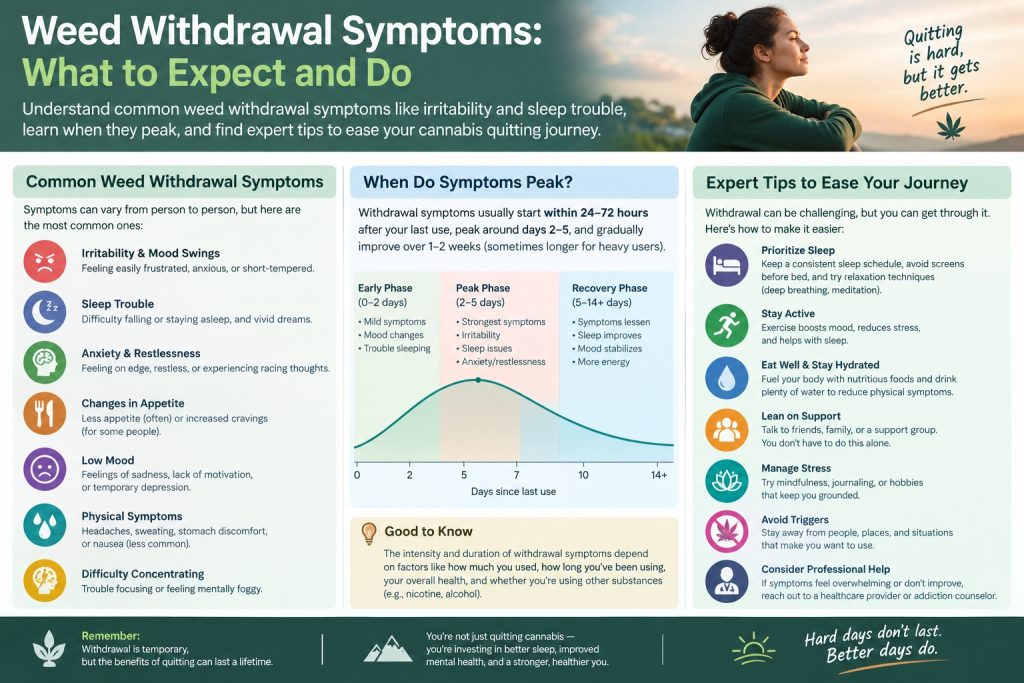
Stopping cannabis can feel surprisingly rough, especially if you’ve used high-THC flower, vapes, edibles, dabs, or concentrates most days. You may become irritable, sleep badly, lose your appetite, or wonder why your dreams suddenly deserve their own Netflix series. These weed withdrawal symptoms are real, recognized by major diagnostic guidelines, and usually temporary.
This evidence-based review explains what cannabis withdrawal commonly feels like, when symptoms tend to peak, which home strategies may help, and when you should seek medical care. It’s intended for adults cutting back or quitting, not as a personal diagnosis or a substitute for treatment. Your experience may differ according to dose, frequency, THC potency, other substance use, and physical or mental health conditions.
The reassuring part? Cannabis withdrawal is generally not medically dangerous by itself. But it can be deeply uncomfortable, disrupt work and relationships, and make returning to cannabis tempting. Knowing what’s coming gives you a much better chance of navigating it safely.
Key Takeaways
- Weed withdrawal symptoms like irritability, sleep trouble, and cravings often begin within 24–48 hours of stopping cannabis and peak in the first week.
- Common symptoms include mood changes, sleep disruption with vivid dreams, reduced appetite, physical discomfort, and difficulty concentrating.
- Cannabis withdrawal is generally not dangerous but can cause significant discomfort, making relapse tempting; knowing the timeline helps manage expectations.
- Home strategies such as maintaining hydration, consistent sleep routines, gentle exercise, and managing cravings without substituting alcohol can ease symptoms.
- Seek medical advice if symptoms persist beyond a few weeks, worsen, or cause severe distress, and be honest about all substance use for proper support.
- Professional counselling and support groups improve success rates, and planning for triggers and lapses is crucial to prevent relapse during weed withdrawal.
What Are the Most Common Weed Withdrawal Symptoms?
Cannabis withdrawal can affect your mood, sleep, appetite, body, and ability to focus. Under DSM-5-TR diagnostic criteria summarized in clinical research, withdrawal generally involves several symptoms emerging after heavy, prolonged use stops or drops substantially.
Not everyone gets every symptom. Some people feel mildly edgy for a few days: others experience a difficult couple of weeks.
Irritability, Anxiety, Restlessness, and Depressed Mood
You might feel unusually impatient, tense, angry, or emotionally flat. Small annoyances, a slow checkout line, a noisy roommate, that group chat, can suddenly seem enormous. Anxiety and restlessness are also common.
A temporary low mood doesn’t automatically mean clinical depression. Still, severe hopelessness, inability to function, or thoughts of self-harm require prompt professional help.
Trouble Sleeping, Vivid Dreams, and Nightmares
Difficulty falling asleep, repeated waking, night sweats, and intense dreams are among the most frequently reported weed withdrawal symptoms. Cannabis can alter sleep architecture, and stopping may cause REM sleep to rebound, making dreams more vivid or unsettling.
Sleep often takes longer than appetite or physical discomfort to normalize. That’s frustrating, but it doesn’t mean recovery isn’t working.
Reduced Appetite and Weight Changes
Food may seem less appealing, portions may shrink, and mild weight loss can occur. If cannabis was closely tied to eating, say, using before dinner, your routine can feel “off” without it.
Choose small, manageable foods such as soup, toast, yogurt, bananas, rice, or smoothies. Seek advice if you can’t maintain hydration, lose substantial weight, or have an eating disorder.
Physical Symptoms: Headaches, Sweating, Chills, and Stomach Discomfort
Physical effects can include headaches, sweating, chills, shakiness, muscle tension, fatigue, abdominal discomfort, or nausea. These symptoms are usually mild to moderate, although “mild” can feel like a generous description at 3 a.m.
Persistent vomiting, intense abdominal pain, fainting, confusion, or signs of dehydration deserve medical assessment rather than an assumption that withdrawal is responsible.
Cannabis Cravings and Difficulty Concentrating
Cravings may arrive as brief, powerful waves triggered by boredom, stress, certain friends, music, gaming, or familiar places. Concentration can also become patchy, making work or studying harder.
Try delaying action for 15 minutes while changing your setting. Walk outside, shower, call someone, or start a specific task. A craving is an internal signal, not an instruction you must obey.
Weed Withdrawal Timeline: When Symptoms Start, Peak, and Improve
The typical weed withdrawal timeline is a useful guide, not a countdown clock. Research reviews suggest symptoms usually begin within 24–48 hours, peak during the first week, and improve over one to three weeks. Heavy, long-term use can produce a slower course.
| Period | Common experience |
|---|---|
| 24–48 hours | Irritability, cravings, anxiety, sleep trouble |
| Days 2–6 | Symptoms often feel strongest |
| Weeks 1–3 | Appetite and mood improve: sleep may lag |
First 24–48 Hours: Symptoms Often Begin
The first day may feel normal, especially because THC and its metabolites remain in your body. Then irritability, reduced appetite, restlessness, or difficulty sleeping may emerge.
Prepare before your stop date: remove cannabis and paraphernalia, tell one supportive person, stock easy meals, and lighten nonessential commitments. A planned first weekend usually beats an improvised Monday morning.
Days 2–6: Symptoms Often Reach Their Peak
This is often the toughest stretch. Sleep loss can amplify anxiety and short temper, while cravings challenge your original decision. If possible, avoid major confrontations and high-risk social settings.
Track symptoms once daily rather than inspecting your mood every ten minutes. Seeing a headache shift from 7/10 to 4/10 provides concrete evidence that the uncomfortable phase is moving.
Weeks 1–3: What Typically Improves and What May Linger
Appetite, headaches, sweating, and stomach discomfort often settle first. Irritability and anxiety usually ease gradually. Sleep disruption, vivid dreams, low mood, and cravings may linger for several weeks, particularly after daily use of potent products.
Progress isn’t perfectly linear. One terrible night after three decent ones doesn’t reset your recovery: it’s a bump, not a time machine.
Persistent or Worsening Symptoms: When to Get Reassessed
Arrange a clinical assessment if symptoms remain severe beyond several weeks, worsen instead of improving, or stop you from eating, sleeping, working, or caring for yourself. Cannabis may have been masking anxiety, depression, trauma symptoms, ADHD, insomnia, or chronic pain.
A clinician can distinguish prolonged withdrawal from an underlying condition and build a more appropriate treatment plan.
Why Cannabis Withdrawal Happens and Who Is Most at Risk
Regular THC exposure causes your endocannabinoid system to adapt. When THC suddenly disappears, that system needs time to recalibrate. Withdrawal risk is higher when you use cannabis daily or near-daily, consume larger amounts, have used for years, or live with another substance-use or mental health condition.
How Frequent Use, THC Potency, Dabs, and Concentrates Affect Withdrawal
Modern concentrates can deliver far more THC than traditional flower. Products labelled 70–90% THC, common among wax, shatter, and some vape oils, make it easy to develop substantial tolerance.
Frequent dosing matters too. Taking small hits throughout the day can maintain near-continuous exposure. Heavy concentrate users may hence experience stronger cravings, sleep disruption, irritability, and appetite changes after stopping.
Physical Dependence vs. Cannabis Use Disorder: Understanding the Difference
Physical dependence means your body has adapted and produces symptoms when use stops. It can occur without addiction.
Cannabis use disorder (CUD) is a broader pattern involving impaired control or continued use despite harm, for example, repeatedly failing to cut down, neglecting responsibilities, or giving up activities. Withdrawal can support a CUD diagnosis, but it doesn’t establish one by itself.
Is It Cannabis Withdrawal or Something Else?
Timing offers clues, but symptoms such as anxiety, nausea, insomnia, and sweating have many possible causes. Consider recent medication changes, infections, pregnancy, thyroid problems, caffeine intake, and withdrawal from nicotine or other drugs. Don’t force every symptom into the cannabis-withdrawal box simply because you recently quit.
Withdrawal vs. Cannabinoid Hyperemesis Syndrome: Nausea and Vomiting
Withdrawal may cause reduced appetite, nausea, and mild stomach discomfort. Cannabinoid hyperemesis syndrome (CHS) more often causes recurrent, severe nausea and vomiting during ongoing or recent long-term cannabis use: hot showers may provide temporary relief.
CHS can cause dangerous dehydration and electrolyte disturbances. Repeated vomiting, minimal urination, dizziness, or inability to retain liquids needs urgent medical attention, not another hot shower and crossed fingers.
Returning Pain or Anxiety, Nicotine Withdrawal, and Other Overlapping Symptoms
If cannabis suppressed pain, insomnia, or anxiety, stopping can uncover the original problem. That recurrence isn’t necessarily withdrawal, though both can happen together.
Blunts and spliffs complicate matters because quitting them may also stop nicotine. Nicotine withdrawal can produce irritability, low mood, cravings, and poor concentration. Tell your clinician exactly what you used, including tobacco, alcohol, prescriptions, and supplements.
Is Weed Withdrawal Dangerous?
Uncomplicated cannabis withdrawal is generally not life-threatening, unlike withdrawal from alcohol or benzodiazepines. Its main risks are impaired functioning, emotional distress, relapse, and worsening of existing health problems. Those risks still matter. You don’t earn extra points for suffering alone, and seeking support isn’t “failing” at quitting.
Urgent Warning Signs: Suicidal Thoughts, Psychosis, Severe Vomiting, or Dehydration
Get urgent help for suicidal thoughts, hallucinations, paranoia, severe agitation, confusion, chest pain, fainting, uncontrolled vomiting, or dehydration. In Canada, call or text 9-8-8 for crisis support: call 911 for immediate danger.
Very dark urine, minimal urination, inability to keep fluids down, rapid heartbeat, or severe weakness can indicate dehydration requiring prompt treatment.
Why Stopping Alcohol or Benzodiazepines at the Same Time Requires Medical Advice
Alcohol and benzodiazepine withdrawal can trigger seizures, delirium, or death. If you regularly use alcohol or medicines such as alprazolam (Xanax), clonazepam (Rivotril), or diazepam (Valium), don’t abruptly stop everything without medical advice.
Be candid about quantities and timing. Clinicians need accurate information to create a safe taper or recommend supervised withdrawal care: they’re not there to grade your life choices.
How to Cope With Weed Withdrawal Symptoms at Home
Home management may be reasonable when symptoms are mild to moderate, you can eat and drink, your living environment is safe, and you have no urgent psychiatric or medical concerns. Make the plan concrete: identify triggers, schedule check-ins, and write down who you’ll contact if symptoms intensify.
Support Sleep, Hydration, Appetite, and Gentle Physical Activity
Keep a consistent wake time, dim screens before bed, and reserve your bed for sleep. Don’t chase one rough night with excessive caffeine the next morning.
Sip water regularly and use an oral rehydration drink if sweating or nausea is significant. Eat small meals, and try gentle walking or stretching. Hard workouts aren’t mandatory: your body isn’t auditioning for a sports-drink commercial.
Manage Anxiety, Irritability, and Cravings Without Replacing Cannabis With Alcohol
Use slow breathing, brief walks, music, cold water on your face, or a trusted-person check-in when emotions spike. Apologize early if irritability spills onto someone else.
Avoid substituting alcohol, sedatives, or unprescribed medication. They can worsen sleep quality and create a more dangerous dependence. Instead, plan a response: notice the craving, delay, change locations, contact support, reassess.
Quitting Cold Turkey vs. Gradually Reducing Use: Planning With a Clinician
Stopping at once provides a clear endpoint but may produce a sharper transition. Gradual reduction might feel more manageable, although cannabis tapering lacks a universally validated schedule and can become indefinite without structure.
A clinician can help you set dose limits, remove morning use, lower THC potency, and choose a stop date. Avoid compensating with deeper inhalation or larger edible doses.
Professional Assessment and Treatment for Cannabis Withdrawal
Professional help is worth considering if you’ve repeatedly tried to quit, use high-potency products throughout the day, have severe symptoms, or live with bipolar disorder, psychosis, major depression, or significant medical illness. Start with primary care, addiction medicine, psychiatry, or a licensed substance-use treatment provider.
How Withdrawal Is Diagnosed and When Supervised Care May Be Needed
There’s no single blood or urine test that diagnoses withdrawal. A clinician reviews your use pattern, symptom timing, other substances, medications, and possible alternative diagnoses.
Supervised or residential care may be appropriate when your home is unsafe, psychiatric symptoms are unstable, multiple substances are involved, or outpatient attempts haven’t worked. Most people, however, can receive support without hospitalization.
Medications, CBD, and Detox Products: Evidence, Limitations, and Safety
No medication is approved in Canada specifically for cannabis withdrawal. Clinicians may sometimes treat individual symptoms, but evidence for medications remains mixed, and side effects matter.
CBD isn’t a proven do-it-yourself withdrawal cure: retail products vary in dose and purity and may contain THC or interact with medications. “Detox” drinks don’t reset brain adaptation or reliably defeat drug tests. Save your money, and possibly your stomach.
Finding Ongoing Support: Counselling, Peer Groups, and Local Help Services
Evidence-based counselling may include cognitive behavioural therapy, motivational enhancement therapy, and contingency management. You can also explore Marijuana Anonymous, SMART Recovery, or other peer groups: the right fit matters more than the logo.
In Canada, Health Canada’s Get help with substance use page lists free national and provincial services, including Drug Rehab Services (1-877-254-3348) for confidential referrals to local services. Ask providers about cost, provincial or private coverage, confidentiality, virtual care, and experience treating cannabis use.
Preventing Relapse and Making a Plan if You Return to Cannabis Use
Map your three strongest triggers and assign each a response. For example: after-work stress becomes a 20-minute walk: insomnia prompts a sleep routine: a using friend gets an honest “I’m taking a break.”
If you use again, don’t turn one evening into a month-long surrender. Stop, note what happened, discard the remaining supply, and contact support. A lapse is useful data, not a moral verdict.
Frequently Asked Questions About Weed Withdrawal
Can a Tolerance Break or Cutting Back Cause Withdrawal Symptoms?
Yes. Withdrawal can follow a major reduction, not only complete abstinence. If you move from high-potency daily use to occasional use, you may notice sleep trouble, irritability, appetite changes, or cravings.
A tolerance break can reveal dependence that wasn’t obvious while you were using. Symptoms don’t prove addiction, but they’re a good reason to examine your pattern honestly.
Does a Positive THC Drug Test Mean You Are Still in Withdrawal?
No. THC metabolites may remain detectable long after withdrawal improves, particularly after frequent use. Detection varies with the test type, usage pattern, body composition, and individual metabolism. A positive urine result indicates prior exposure, not current impairment and not the severity of withdrawal.
Most weed withdrawal symptoms improve with time, routine, and support. Set up your environment before quitting, monitor your physical and mental health, and seek help if symptoms are severe or persistent. You’re not weak because stopping feels difficult: discomfort reflects adaptation. Make one practical move today: tell someone, schedule care, or write your plan.