
Nov
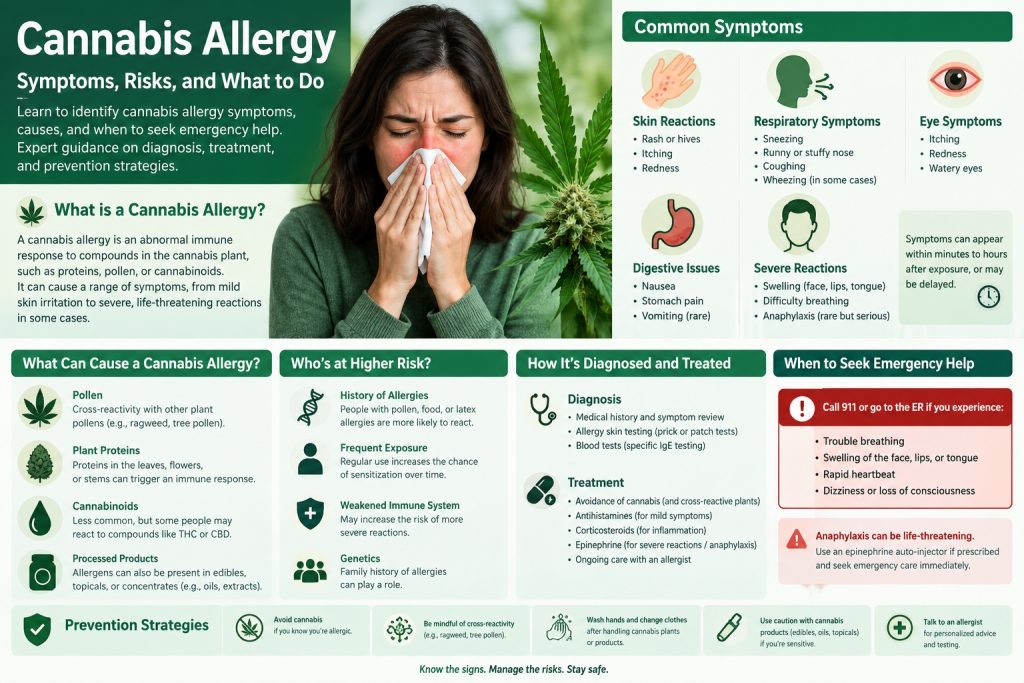
A stuffy nose after someone lights a joint may seem like ordinary smoke irritation. But what if you also develop itchy eyes, hives, wheezing, or swelling around your mouth? A cannabis allergy can occur after inhaling, touching, or ingesting cannabis and hemp-derived products. Although research is still catching up with expanding legalization and commercial use, documented reactions range from mild contact rashes to life-threatening anaphylaxis.
That uncertainty makes cannabis reactions especially confusing. Smoke itself irritates the airways. THC can cause a racing heart, dizziness, and panic. Edibles contain unrelated allergens such as milk, nuts, or soy. Cannabis flower may also carry mould. In other words, feeling unwell around marijuana doesn’t automatically mean you’re allergic to the plant, but genuine allergy shouldn’t be brushed off, either.
This evidence-based review explains how to recognize cannabis allergy symptoms, when to seek emergency help, where exposure can occur, and what an allergist can realistically test. It also covers cross-reactivity with certain foods, workplace exposure, CBD products, and practical prevention. Because cannabis allergy testing remains limited and no consumer product can reliably label itself “hypoallergenic,” the safest plan depends on your particular reaction, not internet guesswork.
Important: This article provides general education, not a diagnosis. If you’re having trouble breathing, your throat feels tight, or you feel faint after cannabis exposure, use prescribed epinephrine and call 911 immediately.
Key Takeaways
- A cannabis allergy is an immune reaction to Cannabis sativa proteins that can cause symptoms from mild hives to life-threatening anaphylaxis after inhaling, touching, or ingesting cannabis products.
- Recognizing cannabis allergy symptoms such as itchy eyes, nasal congestion, hives, and wheezing is crucial, especially distinguishing them from smoke irritation, THC effects, or panic responses.
- If severe symptoms like breathing difficulty, throat swelling, or faintness occur, use prescribed epinephrine immediately and seek emergency medical help; antihistamines are not a substitute.
- Diagnosis relies on detailed clinical history and specialist allergy testing since no standardized cannabis allergy test exists, and self-testing at home can be dangerous.
- Avoidance of cannabis exposure, including secondhand smoke and contaminated products, is the primary treatment, with workplace controls and emergency plans essential for high-risk individuals.
- Cross-reactivity with certain foods may occur but does not justify blanket food avoidance; consult an allergist for personalized guidance and testing.
What Is a Cannabis Allergy?
A cannabis allergy is an immune reaction to proteins in Cannabis sativa, the species encompassing marijuana and hemp. Your immune system mistakenly treats an otherwise harmless plant protein as a threat. In immediate allergy, immunoglobulin E, better known as IgE, can trigger histamine and other inflammatory chemicals, producing symptoms such as sneezing, hives, swelling, or wheezing.
You may react after breathing pollen or plant particles, handling flower, working near plants, or consuming a cannabis-derived ingredient. Delayed allergic contact dermatitis can follow skin exposure and involves a different immune pathway. Reactions have been reported with marijuana, industrial hemp, and some CBD products: THC isn’t necessarily the allergen.
The term should not be used for every unpleasant cannabis experience. Intoxication, anxiety, smoke irritation, and allergy can feel similar, yet they have different causes and safety implications.
How Common Is It, and Who May Be at Risk?
There is no reliable population-wide prevalence figure. Cannabis has historically been illegal in many places, patients may hesitate to report use, and standardized testing is scarce. Reviews by international allergy specialists, including the Canadian Society of Allergy and Clinical Immunology, describe cannabis allergy as an emerging condition whose true frequency is probably underestimated.
Potentially higher-risk groups include:
- Cannabis growers, trimmers, processors, dispensary staff, and laboratory workers
- People with frequent direct exposure to plants or airborne plant dust
- People with asthma, allergic rhinitis, eczema, or other plant-food allergies
- Individuals exposed to cannabis pollen in cultivation regions
Prior tolerance doesn’t guarantee future tolerance. Allergy can emerge after repeated exposure, although exposure alone doesn’t mean you’ll become allergic. Because data remain limited, risk factors are clues, not a scoring system.
When a Reaction to Cannabis Is a Medical Emergency
A suspected cannabis allergy becomes an emergency when it affects breathing or circulation, or when symptoms rapidly involve several body systems. Don’t wait to see whether a severe reaction “settles down.” Anaphylaxis can worsen within minutes, and a person who initially looks fairly well may deteriorate quickly.
If symptoms are severe, stop the exposure if you can do so safely. Move away from smoke or airborne plant material, but don’t delay treatment to shower, change clothes, or investigate the product. Call 911 or your local emergency number, and follow the person’s prescribed allergy action plan.
Anaphylaxis Warning Signs: Breathing Trouble, Throat Swelling, and Faintness
Warning signs can include:
- Noisy or difficult breathing, wheezing, or persistent coughing
- Throat tightness, trouble swallowing, or a hoarse voice
- Swelling of the tongue, lips, face, or throat
- Weakness, confusion, collapse, or a feeling of impending doom
- Pale, clammy skin; weak pulse; or sudden faintness
- Repetitive vomiting or severe abdominal cramps, particularly with skin or breathing symptoms
- Widespread hives combined with symptoms elsewhere in the body
Anaphylaxis does not always cause hives. A sudden breathing or circulation problem after likely allergen exposure can be enough to warrant emergency action. Someone who has inhaled THC may also feel anxious or lightheaded, but it’s unsafe to assume panic when throat swelling, wheezing, blue-grey lips, or collapse is present.
Use Prescribed Epinephrine and Call Emergency Services: Antihistamines Are Not a Substitute
If you’ve been prescribed an epinephrine auto-injector and your action plan indicates anaphylaxis, use it immediately in the outer mid-thigh. It can generally be given through clothing. Then call 911, even if you improve, because symptoms can return and further treatment may be required.
Epinephrine is the first-line treatment for anaphylaxis. Antihistamines may reduce itching or hives, but they act too slowly and don’t reliably reverse throat swelling, low blood pressure, or severe bronchospasm. They must never replace epinephrine.
Lie down with your legs elevated unless breathing is easier sitting up; if vomiting, lie on your side. Don’t stand or walk suddenly. A second epinephrine dose may be appropriate according to your prescribed plan and device instructions while help is coming.
Cannabis Allergy Symptoms: What to Look For
Cannabis allergy symptoms depend on the route of exposure and immune mechanism. Your reaction may stay localized, itchy fingers after trimming plants, for example, or affect several systems. The most useful clues are repeatability, timing, and a consistent connection to a particular exposure.
Keep in mind that mild symptoms during one episode don’t guarantee that every future reaction will remain mild. Conversely, one coughing spell in a smoky room doesn’t establish an allergy. Record what happened rather than trying to assign yourself a diagnosis.
Sneezing, Itchy Eyes, Nasal Congestion, Coughing, and Wheezing
Airborne pollen, plant dust, or aerosolized material may produce symptoms resembling seasonal allergies: rapid sneezing, a runny or blocked nose, watery red eyes, and an itchy nose, palate, or throat. Direct eye exposure can cause pronounced redness and swelling.
Lower-airway symptoms include coughing, chest tightness, shortness of breath, and wheezing. These deserve particular attention if you have asthma. Smoke and vapour can trigger the same respiratory complaints without an IgE-mediated allergy, so symptoms alone can’t reliably separate the two.
A practical clue is whether reactions also occur around unsmoked flower, living plants, or plant handling. Still, don’t deliberately repeat the exposure to find out. An allergist can assess the pattern more safely.
Hives, Itching, Swelling, and Contact Dermatitis
Immediate skin reactions may include raised, itchy welts; generalized itching; or swelling around the eyelids, lips, hands, or face. Contact urticaria often appears quickly where raw plant material touched your skin. It may remain local or accompany respiratory and systemic symptoms.
Contact dermatitis usually behaves differently. Red, itchy, dry, cracked, or blistered skin can develop hours or days after exposure, particularly with repeated occupational handling. Resin, plant sap, and ingredients in topical products are possible culprits. Gloves can help, but the wrong glove or trapped sweat may cause a separate rash, skin is annoyingly dramatic that way.
Photograph a visible rash and note where it began. By the time you reach an appointment, the evidence may otherwise have vanished.
Nausea, Vomiting, and Abdominal Pain After Ingestion
An allergic reaction after eating an edible or hemp-containing food can cause nausea, abdominal cramping, diarrhea, or vomiting. Gastrointestinal symptoms are more concerning for anaphylaxis when they begin abruptly and occur with hives, swelling, breathing trouble, or faintness.
But several nonallergic problems are more common. Excess THC can cause anxiety, dizziness, and vomiting: chronic heavy cannabis use is associated with cannabinoid hyperemesis syndrome, which often involves recurrent vomiting and temporary relief from hot showers. Food poisoning is another possibility.
The edible’s complete ingredient list matters. A brownie may contain milk, egg, wheat, soy, peanuts, or tree nuts. Save the packaging and batch information for your clinician rather than assuming cannabis was responsible.
When Symptoms Start: Immediate Reactions Versus Delayed Skin Reactions
IgE-mediated reactions commonly begin within minutes and usually within a couple of hours of exposure. Timing may be less obvious when airborne exposure is continuous or when an edible digests slowly. Rapid onset of hives, swelling, wheezing, or vomiting is particularly informative.
Delayed contact dermatitis generally appears later, often several hours to a few days after skin contact, and may persist after exposure ends. Irritant dermatitis can look nearly identical, especially when frequent handwashing, solvents, plant fibres, and gloves are involved.
Create a simple timeline: product, route, amount, start time, symptoms, treatment, and duration. Include exercise, alcohol, medications, and food eaten nearby because these can change reaction severity. That little note on your phone may be more useful than a blurry memory six weeks later.
What Causes Cannabis Allergies, and How Does Exposure Happen?
Cannabis contains numerous proteins capable of prompting immune recognition, but researchers haven’t fully mapped which ones matter across different populations and products. Exposure can occur through inhalation, skin contact, ingestion, or accidental transfer from contaminated hands to the eyes and mouth.
Legal cannabis complicates the picture, in a useful but messy way. Flower, concentrates, oils, foods, cosmetics, and hemp seed ingredients differ substantially. Manufacturing processes may reduce some proteins while introducing flavours, carrier oils, or contaminants. A reaction to one item hence doesn’t prove that every ingredient or every cannabis product played the same role.
Cannabis Pollen and Plant Proteins, Including Can s 3
Male cannabis plants release windborne pollen, which can travel beyond cultivation areas and provoke rhinitis, conjunctivitis, or asthma-like symptoms in sensitized people. Female flowers and other plant tissues also contain potentially allergenic proteins, so pollen isn’t the only concern.
The best-known characterized allergen is Can s 3, a nonspecific lipid transfer protein, or nsLTP. It is clinically important in parts of Europe and is associated with cross-reactions to plant foods. Other reported cannabis allergens include profilin, a pathogenesis-related protein, and proteins also found in latex or other plants. Their relevance varies geographically and individually.
Cannabis potency labels measure cannabinoids such as THC and CBD, not allergenic protein content. A “high-CBD” or low-THC label therefore tells you almost nothing about allergy risk.
Smoking, Vaping, and Secondhand Exposure
Smoking can expose you to cannabis proteins and particles while simultaneously irritating your eyes and respiratory tract with combustion products. Secondhand smoke may hence cause allergic symptoms, irritant symptoms, or both. People with asthma can react even without demonstrable cannabis sensitization.
Vaping avoids combustion but isn’t an allergy workaround. Aerosols can irritate airways, and cartridges may contain terpenes, flavourings, propylene glycol, vegetable glycerin, or other ingredients. Illicit or poorly characterized products add further uncertainty. The investigation of the 2019 US EVALI outbreak, for example, linked many cases to THC vaping products containing vitamin E acetate, an injury mechanism, not a cannabis allergy.
If another person’s use triggers symptoms, ventilation may not be enough. A genuinely smoke- and vapour-free space is more dependable.
Edibles, Hemp Seeds, CBD Products, and Topicals: Potential Allergen Sources
Edibles can expose you to residual cannabis proteins as well as conventional food allergens. Hemp seeds and hemp seed protein are used in granola, protein powders, nondairy drinks, and bakery products: allergic reactions have been reported, although they appear uncommon. Refining may change protein content, but processing isn’t consistent enough to guarantee safety.
CBD isolate, broad-spectrum oil, and full-spectrum extract aren’t interchangeable. Their plant-protein content may differ, and labels don’t provide validated allergy thresholds. Products may also contain coconut-derived MCT oil, sesame, flavourings, beeswax, lanolin, or fragrances.
Topicals deserve similar scrutiny. A rash beneath a CBD balm could reflect cannabis, fragrance, preservatives, or another botanical. Bring the exact ingredient list to your appointment. “Natural” is a marketing category, not an allergy safety certificate.
Handling Plants and Occupational Exposure in Cannabis Workplaces
Growers and processors may encounter pollen, plant dust, resin, mould, cleaning chemicals, pesticides, and high airborne particle levels. Repetitive trimming also increases skin exposure. The result can be rhinitis, asthma symptoms, hives, or dermatitis, with several hazards operating at once.
If work appears connected to symptoms, report the pattern early and ask about an occupational-health evaluation. Useful controls follow the hierarchy of controls: isolate dusty tasks, improve local exhaust ventilation, automate processes, strengthen housekeeping, and then select suitable protective equipment. A loose mask and heroic optimism aren’t an exposure-control program.
In Canada, you can raise workplace health concerns with your provincial workplace safety regulator, such as WorkSafeBC in British Columbia, and the Canadian Centre for Occupational Health and Safety (CCOHS) offers free guidance on work-related asthma and exposure controls. Don’t take plant material home for testing; instead, preserve product names, task records, safety data sheets, and symptom timing.
Cannabis Allergy vs. Irritation, Side Effects, and Other Reactions
Not every reproducible reaction is allergic. Clinicians distinguish allergy from irritation, expected drug effects, toxicity, asthma exacerbation, and responses to another ingredient. That distinction affects everything from emergency planning to whether avoidance must extend across product categories.
Compare the pattern rather than relying on one symptom:
| Pattern | More suggestive clues |
|---|---|
| Allergy | Itching, hives, swelling, rapid sneezing, wheezing, repeatable exposure link |
| Irritation | Burning eyes or throat, cough proportional to smoke or vapour |
| THC effect | Euphoria, altered perception, dry mouth, impaired coordination |
| Panic response | Fear, tingling, fast breathing, racing heart without objective swelling or hives |
These patterns can overlap. You can experience THC-related anxiety and an allergic reaction during the same episode.
Smoke Irritation, Asthma Flare-Ups, and THC-Related Anxiety
Cannabis smoke contains fine particles and airway irritants. It can provoke coughing, burning, mucus, and chest discomfort in people who aren’t allergic. If you have asthma, smoke or aerosol may trigger bronchospasm: wheezing is medically important regardless of whether allergy caused it.
THC can raise heart rate and alter perception. A high dose, particularly from a delayed-onset edible, may produce panic, dizziness, nausea, or a sense that breathing feels “wrong.” That experience can be terrifying, but it doesn’t typically produce hives or visible tongue swelling.
Don’t use this distinction to dismiss emergency signs. If breathing is difficult, symptoms are escalating, or you’re unsure whether anaphylaxis is occurring, seek urgent help. Later, a clinician can sort through the less dramatic details.
Reactions to Mould, Fragrances, Additives, or Other Product Ingredients
Cannabis can become contaminated with moulds, and indoor cultivation environments may carry substantial fungal exposure. Someone sensitized to mould might react around a contaminated batch or workplace without being allergic to cannabis itself. Laboratory testing on retail products varies by jurisdiction and doesn’t eliminate every possibility.
Vape liquids, gummies, and topicals introduce long ingredient lists: flavourings, dyes, preservatives, carrier oils, botanical extracts, and fragrances. Even rolling papers or cleaning products used on equipment may matter. A reaction limited to one mango-flavoured cartridge but absent around raw plant material points the investigation in a different direction.
Save labels, receipts, lot numbers, and photos. Don’t rely on strain names, “Blue Dream” from two producers isn’t a standardized medical formulation and may differ in cultivation, processing, contaminants, and added terpenes.
Cannabis and Food Cross-Reactivity: Understanding the Connection
Cross-reactivity occurs when an antibody recognizes structurally similar proteins from different sources. In cannabis allergy, Can s 3 may cross-react with nsLTPs found in various fruits, vegetables, nuts, cereals, wine, and beer. This has been described as cannabis-fruit-and-vegetable syndrome.
Symptoms may range from mouth itching to hives or systemic reactions. Unlike classic birch-pollen oral allergy syndrome, lipid transfer proteins can resist heat and digestion, so cooked foods may not always be tolerated. Alcohol, exercise, and anti-inflammatory medicines can sometimes act as cofactors that increase reaction severity.
Still, cross-reactivity is not automatic. A positive sensitization result doesn’t prove you’ll react when eating a food, and regional patterns differ.
Peach, Tomato, Hazelnut, and Other Reported Links: Why Blanket Food Avoidance Is Not Recommended
Reported associations include peach, tomato, hazelnut, walnut, apple, citrus fruits, banana, and some cereal products. Peach nsLTP, known as Pru p 3, is especially relevant in Mediterranean populations. Latex and tobacco associations have also been discussed, although the underlying allergens and clinical importance aren’t identical for everyone.
You shouldn’t remove a dozen nutritious foods merely because they appear on an online cross-reactivity chart. Unnecessary restriction can create nutritional, financial, and quality-of-life costs, and it may muddy the diagnostic picture.
Instead:
- Keep eating foods you already tolerate unless your clinician advises otherwise.
- Record any reproducible food symptoms and possible cofactors.
- Ask an allergist whether targeted testing or a supervised food challenge is appropriate.
- If a food has previously caused a serious reaction, don’t retry it at home.
How Is Cannabis Allergy Diagnosed?
Diagnosis begins with a detailed clinical history. There is no universally available, standardized test that can independently confirm or exclude cannabis allergy. An allergist weighs your exposure pattern, symptom timing, examination, asthma status, and possible alternative allergens.
The evaluation may also consider allergic rhinitis, contact dermatitis, mould allergy, food allergy, vocal-cord dysfunction, panic, and adverse cannabinoid effects. Sometimes the most honest outcome is “suspected but unconfirmed.” That may feel unsatisfying, but it’s safer than false certainty from an unvalidated test.
Look for a certified allergist (in Canada, a specialist in clinical immunology and allergy, usually seen by referral) familiar with plant allergens or occupational disease. If symptoms occur at work, occupational medicine and dermatology may also contribute.
What an Allergist Needs to Know: Exposure, Products, Symptoms, and Timing
Before your visit, build a compact exposure diary. Include:
- Product type, brand, strain name, and batch when known
- Flower, edible, oil, vape, hemp food, or topical formulation
- Whether you inhaled, ingested, touched, or encountered it secondhand
- Time from exposure to first symptom
- Skin, eye, nose, breathing, digestive, and circulation symptoms
- Treatments used and whether they helped
- Other foods, alcohol, exercise, medicines, pets, moulds, or workplace tasks
Photos of hives and swelling are valuable. So are emergency-department records and ingredient labels. Be candid about route and amount: your allergist isn’t there to police you. Accurate details can separate a true cannabis allergy from a brownie ingredient, excessive THC dose, or workplace irritant.
Skin-Prick and Blood Tests: Limited Availability, Standardization, and Interpretation
Some specialty centres use prick-to-prick testing with plant material or locally prepared cannabis extracts. However, extracts vary, legal handling can be difficult, and nonstandardized material may produce inconsistent results. Testing with fresh plant matter also presents occupational and safety concerns.
Research assays measuring cannabis-specific IgE or responses to components such as Can s 3 exist, but access is limited and performance differs by population. Cross-reactive carbohydrate determinants and other plant sensitizations may complicate interpretation. A positive result indicates sensitization, not necessarily clinical allergy: a negative result may not exclude it.
Patch testing can be considered for delayed contact dermatitis, often focusing on product ingredients as well as the plant. Your clinical history remains the anchor, testing supports it rather than replacing it.
Why You Should Not Test Yourself by Reusing Cannabis at Home
A home “challenge” can turn a manageable question into an ambulance ride. The amount of allergen in flower, oils, and foods isn’t standardized, and a previous mild reaction doesn’t predict that the next one will be mild. Smoking also adds airway irritation, making the result hard to interpret.
Don’t rub cannabis on your skin, inhale a small puff, or nibble an edible to test tolerance. Online allergy panels and hair tests aren’t substitutes for a medical evaluation, either.
When a challenge is genuinely necessary, an allergist decides whether it can be justified and conducted with measured dosing, observation, and emergency equipment. In many cases, the combination of a convincing history and avoidable exposure makes deliberate challenge unnecessary.
Cannabis Allergy Treatment and Prevention
The central treatment for a confirmed or strongly suspected cannabis allergy is avoiding the relevant exposure. That sounds simple until cannabis appears in a roommate’s vape, a restaurant dessert, a hand cream, or your workplace air.
Your plan should match the severity and route of previous reactions. Someone with delayed dermatitis from trimming plants needs different protections than someone who developed throat swelling after a hemp protein shake. Ask your clinician to document suspected triggers, safe symptom treatments, and clear emergency thresholds.
There is currently no established cannabis desensitization protocol for routine clinical use. Symptom medication may help, but it doesn’t make continued exposure risk-free.
Avoiding Triggering Products, Secondhand Exposure, and Workplace Allergens
Read ingredient labels every time, particularly on supplements, protein powders, CBD oils, cosmetics, and edibles. Manufacturers can reformulate products. Because “THC-free” refers to cannabinoid content rather than allergenic proteins, it shouldn’t be treated as an allergy claim.
At home, ask others to use cannabis outside and away from doors or windows: if secondhand exposure causes significant reactions, complete avoidance may be necessary. Wash hands and change outer clothing after plant handling. Don’t share grinders, pipes, preparation surfaces, or utensils contaminated with cannabis residue.
At work, request a formal hazard assessment rather than relying only on personal protective equipment. Ventilation, enclosed processing, wet-cleaning methods, and task changes often control exposure more effectively. Discuss accommodations with occupational health, especially if asthma or systemic symptoms are developing.
Medicines for Mild Symptoms and Clinician-Guided Asthma Management
For isolated mild nasal or skin symptoms, a clinician may recommend a non-sedating oral antihistamine, antihistamine eye drops, a nasal corticosteroid, or appropriate topical therapy. Medication choice depends on your health conditions, pregnancy status, other drugs, and whether the reaction is immediate or delayed.
Antihistamines don’t prevent anaphylaxis and shouldn’t be used to “pre-treat” continued cannabis exposure. Sedating products can also compound cannabis-related impairment.
If you have asthma, follow a clinician-written asthma action plan. Keep prescribed reliever medication accessible and use controller therapy consistently when indicated. Increasing cough, nighttime waking, activity limitation, or frequent rescue-inhaler use warrants reassessment. Severe breathing symptoms after allergen exposure may require epinephrine as well as asthma treatment: your personalized plan should spell that out.
Who May Need an Epinephrine Auto-Injector and an Emergency Action Plan?
An allergist may prescribe epinephrine if you’ve experienced anaphylaxis, respiratory or cardiovascular symptoms, significant throat swelling, or another reaction suggesting meaningful future risk. Your exposure likelihood, asthma control, distance from emergency care, and diagnostic uncertainty may influence the decision.
If prescribed one:
- Carry it consistently, not in a car’s temperature extremes.
- Learn the specific device and check its expiration date.
- Teach family, coworkers, or friends how to help.
- Keep a written action plan available.
- Seek emergency care after using it.
Many clinicians recommend access to two doses because symptoms may persist or recur. Medical identification jewellery can also help. Most importantly, don’t let embarrassment about cannabis delay treatment, emergency teams need accurate information, not a creatively edited version of events.
Frequently Asked Questions About Cannabis Allergy
Cannabis allergy research is developing, so straightforward questions sometimes have frustratingly qualified answers. The practical rule is to respect a repeatable reaction, avoid experimentation, and seek specialist guidance when symptoms involve breathing, widespread hives, swelling, vomiting, or faintness.
Can You Develop a Cannabis Allergy After Years Without Symptoms?
Yes. Allergic sensitization can arise after repeated exposure, meaning you may tolerate cannabis for years before symptoms appear. Changes in exposure can matter too: starting cultivation work, handling larger quantities, switching from occasional use to daily use, or encountering pollen may provide a different dose and route.
A new reaction doesn’t automatically prove a new allergy, however. Product ingredients, mould contamination, asthma, and dose-related THC effects should be considered. Document exactly what changed and avoid the suspected trigger pending evaluation, especially after a systemic response.
Is Any Cannabis Strain or THC-Free CBD Product Safe If You Have an Allergy?
No strain can currently be declared universally safe for someone with cannabis allergy. Strain names don’t standardize allergenic proteins, and THC or CBD percentages measure cannabinoids rather than allergens. Indica-versus-sativa labelling doesn’t solve that problem.
A THC-free CBD product might still contain cannabis-derived proteins, trace ingredients, carrier oils, flavours, or topical allergens. Highly purified products may differ in protein content, but there isn’t a validated label threshold that guarantees safety. Don’t switch products as an unsupervised test. Ask your allergist whether avoidance should include all cannabis- and hemp-derived products or only a documented formulation.
Is There a Cure or Proven Immunotherapy for Cannabis Allergy?
There is no widely accepted, standardized allergen immunotherapy or cure for cannabis allergy. Published research and occasional case-based approaches don’t amount to a validated desensitization treatment you can obtain routinely. Avoidance, symptom control, asthma management, workplace exposure reduction, and emergency preparedness remain the main tools.
That’s not a reason to panic. It’s a reason to make a precise plan. If your symptoms suggest a cannabis allergy, stop guessing, gather your labels and timeline, and arrange an allergist evaluation. Call 911 for breathing trouble, throat swelling, collapse, or rapidly progressing multisystem symptoms, and use prescribed epinephrine without waiting for an antihistamine to work.
You don’t need to prove toughness or recreate the reaction. The sensible next step is smaller and safer: identify the likely exposure, protect your lungs and skin, and get advice tailored to what actually happened to you.