
Nov
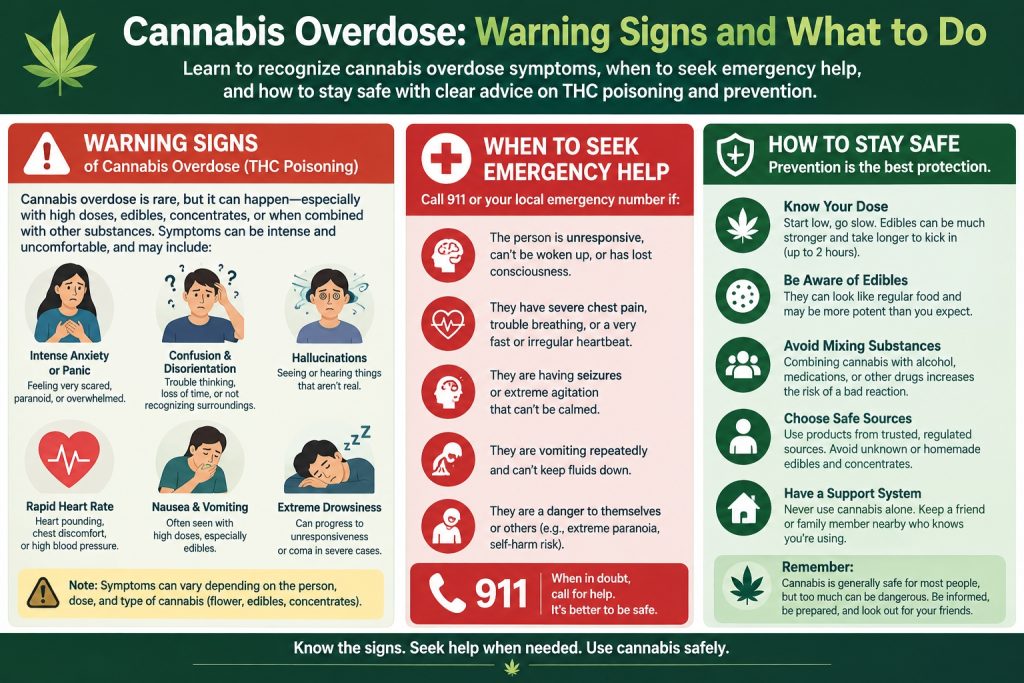
A cannabis overdose rarely looks like the dramatic poisoning scene people imagine. More often, it begins with someone saying, “I don’t feel right,” followed by panic, vomiting, confusion, a pounding heart, or overwhelming sleepiness. The experience is sometimes called greening out, but that casual phrase can minimize a genuinely frightening, and occasionally dangerous, reaction.
A cannabis overdose means consuming enough cannabis to cause harmful intoxication or poisoning. It doesn’t automatically mean a fatal dose, and deaths caused solely by THC appear to be exceptionally rare. Still, cannabis can contribute to serious outcomes through impaired driving, falls, aspiration, heart complications, severe agitation, or exposure to another substance. Children face particular risk because a small amount of a high-potency edible can deliver a large dose relative to body size.
This guide explains how to recognize cannabis poisoning, when to call emergency services, what clinicians may do, and how long symptoms commonly last. It covers marijuana and THC products, including edibles, vape oils, concentrates, and delta-8 THC, while distinguishing them from synthetic cannabinoids such as K2 or Spice, which can be substantially more unpredictable.
If symptoms are happening now, don’t wait for an article to settle the question. Call 911 for difficulty breathing, a seizure, collapse, chest pain, severe agitation, or an inability to wake the person. In Canada, call your regional poison centre at 1-844-POISON-X (1-844-764-7669): Quebec residents can call the Centre antipoison du Québec at 1-800-463-5060. Poison specialists can assess the product, amount, timing, symptoms, and person’s age or health conditions, and tell you what to do next.
Key Takeaways
- A cannabis overdose involves consuming enough THC to cause harmful intoxication, with symptoms ranging from panic and dizziness to severe confusion and reduced consciousness.
- Immediate emergency help is crucial if there are signs like trouble breathing, seizures, unresponsiveness, chest pain, or severe agitation during a cannabis overdose.
- Children are particularly vulnerable to cannabis poisoning, so any suspected exposure in children requires prompt medical or poison centre advice.
- Edibles pose a higher overdose risk due to delayed onset of effects; wait at least two hours before redosing and always use products with clear THC labelling.
- There is no specific antidote for THC poisoning; treatment is supportive, focusing on monitoring vital signs and managing symptoms safely until recovery.
- To reduce overdose risk, use low doses, avoid mixing substances, never drive impaired, and securely store cannabis products away from children and pets.
What to Do During a Suspected Cannabis Overdose
Your first job isn’t determining exactly how many milligrams were consumed. It’s checking whether the person is breathing normally, can respond to you, and is protected from immediate harm.
Move dangerous objects away, keep the environment quiet, and look for packaging. If you can do so safely, note the product name, THC strength, amount missing, time of exposure, and whether alcohol, medications, or other drugs may be involved. Don’t scold or interrogate the person. A calm voice is far more useful when paranoia has turned an ordinary living room into what feels like a five-alarm emergency.
Call Emergency Services for Trouble Breathing, Unresponsiveness, Seizures, or Chest Pain
Call 911 immediately if the person:
- Has trouble breathing, slow or irregular breathing, or blue/grey lips
- Cannot be awakened, collapses, or stops responding
- Has a seizure
- Reports chest pain or severe pressure
- Shows stroke-like symptoms, such as one-sided weakness
- Is dangerously agitated, violent, or at risk of self-harm
- Has repeated vomiting with reduced alertness
- May have taken opioids, synthetic cannabinoids, or an unknown product
Tell the dispatcher what you know without hiding cannabis use. Accurate information helps responders choose safer treatment: it isn’t the moment for creative storytelling. Follow the dispatcher’s CPR instructions if breathing stops. If a seizure occurs, protect the head and clear nearby objects, but don’t restrain the person or put anything in their mouth.
Contact a Poison Centre: Canadian Resources
For concerning symptoms without an obvious life-threatening emergency, call a poison centre promptly:
| Location | Resource | Contact |
|---|---|---|
| Most of Canada | Your regional poison centre, through 1-844-POISON-X | 1-844-764-7669 |
| Quebec | Centre antipoison du Québec | 1-800-463-5060 |
| Nunavut | Your local health centre or public health unit | Community numbers |
These services provide free, case-specific advice, 24 hours a day. Have the package nearby, but don’t delay calling because the label is missing or confusing. For a child, an older adult, a pregnant person, or anyone with significant heart, lung, or psychiatric illness, seek advice early. Call emergency services rather than a poison centre first when severe warning signs are present.
While Waiting for Help: Stay With the Person, Monitor Breathing, and Do Not Induce Vomiting
Stay nearby and repeatedly check breathing and responsiveness. Keep the person somewhere quiet and away from stairs, traffic, water, balconies, and cooking equipment. If they are vomiting but awake, help them sit forward. If they are unconscious but breathing, place them on their side in the recovery position unless an injury makes movement unsafe.
Do not induce vomiting. Don’t give coffee, a cold shower, alcohol, or random supplements as a “detox.” These won’t neutralize THC and may increase choking, falls, dehydration, or distress. Avoid giving food or drink to someone who is very drowsy or struggling to swallow.
Reassure an alert person with simple facts: “You’re safe. I’m staying with you. Help is coming.” Keep the product container for clinicians.
Cannabis Overdose Signs and Symptoms
Cannabis poisoning can affect perception, coordination, heart rate, blood pressure, digestion, and consciousness. Symptoms vary widely, so don’t use one person’s previous experience as a ruler for everyone else.
A mildly uncomfortable adult may remain alert and improve in a calm setting. A child who becomes unusually floppy or sleepy after possible edible exposure needs prompt professional advice. The product also matters: regulated THC, an unknown vape cartridge, and synthetic cannabinoids don’t share the same risk profile.
Common Symptoms: Anxiety, Panic, Dizziness, Nausea, and a Racing Heart
Common signs of excessive THC include:
- Anxiety, panic, paranoia, or a sense of impending doom
- Dizziness, poor balance, weakness, or faintness
- Nausea or vomiting
- Dry mouth and red eyes
- Trembling or sweating
- Fast heart rate or noticeable palpitations
- Altered time perception and difficulty concentrating
- Sleepiness, slowed reactions, and impaired coordination
Symptoms can feed one another. A racing heart may trigger panic: panic then makes the heartbeat feel even more alarming. Sit the person down, reduce noise and stimulation, and discourage pacing, especially near stairs.
Even familiar symptoms deserve medical attention when they’re intense, prolonged, worsening, or accompanied by chest pain, breathing problems, fainting, severe vomiting, or unusual neurological changes.
Severe Symptoms: Extreme Confusion, Hallucinations, and Reduced Consciousness
Severe intoxication may cause profound disorientation, hallucinations, delusions, inability to walk safely, extreme agitation, or markedly reduced consciousness. Some people become nearly unresponsive: others behave unpredictably because they can’t reliably interpret their surroundings.
Don’t assume hallucinations or bizarre behaviour are “just weed.” Acute psychosis, head injury, low blood sugar, stroke, medication toxicity, and exposure to synthetic cannabinoids can look similar. Call emergency services when the person can’t be kept safe, doesn’t recognize familiar people, is threatening self-harm, or can’t be awakened normally.
Reduced alertness creates another danger: vomit can enter the lungs. Monitor breathing, position an unconscious but breathing person on their side when safe, and give emergency responders an honest account of all possible substances.
THC Poisoning in Children: Warning Signs and Why Any Suspected Exposure Needs Prompt Advice
Children may develop pronounced symptoms after eating what looks like an ordinary gummy, brownie, or chocolate. Warning signs include unusual sleepiness, poor balance, confusion, vomiting, limpness, slurred speech, abnormal breathing, agitation, dilated pupils, or difficulty waking.
Any suspected childhood cannabis exposure warrants prompt poison-centre or medical advice, even if the child initially appears well. Edible effects may be delayed, and young children can’t reliably explain what they feel. Call 911 for breathing trouble, seizure, collapse, or unresponsiveness.
Don’t wait for “proof.” Check wrappers, trash, handbags, and nearby containers, but call while gathering details. Never punish a child for telling you what happened. And don’t transport a severely impaired child yourself if safe ambulance care is available: deterioration in the back seat is a situation nobody wants.
Can You Overdose on Weed?
Yes. You can consume more cannabis than your body can tolerate and experience clinically significant poisoning. The word overdose describes excessive exposure and harmful effects: it doesn’t require death.
This distinction matters. Saying “weed can’t cause an overdose” may discourage someone from seeking help. Saying every bad high is likely to be fatal is equally inaccurate. Most uncomplicated THC intoxication resolves with time and supportive care, but severe symptoms and indirect harms are real.
Cannabis Intoxication, THC Poisoning, and Greening Out: What These Terms Mean
Cannabis intoxication is the broad clinical term for temporary mental and physical effects after cannabis use. These effects range from the intended high to marked impairment.
THC poisoning or cannabis overdose generally describes exposure producing harmful symptoms that may require poison-centre guidance, monitoring, or medical treatment. Public-health agencies often use poisoning when discussing accidental pediatric edible exposures.
Greening out is slang for an unpleasant episode involving nausea, sweating, dizziness, panic, vomiting, or feeling faint after too much cannabis. It isn’t a diagnosis and tells you nothing reliable about severity.
The practical rule? Respond to the symptoms, not the label. A person with chest pain or reduced consciousness needs assessment whether friends call it greening out, a bad trip, or “probably nothing.”
Can Cannabis Overdose Be Fatal? Distinguishing Toxicity, Indirect Harms, and Detection After Death
Fatal poisoning from THC alone appears exceedingly uncommon, and a universally accepted lethal human dose hasn’t been established. That doesn’t make cannabis harmless. Intoxication can contribute to fatal crashes, drowning, falls, aspiration, dangerous behaviour, and cardiovascular events in susceptible people. Products contaminated with opioids or containing synthetic cannabinoids create different, and potentially greater, risks.
Finding THC metabolites after death doesn’t prove cannabis caused the death. These compounds can remain detectable long after impairment has ended, so coroners and medical examiners consider toxicology alongside injuries, medical history, scene evidence, and other substances.
The useful takeaway isn’t “safe” versus “deadly.” It’s that direct fatal THC toxicity is rare, while impairment and complications can still become emergencies. If someone has severe symptoms, treat what you see instead of debating statistics.
How Much THC Is Too Much?
There is no single THC dose that guarantees either comfort or poisoning. A package marked “100 mg” might represent ten servings, one serving, or, on an inaccurate unregulated label, something else entirely.
For context, Canada caps a legal edible package at 10 mg of THC in total, while cautious beginners may experience substantial effects from 2.5 mg. These are reference points, not promises of safety. An amount tolerated by a frequent adult consumer could severely affect a new user or a child.
Why There Is No Universal Overdose Threshold: Potency, Tolerance, Age, and Health
Response depends on dose, prior exposure, body size, age, metabolism, product formulation, and route of use. Anxiety disorders, heart disease, pregnancy, frailty, and interactions with sedating medicines may also change risk.
Tolerance complicates comparisons. Someone who uses high-THC concentrates daily may report modest effects at a dose that overwhelms a beginner. But tolerance doesn’t eliminate impaired driving, cardiovascular strain, dependence, or contamination risk.
Labels aren’t always dependable outside regulated markets, either. A “500 mg” candy may describe the entire bag rather than each piece, or may simply be wrong. Start with the lowest available dose, use only products with clear testing and serving information, and don’t treat a friend’s tolerance as your dosing guide. Your nervous system didn’t read their résumé.
Why Edibles Increase Risk: Delayed Effects, Serving Sizes, and Repeat Dosing
Edibles are a classic setup for accidental overconsumption. Effects may not become obvious for 30 minutes to two hours, sometimes longer, while the liver converts THC into 11-hydroxy-THC, an active metabolite associated with strong, prolonged effects.
The familiar mistake goes like this: you eat one gummy, feel nothing after 40 minutes, take two more, and then all three doses arrive like late buses travelling in a convoy.
Read the total THC content and the amount per piece. Don’t divide a product unless portions can be measured reliably. Wait at least the label-recommended interval, often two hours or more, before even considering another dose. Longer caution may be appropriate after a large meal, with unfamiliar products, or for beginners. Keep edibles in original, child-resistant packaging rather than a cookie jar or snack bag.
Delta-8 THC, Concentrates, and Synthetic Cannabinoids: Important Differences in Risk
Delta-8 THC is psychoactive and can cause intoxication, confusion, vomiting, anxiety, and reduced consciousness. Manufacturing byproducts and inconsistent labelling are additional concerns in poorly regulated products. “Hemp-derived” does not mean non-intoxicating or risk-free: in Canada, Health Canada treats delta-8 THC as cannabis under the Cannabis Act.
Concentrates, wax, shatter, dab products, and high-potency vape oils, can deliver far more THC per inhalation than traditional cannabis flower. That makes dose control harder, particularly for new users.
Synthetic cannabinoids sold as K2, Spice, or similar products are not simply strong marijuana. Their chemistry and effects can differ substantially, with reports of seizures, severe agitation, kidney injury, psychosis, heart complications, and death. Treat suspected synthetic cannabinoid exposure or an unknown vape product more urgently. If the source is uncertain and symptoms are severe, call emergency services and preserve the packaging for responders.
How Long Do Cannabis Overdose Symptoms Last?
Many uncomplicated reactions improve as THC levels fall, but there’s no precise countdown clock. Route, dose, tolerance, age, food intake, and other substances all affect duration.
An adult who inhaled too much may improve over several hours. A large edible exposure can cause impairment well into the next day, while children may require extended observation. Feeling “mostly normal” also doesn’t guarantee that reaction time and judgment have fully recovered.
Typical Onset, Peak Effects, and Duration: Edibles Versus Inhaled Cannabis
| Route | Typical onset | General pattern |
|---|---|---|
| Smoking or vaping | Within minutes | Often peaks earlier and declines over several hours |
| Edibles | About 30 minutes–2+ hours | Later peak: effects may last 6–12 hours or longer |
These are broad ranges, not discharge instructions. Large edible doses can produce symptoms lasting 24 hours or more, particularly in inexperienced users. Residual fatigue, mental fog, or poor coordination may outlast the most intense phase.
Don’t drive, cycle in traffic, swim alone, operate tools, or supervise young children while impaired. If symptoms are improving, continue hydration only if the person is fully awake and swallowing normally. Rest in a safe setting with a sober adult nearby rather than relying on a timer and declaring victory at hour six.
When Persistent or Worsening Symptoms Need Medical Reassessment
Seek urgent reassessment if symptoms worsen instead of gradually improving, or if the person develops chest pain, breathing difficulty, seizure, fainting, severe headache, weakness, fever, repeated vomiting, escalating agitation, or difficulty waking.
Persistent confusion can indicate more than THC exposure. Clinicians may need to consider dehydration, electrolyte abnormalities, infection, head trauma, medication interactions, low blood sugar, psychosis, stroke, or another intoxicant. A person who fell while impaired may focus on the “bad high” and overlook a concussion.
Contact a poison centre or a clinician again if the course no longer matches the original advice. Be especially cautious with children, older adults, pregnant people, and anyone with cardiac or psychiatric conditions. A change in symptoms is new information: you’re not “bothering” anyone by reporting it.
How Cannabis Poisoning Is Diagnosed and Treated
Cannabis poisoning is usually diagnosed from the history, symptoms, vital signs, and examination, not from one definitive laboratory result. Emergency teams first stabilize breathing and circulation, then look for conditions that could imitate or complicate intoxication.
Bring the package or a photo when possible. Details such as “two 10 mg gummies at 8 p.m.” are more useful than “some weed earlier.” If the source was unregulated or unknown, say so plainly.
What Clinicians Assess: Symptoms, Product Details, Other Substances, and Testing Limitations
Clinicians may check heart rate, blood pressure, temperature, oxygen level, mental status, balance, pupil response, and blood glucose. Depending on symptoms, they may order an electrocardiogram, blood tests, imaging, or tests for other substances.
Urine cannabinoid tests have an important limitation: a positive result confirms prior exposure but usually can’t establish dose, timing, current impairment, or whether cannabis caused today’s symptoms. THC metabolites may remain detectable for days or longer, especially after frequent use.
Expect questions about alcohol, opioids, stimulants, prescriptions, supplements, and psychiatric or cardiac history. Honest answers aren’t a confession: they’re clinical data. Also mention injuries, pregnancy, and whether anyone else using the same product became ill. Those clues can shift the diagnosis from routine intoxication to contamination or another emergency.
Supportive Treatment, Monitoring, and Recovery: Why There Is No Specific THC Antidote
There is no approved antidote that directly reverses THC. Treatment is supportive and tailored to complications. It may include a calm, low-stimulation setting: observation: intravenous fluids for dehydration: anti-nausea medication: oxygen: heart monitoring: or carefully selected medication for severe agitation.
Most otherwise healthy adults with uncomplicated intoxication recover with time and monitoring. Children, people with persistent altered consciousness, and patients with cardiovascular or psychiatric complications may need longer observation or admission.
Discharge should depend on clinical recovery, not merely a positive test or an arbitrary number of hours. The person should be awake, medically stable, able to walk safely when appropriate, and released to responsible supervision. Driving home is off the table. Arrange a sober driver or follow the facility’s transport recommendations.
Naloxone Does Not Reverse THC Poisoning but Can Help When Opioid Overdose Is Suspected
Naloxone reverses opioid effects: it doesn’t reverse THC intoxication. But, give naloxone if opioid overdose is possible, especially when someone is unresponsive, breathing slowly, or has pinpoint pupils, and call 911.
You don’t need certainty before using naloxone. It generally won’t harm someone who hasn’t taken opioids, and unknown pills or powders may contain fentanyl. Administer it according to the device instructions, provide rescue breathing or CPR as directed, and repeat dosing if emergency dispatchers advise it.
A person who wakes after naloxone still needs emergency care because its effect can wear off before the opioid does. Conversely, no response to naloxone doesn’t prove the problem is cannabis. Continue emergency care and let clinicians investigate other causes.
Complications and Conditions That Can Resemble Cannabis Overdose
Not every illness occurring after cannabis use is a straightforward overdose. Timing can create a misleading story: someone uses cannabis, develops chest pain, and everyone assumes anxiety, when the actual problem may require cardiac treatment.
Medical assessment is especially important when symptoms are unusual for the person, sharply localized, recurrent, or out of proportion to the reported dose. Cannabis can coexist with illness rather than explain it.
Cannabinoid Hyperemesis Syndrome: Recurrent Vomiting and Dehydration
Cannabinoid hyperemesis syndrome, or CHS, typically occurs in people with prolonged, frequent cannabis use. It causes recurrent bouts of severe nausea, abdominal pain, and vomiting. Many patients report temporary relief from very hot showers or baths, a clue, not a cure.
CHS differs from a one-time episode of nausea after taking too much THC. Repeated vomiting can cause dehydration, kidney injury, and dangerous electrolyte disturbances. Seek care for inability to keep liquids down, minimal urination, fainting, blood in vomit, severe abdominal pain, or confusion.
Emergency treatment may include fluids, electrolyte correction, and anti-nausea strategies, but sustained cannabis cessation is the key preventive measure. Because appendicitis, pregnancy complications, pancreatitis, and other conditions can resemble CHS, don’t self-diagnose solely because hot water provides relief.
Cardiovascular Symptoms, Acute Psychosis, and Injury Risks
THC can raise heart rate and alter blood pressure. Chest discomfort may be panic, but it may also indicate a cardiovascular problem, particularly in older adults or people with heart disease. New chest pain, fainting, severe shortness of breath, or neurological deficits requires emergency evaluation.
High-potency products can also precipitate severe paranoia, hallucinations, or psychotic symptoms, especially in susceptible individuals. Keep your distance if behaviour becomes threatening, remove weapons only if this can be done safely, and call emergency services. Don’t argue with a delusion: focus on safety and simple reassurance.
Impaired coordination creates quieter risks: falls, burns, traffic collisions, and drowning. Check for head impacts and hidden injuries. If someone can’t walk steadily, the solution isn’t a heroic trip to the shower, it’s keeping them seated and supervised.
How to Reduce the Risk of Cannabis Poisoning
Risk reduction starts before anyone consumes a product. Choose clearly labelled, regulated products where legal: understand the THC amount per serving: and avoid unfamiliar concentrates if you have little tolerance.
Plan the setting, too. A sober trusted person, a safe ride, and a low dose are far less exciting than an emergency department wristband, and that’s exactly the point.
Avoid Rapid Redosing, Mixing Substances, and Driving While Impaired
Use the smallest practical THC dose and allow enough time for the route of administration. With edibles, impatience is the troublemaker: don’t redose simply because the first hour feels uneventful.
Avoid combining cannabis with alcohol, opioids, sleep medicines, benzodiazepines, or other substances that increase sedation or impairment. Ask a pharmacist about interactions with prescriptions, particularly if you take blood thinners, seizure medication, or sedatives.
Never drive after using cannabis. Coffee, food, and cold air don’t restore reaction time. Arrange a ride before consuming anything, not after you’re staring at a rideshare app as though it’s advanced calculus. If a product repeatedly causes panic, vomiting, or confusion, stop using it rather than attempting to “build tolerance.”
Prevent Accidental Exposure With Secure Storage, Clear Labels, and Safe Disposal
Store cannabis locked, elevated, and out of sight, ideally in its original child-resistant package. A high kitchen cabinet alone isn’t secure: children climb, and teenagers know where adults hide things.
Never place THC gummies in a regular candy bag or infused brownies beside ordinary snacks. Keep medical and recreational products clearly labelled, and tell other caregivers, including grandparents and babysitters, where they are secured. Pets also require protection: contact a veterinarian promptly after suspected exposure.
Follow local disposal rules. Where no take-back option exists, make unwanted products unusable and unappealing before placing them in a sealed container, while following package and municipal guidance. Don’t flush products unless specifically instructed. If accidental exposure occurs, save the label and call a poison centre rather than relying on internet guesses.
When Repeated Episodes Signal a Need for Cannabis Use Support
One unpleasant episode may be a dosing mistake. Repeated cannabis overdose symptoms, escalating tolerance, recurrent CHS, missed responsibilities, risky driving, or unsuccessful attempts to cut down suggest it’s time for a broader conversation.
Support doesn’t require adopting a label or reaching some imaginary rock bottom. Start with a primary-care clinician, addiction-medicine specialist, or therapist. In Canada, Health Canada’s Get help with substance use page lists free, confidential help, including Drug Rehab Services at 1-877-254-3348 for treatment referrals, and services in your province or territory. If there is immediate danger or suicidal thinking, call or text 9-8-8, the Suicide Crisis Helpline.
A practical first step is tracking when, why, and how much you use for two weeks. Note panic, vomiting, sleep disruption, spending, and attempts to stop. That record can reveal patterns that memory politely edits out.
If you’re supporting someone else, lead with concern rather than accusation: “I’ve noticed you’ve ended up sick three times this month. Can we talk about getting help?” Boundaries and compassion can coexist.
Frequently Asked Questions
The safest response to a suspected cannabis overdose depends on symptoms, age, product type, and possible co-exposures. When the situation doesn’t fit a simple pattern, or your instincts say something is wrong, contact a poison centre or seek medical care. You don’t need to solve the toxicology puzzle first.
Is It Safe to Sleep Off a Cannabis Overdose?
An alert adult with mild, improving symptoms may be able to rest after a poison centre or a clinician confirms that home observation is appropriate. A sober adult should remain nearby, and the person should be breathing normally and easy to wake.
Do not simply put someone to bed if they are difficult to awaken, repeatedly vomiting, breathing abnormally, severely confused, injured, or suspected of taking opioids or another substance. Call 911. Place an unconscious but breathing person on their side when safe and monitor them continuously.
Children with suspected exposure need prompt professional guidance even when they merely seem sleepy. Sleepiness and reduced consciousness can look deceptively similar. And no one should be left alone in a bathtub, near stairs, or anywhere a sudden loss of coordination could become catastrophic.
Medical References and Verified Emergency Resources
For evidence-based guidance and emergency contacts, consult:
- 1-844-POISON-X: Health Canada’s toll-free number that connects you to your regional poison centre (in Quebec, Centre antipoison du Québec at 1-800-463-5060).
- Health Canada: Cannabis poisonings in children, prevention guidance and Canadian poison-centre information.
- Health Canada: Health effects of cannabis, short- and long-term effects, onset, and duration.
- Canadian Centre on Substance Use and Addiction: Cannabis (Canadian Drug Summary), Canadian data on cannabis use and related harms.
- Health Canada: Guidance on cannabis products with intoxicating cannabinoids other than delta-9-THC, delta-8 THC and other intoxicating cannabinoids under the Cannabis Act.
- Health Canada: Get help with substance use, free, confidential national and provincial support.
A suspected cannabis overdose is usually survivable with appropriate monitoring and supportive care, but you shouldn’t dismiss severe symptoms simply because THC is involved. Call emergency services for breathing problems, unresponsiveness, seizures, chest pain, dangerous behaviour, or possible mixed-drug exposure. Contact a poison centre early for individualized advice, especially after childhood exposure.
For prevention, keep the plan refreshingly boring: choose clearly labelled products, start with a low dose, wait before taking more, don’t mix intoxicants, never drive impaired, and lock cannabis away from children and pets. If frightening episodes keep happening, treat that pattern as useful information rather than a personal failure. A clinician or substance-use professional can help you make the next decision safely.