
Nov
A blood pressure reading drops after you use cannabis. Is that proof it’s working? Not necessarily, and the fuller story is more complicated than the number on your monitor.
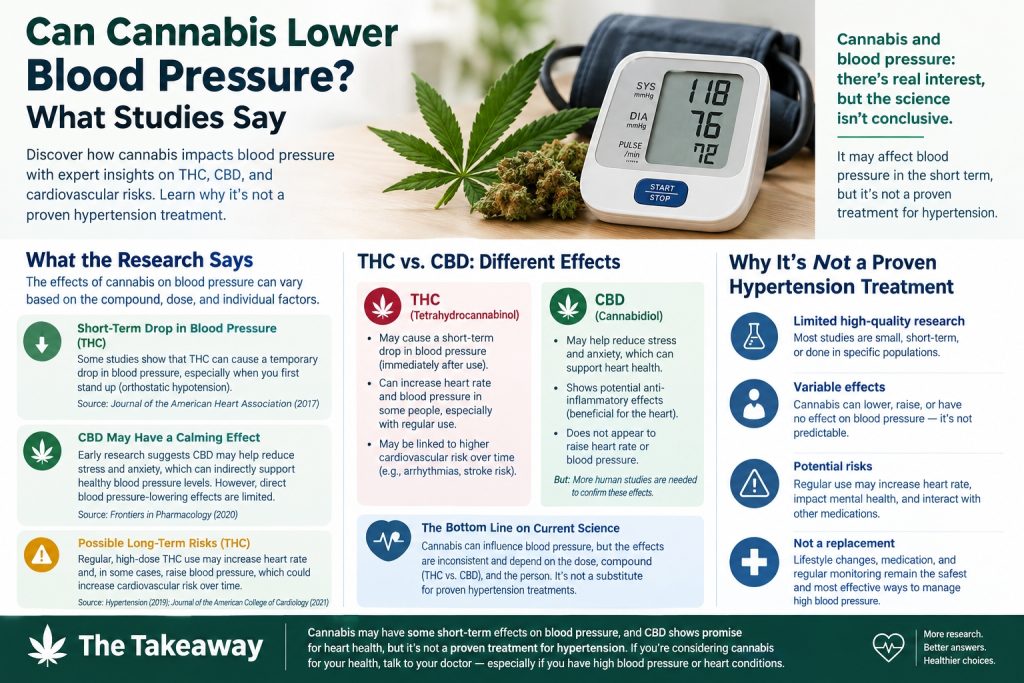
So, can cannabis lower blood pressure? THC and CBD can affect blood vessels, heart rate, stress responses, and blood pressure, but their effects vary by product, dose, timing, and your health. Cannabis may briefly lower blood pressure in some situations; it can also raise it, trigger dizziness, or interact with medication. Most importantly, a temporary change isn’t the same as treating hypertension.
This evidence-based review examines short- and long-term effects, human research, consumption methods, cardiovascular risks, and practical safety steps. It isn’t a substitute for personalized medical care. If you use cannabis, or you’re considering it, bring the details to your clinician rather than quietly experimenting with your heart and a mystery gummy.
Key Takeaways
- Cannabis can temporarily lower blood pressure in some cases, but these effects are short-lived and not a proven treatment for hypertension.
- THC may initially raise heart rate and blood pressure before blood vessels relax, which can cause dizziness, especially when standing up quickly.
- CBD has not been conclusively proven to lower blood pressure long-term and may interact with other medications.
- Different methods of cannabis consumption affect onset and intensity of cardiovascular effects, with smoking and vaping carrying added risks.
- People with heart conditions or on blood pressure medication should consult clinicians before using cannabis due to potential interactions and safety concerns.
- Reliable blood pressure management requires consistent prescribed treatment and lifestyle changes, not cannabis use alone.
Can cannabis lower blood pressure, or can it raise it?
Cannabis can do either. Shortly after THC exposure, your heart rate may rise and your blood pressure may temporarily increase. Later, blood-vessel relaxation can lower pressure, especially when you stand. That swing helps explain why one person feels relaxed while another feels a pounding heart or gets dizzy walking to the kitchen.
The short answer: temporary drops do not establish a treatment for hypertension
A lower reading after cannabis doesn’t demonstrate lasting blood pressure control. Hypertension treatment must work consistently and reduce risks such as stroke, heart attack, kidney disease, and heart failure. No major clinical guideline recommends cannabis for hypertension, and Health Canada hasn’t approved cannabis or CBD for lowering blood pressure.
Think of one low reading as a snapshot, not the whole cardiovascular movie.
Understanding blood pressure: systolic, diastolic, high, and low readings
Blood pressure is recorded as two numbers in millimetres of mercury (mm Hg):
- Systolic pressure, the top number, measures pressure as your heart contracts.
- Diastolic pressure, the bottom number, measures pressure between beats.
According to Hypertension Canada’s 2025 guideline, hypertension is diagnosed at 130 systolic or 80 diastolic or higher, although diagnosis requires properly obtained, repeated readings, not one stressful appointment.
Low pressure has no universal cutoff, but readings below 90/60 may be concerning when accompanied by weakness, blurred vision, confusion, or fainting.
How THC and CBD affect blood pressure and heart rate
Cannabis contains many compounds, but most cardiovascular research focuses on tetrahydrocannabinol (THC) and cannabidiol (CBD). They act differently, and product labels don’t always predict real-world exposure accurately.
THC can initially increase heart rate and blood pressure
THC activates cannabinoid receptors and can stimulate the sympathetic nervous system. Soon after use, your heart rate may climb by roughly 20–50 beats per minute, though responses vary. Blood pressure can rise while you’re sitting or lying down, increasing cardiac workload.
That matters more if your coronary arteries are narrowed or you already experience arrhythmias or chest pain.
Blood vessel relaxation and orthostatic hypotension: why standing up can cause dizziness
THC may also widen blood vessels. Your pressure can fall when you move upright, a reaction called orthostatic hypotension. Blood briefly pools in your legs, leaving less available to reach your brain.
You might notice lightheadedness, dimmed vision, nausea, or the classic “Whoa, I stood up too fast” grab for the nearest chair. Dehydration, heat, alcohol, and blood pressure medication can intensify this effect.
CBD differs from THC, but blood pressure benefits remain unproven
CBD usually doesn’t produce THC’s intoxicating high. Small experiments suggest it may influence vascular function or blunt blood pressure responses to stress. That’s interesting, but it doesn’t prove CBD treats chronic hypertension.
CBD can cause sleepiness, diarrhea, appetite changes, and medication interactions. Oils may also contain inconsistent CBD concentrations or undeclared THC, and in Canada CBD is still regulated as cannabis under the Cannabis Act, with no non-prescription CBD health product authorized.
Short-term versus long-term effects of cannabis on blood pressure
Short-term research captures changes over minutes or hours. Long-term cardiovascular outcomes unfold over years, making them harder to isolate from tobacco use, diet, stress, medications, and underlying illness.
How dose, potency, timing, and tolerance influence the response
A low-THC product and a high-potency concentrate aren’t interchangeable. Effects depend on:
- THC-to-CBD ratio and total dose
- Your previous exposure and tolerance
- Whether you recently ate, exercised, or drank alcohol
- Product route and absorption
- Anxiety, hydration, and baseline blood pressure
Modern concentrates may deliver far more THC than cannabis used in older studies. “One hit” therefore isn’t a meaningful scientific dose.
Regular use and withdrawal: why blood pressure patterns may change
Frequent users may develop tolerance to some immediate effects. When heavy use stops, irritability, anxiety, poor sleep, and appetite changes can occur; some small studies have also observed temporary blood pressure increases during abstinence.
That doesn’t mean continuing cannabis is the solution. If you use heavily, ask a clinician how to reduce or stop safely while monitoring symptoms and pressure.
What human studies actually show about cannabis and hypertension
The human evidence is mixed and limited. Studies often use small samples, different products, short follow-up periods, or self-reported exposure. Those design differences make confident conclusions difficult. (For the wider picture, including long-term risk studies, see our guide to weed and blood pressure.)
The older-adult hypertension study: findings, study design, and limitations
A small prospective study of adults aged 60 and older with hypertension reported lower 24-hour systolic and diastolic readings after three months of prescribed cannabis, with the largest reduction several hours after administration. More participants also showed a normal night-time dip in blood pressure.
But the study included only 26 people, lacked a randomized placebo control, and evaluated varied cannabis regimens. Its findings support further research, not routine prescribing.
Small CBD trials: resting blood pressure, stress responses, and unanswered questions
In a randomized crossover study of nine healthy men, a single 600 mg CBD dose reduced resting systolic pressure and blunted increases during stress. A later repeat-dosing study found that some effects weakened as exposure continued.
These trials were small, short, and largely involved healthy participants, not diverse patients with established hypertension. They can’t tell you whether common retail doses prevent strokes or control pressure for years.
Why observational associations and short-term changes do not prove lasting benefit
Observational studies may find associations between cannabis use and cardiovascular outcomes, but users and nonusers often differ in age, tobacco exposure, income, sleep, and healthcare access. Researchers can adjust for these factors, but never perfectly.
Likewise, a temporary pressure reduction is a surrogate measurement. The meaningful question is whether treatment safely prevents disease. That evidence doesn’t yet exist for cannabis.
Does the way you use cannabis change its blood pressure effects?
Yes. Delivery method changes how quickly cannabinoids enter your bloodstream, how high concentrations climb, and how long effects persist.
| Method | Typical onset | Key concern |
|---|---|---|
| Smoking/vaping | Minutes | Rapid cardiovascular effects; inhalation risks |
| Edibles | 30 minutes–2+ hours | Delayed, unpredictable peak |
| Oils/tinctures | About 15–90 minutes | Variable absorption and labelling |
| Topicals | Mostly local | No proven blood pressure effect |
Smoking and vaping: rapid effects and cardiovascular concerns
Inhaled THC acts quickly, so heart-rate and pressure changes can feel abrupt. Cannabis smoke contains particulate matter and many combustion products also found in tobacco smoke. Vaping avoids combustion but isn’t harmless: concentrates can deliver high THC doses, and contaminated products have caused serious lung injury.
Health Canada lists blood vessels damaged by cannabis smoke among its short-term effects, and warns that vaping cannabis carries its own risks.
Edibles, oils, and tinctures: variable onset, duration, and absorption
Edibles arrive late and stay longer. A person may take another piece after 30 minutes, assume the first “did nothing,” and then meet both doses at once, an unpleasant plot twist.
Food, metabolism, and product consistency affect absorption. Oils and tinctures may act sooner, particularly when held under the tongue, but they still don’t provide predictable hypertension treatment.
Topical cannabis: no established role in lowering blood pressure
Creams, balms, and lotions are generally intended for local effects and usually produce limited systemic cannabinoid exposure. No reliable evidence shows that applying a CBD or THC topical lowers blood pressure. A soothing menthol balm may feel pleasant on your shoulder, but it isn’t quietly treating your arteries.
Cardiovascular risks and medication interactions to discuss with a clinician
Cannabis can affect circulation, alertness, and drug metabolism. Tell your clinician what you use, including the brand, dose, THC/CBD content, frequency, and route. This isn’t confession time; it’s medication-safety information.
Who needs extra caution: older adults and people with heart disease, hypertension, or low blood pressure
Use warrants particular caution if you have coronary disease, heart failure, an arrhythmia, previous stroke, uncontrolled hypertension, or frequent fainting. Older adults may be more vulnerable to medication interactions, falls, and fractures.
Pregnancy, breastfeeding, and an upcoming procedure are additional reasons to disclose cannabis use promptly to your care team.
Potential interactions with blood pressure medicines, blood thinners, and other prescriptions
Cannabis may compound dizziness or low pressure caused by ACE inhibitors, beta-blockers, calcium-channel blockers, diuretics, and other antihypertensives. CBD can affect liver enzymes that process numerous medicines.
Potentially important interactions include anticoagulants such as warfarin, sedatives, anti-seizure drugs, and certain heart medicines. Don’t stop prescriptions or change doses yourself: ask your physician or pharmacist to review the full list.
How alcohol, nicotine, and other substances can complicate the effects
Alcohol can worsen impairment, dehydration, and orthostatic dizziness. Nicotine raises heart rate and pressure, while stimulants can place additional strain on your cardiovascular system. Combining substances makes both the experience and its medical interpretation less predictable.
If you’re tracking pressure, record these exposures. Otherwise, your log may look like random numbers generated by a moody calculator.
What to do if cannabis changes your blood pressure
Don’t panic over one unusual reading, but don’t ignore recurring symptoms. Stop using cannabis until you’ve discussed a concerning reaction with a qualified clinician.
How to record home readings and symptoms for your clinician
Use a validated upper-arm cuff with the correct cuff size; Hypertension Canada’s recommended devices list shows monitors that have passed its validation process. Avoid exercise, nicotine, and caffeine for 30 minutes; empty your bladder, sit quietly for five minutes, and keep your feet flat and arm supported.
Take two readings one minute apart. Record the time, symptoms, cannabis dose and method, medications, alcohol, and body position. That short diary is far more useful than “I felt weird Tuesday-ish.”
Dizziness or near-fainting: immediate precautions and when to seek medical advice
Sit or lie down immediately so you don’t fall. If possible, raise your legs, move slowly, and don’t drive. Hydration may help when dehydration contributes, unless your clinician restricts fluids.
Contact a clinician if episodes recur, you fall, symptoms last, or readings remain unusually low. Fainting deserves prompt evaluation, particularly with heart disease.
When very high readings, chest pain, fainting, or stroke symptoms require urgent care
Call 911 for chest pressure, severe shortness of breath, fainting, sudden weakness or numbness, facial drooping, trouble speaking, confusion, or a sudden severe headache. These include the signs of stroke.
A reading of 180/110 mm Hg or higher with concerning symptoms can represent an emergency. Don’t take extra cannabis, or extra prescription medication, unless emergency professionals specifically instruct you to do so.
Proven ways to lower blood pressure, and why cannabis should not replace prescribed treatment
Reliable blood pressure care is less glamorous than a miracle strain, but it has much stronger evidence. Your plan may include:
- Taking prescribed medication consistently
- Following a DASH-style eating pattern rich in vegetables, fruit, whole grains, and legumes
- Reducing excess sodium, especially from restaurant and packaged foods
- Getting regular aerobic and resistance activity
- Limiting alcohol, avoiding tobacco, and improving sleep
- Treating sleep apnea and managing weight when applicable
If side effects or costs make medication difficult, tell your clinician. Generic options such as lisinopril, losartan, amlodipine, and hydrochlorothiazide may be inexpensive, but the right choice depends on your kidneys, electrolytes, age, pregnancy potential, and other conditions.
Cannabis shouldn’t replace prescribed treatment. Stopping an antihypertensive because yesterday’s post-edible reading looked good can leave your pressure uncontrolled once the temporary effect disappears.
Frequently asked questions about cannabis and blood pressure
Is indica or sativa better for high blood pressure?
Neither category has been proven better. “Indica” and “sativa” labels don’t reliably predict cannabinoid content or cardiovascular effects. Two products sharing a label may contain very different THC levels, CBD ratios, and terpenes. For safety discussions, the laboratory-tested composition and dose are more useful than the strain name.
Is there an evidence-based cannabis dose or strain for hypertension?
No. Researchers haven’t established a safe, effective cannabis dose, formulation, schedule, or strain for treating hypertension. Products sold at dispensaries also vary in potency and purity. If you already use cannabis, a clinician can help assess risk, but that isn’t equivalent to prescribing it as blood pressure therapy.
Does a lower blood pressure reading mean cannabis is safe for your heart?
No. Blood pressure is only one part of cardiovascular safety. Cannabis may lower one reading while increasing heart rate, causing orthostatic symptoms, impairing judgment, or interacting with medication. Route, potency, age, and underlying disease all matter.
So, can cannabis lower blood pressure? Sometimes, temporarily, but current evidence doesn’t support using it to treat hypertension or prevent cardiovascular disease. Keep taking prescribed medicine, monitor your readings correctly, and share your cannabis use honestly with your healthcare team. Your next practical step is simple: bring a one-week blood pressure and symptom log to your next appointment, then make decisions using the pattern, not one tempting number.