
Blog 2026
How to Read a Cannabis Label: THC, CBD, Terpenes, and Lab Results
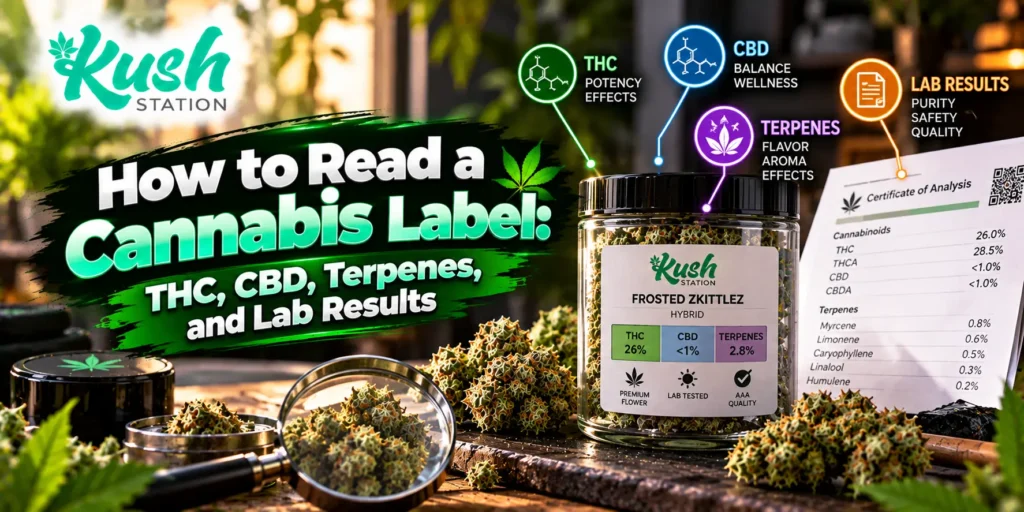
Oct
You pick up a package of dried flower and see numbers, percentages, a red symbol, a lot number, and a block of Cannabis delivery warnings. Or you open a product page online and find a THC range, a list of terpenes, and a link to something called a “certificate of analysis.” If that looks like a foreign language, you are not alone.
Cannabis labels hold a lot of useful information, and once you know how to read them, they help you choose products that match your tolerance, your goals, and your comfort level. This guide walks through every part of a Canadian cannabis label, from THC and CBD to terpenes, packaging dates, and lab results. By the end, you will be able to compare products with confidence, whether you are standing in a store or browsing online.
Why Cannabis Labels Matter
Cannabis is not one-size-fits-all. Two products that look similar on a shelf can differ enormously in strength and effect. A flower with 12% THC and a flower with 28% THC are very different experiences. A 2.5 mg gummy and a 10 mg gummy are, too.
Labels exist to protect you. In Canada, legal cannabis is regulated, so packaging must show specific information in a standardized format. That consistency lets you compare products from different producers, avoid taking more than you intended, and spot anything that looks off.
Reading the label also helps you:
Control your dose. Especially important with edibles, where effects are delayed and long-lasting.
Find the right product. Whether you want something mild for relaxing or something stronger for experienced use.
Avoid surprises. Knowing the potency, ingredients, and warnings in advance prevents unpleasant experiences.
Confirm you are buying a legal, tested product. Legitimate products carry required labelling elements that illegal-market products often lack.
The Anatomy of a Canadian Cannabis Label
Before diving into each element, here is an overview of what you will typically find on a package of legal cannabis in Canada.
| Label Element | What It Tells You | Why You Should Care |
| Brand and product name | Who made it and what it is | Helps you find and reorder what you liked |
| Product type | Dried flower, pre-roll, oil, edible, vape, etc. | Determines how you use it and how fast it works |
| THC and CBD content | Potency of the main cannabinoids | Your most important dosing information |
| Net weight or unit count | How much product is in the package | Helps you compare value |
| Standardized cannabis symbol | Red symbol marking the product as containing THC | Signals a regulated cannabis product |
| Health warning message | Rotating safety statements | Reminds you of risks |
| Lot number | Identifies the production batch | Used for recalls and traceability |
| Packaging date and best-before or expiry date | Freshness information | Tells you how recently it was packaged |
| Ingredients and allergens | What is in the product | Critical for edibles and extracts |
| Producer details | Licence holder’s name and contact information | Lets you reach the company |
| Excise stamp | Shows duties have been paid | Indicates a legal product |
The exact layout varies by producer and product type, but the legally required elements are consistent. We will go through them one at a time.
THC: Understanding Potency
THC (tetrahydrocannabinol) is the main compound that produces the “high.” When people say a product is “strong,” they usually mean it has high THC.
How THC is shown on the label
On Canadian packaging, THC content appears in one or both of these formats:
Milligrams per gram (mg/g) for dried flower and other bulk products. A flower listed at 200 mg/g THC is the same as 20% THC.
Percentage (%) is commonly shown alongside mg/g, and it is the number most shoppers recognize.
Milligrams per unit (mg) for edibles, capsules, beverages, and similar products. For example, “5 mg THC per gummy.”
The conversion is simple: divide mg/g by 10 to get the percentage. So 180 mg/g is 18%.
Ranges, not exact numbers
Many labels show a range, such as “THC: 18% to 24%,” rather than a single figure. This reflects natural variation between batches and even within the same batch. Plants are agricultural products, not manufactured to a precise formula. Regulations allow only a limited tolerance between the Buy weed Canada stated and tested value, so the label is a reliable guide, but not a guarantee down to the decimal.
THC vs. total THC
This is where many beginners get confused. In raw cannabis flower, much of the THC exists as THCA, a non-intoxicating acidic form. THCA converts into active THC when heated, which happens when you smoke, vape, or cook with it.
To account for this, producers report total THC, which combines the THC already present with the THCA that will convert once heated. The standard formula is:
Total THC = THC + (THCA × 0.877)
The 0.877 factor reflects the weight lost when THCA converts to THC. You do not need to do this math yourself. The number on a Canadian label should already reflect total THC for dried products, which is the figure that matters for how strong the product will be when used.
What do THC numbers actually mean?
There is no universal scale, but these general ranges help with orientation for dried flower:
| THC Range | General Description | Who It Might Suit |
| Under 10% | Mild | New or low-tolerance consumers |
| 10% to 15% | Low to moderate | Beginners, occasional users |
| 15% to 20% | Moderate | Regular consumers |
| 20% to 25% | High | Experienced consumers |
| 25%+ | Very high | High-tolerance users |
Remember that higher is not automatically better. Flower in the 15% to 22% range is common and plenty strong for most people. Very high THC can increase the chance of anxiety, a racing heart, or dizziness, particularly for newcomers. Also, THC percentage is only part of the story. Terpenes, CBD, and your own body chemistry all shape the experience.
CBD: The Balancing Compound
CBD (cannabidiol) does not cause a high. It interacts with the body differently from THC and is widely studied for its potential effects. Many people choose CBD-containing products because they find that CBD can soften or balance the intensity of THC.
How CBD appears on the label
CBD is displayed the same way as THC: mg/g or percentage for dried products, and mg per unit for edibles, oils, and capsules. As with THC, you will often see total CBD, which includes CBDA (the raw, acidic form) converted by heat.
THC-to-CBD ratios
Because CBD can moderate THC, the ratio between the two is a helpful way to think about a product.
| Ratio (THC:CBD) | Typical Character | Often Chosen By |
| High THC, little CBD | Strong, classic cannabis effects | Experienced consumers |
| Balanced (roughly 1:1) | Milder, more even | Beginners, people sensitive to THC |
| CBD-dominant, trace THC | Little to no intoxication | People who want to avoid a high |
If you are new and nervous, a balanced ratio such as 5 mg THC with 5 mg CBD, or a flower with similar levels of each, is a gentle place to start.
Also note that CBD-dominant products are not necessarily non-intoxicating. Check the THC number even on products marketed as “CBD.” Some contain enough THC to be noticeable.
Other cannabinoids
You may see minor cannabinoids listed on some labels, such as CBG, CBN, or CBC. These appear in smaller amounts, and research on them is still developing. CBN, for example, is often marketed for evening use, but the evidence is limited, so treat marketing claims with a healthy dose of skepticism.
Terpenes: The Flavour and Aroma Compounds
If cannabinoids tell you about potency, terpenes tell you about character. Terpenes are aromatic compounds found in many plants, including lavender, citrus fruit, pine trees, and black pepper. In cannabis, they create the distinct smells and flavours of each strain.
Why terpenes matter
Terpenes give you a first read on what a strain smells and tastes like. Many consumers also believe they influence how a strain feels. Research is still evolving, but the working idea, sometimes called the “entourage effect,” suggests that cannabinoids and terpenes may interact to shape the Cannabis overall experience. That could explain why two products with identical THC levels sometimes feel different.
Be careful with promises. Terpenes are often marketed with specific effect claims, but the science does not yet support precise predictions. Think of terpene profiles as a useful guide to flavour, and a loose suggestion about effect.
Common terpenes and what they are known for
| Terpene | Aroma and Flavour | Also Found In | Commonly Associated With |
| Myrcene | Earthy, musky, fruity | Mangoes, hops, thyme | Relaxing, calming reputation |
| Limonene | Bright citrus | Lemon and orange peel | Uplifting, mood-lifting reputation |
| Caryophyllene | Peppery, spicy | Black pepper, cloves | Warm, spicy character |
| Linalool | Floral, lavender | Lavender | Calm, soothing reputation |
| Pinene | Fresh pine | Pine needles, rosemary | Crisp, alert reputation |
| Humulene | Woody, earthy | Hops, sage | Earthy, herbal character |
| Terpinolene | Fresh, floral, herbal | Lilacs, apples | Light, bright character |
| Ocimene | Sweet, herbal | Basil, mint | Sweet, fresh character |
How terpenes appear on labels
Terpene reporting is not as standardized as THC and CBD. Some producers list the top three terpenes by name, some give percentages or mg/g, and some include a full profile on their certificate of analysis. A product that lists dominant terpenes gives you a head start in predicting flavour.
A practical tip: if you find a strain you love, check its terpene profile. Next time, look for products with a similar profile, even under a different strain name. This approach is often more reliable than choosing by strain name alone, since names are not always consistent between producers.
Indica, Sativa, and Hybrid: What the Label Is Really Telling You
Most packages list a strain type: indica, sativa, or hybrid. Traditionally, indica is associated with relaxing, body-centred effects, sativa with uplifting, head-focused effects, and hybrids with something in between.
This is a helpful starting point, but not a rule. Chemistry, including THC, CBD, and terpene content, shapes your experience more than the label does. Your tolerance, mood, and environment also play a role. When you read a label, use the strain type as a loose guide, then pay closer attention to the cannabinoid and terpene numbers.
Reading Labels on Different Product Types
Labels look a little different depending on what you are buying. Here is what to focus on for each category.
Dried flower and pre-rolls
Look for:
THC and CBD range (as a percentage or mg/g)
Net weight (a gram, an eighth, an ounce, or for pre-rolls, the number of joints and weight of each)
Dominant terpenes, if listed
Packaging date and best-before date
Strain type and name
For pre-rolls, check whether they are standard or infused. Infused pre-rolls contain added concentrate such as kief or oil and can be considerably stronger. The label should state this, and the THC figure will usually be noticeably higher.
Edibles
Edibles require the most careful reading, because the dose per piece matters more than anything.
Look for:
THC per piece (for example, 2.5 mg, 5 mg, or 10 mg)
Total THC per package
Number of pieces
Serving size
Ingredients and allergens
Nutrition facts table
Canadian regulations cap edible cannabis at 10 mg of THC per package. That means a package of ten gummies, for instance, will be dosed at 1 mg each, whereas a single-serve product may contain up to 10 mg. This limit reduces the risk of accidentally taking too much, but you should still read carefully and respect onset times.
| Label Detail | What It Means | Tip |
| mg THC per piece | Dose in each gummy, chocolate, or drink | Start with 2.5 mg or less if new |
| Pieces per package | How the total is divided | Do not assume one package equals one dose |
| Onset note | Effects may take up to two hours | Wait before taking more |
| Allergens | Nuts, dairy, gluten, and so on | Check even if you have no known allergies |
Oils, tinctures, and capsules
For oils and tinctures, check mg per millilitre and the dose per dropper or serving. For capsules, check mg per capsule. These products are measured precisely, which makes them popular for people who want consistent dosing. Because they are ingested, they behave more like edibles than like inhaled cannabis, with a delayed onset and longer duration.
Beverages
Cannabis drinks list mg THC (and CBD) per container. They are limited to the same per-package THC cap as other edibles. Effects can start somewhat faster than with solid edibles, but you should still go slowly.
Vapes and concentrates
Vape cartridges and concentrates are much more potent than flower. Look for:
THC percentage, which often runs from 60% to 90% or more
Extract type, such as distillate, live resin, or rosin
Total mg per cartridge or package
Compatibility with your device, since cartridges use specific battery types
If you are new to vaping, start with a few small puffs and wait several minutes before deciding on more.
The Standardized Cannabis Symbol
One of the first things you will notice on a Canadian cannabis package is a bold red symbol containing the letters “THC.” This is the standardized cannabis symbol, and it is required on products that contain THC at or above a set threshold.
It serves as a clear visual signal that the product contains cannabis, helping prevent accidental use, especially by children. The symbol must appear in a prescribed size, colour, and position on the package. If you see a product that seems to be cannabis but lacks this symbol, treat it as a warning sign that it may not be a legal, regulated product.
Health Warning Messages
Canadian cannabis packages carry rotating health warnings, similar in spirit to those on tobacco products. These messages cover topics such as:
Risks of driving or operating machinery while impaired
Dangers of use during pregnancy and breastfeeding
Mental health considerations
Keeping cannabis away from children and pets
Potential effects on young people’s brain development
Risks associated with smoking
They are easy to skim past, but they contain genuinely useful safety information. If you have a health condition, take medication, or are pregnant, talk to a doctor or pharmacist before using cannabis.
Lot Numbers, Packaging Dates, and Freshness
Lot number
The lot (or batch) number identifies the specific production run your product came from. It matters for two reasons. First, if a problem is discovered, such as a contamination issue, a recall can target the affected lots. Second, it connects your product to its lab results. Matching a lot number to a certificate of analysis lets you see exactly what was tested.
If you find a batch you love, note the lot number. Quality and potency can vary between batches of the same strain.
Packaging date
This shows when the product was sealed in its package, which is a better freshness indicator than the harvest date. For flower, fresher is generally better for aroma and flavour, though proper storage matters too.
Best-before or expiry date
Edibles, oils, and some other products carry a best-before date, after which they may lose quality or potency. Flower does not “expire” the way milk does, but over time it dries out and loses terpenes and potency. If a package looks old, feels very dry, or smells faint, it may be past its best.
Freshness checklist
| Check | Good Sign | Be Cautious |
| Packaging date | Recent | Many months old |
| Best-before date | Well in the future | Very close or passed |
| Package seal | Intact | Broken or loose |
| Smell (if you can check) | Fragrant and distinct | Faint, musty, or like hay |
| Appearance | Slightly sticky, colourful | Dry, brittle, or discoloured |
Ingredients, Allergens, and Additives
For anything you eat or drink, read the ingredient list just as you would for ordinary food. Edibles must list ingredients and allergens, and they carry a nutrition facts table. If you have food allergies or dietary restrictions, such as gluten-free, nut-free, vegan, or diabetic-friendly needs, check carefully. Cannabis gummies, for example, often contain gelatin and sugar.
For vapes and extracts, look at what else is in the product besides cannabis. Canadian rules restrict certain additives, and a clearer ingredient list generally signals a more transparent producer.
Understanding Lab Results and Certificates of Analysis
Labels give you the highlights. For the full story, look at the certificate of analysis (COA), the report from a laboratory that tested your product. Many licensed producers and some retailers make COAs available through a QR code on the package, a link on the product page, or by request.
Reading a COA may seem intimidating at first, but it follows a predictable structure.
What a COA typically includes
| Section | What It Shows | Why It Matters |
| Product and batch details | Product name, lot number, test date, lab name | Confirms the report matches your product |
| Cannabinoid profile | THC, THCA, CBD, CBDA, and minor cannabinoids | Verifies the potency on the label |
| Terpene profile | Which terpenes are present and how much | Helps predict flavour and character |
| Pesticide screening | Tests for pesticide residues | Confirms the product is free of harmful residues |
| Microbial testing | Mold, yeast, bacteria, and similar contaminants | Protects against unsafe growth |
| Heavy metals | Lead, arsenic, cadmium, mercury | Screens for toxic metals |
| Residual solvents | Leftover solvents from extraction (for extracts) | Important for concentrates and vapes |
| Moisture content | Water content of the product | Affects quality and shelf life |
How to read the cannabinoid section
You will usually see each cannabinoid listed with a result in percentage or mg/g, often with a “Pass” or “ND” next to some entries.
THCA: The raw form that converts to THC. Often the largest number on a flower COA.
Delta-9 THC: The active form already present. Usually a small number in raw flower.
Total THC: Calculated from the two above. This is the number to compare to the label.
ND: Short for “not detected.” It means the compound was below the lab’s detection limit.
LOQ (limit of quantitation): The lowest amount the lab can measure reliably. Results below this are often marked “<LOQ.”
If the total THC on the COA is wildly different from the label, that is a red flag. Small differences are normal, but large gaps suggest inaccurate testing or labelling.
How to read the safety tests
For contaminant sections (pesticides, microbials, heavy metals, residual solvents), you are mostly looking for “Pass” results or values below the allowed limits. The report should show the limit and the result side by side. A trustworthy COA is transparent about both.
Signs of a reliable COA
It names an accredited, independent laboratory.
The lot number matches your product.
The test date is reasonable and not years old.
It covers both potency and safety, not only THC.
It is complete and legible, not cropped or heavily edited.
Be wary of producers who only advertise THC numbers and offer no way to see lab results. Transparency is a mark of quality.
Common Label Mistakes Beginners Make
Even careful shoppers fall into a few traps. Here are the most common, and how to avoid them.
Assuming higher THC is better. Potency does not equal quality. Flavour, freshness, and terpene content matter just as much.
Mixing up mg and %. A 10 mg edible and a 10% flower are completely different measurements. One is a dose, the other is a concentration.
Ignoring the per-package vs. per-piece distinction. A package that says “10 mg THC” may contain ten pieces at 1 mg each, or a single piece at 10 mg.
Trusting strain names blindly. The same name can mean different genetics from different producers. Check the numbers and terpene profile.
Skipping the date. Old flower is less fragrant and less pleasant, even when the THC number looks great.
Overlooking CBD. If you want a gentler experience, the CBD number is as important as the THC one.
Taking marketing claims as fact. Descriptions like “great for sleep” or “boosts creativity” are not medical claims and do not reflect guaranteed effects.
Never asking for lab results. If you are curious about what is in a product, ask. Reputable sellers are happy to share.
Step-by-Step: How to Read a Label in 60 Seconds
When you want a quick method, follow these steps in order.
Confirm it is a legal product. Look for the standardized cannabis symbol, health warnings, and excise stamp.
Check THC and CBD. Decide whether the potency fits your experience level.
Look at the unit. Is it a percentage, mg/g, or mg per piece? Do the math for edibles.
Scan the terpenes. If they are listed, see whether the profile matches flavours you like.
Check the dates. Look for a recent packaging date and a comfortable best-before date.
Read the ingredients. Especially for edibles, vapes, and extracts.
Note the lot number. If you like the product, you can find the COA or reorder the same batch later.
Open the COA if you can. Confirm potency and see the contaminant results.
Reading Product Pages When You Shop Online
When you shop for cannabis online, you will not hold the package in your hands, so the product page has to do the work. A good one mirrors what a label would tell you.
Look for:
Clear THC and CBD numbers, with ranges if they apply
Terpene information, even if just the top few
Strain type and genetics
Weight or unit information for every size option
Ingredient and allergen details for edibles
Photos of the actual product and packaging
A way to view lab results or a statement about testing
Customer reviews from real buyers
If a page only says “strong” or “potent” with no numbers, or if numbers appear inconsistent between the description and the listing, treat it cautiously. Remember that legal online sales in Canada go through provincially authorized retailers, which are required to provide accurate product information. [Add your licensing and compliance details here.]
Matching Labels to Your Goals
Once you can decode a label, you can shop with intention. Here are a few examples of how to put it into practice.
You want a gentle first experience. Look for flower around 10% to 15% THC or a balanced THC-to-CBD ratio, or a 2.5 mg edible. Start with a small amount and wait.
You want to unwind in the evening. Look for indica or indica-leaning hybrids with calming terpenes such as myrcene or linalool. Check the dose and give yourself time to settle in.
You want a daytime or social product. Look for sativa-leaning strains with bright terpenes such as limonene or pinene, but keep potency moderate so you stay comfortable.
You do not want to smoke. Choose an edible, beverage, oil, or capsule, and read the mg per unit carefully.
You are experienced and want something stronger. Look at higher-THC flower, hash, or concentrates, and verify potency and safety on the COA.
You are sensitive to anxiety. Consider products with CBD included and avoid very high-THC options until you know how you react.
Storing Your Cannabis After You Read the Label
Labels often include storage instructions, and following them keeps your product fresh and safe. As a general guide:
Store flower in an airtight container in a cool, dark place.
Keep edibles in their original packaging, away from regular snacks.
Keep concentrates and hash sealed and away from heat.
Store vape cartridges upright, away from extreme temperatures.
Lock up or elevate all cannabis if children or pets are around.
Keep the original packaging, or at least the label and lot number, so you can look up information later or report any problems.
Responsible Use Reminders
Understanding a label does not remove the need for caution. A few reminders:
Start low and go slow, especially with edibles.
Never drive or operate machinery after using cannabis.
Avoid mixing with alcohol, which can intensify impairment.
Talk to a healthcare professional if you take medication or have a medical condition.
Avoid use during pregnancy and breastfeeding.
Keep products away from children and pets.
If you ever consume more than intended, move to a quiet, comfortable place, drink water, and remember that the effects are temporary. Seek medical help for severe symptoms, or if a child or pet may have ingested cannabis.
Frequently Asked Questions
What does THC percentage mean on a cannabis label?
It shows the concentration of THC by weight in the product. A flower labelled 20% THC is 20% THC by weight, equivalent to 200 mg per gram. For edibles, THC is shown in milligrams per piece instead.
What is the difference between THC and total THC?
THC is the active compound already present. Total THC adds the THCA (the raw, acidic form) that converts to THC when heated. Total THC is the more useful number, since it reflects the strength you will actually experience when you smoke, vape, or cook with the product.
How do I convert mg/g to a percentage?
Divide the mg/g figure by 10. For example, 220 mg/g equals 22%.
Is higher THC always better?
No. Higher THC means a stronger product, not necessarily a better one. Flavour, freshness, terpene content, and how well the product suits your tolerance matter just as much. Very high THC can also increase the likelihood of unpleasant effects like anxiety.
What are terpenes, and do they affect how cannabis feels?
Terpenes are aromatic compounds that create a strain’s smell and flavour. Many people believe they influence the experience, and researchers are studying how they interact with cannabinoids. For now, treat them as a guide to flavour first and effect second.
What is a certificate of analysis (COA)?
A COA is a laboratory report showing a product’s cannabinoid content, terpene profile, and results of safety tests for pesticides, microbial contaminants, heavy metals, and (for extracts) residual solvents. It is the most complete source of information about a specific batch.
How can I find lab results for my product?
Check for a QR code on the package, a link on the product page, or ask the retailer or producer. Use the lot number to make sure you are looking at the right report.
What does “ND” mean on a lab report?
“ND” stands for “not detected,” meaning the compound was below the lab’s detection limit.
How strong should my first edible be?
Most beginners start with 2.5 to 5 mg of THC, and some choose 1 to 2.5 mg. Wait at least two hours before taking more.
What is the red symbol on cannabis packaging?
It is the standardized cannabis symbol, required on Canadian products containing THC above a set threshold. It signals that the package contains cannabis and helps prevent accidental consumption.
Why do strain names not always match what I expect?
Strain names are not strictly regulated, so the same name can refer to different genetics or growing conditions across producers. Rely on cannabinoid and terpene data, not names alone.
Does flower expire?
It does not spoil like fresh food, but it loses aroma, flavour, and potency over time, especially if stored poorly. Check the packaging date and best-before date, and store flower in an airtight container away from heat and light.
Final Thoughts: Let the Label Work for You
A cannabis label is more than legal fine print. It is a practical tool that tells you how strong a product is, what it smells and tastes like, how fresh it is, and whether it has been tested for safety. Once you know how to read THC and CBD figures, make sense of terpenes, and look up a certificate of analysis, you can choose products with confidence rather than guesswork.