
Cannabis
Cannabis Cream for Pain: What Works and How to Choose
Nov
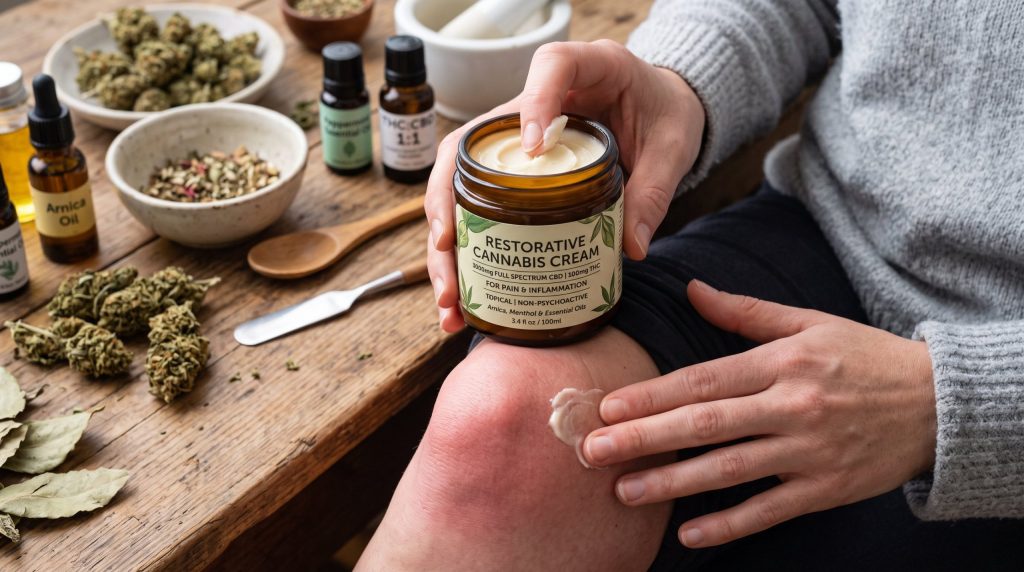
A jar of cannabis cream can look deceptively simple: rub it on, wait, and hope your cranky knee stops complaining. In reality, choosing and using cannabis cream for pain involves several decisions, CBD or THC, cream or balm, cooling or warming, topical or transdermal. Product labels don’t always make those distinctions clear.
Cannabis pain creams are applied directly to a sore joint, tight muscle, or other localized area. Many people use them because they’re convenient, don’t require inhalation, and generally have a lower risk of intoxicating effects than edible or inhaled cannabis. Yet “natural” doesn’t automatically mean effective, gentle, or suitable for everyone. Evidence for cannabis topicals is promising in places but still limited, and ingredients such as menthol may contribute as much to the immediate sensation as the cannabinoids themselves.
This review explains what current research and product labelling can, and can’t, tell you. You’ll learn how topical THC and CBD differ, which added ingredients matter, how to read a certificate of analysis, and how to apply a product without accidentally introducing peppermint oil to your eyeball. That last lesson tends to stick.
A quick scope note: this is an evidence-informed buying and usage guide, not an endorsement of a particular brand or a substitute for medical care. No manufacturer paid for placement, and no affiliate relationship influences the comparisons. Cannabis is legal across Canada, but legal age and retail rules vary by province and territory, so verify local rules before purchasing a THC-containing cream. If your pain is severe, unexplained, worsening, or accompanied by weakness, fever, trauma, or loss of bladder or bowel control, skip the experiment and contact a clinician.
Key Takeaways
- Cannabis cream for pain offers localized relief by applying cannabinoids like CBD and THC directly to sore areas without ingesting them.
- Choosing the right cannabis cream depends on factors like cannabinoid type, product texture (cream, balm, lotion), and additional ingredients such as menthol which affect sensation and comfort.
- Topical creams usually provide superficial pain relief without significant intoxication, while transdermal products penetrate deeper and may cause systemic effects and drug test considerations.
- Start with small, patch-tested amounts of cannabis cream on intact skin, apply gently, and track pain relief and function improvements to determine effectiveness.
- Look for products with clear labelling, verified third-party testing (COA), appropriate cannabinoid concentrations, and ingredients suited to your skin sensitivity and pain type.
- Cannabis creams should be part of a broader pain management plan including medical consultation, physiotherapy, and cautious use especially in cases of severe or worsening pain.
What Is Cannabis Cream for Pain?
Cannabis cream for pain is a topical preparation containing cannabinoids, most often cannabidiol (CBD), tetrahydrocannabinol (THC), or both. You spread it over a specific painful area rather than swallowing or inhaling it.
These products combine cannabinoids with a base such as water, oil, shea butter, or beeswax. Some also include menthol, camphor, arnica, essential oils, or other ingredients intended to change skin sensation or support massage. They’re commonly marketed for sore muscles, stiff joints, exercise recovery, and everyday aches.
Most conventional topicals are designed to act near the application site. They shouldn’t be confused with prescription pain treatments or assumed to repair an injury. Think of a cream as one tool in the drawer, not the entire toolbox.
Topical cannabis cream vs balm vs lotion vs salve: what’s the difference?
The names overlap, but texture and water content usually separate them:
| Format | Typical texture | Best suited to | Main trade-off |
|---|---|---|---|
| Lotion | Light, water-rich | Large or hairy areas | May need frequent reapplication |
| Cream | Medium-weight emulsion | Knees, shoulders, hands | Less portable than a stick |
| Balm/salve | Thick, oil-and-wax base | Small joints and dry skin | Greasy: may stain fabric |
| Roll-on | Liquid or gel | Back, neck, travel | Harder to control exact amount |
A balm isn’t inherently stronger than a lotion. Potency depends on cannabinoid concentration, not thickness. A 500-milligram balm may be weaker per gram than a smaller 1,000-milligram cream, labels require a little arithmetic.
Topical vs transdermal cannabis: localized relief vs whole-body effects
A standard topical is intended to work in superficial tissues around the application area, with limited entry into the bloodstream. A transdermal product uses penetration-enhancing technology to move cannabinoids across the skin and into systemic circulation. Patches, gels, and specifically labelled transdermal creams may hence produce body-wide effects.
That distinction matters. A normal CBD knee balm is unlikely to behave like an edible. A transdermal THC patch potentially can cause impairment and may raise drug-testing concerns.
Look for words such as transdermal, systemic delivery, or penetration enhancer. Don’t assume every “deep relief” claim means medically demonstrated deep absorption: that phrase is frequently marketing language rather than pharmacokinetic evidence.
How Cannabis Cream for Pain Works (The Science, Simply Explained)
Cannabis topicals may influence cannabinoid receptors, pain-signalling pathways, inflammation, and local skin sensation. But the mechanism isn’t as tidy as “CBD enters joint, pain disappears.” Skin is specifically built to keep foreign substances out, and formulation makes an enormous difference.
Human clinical evidence remains much thinner than enthusiastic packaging suggests. Small trials and observational studies have reported potential benefits for certain localized pain conditions, but different doses, formulations, and diagnoses make direct comparisons difficult. Meanwhile, massage and ingredients such as menthol can create their own effects.
The sensible interpretation? Cannabis cream may be a useful low-burden experiment for some localized discomfort, but it isn’t proven to regenerate cartilage, heal torn tissue, or treat every source of pain.
The endocannabinoid system in skin, muscles, and joints
Your endocannabinoid system helps regulate processes including pain perception, inflammation, immune responses, and skin function. Cannabinoid receptors, particularly CB1 and CB2, have been identified in skin cells, nerve fibres, immune cells, and tissues associated with joints.
THC interacts relatively directly with cannabinoid receptors. CBD’s behaviour is broader and more indirect: it may influence enzymes, inflammatory signalling, and non-cannabinoid targets such as TRP ion channels involved in heat and pain sensation.
This biological plausibility helps explain scientific interest, but the presence of a receptor doesn’t prove that a retail cream delivers enough cannabinoid to it. Dose, formulation, skin condition, and contact time all affect the result.
THC and CBD absorption through skin: what research suggests (and limits)
Cannabinoids are fat-soluble molecules, while the skin’s outer layer is a formidable barrier. Regular topical products generally penetrate the upper skin layers better than they enter circulation. Formulations using ethanol, liposomes, certain oils, or other enhancers may improve passage, although “nano” on a label isn’t automatic proof of superior performance.
Reviews of cannabinoid delivery research note that transdermal systems can improve absorption, but many findings come from laboratory, animal, or small human studies. Retail products also vary substantially, so results from one formula can’t simply be assigned to another.
Research gaps include standardized dosing, long-term safety, head-to-head THC-versus-CBD trials, and reliable data for specific diagnoses. Be suspicious of precise promises such as “works for exactly eight hours.” Biology rarely reads ad copy.
Will it make you feel “high”? What to expect from topical THC
A conventional THC topical used on intact skin is generally not expected to cause intoxication because little THC reaches the bloodstream. You may notice warmth, cooling, tingling, or reduced discomfort, but not the mental effects typically associated with inhaled or edible THC.
There are important exceptions. A transdermal product is designed for systemic absorption. Applying excessive amounts, covering the area tightly, using damaged skin, or combining the product with heat may alter absorption. Product formulation matters too.
Until you know how a THC cream affects you, use a small amount at home and avoid driving if you feel dizzy, sleepy, mentally altered, or otherwise impaired. Keep THC products locked away from children and pets, even if the jar smells more like eucalyptus than cannabis.
THC vs CBD Cannabis Cream for Pain: Which Should You Choose?
There’s no universal winner in the THC-versus-CBD matchup. Your choice depends on local law, sensitivity to THC, workplace testing, product availability, and the type of discomfort you’re addressing.
In Canada, CBD is regulated under the Cannabis Act just like THC, so CBD and THC creams follow the same federal rules, including a limit of 1,000 mg of THC per package of a cannabis topical. Some users prefer combined formulas because cannabinoids and plant compounds may complement one another, but the often-cited “entourage effect” remains a developing hypothesis rather than a guaranteed outcome.
A practical first step is to choose a tested, clearly labelled formula, patch-test it, and track your response. A notebook entry, time, amount, pain score, and duration, beats trying to remember whether Tuesday’s knee felt less grumpy than Monday’s.
Best use-cases for THC topicals (deep soreness, stubborn localized pain)
THC topicals are often chosen for persistent, well-localized discomfort such as an achy knee, a sore shoulder, or post-exercise muscle tenderness. Products combining THC and CBD are also popular, and both adult-use and medical cannabis are legal in Canada.
But, “deep soreness” doesn’t prove that THC physically reaches deep muscle or an arthritic joint in a meaningful concentration. The perceived benefit may reflect local receptor activity, counterirritants, massage, or several effects working together.
Consider a THC topical when CBD alone hasn’t helped, you’re of legal age in your province or territory, and drug-testing consequences are manageable. Choose a normal topical, not a transdermal, if you want to minimize systemic exposure. Start conservatively, particularly when the formula contains strong menthol or capsaicin.
Best use-cases for CBD topicals (inflammation, daily maintenance, sensitive users)
CBD cream may appeal to you if you want a non-intoxicating option for daily joint stiffness, minor exercise soreness, or localized discomfort.
That doesn’t mean every CBD product is mild. Menthol, camphor, cinnamon, clove, and capsicum can irritate sensitive skin even when CBD itself is well tolerated. For reactive skin, seek a fragrance-free product with a short ingredient list and perform a patch test for 24 hours.
CBD is frequently marketed as “anti-inflammatory,” but topical clinical evidence remains incomplete. Treat it as a trial rather than a promise. If you see no meaningful improvement after consistent, label-directed use, spending more on a giant jar probably won’t negotiate with your biology.
Full-spectrum vs broad-spectrum vs isolate: what it means for pain relief
Full-spectrum hemp extract contains CBD plus other cannabinoids, terpenes, and small amounts of THC. Broad-spectrum extract is processed to remove THC while retaining selected compounds. CBD isolate is purified CBD without the broader plant profile.
| Extract | THC expected? | Best for | Important caution |
|---|---|---|---|
| Full-spectrum | Trace amount possible | Users wanting a whole-plant formula | Drug-test risk isn’t zero |
| Broad-spectrum | Usually nondetectable | THC-avoidant users seeking mixed compounds | Verify with batch COA |
| Isolate | No intentional THC | Maximum label simplicity | Fewer accompanying compounds |
No strong evidence proves that one category always delivers better topical pain relief. If employment testing is strict, isolate with a credible nondetectable-THC result offers the clearest risk-reduction strategy, but no over-the-counter cannabinoid product can guarantee you’ll pass a test.
Conditions Cannabis Cream May Help (And When It Might Not)
Cannabis cream makes the most practical sense for localized, mild-to-moderate symptoms that you can easily reach. Evidence differs by condition, and pain relief doesn’t necessarily mean the underlying problem is improving.
Before applying anything, ask what the pain might be telling you. Familiar soreness after gardening is different from a swollen calf after a flight. One invites a cautious home-care trial: the other may require urgent assessment.
Use a simple benchmark: if the cream helps you move or sleep more comfortably without causing irritation, it may earn a place in your routine. If pain keeps worsening, repeatedly returns, or changes your strength and function, seek a diagnosis rather than masking the signal.
Arthritis and joint pain
People commonly apply cannabis creams to knees, hands, wrists, and other joints affected by osteoarthritis. Limited human research has produced mixed but interesting results. For example, a small randomized trial of topical CBD for thumb basal-joint arthritis reported improvements in pain-related measures, while other topical CBD studies have not consistently demonstrated clear superiority over placebo.
Massage the product around, not directly into, an intact joint area and assess both comfort and function. Can you open a jar, climb stairs, or sleep more easily? Those outcomes are more useful than vague “wellness.”
A topical won’t reverse cartilage loss or treat inflammatory arthritis on its own. Hot, markedly swollen, suddenly painful joints deserve medical evaluation, particularly when fever is present.
Muscle soreness, strains, and post-workout recovery
For delayed-onset muscle soreness after squats, hiking, or an overconfident weekend softball game, a cannabis cream may make the area feel more comfortable. Massage, cooling menthol, and the ritual of slowing down can all contribute.
A mild strain may also respond to relative rest and gradual movement, but don’t use numbing relief as permission to immediately reload injured tissue. If a hamstring hurts at a pain level of seven before cream and three afterward, the injury hasn’t magically clocked out.
Avoid rubbing aggressively over acute swelling or bruising. Seek care for a visible deformity, a popping injury followed by weakness, inability to bear weight, extensive bruising, or pain that doesn’t improve as expected.
Back and neck tension
Topicals are convenient for a tight upper trapezius, stiff lower back, or the familiar “I stared at a laptop for nine hours” neck. A roll-on can reach awkward spots, while a cream works well if someone can help with application.
Pair it with brief movement: shoulder rolls, an easy walk, or gentle range-of-motion exercises. Avoid forcing a painful stretch just because the area feels temporarily cooled.
Cannabis cream is less likely to solve pain driven by nerve compression, a fracture, infection, or internal disease. Get prompt help when back or neck pain follows major trauma or comes with progressive weakness, numbness, fever, severe headache, chest pain, or bowel or bladder changes.
Nerve pain/neuropathy: what to know before trying topicals
Small studies have explored topical CBD for peripheral neuropathy, with some reporting improvement in sensations such as burning or sharp pain. The evidence is preliminary, and neuropathy has many causes, including diabetes, medication effects, vitamin deficiency, nerve entrapment, and autoimmune disease.
If you have reduced sensation, be especially careful with menthol, camphor, or capsicum. You may not accurately feel excessive cooling, heat, or skin injury. Inspect the area before and after application, and never put cream on diabetic ulcers or broken skin unless a clinician specifically approves it.
New numbness, spreading weakness, balance problems, or rapidly worsening burning pain warrants evaluation. A topical may soften a symptom: it can’t identify why the nerve is misfiring.
Headaches/migraines and temple/neck application cautions
Some users rub a small amount on the back of the neck for tension associated with headaches. Evidence for cannabis topicals as a migraine treatment is inadequate, but, and migraine-specific therapies have much stronger clinical support.
Be extremely cautious near your face. Menthol, camphor, capsaicin, and essential oils can cause intense eye irritation. Don’t apply cream to eyelids, around nostrils, inside ears, or near mucous membranes. Wash your hands thoroughly, or use a cotton swab for a tiny, carefully placed amount on the neck.
Seek urgent care for a sudden “worst headache,” headache after injury, or headache accompanied by confusion, fainting, fever, weakness, vision loss, or difficulty speaking.
Skin conditions and irritation: when to avoid cannabis creams
Don’t apply an ordinary pain cream to open wounds, infected skin, active rashes, severe eczema, fresh tattoos, or burns. A long ingredient list can complicate contact dermatitis, while occlusive balms may trap moisture and irritants.
If you have psoriasis or eczema, ask a dermatologist before experimenting, especially with fragranced products. Although cannabinoids are being studied in dermatology, a pain cream formulated with menthol isn’t the same as a treatment developed for diseased skin.
Patch-test a pea-sized amount on a small area for 24 hours. Mild cooling may be expected: persistent burning, hives, blistering, swelling, or spreading redness isn’t. Wash the product off and stop using it. Breathing difficulty or facial swelling requires emergency help.
Key Ingredients That Make Cannabis Pain Creams Work Better
Cannabinoid milligrams get top billing, but the supporting cast often determines how a product feels. A cream with moderate CBD and 4% menthol may feel more immediately active than a high-potency, cannabinoid-only balm because menthol creates a distinct cooling signal.
Read the complete ingredient panel rather than shopping by the largest number on the front. Consider allergies, scent tolerance, skin type, and when you’ll apply it. A greasy, wintergreen-heavy salve might be fine before bed and spectacularly unpopular in a shared office.
Also separate sensory intensity from pain relief. Burning hotter or cooling harder doesn’t necessarily mean a formula is working better, and discomfort is not a dosage target.
Cooling/warming actives: menthol, camphor, capsicum (pros/cons)
Menthol produces cooling through temperature-sensing channels: camphor can create cooling and warming sensations. Capsicum or capsaicin generates heat and, with repeated use in standardized products, may reduce certain pain signals.
These counterirritants can provide noticeable short-term comfort, but they also increase irritation risk. Capsaicin may burn substantially during early applications. Camphor can be toxic if swallowed, making secure storage essential.
Never combine strong cooling or warming products with a heating pad, tight bandage, sauna, or very hot shower. That can intensify irritation and potentially cause burns. Check concentrations and follow label limits. If you want to evaluate the cannabinoids themselves, choose a formula without counterirritants so menthol’s icy fireworks don’t dominate the experiment.
Anti-inflammatory add-ons: arnica, magnesium, MSM, turmeric (what they’re for)
Arnica commonly appears in bruise and soreness formulas, though evidence varies by preparation and condition. Methylsulfonylmethane (MSM) and turmeric are promoted for inflammation, but topical pain data are limited. Magnesium lotions are popular for cramps and recovery: convincing evidence that magnesium is absorbed through intact skin in clinically meaningful quantities remains lacking.
These ingredients aren’t necessarily useless, they may improve texture, massage, or individual comfort, but labels often outrun research. More ingredients also mean more opportunities for sensitivity.
If you’ve reacted to plants in the daisy family, be cautious with arnica. Avoid placing it on broken skin unless the specific product says otherwise. Choose based on tolerability and transparent formulation, not an ingredient list that resembles an enchanted apothecary shelf.
Carrier and skin-support ingredients: jojoba, coconut, shea/cocoa butter, beeswax
Carriers distribute cannabinoids and determine spread, absorption feel, and staying power. Jojoba is lightweight and relatively stable. Coconut oil feels smooth but may be too occlusive or comedogenic for some skin. Shea and cocoa butter suit dry areas, while beeswax helps a balm remain on small joints.
A water-based cream generally absorbs faster and feels less greasy. Oil-and-wax salves remain in place longer and reduce friction during massage. Neither format guarantees deeper cannabinoid delivery.
Check for personal allergens and practical annoyances. A dark botanical balm can mark pale clothing: an oily product can make hands slippery. If you’re treating your palms, apply it after driving, cooking, or opening that infamously stubborn pickle jar.
Fragrance and essential oils: benefits, allergy risks, and sensitive-skin tips
Lavender, eucalyptus, peppermint, and wintergreen can make application pleasant and may alter perceived cooling or relaxation. They can also trigger allergic contact dermatitis, headaches, or respiratory sensitivity.
“Natural fragrance” isn’t automatically gentler than synthetic fragrance. Wintergreen contains methyl salicylate, an aspirin-related compound that requires particular caution around children, pets, anticoagulant use, and salicylate sensitivity. Essential oils should be properly diluted in the finished formula.
If you have sensitive skin, asthma triggered by scent, or multiple allergies, choose fragrance-free cream with minimal botanicals. Patch-test it and retain the package in case you need to identify a reaction. Stop using any product that makes the treated area progressively angrier, that’s skin feedback, not a detox.
How to Use Cannabis Cream for Pain (Step-by-Step)
Using a topical isn’t complicated, but a consistent method helps you judge whether it works. Begin with clean, dry, intact skin. Photograph or note the product, cannabinoid concentration, application time, and starting pain level.
Then follow this basic sequence:
- Patch-test a small amount before broad use.
- Apply a thin layer directly over the localized area.
- Massage gently unless massage worsens the injury.
- Wash your hands after application.
- Reassess comfort and function over the next several hours.
Don’t layer multiple medicated rubs unless a clinician or pharmacist confirms the combination is appropriate. Menthol cream plus capsaicin plus a heating pad is less “advanced recovery stack” and more regrettable science fair.
Where to apply and how much to use (start low, build gradually)
Apply cannabis cream over the painful muscle or around the joint identified on the label. For a knee, that may mean a thin layer around the front and sides rather than behind the joint where skin rubs. For hand pain, avoid fingertips until you’ve finished touching your face, contacts, or food.
There’s no standardized cannabinoid dose for topical pain. Start with a pea-sized amount for a small area or the manufacturer’s lowest recommended quantity. Spread it thinly and wait before adding more.
Using half the jar doesn’t guarantee stronger relief: it mostly guarantees an earlier reorder. Increase only within label directions, and record the smallest amount that provides a noticeable, repeatable benefit.
How long it takes to work and how long it lasts
Cooling or warming ingredients may be noticeable within minutes. Any cannabinoid-related effect can be subtler and may take 15 to 60 minutes, depending on formulation, application area, skin, and symptom type. Relief may last a few hours, but reliable universal timing data don’t exist.
Set a practical checkpoint: rate your discomfort before use, at 30–60 minutes, and again after three or four hours. Include a functional task, walking downstairs or turning your neck, not just a number.
If nothing changes after several properly spaced trials, reconsider the product or the diagnosis. Don’t immediately assume you need a dramatically higher dose. The painful structure may simply be too deep, or the condition may not respond to topical treatment.
How often to apply and when to reapply
Follow the package directions because active ingredients set different limits. Many products suggest application two to four times daily, but that range isn’t appropriate for every menthol, camphor, capsaicin, or prescription-containing formula.
Reapply only after the previous sensation has settled and the minimum label interval has passed. If you need it more frequently each day to remain functional, discuss the underlying pain with a clinician.
Daily use may be reasonable on healthy skin when the product is well tolerated. Inspect the area regularly for dryness, rash, or discolouration. Taking an occasional day off can also reveal whether the cream is meaningfully helping or has simply become part of the morning choreography beside coffee and keys.
Application tips: massage, heat/ice timing, and avoiding eyes/mucous membranes
Gentle massage can reduce guarding and help spread the cream, but skip vigorous pressure over an acute injury, inflamed joint, suspected clot, fracture, or tender vein. Use only enough pressure to feel comfortable.
Don’t apply cannabis cream immediately before or after a heating pad, hot bath, sauna, or intense exercise unless the label explicitly permits it. Heat can amplify counterirritants and potentially alter absorption. If using ice, place cloth between ice and skin, limit exposure, and let skin return to normal temperature before applying the product.
Wash with soap after use. Gloves or a roll-on help with capsaicin formulas. Keep all products away from eyes, genitals, mouth, nostrils, and broken skin.
What to Look for When Buying a Cannabis Pain Cream
The best cannabis pain cream isn’t necessarily the strongest or most expensive. It’s the product that clearly discloses what’s inside, matches your needs, and has current independent testing.
Shop in this order: legal source, batch testing, cannabinoid content, ingredient suitability, then texture and scent. Flashy claims come last. Avoid products promising to cure arthritis, rebuild cartilage, or permanently eliminate pain: those claims aren’t supported by adequate evidence.
For CBD and THC products alike, consider brands with reachable customer service, lot numbers, realistic language, and certificates of analysis tied to each batch. Marketplace listings and gas-station jars may be convenient, but convenience doesn’t test for pesticides.
Potency explained: mg THC/CBD per jar vs per dose
A label stating “1,000 mg CBD” usually means the entire container. If the jar holds 50 grams, that equals approximately 20 mg CBD per gram of cream. Unless a measured pump is provided, the dose on your skin remains an estimate.
Use this calculation:
Total cannabinoid milligrams ÷ container grams = milligrams per gram
For example, a 30-gram jar containing 600 mg CBD provides about 20 mg per gram. A 60-gram jar containing 600 mg provides about 10 mg per gram.
Don’t compare front-label numbers without comparing container sizes. Also confirm whether “1,000 mg hemp extract” refers to actual CBD or merely the weight of an ingredient. The label’s cannabinoid content and the COA should agree.
Third-party testing (COA): what to verify (potency, pesticides, heavy metals, microbes)
A certificate of analysis, or COA, should come from an independent laboratory and match the product’s batch or lot number. Scan the QR code, but confirm it leads to the actual report, not just the brand homepage.
Verify:
- Potency: CBD, THC, and other cannabinoid levels reasonably match the label.
- Pesticides: Results meet applicable limits.
- Heavy metals: Look for lead, arsenic, cadmium, and mercury screening.
- Microbes: Confirm testing for harmful bacteria, yeast, and mould.
- Residual solvents: Especially relevant to extracted products.
Check the testing date and units. “Pass” without numerical results or methods offers less transparency. If a company won’t provide a batch-specific COA, choose another company: there’s no shortage of jars wearing green leaves.
Texture and delivery: cream vs balm vs roll-on for different body areas
Match the format to your routine. Cream spreads easily over shoulders and knees and absorbs more cleanly before getting dressed. Balm grips knuckles, ankles, and small dry areas. Roll-ons reach the back without coating your hands, while sticks travel well in a gym bag.
For hairy legs or forearms, lotion or gel usually wins over waxy salve. For nighttime hand use, a rich balm may stay put longer, though cotton gloves can protect bedding. Avoid glass jars if grip weakness makes dropping one likely: a pump is easier and more hygienic.
Packaging affects dosing too. Metered pumps improve consistency. Open jars invite repeated finger contact, so use clean hands and don’t share them when skin infection is a concern.
Quality, consistency, and legality: medical vs recreational vs hemp-derived
In Canada, medical and recreational cannabis products may contain meaningful THC. The medical program involves a healthcare practitioner’s authorization and can come with clinician guidance, while adult-use products don’t require a medical document.
Industrial hemp is defined as cannabis with 0.3% THC or less in the flowering heads and leaves, but CBD made from hemp is still regulated under the Cannabis Act. Only hemp seed oil with no added cannabinoids falls outside it. A product available online isn’t automatically legal at your destination, especially when travelling.
Keep receipts and original packaging, and never take cannabis products into or out of Canada, including CBD made from hemp. On domestic flights, airport screening rules and the laws at your destination matter. When uncertain, leave the jar at home.
Safety, Side Effects, and Drug Testing Concerns
Cannabis creams are generally considered lower risk than systemic cannabis because ordinary topicals produce limited bloodstream exposure. Still, reactions can occur from cannabinoids, botanical extracts, preservatives, fragrances, or counterirritants.
Use only on intact skin and follow the label. Don’t ingest a topical or substitute it for an oral product. Store it away from children and animals: THC, camphor, essential oils, and salicylates can be dangerous when swallowed.
If you take medication, a standard localized topical is less likely to produce a systemic interaction than oral CBD or THC, but transdermal formulas are different. Ask a pharmacist about uncertain combinations, particularly if you use anticoagulants or medicines with narrow safety margins.
Common side effects (skin irritation, redness, warmth/cooling sensitivity)
Possible reactions include redness, itching, dryness, rash, stinging, and excessive warmth or cooling. Strong counterirritants can feel dramatic even without an allergy, but pain, blistering, swelling, or persistent redness means you should remove the product.
Wash with mild soap and lukewarm water. Capsaicin is oil-soluble and may not rinse away easily with water alone: avoid hot water, which can intensify the sensation. Don’t apply another active cream to “cancel it out.”
Seek urgent help for facial swelling, breathing trouble, widespread hives, or faintness. Report serious reactions to the manufacturer and, where appropriate, to Health Canada through its cannabis side effect reporting form or at 1-866-234-2345. Keep the label and lot number for reference.
Who should talk to a clinician first (pregnancy, breastfeeding, skin conditions, kids)
Avoid cannabis products during pregnancy or breastfeeding unless your qualified healthcare professional specifically recommends otherwise. Safety data are insufficient, and major health authorities advise caution about cannabis exposure during these periods.
Consult a clinician before use if you have severe eczema, psoriasis, open wounds, circulation problems, neuropathy with reduced sensation, significant allergies, or a history of reactions to topical analgesics. Ask a pediatrician before using any cannabinoid topical on a child: adult formulations may contain unsafe concentrations of camphor, menthol, salicylates, or essential oils.
Older adults with thin skin and people using multiple pain treatments should also check with a pharmacist. Bring the actual ingredient panel. “It’s a CBD cream” isn’t enough information when the seventh ingredient is wintergreen.
Can cannabis topicals show up on a drug test? (topical vs transdermal considerations)
A conventional topical used externally on intact skin is generally considered unlikely to produce enough urinary THC metabolite for a positive test. But “unlikely” isn’t “impossible,” particularly when product labelling is inaccurate or the formulation is transdermal.
Transdermal THC is specifically designed to enter circulation and presents a clearer testing risk. Full-spectrum hemp products may also contain trace THC, and contamination or batch variation can occur. Hair testing introduces additional concerns about external contact.
If testing could affect your job, parole, athletics, or medical treatment, the safest choice is to avoid THC-containing and full-spectrum products. A verified CBD-isolate topical may reduce risk but can’t guarantee a negative result. Wear gloves during application to another person and consult the relevant testing authority.
When Cannabis Cream Isn’t Enough: Combining with Other Pain Strategies
Pain often responds better to a layered plan than to one heroic jar. Cannabis cream may make movement more comfortable, while movement, sleep, rehabilitation, and workload changes address contributing factors.
Build around the basics: identify the likely cause, protect an acute injury without becoming completely inactive, and return to activity gradually. If you’re using pain relief to push through worsening symptoms, the strategy needs a rethink.
Medication combinations deserve professional guidance. Topical cannabinoids may coexist with acetaminophen, anti-inflammatory drugs, or prescription treatments in some plans, but your medical history matters. Don’t apply different topical medicines over the same skin area unless a clinician approves it, and don’t stop prescribed therapy solely because a cream feels helpful.
Stretching and mobility basics to pair with topical use
Use gentle movement rather than aggressive stretching. For a stiff neck, try slow turns within a comfortable range. For a sore lower back, a short walk may be more useful than yanking your knees to your chest. For an achy knee, controlled sit-to-stands can gradually restore confidence and capacity.
A simple routine might include five minutes of easy movement, topical application, then a reassessment after 30 minutes. The cream should support motion, not disguise sharp pain while you force it.
Aim for mild tension, never electrical pain, numbness, or increasing symptoms. If a specific movement repeatedly worsens your condition, stop guessing and get individualized advice from a physiotherapist or other qualified clinician.
Physiotherapy, massage, chiropractic, and recovery routines
Physiotherapy can identify strength, mobility, and load-management problems, then provide a progressive plan. Massage may temporarily reduce tension and improve comfort. Chiropractic manipulation helps some forms of musculoskeletal pain, but it isn’t appropriate for every condition: discuss risks, especially for forceful neck manipulation.
Bring your cannabis cream to appointments, or at least photograph the label. A therapist needs to know whether the area is numbed, heated, or cooled before hands-on treatment. Don’t apply a strong menthol balm immediately before massage unless the practitioner agrees.
Recovery also includes adequate sleep, protein, hydration, and realistic training increases. No topical can out-negotiate repeated overload. Sometimes the most effective intervention is the deeply unglamorous decision not to double your running mileage this week.
Red flags: when to seek medical care for pain
Seek urgent or emergency care (call 911) for pain accompanied by:
- Chest pressure, trouble breathing, sweating, or pain radiating to the jaw or arm
- New facial droop, confusion, speech difficulty, or one-sided weakness
- Loss of bladder or bowel control, saddle numbness, or progressive limb weakness
- A cold, pale, severely swollen, or suddenly painful limb
- High fever, spreading redness, or a hot swollen joint
- Major trauma, deformity, or inability to bear weight
- A sudden, severe headache unlike your usual headaches
Arrange non-emergency evaluation when pain persists, repeatedly interrupts sleep, requires escalating products, or limits daily function. Cannabis cream can quiet an alarm: it can’t confirm whether the toast is burned or the kitchen is on fire.
FAQs About Cannabis Cream for Pain
These quick answers cover the buying and usage questions that tend to surface once you’re standing in front of twenty nearly identical jars. Remember that formulation and testing matter more than buzzwords, leaf graphics, or claims that a product is “maximum zen.”
Is THC cream better than CBD cream for pain?
Not universally. THC may offer useful local effects for some people with persistent soreness, particularly in combined THC-CBD formulas, but head-to-head clinical evidence is limited. CBD is non-intoxicating and may be preferable if you’re sensitive to THC.
Your best choice depends on legality, testing concerns, ingredients, and personal response. If possible, compare well-tested products with similar bases rather than comparing a plain CBD cream against a THC balm loaded with menthol. Otherwise, you won’t know which ingredient made the difference.
Start with the lowest-complexity option that fits your needs. Track pain and function for several applications, then keep it only if the improvement is meaningful and repeatable.
What’s the difference between hemp cream and cannabis cream?
Hemp and marijuana are both cannabis, but Canadian law distinguishes industrial hemp by its low THC concentration (0.3% or less in the flowering heads and leaves). A hemp cream usually contains hemp-derived CBD and little or no THC. “Cannabis cream” is a broader term and may describe CBD-dominant, THC-dominant, or balanced products.
Don’t confuse hemp seed oil with CBD. Hemp seed oil can be a useful moisturizer but naturally contains little to no CBD. If a product advertises hemp prominently yet lists no cannabinoid milligrams, it may be a skin cream rather than a cannabinoid pain topical.
Check the cannabinoid panel and COA. Those documents tell you more than the plant illustration on the package ever will.
Is balm better than lotion for pain?
Balm isn’t automatically more effective. Its thick oil-and-wax base stays on the skin and works well for knuckles, knees, and compact areas. Lotion spreads faster over large or hairy regions and feels less greasy under clothing.
Choose based on where and when you’ll use it. A balm may suit bedtime ankle care, while a fast-drying lotion may be better before work. Then compare potency per gram, active ingredients, and testing, not format alone.
If you dislike the texture, you probably won’t use the product consistently. That practical detail matters. The theoretically perfect salve does very little while permanently exiled to the back of your bathroom cabinet.
How much THC/CBD should I use for pain?
There’s no established universal topical dose. Begin with the smallest amount directed on the label, often a pea-sized portion for a small area, and spread it in a thin layer. Wait long enough to assess the effect before applying more.
Calculate concentration by dividing total cannabinoid milligrams by container weight in grams. This allows a fairer comparison, although it still won’t reveal exactly how much enters your skin.
Use the minimum amount that reliably improves comfort or function without irritation. If you repeatedly exceed directions or cover large areas, stop and ask a pharmacist or clinician for guidance. Higher milligrams don’t compensate for an incorrect diagnosis or a poorly formulated product.
Can I use cannabis cream daily?
Many adults can use a well-tolerated topical daily on intact skin, provided they follow label limits. Inspect the area for dryness, redness, rash, or increasing sensitivity, especially when the formula contains menthol, camphor, capsicum, salicylates, fragrance, or essential oils.
Daily use shouldn’t replace evaluation of persistent pain. If you need more product each week, symptoms are spreading, or the cream no longer helps you function, the underlying condition deserves attention.
Eventually, cannabis cream for pain is best approached as a measured personal trial: choose a legal, batch-tested formula: match the cannabinoid and texture to your needs: patch-test: start small: and document what changes. Pair any benefit with sensible movement and appropriate medical care. If it helps you climb the stairs, sleep, or finish a walk more comfortably without troublesome effects, that’s useful information. If it doesn’t, you haven’t failed, the product simply hasn’t earned its spot in your routine.