
Blog 2026
Scromiting Explained: Causes, Red Flags, and Relief
Nov
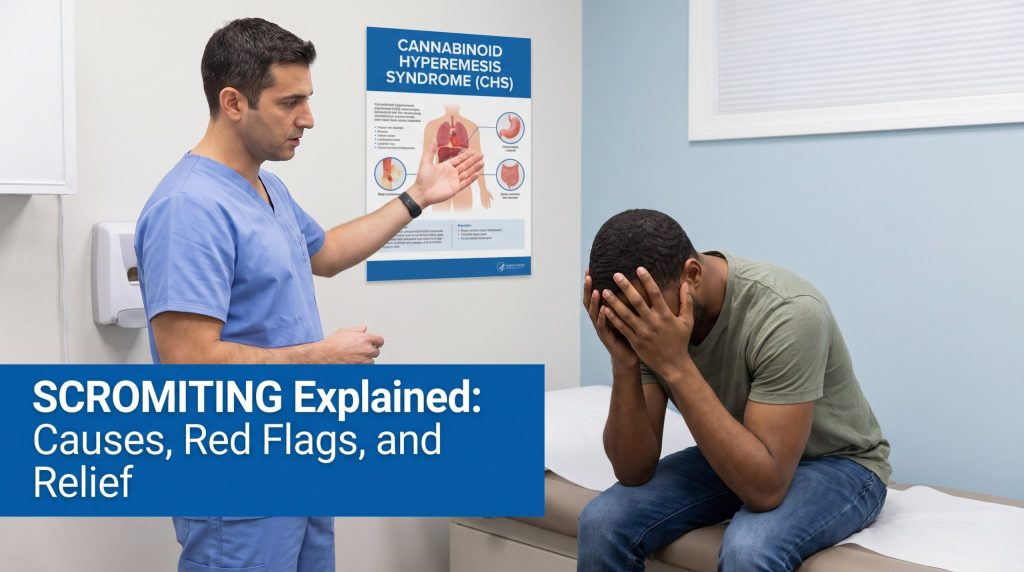
The word scromiting sounds like internet slang, and technically, it is. But the experience it describes is painfully real: repeated, forceful vomiting accompanied by screaming, groaning, or crying. The noise may come from severe abdominal pain, panic, relentless retching, or all three at once.
Scromiting is most often discussed in connection with cannabinoid hyperemesis syndrome (CHS), a condition associated with prolonged, frequent cannabis use. Yet cannabis isn’t the only possible explanation. Food poisoning, cyclic vomiting syndrome, pregnancy complications, medications, toxins, withdrawal, and surgical emergencies can produce similarly dramatic episodes.
This review explains what scromiting means, how clinicians evaluate it, which treatments may help, and when you shouldn’t try to ride it out at home. It’s educational, not a diagnosis: severe vomiting has many causes, and guessing wrong can delay important care.
One point matters from the start. If you use cannabis regularly, tell your healthcare team honestly, including edibles, concentrates, vape cartridges, delta-8 THC, and medical products. Clinicians need the pattern, not a confession. Cannabis is legal or culturally accepted in many places, but legality doesn’t prevent CHS, and withholding that detail can lead to repeated scans, ineffective medication, and a frustrating cycle of ER visits.
If you’re vomiting continuously, can’t retain fluids, feel faint or confused, have severe pain, or see blood, skip the scrolling and seek urgent medical help. Otherwise, here’s what you need to know about scromiting and the clues behind it.
Key Takeaways
- Scromiting describes severe vomiting accompanied by screaming or distress, often linked to cannabinoid hyperemesis syndrome (CHS) caused by prolonged cannabis use.
- Honest disclosure of cannabis use, including all forms like edibles and vapes, is crucial for accurate diagnosis and effective treatment of scromiting.
- The only definitive treatment for CHS-related scromiting is complete cessation of all cannabis products, as symptom relief is unlikely without stopping use.
- Seek urgent medical care if vomiting is relentless, accompanied by severe pain, dehydration, confusion, or blood to avoid serious complications.
- Hot showers may temporarily ease symptoms of CHS, but they do not replace medical evaluation, hydration, or cannabis cessation.
- Scromiting can have multiple causes beyond cannabis, including infections, pregnancy complications, medications, or surgical emergencies, so professional assessment is essential.
What is scromiting?
Scromiting describes an episode in which intense vomiting happens alongside screaming, crying, or loud vocal distress. It isn’t a precise clinical term, and you won’t generally find it written as the official diagnosis on a discharge summary.
The label can still be useful because it communicates severity. Someone isn’t merely feeling queasy: they may be retching repeatedly, experiencing significant pain, and becoming dehydrated quickly. But, the word describes what is happening, not why. Identifying the underlying cause remains the important part.
Scromiting meaning and origin (screaming + vomiting)
“Scromiting” is a blend of screaming and vomiting. News reports and online discussions popularized it while describing especially distressing cases of CHS, although the behaviour itself isn’t exclusive to cannabis-related illness.
The term can sound flippant, which is unfortunate when you’re the person curled on a bathroom floor. Screaming may be an involuntary response to painful abdominal cramping or forceful retching, not evidence that someone is exaggerating. Use the word descriptively, but don’t let its meme-like quality minimize a potentially serious medical problem.
Is scromiting a medical diagnosis or a symptom?
Scromiting is not a recognized standalone diagnosis. It’s an informal description of severe vomiting plus vocal distress. A clinician may instead diagnose CHS, cyclic vomiting syndrome (CVS), gastroenteritis, hyperemesis gravidarum, pancreatitis, bowel obstruction, or another condition.
That distinction affects treatment. Taking an anti-nausea tablet without identifying an obstruction, toxic exposure, or pregnancy complication is like silencing a smoke alarm without checking for fire. The vomiting pattern, accompanying symptoms, examination, laboratory results, and health history all help uncover the cause.
Scromiting and CHS (Cannabinoid Hyperemesis Syndrome): the most common link
CHS is the condition most strongly associated with the term scromiting. It causes recurring nausea, abdominal discomfort, and severe vomiting in some people who use cannabis, typically frequently and over an extended period.
The paradox catches people off guard because cannabis can reduce nausea in other settings. You may have used it for years without trouble or relied on it to settle your stomach. That doesn’t rule out CHS. According to the Canadian Centre on Substance Use and Addiction’s CHS brief, complete symptom resolution after stopping cannabis is central to confirming the condition.
How cannabis can trigger CHS and scromiting
The exact mechanism remains unsettled. THC and other cannabinoids interact with CB1 receptors in the brain and digestive system. With chronic exposure, those effects may disrupt nausea control, stomach emptying, intestinal function, temperature regulation, or the body’s stress-response systems.
Potency and total exposure may matter. Concentrates, high-THC flower, vapes, and frequent edibles can deliver substantial cannabinoid doses, though there is no reliable “safe” threshold that predicts who develops CHS. Genetics and individual physiology probably help explain why one daily user becomes ill while another doesn’t.
CHS phases: prodromal, hyperemetic, recovery
CHS is commonly described in three phases:
- Prodromal: Morning nausea, fear of vomiting, and vague abdominal discomfort may occur for months or years. You may continue or increase cannabis because it seems to offer temporary relief.
- Hyperemetic: Vomiting becomes frequent and difficult to control. You may have abdominal pain, compulsive hot bathing, dehydration, and repeated urgent-care visits.
- Recovery: Vomiting settles after cannabis is stopped and hydration is restored. Appetite and normal eating gradually return.
Restarting cannabis can trigger another cycle, even after a long symptom-free interval.
Why hot showers help (and what it suggests clinically)
Many people with CHS discover that very hot showers or baths temporarily reduce nausea and pain. Heat may influence temperature-regulating pathways and TRPV1 receptors, which are also activated by capsaicin. The relief often fades soon after you leave the water.
This behaviour is a useful clinical clue, but it’s not proof of CHS. People with CVS may also seek hot baths. Excessive bathing can worsen dehydration or cause burns, so it shouldn’t replace fluids, medical evaluation, or cannabis cessation.
Symptoms that commonly occur with scromiting
Scromiting episodes vary, but the core picture is repeated vomiting severe enough to produce pain, panic, exhaustion, or loud cries. Symptoms may arrive in waves, with brief quiet periods followed by another round of retching.
Your accompanying symptoms provide the diagnostic clues. Diarrhea after a shared meal points in a different direction than months of morning nausea and daily cannabis use. Severe one-sided pain, a rigid abdomen, neurological symptoms, or pregnancy also changes the urgency considerably.
GI symptoms: nausea, repeated vomiting, abdominal pain
Common gastrointestinal symptoms include:
- Persistent nausea and forceful, repeated vomiting
- Dry heaving after the stomach is empty
- Upper or diffuse abdominal pain
- Poor appetite and inability to tolerate water or food
- Occasional diarrhea, depending on the cause
CHS pain is often described as diffuse or centred in the upper abdomen. But location alone can’t distinguish it from gallbladder disease, pancreatitis, appendicitis, ulcers, or obstruction. New, severe, localized, or steadily worsening pain warrants prompt assessment.
Dehydration and electrolyte imbalance signs
Repeated vomiting drains water, sodium, potassium, and chloride. Warning signs include a dry mouth, intense thirst, dark or infrequent urine, weakness, headache, dizziness when standing, racing heartbeat, and muscle cramps.
More serious electrolyte disturbances can cause confusion, fainting, severe lethargy, abnormal heart rhythms, or seizures. Kidney function may also deteriorate when fluid loss becomes substantial. If you haven’t urinated for many hours, can’t stand safely, or can’t keep down small sips, home hydration has stopped being a reasonable experiment.
What scromiting looks/sounds like vs typical vomiting
Typical vomiting may involve a few episodes followed by relief. Scromiting usually looks more relentless: repeated heaving, intense abdominal guarding, pacing, crying out, or rushing between a hot shower and the toilet.
Sound doesn’t measure medical severity by itself. One person may scream: another may become eerily quiet despite being equally sick. Focus on frequency, hydration, pain, alertness, blood, fever, and duration, not volume. And no, recording someone for social media isn’t helpful. Note episode timing and call for care instead.
Other possible causes of scromiting (not just cannabis)
Although scromiting and CHS are closely linked online, assuming every dramatic vomiting episode comes from cannabis is risky. Clinicians must consider common stomach illnesses as well as time-sensitive conditions such as appendicitis, bowel obstruction, ectopic pregnancy, diabetic ketoacidosis, meningitis, or poisoning.
The surrounding story matters: recent meals and travel, sick contacts, pregnancy possibility, headache history, new prescriptions, alcohol use, and exposure to chemicals can all redirect the investigation.
Gastroenteritis/food poisoning and severe abdominal pain
Viral gastroenteritis often causes vomiting, watery diarrhea, cramps, and sometimes fever. Foodborne illness may affect several people who ate the same dish and can begin within hours or days, depending on the organism. Think sketchy picnic potato salad, but don’t automatically blame the last thing you ate.
Bloody diarrhea, high fever, severe dehydration, a swollen abdomen, or sharply localized pain requires medical review. Vomiting without diarrhea can still be infectious, but it also raises the need to consider noninfectious causes.
Cyclic vomiting syndrome (CVS) and migraine-related vomiting
CVS causes stereotyped attacks of intense vomiting separated by periods of relatively normal health. Episodes may be triggered by stress, sleep loss, infection, menstruation, certain foods, or excitement. Migraine, light sensitivity, headache, or a family migraine history may support the diagnosis.
Unlike CHS, CVS isn’t resolved by permanently stopping cannabis, although cannabis can complicate the picture. A diary recording sleep, stress, menstruation, cannabis exposure, migraine symptoms, and episode timing can reveal patterns that memory misses when you’re exhausted.
Pregnancy-related hyperemesis (hyperemesis gravidarum)
Hyperemesis gravidarum is much more severe than ordinary morning sickness. It can involve persistent vomiting, weight loss, dehydration, and electrolyte abnormalities, sometimes requiring IV fluids, medication, or hospitalization.
If pregnancy is possible, take a test and contact a healthcare professional. Don’t assume cannabis is a safe anti-nausea workaround: major medical organizations advise against cannabis use during pregnancy. Severe abdominal or pelvic pain, bleeding, shoulder pain, or fainting may indicate an ectopic pregnancy and requires emergency evaluation.
Medication/toxin-related vomiting and withdrawal
Antibiotics, chemotherapy drugs, GLP-1 medications such as semaglutide, opioids, and many other medicines can cause nausea or delayed stomach emptying. Alcohol or opioid withdrawal may also produce vomiting, sweating, tremor, agitation, and cardiovascular changes.
Toxins, including carbon monoxide, contaminated products, mushrooms, or excessive medication doses, need specialized advice. In Canada, call your regional poison centre at 1-844-POISON-X (1-844-764-7669); in Quebec, call the Centre antipoison du Québec at 1-800-463-5060. Don’t induce vomiting unless a poison specialist specifically instructs you to do so.
How scromiting is evaluated: diagnosis and tests
There is no single scromiting test, and no routine laboratory test definitively proves CHS. Evaluation begins with vital signs, hydration status, an abdominal and neurological examination, and a detailed history. Testing is then tailored to your risks and symptoms.
CHS is often a diagnosis of exclusion, especially during a first severe episode. That doesn’t mean “nothing is wrong.” It means clinicians must rule out dangerous alternatives while checking whether the overall pattern fits cannabis-related hyperemesis.
Key history questions (cannabis use pattern, hot bathing, episode cycles)
Expect questions about when vomiting began, how often episodes recur, and whether you return to normal between them. Be specific about cannabis frequency, duration, product type, potency when known, and the date of last use. “Sometimes” can mean twice a year or twice before lunch.
Clinicians may also ask whether hot bathing helps, whether symptoms disappeared during abstinence, and whether they returned after reuse. Other key details include medications, pregnancy possibility, migraine history, alcohol, withdrawal, travel, sick contacts, surgeries, and weight loss.
Common labs/imaging to rule out emergencies
Possible tests include:
- Blood counts, glucose, electrolytes, kidney and liver function
- Lipase to evaluate possible pancreatitis
- Urinalysis for hydration, infection, or ketones
- Pregnancy testing when biologically relevant
- ECG before or during medicines that can affect heart rhythm
- Ultrasound or CT imaging when pain or examination suggests another cause
A urine cannabis test confirms exposure, not CHS. THC metabolites can remain detectable long after intoxication, particularly with frequent use. Imaging may be unnecessary in a familiar, uncomplicated pattern, but that decision belongs to the treating clinician.
CHS vs CVS: how clinicians tell the difference
CHS and CVS can look nearly identical: cyclic attacks, severe vomiting, abdominal pain, and sometimes hot bathing. Heavy, prolonged cannabis exposure supports CHS, but exposure alone doesn’t settle the issue.
The clearest discriminator is sustained recovery after complete cannabis abstinence. CVS may persist despite abstinence and may track with migraine biology or predictable triggers. Because recovery and relapse unfold over time, the final answer may require follow-up rather than one ER visit. A symptom-and-use diary makes that follow-up far more useful.
How to stop scromiting: treatment options
Treatment has two goals: stabilize the current episode and address its cause. A medication that stops vomiting today won’t necessarily prevent the next attack. In CHS, that second part is especially blunt, complete cannabis cessation is the only established definitive solution.
Treatment choices depend on dehydration, examination findings, pregnancy, heart rhythm, other medications, and the suspected diagnosis. Avoid using someone else’s prescription or improvising with high doses. When you’re dehydrated, medication side effects can become less forgiving.
At-home steps for mild cases (hydration, oral rehydration, triggers to avoid)
Home care is appropriate only when symptoms are mild, you remain alert, and you can retain fluids. Take frequent small sips of an oral rehydration solution rather than gulping plain water. Store-bought products such as Pedialyte work: properly prepared oral rehydration mixtures also replace salts and glucose.
Pause cannabis and alcohol. Once vomiting settles, try bland, easy-to-digest foods in small portions. Avoid greasy meals and intense exercise. If every sip comes back up, symptoms worsen, or urine output drops, don’t keep “testing” your stomach for hours, seek care.
Emergency/urgent care treatment (IV fluids, antiemetics, pain control)
Urgent treatment may include IV fluids, electrolyte replacement, glucose assessment, anti-nausea medication, and monitoring. Ondansetron and other conventional antiemetics are often tried, although CHS can respond poorly to them.
Pain management should be cause-specific. Opioids may worsen nausea and bowel function and aren’t generally preferred for CHS. Clinicians also reassess for surgical or cardiac emergencies if pain is severe or unusual. The goal isn’t simply to sedate you: it’s to restore circulation, control symptoms safely, and avoid missing a dangerous diagnosis.
CHS-specific approach: cannabis cessation (only definitive fix)
If CHS is suspected, you need to stop all cannabinoid products, not merely switch strains or reduce THC. That includes flower, concentrates, edibles, delta-8 products, and potentially CBD products. “Just weekends” may still restart symptoms in someone who has already developed CHS.
This can be difficult when cannabis supports sleep, anxiety, pain, appetite, or your social routine. Ask for alternatives and cessation support instead of white-knuckling it. A primary-care clinician, addiction specialist, therapist, or the services listed on Health Canada’s Get help with substance use page (including Drug Rehab Services at 1-877-254-3348 and help in your province or territory) can help you create a realistic plan.
Medications sometimes used in CHS (e.g., haloperidol/capsaicin), what to discuss with a clinician
Some emergency departments use haloperidol or droperidol for suspected CHS. Evidence suggests potential benefit, but these medicines can cause sedation, abnormal muscle movements, agitation, or heart-rhythm problems. They require clinician-directed dosing and, in some circumstances, ECG monitoring.
Topical capsaicin cream applied to the abdomen or arms may reduce symptoms by activating heat-sensitive TRPV1 pathways. It can also burn or irritate skin and must be kept away from eyes, broken skin, and sensitive areas. Discuss concentration, application, pregnancy, interactions, and cardiac risks with your clinician, TikTok is not a pharmacist.
When to go to the ER for scromiting (red flags)
Severe vomiting can move from miserable to dangerous surprisingly fast. Call emergency services if you’re difficult to wake, severely confused, having a seizure, struggling to breathe, or experiencing crushing chest pain. Don’t drive yourself if you feel faint or impaired.
Urgent evaluation is also appropriate for a first unexplained episode of relentless vomiting, especially with major pain or underlying kidney, heart, endocrine, or immune conditions. Children and older adults can deteriorate more quickly.
Signs of severe dehydration, confusion, fainting, or inability to keep fluids down
Go to an emergency department or obtain urgent medical advice if you:
- Can’t keep even small sips down for several hours
- Have minimal or no urine, very dark urine, or a racing heart
- Become confused, extremely weak, or unusually sleepy
- Faint or nearly faint when standing
- Develop severe cramps, palpitations, or a seizure
These signs may reflect major fluid loss, kidney injury, low potassium or sodium, or acid-base disturbances. A hot shower may briefly mute symptoms, but it cannot replace circulating blood volume or electrolytes.
Blood in vomit, severe chest/abdominal pain, fever, stiff neck, or pregnancy
Seek urgent care for red blood or coffee-ground material in vomit, black stools, a rigid or swollen abdomen, severe localized pain, chest pain after retching, high fever, a severe headache with stiff neck, or new neurological symptoms.
Pregnant patients should contact their maternity team promptly for persistent vomiting and seek emergency care for fainting, bleeding, severe pelvic pain, confusion, or inability to hydrate. Green vomit, suspected poisoning, uncontrolled diabetes, or pain that feels dramatically different from previous episodes also belongs in the “don’t wait” category.
Recovery, complications, and how long it lasts
The duration of scromiting depends on the underlying illness and how quickly treatment begins. Foodborne toxin illness may pass relatively quickly: CVS attacks can last hours or days: CHS may recur until cannabinoid exposure ends.
After the vomiting stops, fatigue and stomach sensitivity often linger. Reintroduce fluids and food gradually, follow discharge instructions, and arrange follow-up if the diagnosis remains uncertain. Feeling better after IV medication doesn’t necessarily mean the root problem has disappeared.
How quickly symptoms improve after treatment and cannabis cessation
Acute CHS symptoms may improve within a day or two with fluids, medication, and abstinence, but recovery varies. Appetite, hydration, and normal digestion can take longer to stabilize. Some people report residual symptoms for days or weeks.
The key test is continued improvement while remaining cannabis-free. If vomiting persists, returns despite sustained abstinence, or develops new features, you need reassessment for CVS or another diagnosis. Don’t resume cannabis simply to “check” whether CHS was real: relapse can provoke another severe attack.
Potential complications: kidney injury, esophageal tears, electrolyte issues
Major fluid loss can cause acute kidney injury and dangerous electrolyte abnormalities. Forceful retching may create a Mallory-Weiss tear in the lower esophagus, producing blood in vomit. Rarely, a full esophageal rupture can cause sudden chest pain, breathing difficulty, and critical illness.
Other complications include aspiration into the lungs, malnutrition, burns from prolonged hot bathing, and abnormal heart rhythms related to electrolyte loss or medication. Most are preventable when you seek care early and address the cause rather than repeatedly patching each episode.
Preventing scromiting episodes
Prevention starts with a credible diagnosis. “Avoid everything that might upset your stomach” isn’t much of a plan, and it tends to leave you eating crackers while fearing the next attack. Instead, identify recurring exposures and document what happens before, during, and after each episode.
Track cannabis use, meals, medications, menstruation, migraine symptoms, stress, sleep, illness, and travel. Bring that record to follow-up appointments. Patterns that seem invisible across six months can look obvious on one page.
Preventing CHS recurrence: stopping cannabis, relapse risk, support options
For CHS, prevention means sustained cannabis abstinence. Cutting down, changing delivery methods, or choosing a product marketed as “clean” doesn’t reliably prevent recurrence. If you restart, symptoms may return even if the first few uses seem harmless.
Make cessation practical: remove products and paraphernalia, tell a trusted person, plan for sleep or anxiety symptoms, and avoid high-risk social settings initially. Behavioural therapy and peer support can help. If withdrawal brings irritability, poor sleep, appetite changes, or cravings, ask your clinician about symptom-focused treatment rather than returning to cannabis.
If not CHS: prevention strategies based on cause (food safety, migraine plans, meds review)
For infectious illness, prevention includes careful handwashing, safe refrigeration, avoiding cross-contamination, and cooking foods to recommended temperatures. If CVS or migraine is responsible, your plan may include regular sleep, consistent meals, hydration, trigger management, and prescribed preventive or early-abortive medication.
Review nausea-causing medicines with a pharmacist or prescriber, particularly after dose increases. Don’t stop opioids, steroids, antidepressants, or other dependence-forming medicines abruptly without guidance. During pregnancy, use treatments recommended by your obstetric team. Prevention should match the cause, otherwise it’s just hopeful guesswork.
Scromiting FAQs
Scromiting raises awkward but important questions, particularly when cannabis previously seemed to help nausea. The short answers below reflect current clinical understanding, but your personal risk can’t be calculated from an article.
If episodes recur, request follow-up rather than relying exclusively on emergency treatment. Bring a complete product list and timeline. That includes nonprescription supplements, cannabinoids, and substances you don’t think “count.” They count medically, even when they came in tasteful packaging.
Can occasional cannabis use cause scromiting?
CHS is most commonly reported after frequent, long-term cannabis use, often daily or near-daily. Occasional use is less typical, but no universally accepted exposure threshold exists. People also interpret “occasional” differently, and today’s concentrated products can deliver high THC doses.
A single episode after limited use shouldn’t automatically be labelled CHS. Clinicians should consider intoxication, contaminants, anxiety, gastroenteritis, CVS, and other causes. If cannabis repeatedly precedes vomiting, stop using it and discuss the pattern with a healthcare professional.
Does CBD cause CHS/scromiting?
CHS is principally associated with cannabis and cannabinoid exposure, especially THC, but switching to CBD isn’t a guaranteed workaround. CBD products may contain measurable THC, be inaccurately labelled, or affect cannabinoid pathways themselves. Case reports have also described CHS-like illness with cannabidiol, although evidence is much thinner than for THC-rich cannabis.
If you’re recovering from suspected CHS, the safest approach is to avoid all cannabinoids unless a clinician familiar with your history recommends otherwise. “THC-free” marketing isn’t the same as independent verification.
Why do some people scream during vomiting?
Screaming may be a response to severe abdominal cramps, painful muscle contractions, choking sensations, panic, or the sheer distress of vomiting repeatedly. Some people vocalize involuntarily while forcefully exhaling during retching.
It doesn’t establish a diagnosis, and it shouldn’t be used to judge whether symptoms are genuine. People express pain differently because of physiology, anxiety, culture, prior experiences, and individual coping styles. Treat the person, assess the red flags, and save debates about dramatic sound effects for considerably less miserable circumstances.
Is scromiting dangerous or life-threatening?
It can be. The sound itself isn’t dangerous, but the underlying illness and relentless vomiting can cause severe dehydration, kidney injury, electrolyte disturbances, aspiration, or tears in the esophagus. Occasionally, scromiting-like symptoms signal a surgical, neurological, toxic, or pregnancy-related emergency.
The reassuring part is that prompt treatment is usually effective, and CHS recurrence is preventable when cannabis is stopped completely. Your next step is simple: if red flags are present, seek urgent care now. If episodes are recurrent but you’re stable, schedule an evaluation, document the pattern, and be candid about cannabis. Scromiting may be an informal word, but it deserves a serious, cause-focused response.