
Blog 2026
Can Weed Help You Sleep? What the Evidence Says
Nov
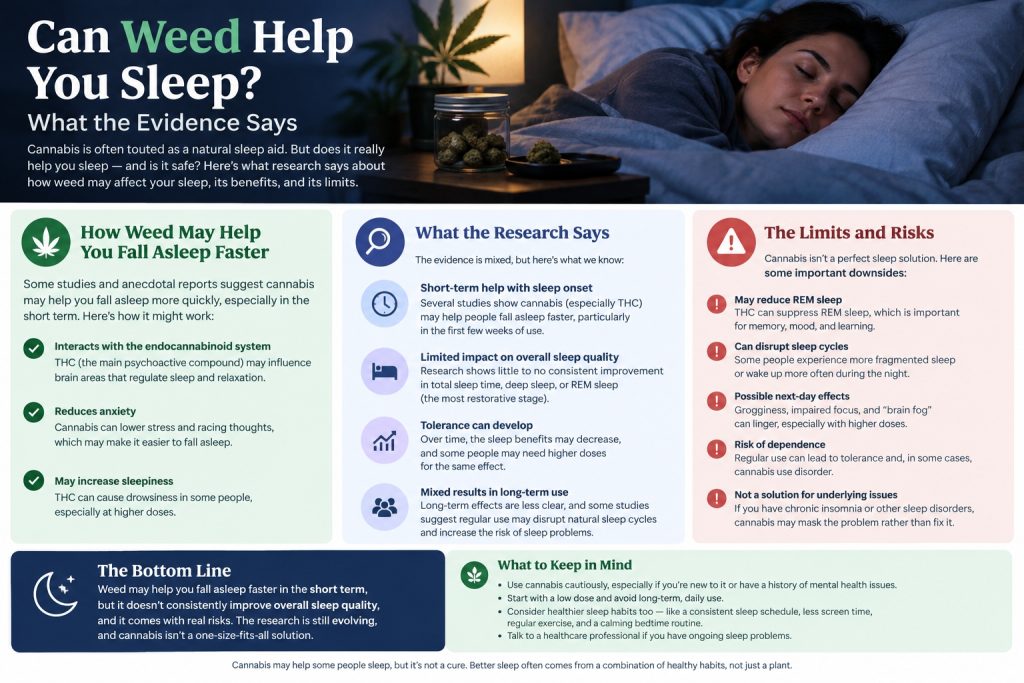
A few puffs, an edible, then lights out, that’s the promise behind countless cannabis sleep products. But can weed help you sleep, or does it simply make you feel drowsy while quietly changing sleep quality?
The honest answer is nuanced. THC may shorten the time it takes some people to fall asleep, particularly when pain is keeping them awake. Yet benefits can fade with regular use, and stopping may trigger rebound insomnia and startlingly vivid dreams. Evidence for CBD and CBN is even less convincing than the packaging often suggests.
This evidence-based review examines cannabis for sleep, not cannabis for every medical condition. You’ll learn what studies say about insomnia, sleep stages, different cannabinoids, long-term use, and safety. Because your health history matters, treat this as preparation for a clinician conversation rather than personalized medical advice. And if you’ve spent nights negotiating with your pillow at 2 a.m., you’re not alone, or out of options.
Key Takeaways
- Cannabis, particularly THC, may help some people fall asleep faster in the short term, especially when pain or other symptoms interfere with sleep.
- Weed is not a proven long-term treatment for insomnia and can lead to tolerance, dependence, and withdrawal symptoms like rebound insomnia and vivid dreams.
- Different cannabinoids like THC, CBD, and CBN have distinct effects, but only THC shows modest evidence for sedation; CBD and CBN lack strong support for improving sleep.
- Cannabis can alter sleep stages by suppressing REM sleep, potentially reducing dream recall, but this does not necessarily improve restorative sleep quality.
- Long-term cannabis use for sleep poses risks including dependence, impaired cognition, and next-day grogginess, making it important to consult a clinician for guidance.
- Cognitive behavioural therapy for insomnia (CBT-I) and addressing underlying health issues remain the most effective and evidence-based approaches for persistent sleep problems.
The short answer: can weed help you sleep?
Yes, cannabis may help you fall asleep sooner in the short term, especially if pain, nausea, or another symptom is disturbing your sleep. THC is mainly responsible for the sedating effect.
But that isn’t the same as treating insomnia or producing restorative sleep. Research remains limited, products vary dramatically, and frequent use can cause tolerance and dependence. CBD and CBN aren’t proven sleep remedies.
Bottom line: Weed may offer temporary symptom relief for some adults, but it isn’t a first-line insomnia treatment, and it can make sleep harder over time.
What does research actually show about cannabis and sleep?
Clinical findings are mixed. A 2022 systematic review of cannabinoids and sleep found that many studies reported improvement, but benefits were generally modest and evidence quality was low. Much of the research involves people with chronic pain or conditions such as multiple sclerosis, not otherwise healthy adults with primary insomnia.
Falling asleep faster versus staying asleep and feeling rested
THC-containing products may reduce sleep-onset latency, the time between lying down and falling asleep. Evidence is weaker for preventing repeated awakenings, extending total sleep, or improving next-day functioning.
That distinction matters. You can fall asleep quickly and still wake feeling as though your brain spent the night running errands. Sedation is observable: truly restorative sleep is more complicated.
Why small studies, self-reported results, and product differences limit conclusions
Many trials include few participants, run for only days or weeks, or rely on subjective sleep ratings. Expectations can influence those ratings, particularly when THC’s effects make blinding difficult.
Meanwhile, “cannabis” could mean inhaled flower, a synthetic cannabinoid, or an oil containing different THC and CBD concentrations. Dose, tolerance, timing, and underlying illness also vary. Pooling those results is a bit like reviewing “beverages” while mixing espresso, chamomile tea, and tequila.
How cannabis may affect sleep stages and dreams
Sleep occurs in repeating stages, including light sleep, deep slow-wave sleep, and rapid eye movement (REM) sleep. Cannabis may alter that architecture rather than merely flipping an on/off switch.
THC, REM sleep, and changes in dreaming
Small, older laboratory studies suggest THC can suppress REM sleep, the stage associated with vivid dreaming and important emotional and memory processes. Regular users may hence remember fewer dreams.
After stopping, REM rebound can produce intense, unusually memorable dreams. It’s common to hear someone say, “I never dreamed on weed, and then my dreams came back in IMAX.” This generally settles as withdrawal passes.
Deep sleep and restorative sleep: what remains uncertain
Some early research suggests acute THC exposure may increase deep sleep, while repeated use could reduce that effect. Results aren’t consistent enough to establish a dependable benefit.
Scientists also don’t yet know what long-term changes mean for cognition, mood, or physical recovery. Feeling knocked out doesn’t prove you received healthier sleep: objective sleep studies and morning function both matter.
THC vs. CBD vs. CBN for sleep: how the evidence compares
These cannabinoids aren’t interchangeable, even when they’re displayed together in the sleep aisle.
| Compound | Current evidence | Main caution |
|---|---|---|
| THC | May produce short-term sedation | Intoxication, anxiety, tolerance |
| CBD | Mixed, dose-dependent findings | Interactions and inconsistent products |
| CBN | Early research: limited human data | Marketing exceeds evidence |
THC: possible sedation, dose-dependent effects, and anxiety risks
Low or moderate THC doses may feel calming. Higher amounts can cause racing thoughts, panic, increased heart rate, dizziness, or paranoia, the opposite of bedtime serenity.
Response varies with tolerance and product potency. Modern concentrates can contain far more THC than cannabis used in older trials, so past research doesn’t map neatly onto today’s dispensary menu.
CBD: mixed findings and why it is not a proven insomnia treatment
CBD doesn’t typically cause THC-like intoxication. Limited studies suggest it may affect alertness or anxiety differently depending on dose, but evidence doesn’t establish it as an effective insomnia therapy.
The products themselves add uncertainty. A bottle’s actual contents may differ from its label, and some CBD products contain detectable THC. CBD can also affect liver enzymes that metabolize medications.
CBN: emerging research versus sleep-product marketing claims
CBN is often marketed as “the sleepy cannabinoid,” frequently in gummies combining CBN, THC, and melatonin. Small emerging studies deserve attention, but there isn’t yet strong independent evidence showing CBN alone reliably improves insomnia.
If a combination gummy works, you can’t assume CBN deserves the credit. THC, melatonin, expectation, or their interaction may explain the result.
Can cannabis help insomnia or other sleep-related problems?
The answer depends partly on why you’re awake. Chronic insomnia is a disorder involving persistent difficulty sleeping despite adequate opportunity, not simply a rough week or sleep disrupted by another untreated condition.
Sleep disrupted by pain or anxiety: indirect relief versus treating insomnia
If pain eases after cannabis use, you may sleep better because the obstacle has softened. That’s indirect relief, not proof cannabis corrected insomnia.
Anxiety is trickier: some people feel calmer, while THC worsens anxiety in others. Cannabis may also become a nightly coping behaviour that preserves fear about sleeping without it. Your clinician should evaluate both the symptom and its cause.
Sleep apnea and restless legs syndrome: why cannabis is not an established treatment
Cannabis isn’t recommended as treatment for obstructive sleep apnea. The American Academy of Sleep Medicine advises against medical cannabis for sleep apnea because effectiveness, delivery, dosing, and safety haven’t been established.
Evidence for restless legs syndrome is limited largely to small reports. Proper evaluation matters because iron deficiency, medications, and other conditions may contribute. Don’t substitute cannabis for CPAP, iron testing, or specialist care.
What happens when you use weed for sleep long term?
The reassuring drowsiness of week one may not remain unchanged. With nightly exposure, your brain adapts, and you may begin using cannabis to avoid poor sleep rather than because it still improves sleep.
Tolerance, dependence, and cannabis use disorder
Tolerance means needing more THC to achieve the same effect. Dependence means your body has adapted enough that stopping causes symptoms. Neither automatically equals addiction, but both can increase risk.
Cannabis use disorder involves continued use despite meaningful harm or difficulty cutting back. Warning signs include escalating doses, cravings, missed responsibilities, and repeatedly failing to reduce use.
Withdrawal-related insomnia, vivid dreams, and rebound sleep problems
After frequent use stops, you may experience insomnia, irritability, anxiety, reduced appetite, sweating, and vivid dreams. Symptoms commonly begin within one or two days, peak during the first week, and improve over roughly two weeks, although sleep disruption can persist longer after heavy use.
This creates a frustrating loop: withdrawal disturbs sleep, then poor sleep seems to “prove” cannabis is necessary. A clinician-guided taper or treatment plan can make that loop easier to break.
Side effects, interactions, and people at higher risk
Cannabis affects coordination, judgment, attention, and heart rate as well as sleepiness. Your personal risk depends on THC dose, delivery method, medications, age, and medical history.
Next-day grogginess, impaired driving, memory problems, and falls
An edible taken late may still impair you the next morning. Don’t drive, operate equipment, or make safety-critical decisions while affected, even if you feel mostly normal.
THC can impair short-term memory and balance. Older adults, people who wake frequently to use the bathroom, and anyone taking sedatives face greater fall risk. Keep nighttime paths lit and uncluttered, but don’t mistake that precaution for eliminating impairment.
Interactions with alcohol, sleep medications, and other sedating drugs
Combining cannabis with alcohol, opioids, benzodiazepines such as alprazolam, antihistamines like diphenhydramine, or prescription sleep medicines can amplify sedation, confusion, and poor coordination.
CBD and THC may also change how certain medicines are metabolized. Bring your clinician or pharmacist a complete list, including gummies, tinctures, supplements, and “just occasional” products. Those details count.
Special concerns during pregnancy, adolescence, and with certain health conditions
Health Canada advises that the safest choice is not to use cannabis during pregnancy and breastfeeding because THC crosses the placenta and passes into breast milk. Adolescents and young adults face additional concerns because the brain is still developing.
Extra caution is warranted if you have a history of psychosis, bipolar disorder, severe anxiety, substance use disorder, cardiovascular disease, or significant liver disease. THC can worsen psychiatric symptoms in susceptible people.
Do cannabis products, timing, and strain labels change sleep effects?
Yes, but not in ways that make dosing simple. Two products with the same advertised THC amount can feel different because absorption, cannabinoid ratios, food intake, and individual metabolism vary.
Smoking, vaping, and edibles: differences in onset, duration, and risks
| Method | Typical pattern | Key concern |
|---|---|---|
| Smoking/vaping | Effects begin within minutes | Lung exposure: easier repeated dosing |
| Edibles | Delayed onset, longer duration | Accidental overconsumption: morning impairment |
| Oils/tinctures | Timing varies by use | Measurement and labelling differences |
The classic edible mistake is taking more after 30 minutes because “nothing happened,” only to have both doses arrive later. Store all products away from children and pets, preferably locked and in original packaging.
Indica, sativa, and terpenes: why labels do not reliably predict better sleep
“Indica means sleepy: sativa means energetic” is catchy dispensary shorthand, not a dependable clinical rule. Genetic testing and chemical analyses show commercial labels don’t consistently predict cannabinoid composition or effects.
Terpenes such as myrcene and linalool are interesting research targets, but marketing claims outpace human sleep evidence. Check verified THC and CBD content rather than relying on a purple package named something like Midnight Coma.
If you are considering cannabis for sleep: safety questions to discuss with a clinician
Before trying cannabis, or increasing what you already use, ask a clinician:
- What’s causing my sleep problem, and should I have a sleep study?
- Could cannabis interact with my prescriptions, alcohol use, or health conditions?
- How would we measure whether it’s helping beyond making me drowsy?
- What signs of tolerance or dependence should I watch for?
- What’s a safe plan if I want to stop?
Keep a two-week sleep diary recording product, dose, timing, awakenings, morning alertness, and daytime function. Don’t drive after use, don’t mix it with other sedatives without medical guidance, and choose regulated products. No universal “sleep dose” has been established.
Better-supported alternatives to cannabis for sleep
If weed isn’t the evidence-backed shortcut you hoped for, that doesn’t mean you’re stuck counting ceiling cracks. Effective insomnia care targets the patterns and conditions keeping you awake.
CBT-I: first-line treatment for chronic insomnia
Cognitive behavioural therapy for insomnia (CBT-I) is the recommended first-line treatment. It combines sleep scheduling, stimulus control, cognitive strategies, and education to rebuild your bed-sleep association.
Unlike a sedative, CBT-I can produce benefits that continue after treatment ends. You can access it through trained therapists or validated digital programs: ask your clinician for options rather than relying on generic “sleep hygiene” alone.
Consistent sleep habits, treating underlying conditions, and clinician-guided medication
Set a consistent wake time, reserve your bed for sleep, get morning light, and reduce late caffeine. If you can’t sleep after roughly 20 minutes, leave bed for a quiet activity until drowsy.
More importantly, address contributors such as apnea, depression, menopause symptoms, reflux, pain, or restless legs. Medication may sometimes help, but selection and duration should reflect your diagnosis, age, risks, and other treatments.
When to seek help for persistent insomnia or reliance on cannabis
Contact a healthcare professional if poor sleep lasts three months, occurs at least three nights weekly, or impairs your mood, concentration, work, or driving. Seek evaluation sooner for loud snoring, gasping, severe daytime sleepiness, unusual nighttime movements, or worsening mental health.
Also ask for help if you can’t sleep without cannabis, keep increasing the dose, or want to stop but can’t. Support can include CBT-I, substance-use counselling, medication management, or a gradual reduction plan. Urgent help is appropriate for suicidal thoughts (in Canada, call or text 9-8-8 any time), psychosis, chest pain, or dangerous intoxication (call 911).
Frequently asked questions
How long can sleep problems last after stopping weed?
For frequent users, insomnia and vivid dreams often begin within 24–48 hours and are worst during the first week. Many people improve within one to two weeks, but sleep difficulties may last several weeks, particularly after heavy, prolonged use or when an underlying sleep disorder was already present.
Avoid treating withdrawal by repeatedly restarting without a plan. If symptoms are severe, persist, or affect safety, contact a clinician. A regular wake time, morning sunlight, exercise earlier in the day, and CBT-I strategies can support recovery.
Scientific sources and medical review
Key evidence includes the National Academies review of cannabis health effects, the American Academy of Sleep Medicine position statement, Health Canada’s information for health care professionals on cannabis and cannabinoids, and clinical literature indexed through PubMed. Product laws and evidence evolve, so verify current guidance for your province or territory.
This article is educational and does not replace diagnosis or individualized treatment. It should receive review by a qualified physician, pharmacist, or sleep-medicine specialist before clinical publication: no personal affiliation with cannabis brands or financial interest in products discussed is claimed.
So, can weed help you sleep? Sometimes, briefly, but sedation, healthy sleep, and effective insomnia treatment aren’t synonyms. If cannabis has become your nightly requirement, don’t beat yourself up. Track what’s happening, discuss it honestly with a clinician, and prioritize treatments, especially CBT-I, that offer stronger evidence without tying tomorrow night’s sleep to another dose.