
Blog 2026
What Is Shatter? THC Shatter Explained: A Beginner’s Safety Guide
Oct
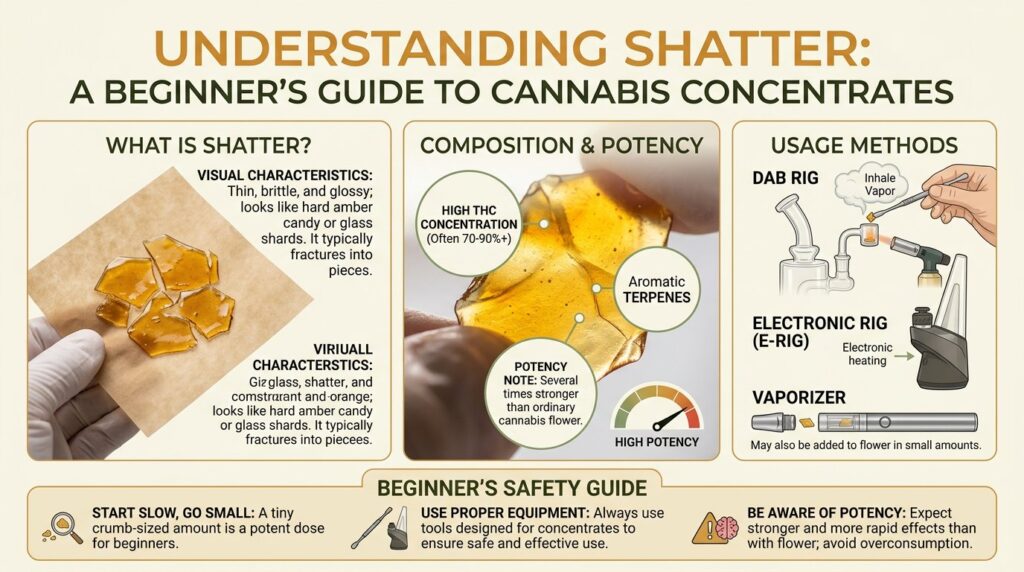
You unwrap a small square of parchment and find something that looks like amber-coloured candy: thin, glossy and brittle enough to crack. It may look like a caramel shard, but it’s cannabis shatter, a highly concentrated extract that can be several times more potent than ordinary flower.
So, what is shatter, exactly? Shatter is a cannabis concentrate known for its translucent, glass-like look and firm texture. It contains concentrated cannabinoids, usually a lot of THC, along with varying levels of aromatic terpenes. People typically inhale it with a dab rig, an electronic rig or a concentrate vaporizer, although some add tiny pieces to flower.
This beginner-friendly guide explains what shatter is, how professional processors make and test it, how it compares with wax and other cannabis concentrates, and what you should know before using it, including the rules in Canada. It does not explain how to make concentrates at home. Hydrocarbon extraction involves flammable gases, specialized equipment and serious fire and contamination risks, and making cannabis extracts at home with combustible solvents is illegal in Canada. [VERIFY]
Shatter’s polished look can make it seem predictable. It isn’t. Potency, purity, flavour and texture vary considerably between products, and even between batches with the same strain name. If you’re an adult in Canada and choose to try THC shatter, the safest approach is simple: buy a tested product, check its potency, use far less than you think you need, and give the effects time to arrive. Concentrates aren’t a beginner shortcut to a “better” experience. They’re simply a stronger format that needs more care.
Key Takeaways
- Shatter is a potent, glass-like cannabis concentrate, often 60% to 90% THC, so dosing needs real care, especially for newcomers.
- It’s made with hydrocarbon or CO₂ extraction in professional facilities; home extraction with solvents is dangerous and illegal in Canada.
- Its texture can range from brittle to sticky depending on temperature and terpenes, but a good “snap” isn’t a sign of potency.
- Start with a very small amount, use a proper dab rig or concentrate vaporizer, and wait 10 to 15 minutes before taking more.
- Buy tested shatter with clear labelling and batch-specific lab results to avoid contaminants.
- Store it cool, dark and airtight to protect potency and flavour.
What Is a Shatter? (Definition and Why It’s Called “Shatter”)
Shatter is a solid cannabis extract made of concentrated cannabinoids and terpenes separated from the plant material. It belongs to the broad family of concentrates, alongside wax, budder, rosin, live resin and distillate. (For a tour of the whole family, see weed concentrates explained.)
The name is wonderfully literal: when cool and stable, a thin sheet can shatter like glass if bent or dropped. That brittleness isn’t a universal sign of quality, though. Heat, terpene content, moisture and handling can make the same product softer or stickier.
You’ll also see the term BHO, or butane hash oil, linked with shatter (it’s closely related to honey oil). Many shatters are made with hydrocarbon extraction, but texture alone doesn’t reveal the method. Read the package rather than judging a golden slab by its sparkle. And if you’ve heard shatter called “glass,” “snap” or “pull-and-snap,” those are just slang for the same product (more in our weed slang guide).
Appearance, texture and typical THC range
Shatter usually ranges from pale yellow to deep amber. It may be nearly transparent, slightly cloudy or full of tiny bubbles. Those differences can reflect processing, age, cannabinoid content or trapped air: darker doesn’t automatically mean dirty, and clear doesn’t automatically mean pure.
At room temperature, shatter is generally firm and smooth. Typical products contain roughly 60% to 90% THC by weight, although lower-THC and CBD-dominant versions exist. Compare that with flower, which often contains around 15% to 30% THC.
Read the label carefully (here’s how to read a cannabis label): “80% THC” means roughly 800 milligrams of THC per gram before losses during use. That’s a lot packed into something the size of a potato-chip crumb.
Shatter vs glass vs pull-and-snap: texture variations
Names such as glass, pull-and-snap and snap-and-pull describe consistency more than a different product.
- Glass: Extremely rigid and brittle; it fractures cleanly when handled.
- Pull-and-snap: Flexible when gently pulled, but snaps after stretching.
- Sap-like shatter: Softer and stickier, especially in a warm room.
A concentrate can move between these states with temperature. Something glassy from the fridge may turn taffy-like between warm fingers. Products rich in certain terpenes may also stay softer, because terpenes behave partly like solvents.
Don’t chase brittleness as proof of potency. Lab results, ingredients, manufacturing details and freshness tell you far more than whether the product does a dramatic little snap.
How Shatter Is Made: Extraction, Purging and What “Quality” Means
Processors make shatter by separating the resin-rich compounds from cannabis, filtering out plant material and carefully removing the extraction solvent. The resulting concentrate is spread into a thin layer and left to stabilize, without the whipping used to make wax or budder.
That’s the intentionally high-level version. Attempting hydrocarbon extraction at home can cause explosions, flash fires, poisoning and contaminated products. “Open blasting” (forcing butane through plant material in an unventilated setup) is especially dangerous. In Canada, only federally licensed processors may use solvents like butane to make cannabis extracts. [VERIFY] (Our guide to cannabis licences explains who can do what.)
For you as a buyer, “quality” should mean verified potency, clean contaminant results, accurate labelling, proper packaging and a pleasant aroma, not just a pale colour or Instagram-worthy transparency.
Common extraction methods (hydrocarbon vs CO₂) at a high level
Hydrocarbon extraction commonly uses butane, propane or a blend in a closed-loop commercial system. These solvents efficiently capture cannabinoids and flavour compounds at controlled temperatures. Manufacturers adjust pressure and temperature to influence the final extract, but proper equipment and trained operators are non-negotiable.
Supercritical or subcritical CO₂ extraction uses pressurized carbon dioxide. CO₂ isn’t flammable under ordinary conditions and leaves no hydrocarbon residue, although the equipment is still highly specialized. It’s more often associated with vape oils and refined extracts than with classic brittle shatter.
Neither method is automatically better. A carefully made hydrocarbon extract may keep excellent flavour, while a heavily refined CO₂ product may taste muted. Testing and execution matter more than the buzzword on the box.
Purging (solvent removal) and why it matters
After extraction, processors must remove leftover solvent, a step often called purging. Commercial facilities use vacuum ovens and controlled heat to let volatile solvents evaporate while protecting the compounds you want.
Incomplete purging can leave too much butane, propane or other residue. You can’t confirm safety by smell, colour, bubbling or the internet’s infamous “lighter test.” Only proper lab analysis can measure residual solvents reliably.
A certificate of analysis (COA) may report residual solvents in parts per million and show whether the batch passed. If a package has no lot number or verifiable test information, that’s your cue to walk away, no detective hat required.
Terpenes, cannabinoids and why shatter varies by strain and batch
Cannabinoids such as THC, CBD, CBG and CBN shape a product’s effects. Terpenes, including myrcene, limonene, pinene and caryophyllene, create aroma and may influence how it feels, although claims about precise “uplifting” or “sedating” outcomes often go beyond current clinical evidence.
Heat, oxygen, starting material, storage and processing all affect the final profile. That’s why two packages labelled Blue Dream may smell and feel different. Strain names aren’t standardized chemical guarantees.
Look for batch-specific cannabinoid and terpene data rather than relying on indica, sativa or a familiar name (here’s why those labels are unreliable). A fresh citrus aroma and an intact seal are useful clues, but they complement lab testing; they don’t replace it.
Shatter vs Wax vs Other Concentrates: Key Differences
Most concentrate names describe texture, processing or starting material, not strength. Shatter, wax and budder can have similar THC levels while behaving very differently on a dab tool. For a deeper head-to-head, see wax vs shatter vs budder.
| Concentrate | Typical texture | Defining feature | Beginner handling |
|---|---|---|---|
| Shatter | Glassy or pull-and-snap | Stable, thin sheet | Easy when cool; can splinter |
| Wax / budder | Soft, whipped | Opaque and pliable | Easy to portion |
| Crumble | Dry, honeycomb-like | Breaks into crumbs | Can scatter |
| Live resin | Saucy or sugary | Fresh-frozen plant material | Sticky but aromatic |
| Rosin | Sap, badder or jam | Solventless pressing | Usually manageable |
| Distillate | Thick oil | Highly refined cannabinoids | Potent; often cartridge-ready |
Packaging, temperature and formulation can blur every category. Treat the table as a map, not cannabis law carved into stone.
Shatter vs wax (texture, handling, aroma, terpenes)
Shatter is usually smooth, translucent and rigid; wax is opaque, soft and aerated. Wax gets its texture when the extract crystallizes or is agitated during finishing. Because it doesn’t fling tiny amber splinters across your desk, many beginners find wax easier to portion.
Wax is sometimes described as more aromatic, but texture alone doesn’t guarantee more terpenes. Freshness, starting material and processing temperatures matter. Good shatter can be wonderfully fragrant; stale wax can smell like almost nothing.
Choose based on practical handling and verified composition. If your home runs warm, brittle shatter may quickly turn sticky. If precise portions are your priority, a stable badder may be less fiddly, especially before coffee.
Shatter vs budder/badder, crumble, live resin, rosin and distillate
Budder or badder has a creamy consistency created by controlled agitation and crystallization. Crumble is drier and porous. Both are convenient for dabbing but may leave residue on tools.
Live resin starts with fresh-frozen cannabis rather than dried flower, which helps keep volatile aromatics. It often costs more and has a sauce-and-crystal texture. Rosin uses heat and pressure instead of a chemical solvent, which appeals to people who want solventless products, but it isn’t automatically pesticide-free. (See live rosin vs shatter and hash vs kief vs rosin.)
Distillate is heavily refined, usually THC-heavy, and often has fewer of the original plant compounds unless terpenes are added back (more in live resin vs distillate). Shatter sits between these: relatively stable, flavourful when fresh and less refined than distillate.
How Strong Is Shatter? Potency, Dosing and Who It’s For
Shatter is one of the more potent inhaled cannabis formats. A product labelled 75% THC contains about 750 milligrams per gram. Even allowing for imperfect transfer and inhalation, a tiny portion can deliver far more THC than a new user expects.
That makes shatter better suited to experienced adults who know how they respond to THC. People with low tolerance, a history of panic after cannabis, heart concerns, pregnancy or susceptibility to psychosis should avoid it or get individual medical advice. It’s also a bad idea before driving, working, caregiving or operating equipment.
If you use cannabis for medical reasons, concentrated THC isn’t a substitute for professional treatment. Talk to your doctor or pharmacist about dosing, interactions and safer options.
Why concentrates feel stronger than flower
Concentrates deliver a dense amount of THC in a small inhalation. Flower contains plant matter and lower cannabinoid levels, so reaching the same THC dose generally takes more material and more puffs.
Inhaled THC reaches the bloodstream quickly, with effects starting within minutes. A large dab can therefore bring a steep rise rather than the gradual build of a shared joint. That sudden intensity may feel euphoric, but it can also trigger coughing, dizziness, a racing heart, nausea or anxiety.
Tolerance complicates comparisons. Someone who dabs daily may call a dose “tiny” that would overwhelm a flower-only consumer. Your friend’s dab is not a unit of measurement, however confidently they insist otherwise.
Beginner dosing: start low and avoid overconsumption
There’s no universal safe dab size, because potency, equipment efficiency and personal sensitivity all vary. If you’re inexperienced, consider skipping concentrates entirely until you’re comfortable with lower-potency cannabis (our THC dosage guide for beginners is a better first step).
If you go ahead, use the smallest piece you can reasonably separate, often described as a crumb smaller than a grain of rice, and choose lower-THC or balanced THC/CBD products when available. Most scales can’t weigh such a tiny piece accurately, so don’t pretend a visual estimate is precise.
Health Canada’s advice is “start low, go slow.” Take one inhalation, sit somewhere comfortable and wait at least 10 to 15 minutes before considering more. Don’t combine it with alcohol or sedatives. You can always add more later; you can’t un-dab the dab.
How to Use Shatter: Methods, Tools and Step-by-Step Basics
Shatter is usually vaporized on a heated surface or in an electronic concentrate chamber. You can also mix it with flower, though that makes dosing and combustion less predictable. “How to use shatter” in short: a tiny piece, low heat, one inhalation, then wait. Our dabbing for beginners guide covers technique in more detail.
Before starting, read the product and device instructions, prepare a very small portion, and pick a stable surface away from children and pets. Keep water nearby, not because water “sobers you up,” but because concentrated vapour can make your throat feel like it has filed a formal complaint.
Never drive after using THC. Store hot tools safely, and don’t improvise with plastic, coated metals or household items that weren’t designed for inhalation.
Dabbing (rig or e-rig): temperature and technique
A traditional rig uses a water pipe, a heat-resistant nail or banger, a dab tool and usually a carb cap. An e-rig controls the heat electronically, which takes out the guesswork and the torch, often a worthwhile safety upgrade for beginners.
At a high level:
- Put a tiny portion on a clean dab tool.
- Heat the device according to the manufacturer’s instructions.
- Use a lower setting, commonly around 205–260°C (400–500°F) on devices that show accurate temperatures.
- Touch the concentrate to the heated surface while inhaling gently.
- Cap if required, then clean the chamber once it cools.
Don’t touch hot glass or metal. If the concentrate instantly scorches and tastes bitter, the surface is probably too hot.
Vape pens and concentrate vaporizers: what to look for
Not every vape pen can handle solid concentrates. Look for a device made specifically for wax or shatter, with adjustable temperature, replaceable or cleanable chambers, overheating protection and a recognized battery safety certification. Puffco, Dr. Dabber and Focus V make well-known concentrate devices, but brand recognition doesn’t replace reading the manual. (See our guide to buying vape pens online in Canada.)
Start at the lowest useful heat setting. Load only enough to cover a small part of the chamber: overpacking can cause leaks, clogged airflow and uneven heating. Don’t scrape the chamber with metal unless the manufacturer allows it.
Avoid unknown prefilled cartridges and mystery additives. The 2019 outbreak of vaping-related lung illness, which affected Canadians too, was linked mainly to THC vaping products from informal sources, particularly those containing vitamin E acetate. [VERIFY: add the current Health Canada vaping-illness link]
Adding shatter to flower (bowl or joint): pros, cons and cautions
You can put a small piece of shatter between layers of ground flower in a bowl or along the centre of a joint. Sandwiching it keeps the concentrate from sticking to everything except, somehow, the one place you wanted it.
This method needs no dab rig and may slow the experience down, but it has drawbacks. Burning creates smoke and destroys some terpenes, the joint may burn unevenly, and you can’t easily work out the combined THC dose. Concentrate near the paper can also melt and run.
Use much less than you would in a dab, keep open flames away from loose packaging, and don’t keep relighting just because the effects haven’t peaked yet.
Effects of Shatter: What to Expect and How Long It Lasts
Shatter’s effects generally resemble those of other THC-rich cannabis products, but they can be more intense because the dose is concentrated. You may notice changes in mood, senses, time awareness, coordination, appetite and short-term memory.
Effects differ sharply between people. One person’s calm evening may be another person’s “why is the fridge humming at me?” episode. Product chemistry plays a part, but dose, tolerance, expectations and surroundings often matter just as much.
The information below describes common patterns, not guaranteed timelines. If effects are severe, unusual or medically worrying, call 911 or your poison centre rather than waiting for an article to reassure you.
Common mental and physical effects
Desired effects may include euphoria, relaxation, laughter, heightened senses, increased appetite or temporary relief from certain symptoms. Evidence supports some cannabinoid-based medicines for specific conditions, but recreational shatter isn’t a standardized medical product.
Unwanted effects can include:
- Anxiety, panic or paranoia
- Impaired attention and short-term memory
- Dizziness or poor coordination
- Dry mouth and red eyes
- Faster heart rate
- Coughing, throat irritation or chest discomfort
- Nausea, especially at high doses
THC also slows reaction time and impairs judgment even when you feel capable. Stay off the road. If you have severe chest pain, trouble breathing, loss of consciousness or dangerous behaviour, get urgent medical help.
Onset and duration by method (dab vs vape vs mixed with flower)
Inhaled effects often begin within seconds to a few minutes and become clearer over roughly 10 to 30 minutes. The strongest effects may last one to three hours, while impairment or grogginess can last longer.
| Method | Typical onset | Main effects may last |
|---|---|---|
| Dab / e-rig | Seconds to 5 minutes | 1–3 hours |
| Concentrate vaporizer | 1–10 minutes | 1–3 hours |
| Mixed with flower | 1–10 minutes | 2–4 hours |
These are broad estimates, not appointment times. Large doses, repeated hits, individual metabolism and low tolerance can stretch the experience. Don’t redose just because the first minute feels quiet.
What changes the experience (tolerance, terpenes, dose, setting)
Dose and tolerance are usually the biggest variables. Frequent THC use can blunt the effects, while a tolerance break can make your old portion feel enormous.
Cannabinoid ratios matter too. CBD may soften some THC effects, although it isn’t a guaranteed antidote. Terpenes shape flavour and may influence the experience, but human research is limited, so don’t treat a limonene percentage like a mood prescription.
Your physical and emotional setting counts as well. Lack of sleep, an empty stomach, alcohol, unfamiliar company or underlying anxiety can change the tone quickly. For a first try, choose a calm place with no obligations and a trusted sober person nearby. Sometimes good “set and setting” just means sweatpants and a cleared calendar.
Safety, Risks and Harm Reduction
The main immediate risks are too much THC, impairment, lung and throat irritation, burns from equipment, and contamination from untested products. Frequent high-potency use may also increase tolerance, dependence, withdrawal symptoms and the risk of cannabis use disorder.
Young people, pregnant or breastfeeding people, and those with certain mental health or heart conditions face extra risks. Canada’s Lower-Risk Cannabis Use Guidelines [VERIFY URL] specifically recommend choosing lower-potency products over high-THC concentrates. Keep every concentrate locked away from children and pets: a sticky golden fragment can look disturbingly like candy.
Harm reduction doesn’t make use risk-free. It means cutting avoidable danger: choose tested products, use less, avoid mixing substances, keep temperatures moderate, don’t share mouthpieces and never drive impaired.
Signs of overconsumption and what to do
Too much THC can cause panic, confusion, vomiting, shaking, dizziness, a racing heart, extreme drowsiness or paranoia. A fatal THC overdose is considered unlikely, but injuries and serious medical complications can still happen.
If you’ve had too much:
- Stop using cannabis and other substances.
- Sit or lie down somewhere quiet and safe.
- Breathe slowly and sip water.
- Ask a trusted sober person to stay with you.
- Remind yourself that inhaled effects usually fade with time.
Call 911 for chest pain, seizures, breathing trouble, unconsciousness, severe agitation or risk of self-harm. For advice on a specific situation, call your provincial poison centre; 1-844-POISON-X (1-844-764-7669) connects you to your local centre. [VERIFY]
Quality and contamination concerns (residual solvents, additives, pesticides)
Untested concentrates may contain residual solvents, pesticides, heavy metals, microbes, synthetic cannabinoids or undisclosed thinning agents. You can’t spot these by looking. A beautiful amber sheet can still fail a lab test.
Buy from a seller that shows real test results (our guide to spotting a trustworthy online dispensary explains what to look for). Check for:
- A lot number that matches the test report
- THC, CBD and ideally terpene results
- Pass results for residual solvents, pesticides, microbes and heavy metals
- Extraction method and ingredient disclosure
- Packaging date and producer contact details
Be cautious if the product smells of chemicals, comes in copied branding, has no tamper-evident seal or makes extravagant potency claims. Don’t use mouldy, leaking or visibly contaminated material, even if it was expensive.
Temperature safety: avoiding harsh hits and burnt concentrate
Very high temperatures make harsher vapour, destroy flavour compounds and may increase exposure to heat-breakdown products. A huge cloud isn’t a quality certificate; sometimes it’s just your lungs getting an unnecessarily dramatic weather event.
Use the lowest temperature that vaporizes the product effectively. On a reliable e-rig, many people start around 205–230°C (400–450°F) and adjust gradually. The actual surface temperature can differ from the display, so follow the device guidance and watch how the material behaves.
Stop if the hit tastes scorched or hurts. Let equipment cool before cleaning, put hot parts on a heat-resistant surface, and keep torches away from alcohol-based cleaners. Never heat a sealed container or concentrate directly with a household flame.
How to Store Shatter Properly (So It Doesn’t Degrade)
Shatter breaks down with heat, light, oxygen and moisture. THC can oxidize over time and volatile terpenes escape, leaving the flavour flatter and the texture less stable. (Our general guide to storing weed, edibles and concentrates covers the basics.)
For short-term storage, keep it sealed in a cool, dark cupboard. For longer storage, an airtight glass container in the fridge may help, but condensation becomes a concern. Let the unopened container come back to room temperature before exposing the shatter to humid air.
Most importantly, use child-resistant packaging inside a locked box, and label it clearly. The freezer’s mystery-food system (“probably soup, possibly cannabis”) is not an acceptable household safety plan.
Best containers and wraps (parchment, silicone, glass) and what to avoid
Unbleached, food-grade parchment is useful for handling shatter, because the concentrate releases easily when cool. Put the folded parchment inside an airtight glass jar for better protection from air and odours.
Silicone containers are handy for short periods, especially for sticky concentrates, but terpenes may interact with some silicone over long storage. Glass is generally the better long-term choice. Use a container small enough to limit extra air.
Avoid wax paper, which can stick or transfer its coating, and don’t use bare plastic wrap. Ordinary paper soaks up oils and sheds fibres. Also avoid handling shatter with your fingers: warmth softens it, and skin oils and debris contaminate it. A clean dab tool is less messy and far less humbling.
Heat, light and oxygen: keeping potency and terpenes intact
Store shatter below warm-room temperature and away from windows, stoves, radiators, dashboards and electronics. A car glove box can turn a tidy sheet into amber glue surprisingly fast, even in a Canadian summer.
Limit oxygen by closing the container right after use. An opaque outer box blocks UV light, and a tight lid slows terpene loss. Don’t keep moving the jar between cold storage and room temperature: temperature swings encourage condensation and texture changes.
Cloudiness, sugaring or softening doesn’t necessarily mean the product is unsafe; it may just have changed consistency. But throw it out if you see fuzzy growth, foreign particles, unusual moisture, leaking packaging or a chemical smell. When in doubt, don’t inhale it.
Shatter in Canada: Legality and Buying Considerations
Cannabis extracts, including shatter, have been legal for adults to buy in Canada since October 2019 under the federal Cannabis Act, but provinces and territories set many of the rules on top of that. [VERIFY] (See our Canadian cannabis legalization timeline for how we got here.) This section is general information, not legal advice; check your provincial government’s website for current rules.
What the rules cover
- Legal age: 19 in most provinces and territories, 18 in Alberta and 21 in Quebec. [VERIFY]
- Possession limits: Adults can carry up to 30 grams of dried cannabis or the equivalent in public. Concentrates count differently from flower: 1 gram of concentrate is treated as equal to 4 grams of dried cannabis, so the public limit works out to about 7.5 grams of shatter. [VERIFY]
- Home extraction: Making extracts at home with butane or other combustible solvents is prohibited. [VERIFY]
- Public use, transport and driving: Provinces and cities set their own rules on where you can consume. Drug-impaired driving is a Criminal Code offence, with legal limits for THC in the blood. [VERIFY]
- Borders: Never take shatter across the Canadian border in either direction, even to places where cannabis is legal. That’s illegal no matter the amount. [VERIFY] Flying within Canada has its own rules; see travelling with cannabis in Canada.
Don’t rely on an old forum thread or a friend whose legal analysis starts with “I’m pretty sure.” Check the official sources.
How to choose a reputable shatter (lab testing, labelling, terpene info)
Compare products on evidence, not the highest THC number. Ask for a recent certificate of analysis and check that its lot number matches your package. Look for contaminant screening, production and packaging dates, net weight, ingredients, required warnings and child-resistant packaging.
Terpene information can help you compare aroma profiles, but it isn’t a promise of a particular effect. Avoid products with damaged seals, vague “99%” claims, cartoon packaging aimed at kids, or no identifiable producer.
A good seller should answer basic questions without pushing you toward the strongest option. Tell them you’re new and want a lower-potency, easy-to-handle product. If their only advice is “take a huge dab,” shop elsewhere. When you’re ready to compare, browse our shatter weed collection and check each product’s THC and testing details.
The Bottom Line: What Is Shatter in Practical Terms?
It’s a potent, glass-like cannabis concentrate: not a special strain, not automatically purer than wax, and definitely not beginner-proof. If you choose to use it, prioritize verified testing, moderate temperatures, secure storage and an exceptionally small first portion.
You don’t earn bonus points for handling the strongest concentrate on the shelf. The better experience is the one you can control. Read the label, prepare your setting, wait before taking more, and listen when your body says that’s enough. Those habits aren’t timid; they’re what informed cannabis use actually looks like.
Frequently Asked Questions About Shatter
What is shatter in cannabis terms?
Shatter is a translucent, glass-like cannabis concentrate with a firm, brittle texture. It contains high levels of THC (often 60–90%) and aromatic terpenes, and it’s usually vaporized with a dab rig or concentrate vaporizer.
What is a shatter made from, and why should only professionals make it?
Shatter is made by extracting cannabinoids and terpenes from cannabis with solvents such as butane or CO₂, then carefully purging the leftover solvent. Professional production matters because home extraction can cause explosions and leave contaminants, and in Canada making extracts with combustible solvents at home is illegal. [VERIFY]
How does shatter compare with wax or budder?
Shatter is more rigid and translucent; wax and budder are softer and opaque. They can have similar THC levels, but shatter is stable when cool and can be brittle, while wax is easier for beginners to portion. See wax vs shatter vs budder for more.
Why is shatter stronger than flower?
Shatter typically contains 60% to 90% THC, compared with 15% to 30% in flower, so a much smaller amount delivers a much bigger dose.
How should beginners use shatter safely?
Start with a piece smaller than a grain of rice, inhale gently with a proper device at a low temperature, and wait 10 to 15 minutes before taking more. Don’t mix it with alcohol or sedatives.
Is shatter legal in Canada?
Yes, cannabis extracts like shatter are legal for adults in Canada, subject to provincial age limits (19 in most provinces, 18 in Alberta, 21 in Quebec) and possession limits, where 1 gram of concentrate counts as 4 grams of dried cannabis. Making it at home with solvents is not legal. [VERIFY]
How do you store shatter?
Keep it in an airtight, child-resistant container, ideally wrapped in unbleached parchment inside a glass jar, somewhere cool and dark. This protects potency and terpenes and keeps it away from kids and pets.