
Blog 2026
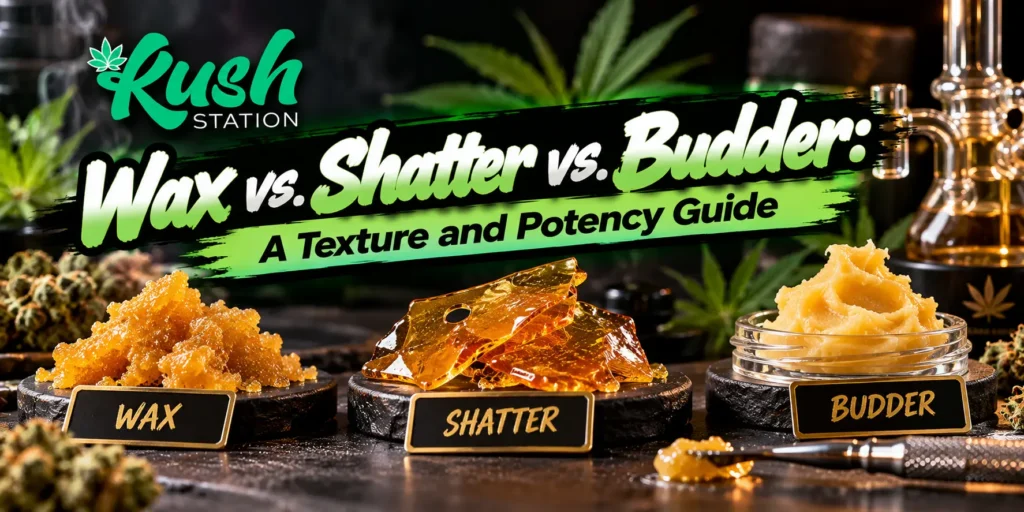
Wax vs. Shatter vs. Budder: A Texture and Potency Guide
Oct
Open the concentrates category on any online dispensary menu and you will meet a confusing list of names: shatter, wax, budder, badder, crumble, sugar, live resin, rosin. They sound like a different Indica language, and the photos do not always help. Some look like amber glass. Others look like cake frosting or honeycomb.
Here is the good news. Most of these products are the same family of cannabis extract, made from the same plant and often from the same starting material. What separates them is texture, and texture comes down to how the extract was handled after it was made. This guide explains how wax, shatter and budder differ, what the texture does and does not tell you about potency, and how to choose the one that suits your taste and experience level.
If you are new to concentrates, read the safety and dosing sections carefully. These are the strongest products on a cannabis menu, and a little goes a long way.
What Are Cannabis Concentrates?
A cannabis concentrate is a product made by separating the resin-rich parts of the plant, mainly the cannabinoids (such as THC and CBD) and terpenes, from the leaves and plant fibre. What is left is a dense, sticky extract with a much higher cannabinoid percentage than dried flower.
Where dried flower usually tests somewhere between 15% and 30% THC, concentrates commonly test between 60% and 90% or more. That jump in strength is the main reason concentrates are recommended for experienced consumers.
Because concentrates are made with a range of methods, using different solvents or no solvent at all, they come out in many forms. Licensed Canadian producers make them in controlled facilities, test them in labs and list the results on the label. That testing is one of the biggest advantages of buying legal, regulated products.
The three names in our title, shatter, wax and budder, are the most searched textures. They are best understood as points on a spectrum, from hard and glassy to soft and creamy.
Why Do Concentrates Have Different Textures?
Before comparing the three, it helps to know why the same extract can look so different from one jar to the next. Several factors play a part.
Moisture and residual content. Extracts hold small amounts of water, plant lipids and other compounds, and how well these are removed affects whether the final product is clear and brittle or cloudy and soft.
Temperature during processing. Gentle, controlled warmth during the final stages helps the extract settle into a particular structure. Different temperature and pressure choices push the result toward glass, sap or paste.
Agitation. Some products are deliberately whipped or stirred. Introducing air and movement while the extract is still pliable creates a fluffy, opaque, creamy texture. Leaving it undisturbed tends to produce a smooth, translucent sheet.
Starting material. Different strains, and fresh-frozen versus dried and cured plant material, behave differently and affect colour, aroma and consistency.
Storage and age. Even a product that left the facility as one texture can change over time with heat, light and air. Shatter, for example, can turn cloudy or crumbly if stored poorly.
The point is that texture is mostly about process, not about the plant or the strength. Hold that thought, because it is the key to the potency question later.
Wax vs. Shatter vs. Budder at a Glance
| Feature | Shatter | Wax | Budder (Badder) |
| Look | Translucent, amber, glass-like | Opaque, crumbly or waxy, golden to pale yellow | Opaque, creamy, pale gold |
| Feel | Hard, brittle, snaps | Soft to firm, sticky or crumbly | Soft, smooth, spreadable |
| Handling | Easy to cut and portion, can be stringy in warm rooms | Can be sticky, often needs a dab tool | Easy to scoop, very sticky |
| Typical potency | High (often 70% to 90% THC) | High (often 60% to 90% THC) | High (often 60% to 85% THC) |
| Flavour | Clean, can be milder | Often rich and terpene-forward | Often rich and terpene-forward |
| Stability | Can degrade or turn cloudy in heat and light | Moderate | Can lose its creamy texture in heat |
| Best for | Precision and clean looks | Everyday dabbing and flavour | Smooth texture and flavour |
Ranges are general. Always check the product label for exact THC and CBD content.
Shatter: The Glass-Like Classic
Shatter is the most recognizable concentrate on the menu. It looks like a piece of stained glass or hard amber candy: flat, translucent and shiny. When you bend or drop it, it snaps with a crisp break, which is where the name comes from.
How shatter gets its look
Shatter forms when the extract is allowed to set in a stable, undisturbed state with the unwanted moisture and certain plant compounds removed. Because it is not whipped or agitated, it keeps that clear, glassy structure. Producers often prize it for its clean appearance, and many people read the clarity as a sign of careful work.
What shatter is like to use
Shatter is easy to portion. You can snap off a small piece, which makes it popular with people who like to measure their dose. It tends to produce a clean, direct experience. Flavour varies, and some shatter is milder than other textures because of how the terpenes were handled during processing.
Drawbacks of shatter
Shatter is stable in a cool, dark place but can become sticky or stringy when warm, and over time it may turn from clear to cloudy or sugary, which is called sugaring. This does not mean it has gone bad, but it does change the texture. Its brittleness can also make it harder to scoop with a tool than softer products.
Who shatter suits
Shatter suits people who like precision, a clean appearance and easy portioning. If you want a concentrate that looks as polished as it performs, this is the one to try.
Wax: The Flexible Everyday Option
Wax is a catch-all term for opaque concentrates that look and feel like candle wax or honeycomb. The Thc edibles texture ranges from crumbly and dry to soft and tacky. The colour usually sits between pale yellow and deep gold.
How wax gets its texture
Wax is typically made by agitating the extract during processing. Moving it while it is still pliable introduces air and changes how the molecules settle. The result is a cloudy, matte texture rather than the clear sheet of shatter.
What wax is like to use
Many people love wax for its flavour. Because the process often keeps more of the plant’s aromatic terpenes intact, wax can taste rich, fruity, piney or earthy. It is also quite versatile. A little wax can go into a rig, on top of a bowl of flower or into a vaporizer designed for concentrates.
Drawbacks of wax
The biggest complaint is stickiness. Wax tends to cling to tools, packaging and fingers, so it takes a little practice. Softer varieties can be messy, while drier, crumbly ones can scatter if you are not careful.
Who wax suits
Wax suits people who care about flavour and want something that is a middle ground between hard shatter and soft budder. It is a good all-round choice if you have tried a few concentrates and want a reliable favourite.
Budder (Badder): The Creamy One
Budder, also spelled badder, is the soft, smooth concentrate that looks like butter, icing or cake batter. It is typically opaque, pale gold and spreadable. If wax is a bit dry and crumbly, budder is the creamy end of the spectrum.
How budder gets its texture
Budder is whipped. During processing, the extract is stirred or beaten while it is warm and pliable, creating a dense, creamy consistency. The extra mixing is why budder often has a smooth, uniform texture, with no hard bits or gaps.
What budder is like to use
Budder is easy to scoop and shape, and many people enjoy its smoothness and bold flavour. Like wax, it often preserves plenty of terpenes. It also tends to be consistent from one scoop to the next, which makes dosing a little more predictable than with crumbly products.
Drawbacks of budder
Budder is very sticky, and it is sensitive to heat. Leave it in a warm place and it may soften, melt or separate. It is best kept cool, sealed and out of direct light.
Who budder suits
Budder suits anyone who likes a soft, smooth product that is easy to handle and flavourful. It is a favourite among people who care about the experience of using a concentrate as well as the effects.
What About Crumble, Sugar, Live Resin and Rosin?
Once you know the texture spectrum, the rest of the menu makes more sense. Here is how the other popular names fit in.
| Type | Texture | How It Relates |
| Crumble | Dry, honeycomb-like, easily breaks apart | The drier cousin of wax |
| Sugar | Wet, granular, sparkly like wet sand | A wax variation with a sugary look |
| Live resin | Saucy, sugary or sticky, varies | Defined by the starting material (fresh-frozen plant), not by one texture |
| Rosin | Sap-like to buttery | A solventless product made with heat and pressure |
| Distillate | Thick, clear, golden oil | Highly refined, often used in vapes and edibles |
Notice that live resin and rosin are defined by how they were made, not by one particular texture. Live resin can be saucy, budder-like or sugary. Rosin can look like sap or butter. This is why labels and product descriptions matter more than photos alone.
Texture vs. Potency: What Is the Real Difference?
This is the question most people really want answered. Is shatter stronger than wax? Is budder weaker than shatter?
The honest answer is that texture does not reliably tell you potency. A concentrate’s strength is determined by how much THC (and other cannabinoids) it contains, and that depends on the plant material, the extraction method and the refinement. You can find a 90% shatter and a 90% budder, or a 65% shatter and a 80% wax.
There are some general tendencies, though.
Shatter is often highly refined and can test very high in THC, but it may contain fewer terpenes, which can make the flavour milder.
Wax, budder and sugar often retain more terpenes, so they may taste richer. Their THC can be just as high.
Distillate is typically the most refined and can reach very high THC percentages, with few terpenes unless they are added back.
Live resin and rosin often test a little lower in THC percentage than distillate but are loved for their aroma and full-spectrum character.
Why the THC number is not the whole story
A higher percentage does not automatically mean a better experience. Terpenes and minor cannabinoids shape how a product tastes and feels. Many experienced consumers choose a product with 70% THC and a vivid terpene profile over a 90% product with little flavour. The idea that the cannabinoids and terpenes work together is often called the entourage effect. Research is still developing, so treat it as an interesting possibility rather than a guarantee.
The practical takeaway
Ignore the texture when judging strength. Read the lab results and the label, and compare the THC percentage and the terpene information.
Flavour: Where Texture and Terpenes Meet
Flavour is where the differences between these products show up most. Several things affect it.
Terpene retention. Gentle handling preserves aromatic compounds. Products that are whipped or made from fresh-frozen material often keep more flavour than heavily refined ones.
Starting strain. A concentrate made from a citrusy strain will carry citrus notes, and one from a diesel-leaning strain will taste fuel-like.
Freshness. Terpenes are volatile, so older concentrates that have been stored warm or opened many times may taste flat.
How you use it. Lower temperatures usually taste better, because high heat burns off terpenes and can feel harsh.
If flavour is your priority, look for wax, budder, live resin or rosin. If you value a clean, simple, precise product, shatter and distillate are good choices.
Storage and Handling Tips
Concentrates are delicate. Good storage keeps their texture, flavour and potency.
Keep them cool. Heat softens and degrades concentrates. A cool cupboard works well, and some people use the fridge for budder and live resin.
Keep them dark. Light can break down cannabinoids and terpenes.
Keep them airtight. Air dulls flavour and can change texture. Return the product to its original container or a small glass jar after each use.
Use parchment, not paper towel. Sticky concentrates can stick to many surfaces. Silicone or parchment makes handling easier.
Label everything and lock it up. Keep all cannabis products in their original, child-resistant packaging, out of sight and out of reach of children and pets.
How to Choose: Which Concentrate Is Right for You?
| If you want… | Consider | Why |
| Easy portioning and a clean look | Shatter | Snaps into small, measurable pieces |
| Rich flavour and everyday versatility | Wax | Balanced texture, often terpene-rich |
| Smooth texture and strong aroma | Budder | Creamy, consistent and easy to scoop |
| Maximum flavour and full-spectrum character | Live resin or rosin | Made to preserve aromatics |
| A neutral, high-potency product | Distillate | Highly refined, very strong |
| The mildest entry into concentrates | Any, in a tiny amount | Dose matters more than type |
A good starting approach is to choose one product from a licensed seller, read the lab results and try a very small amount on a day when you have nowhere to be.
Dosing and Safety: Start Low and Go Slow
Because concentrates are so strong, safety matters more here than anywhere else on the menu.
Start with a tiny amount. Many guides suggest a piece about the size of a grain of rice or smaller for beginners. Wait and see how you feel before taking more. The effects of inhaled concentrates can build quickly and feel intense, especially if you are used to flower.
Know your tolerance. Regular flower smokers still often find concentrates much stronger. Do not assume that your usual dose translates.
Wait between doses. Give yourself at least 15 to 20 minutes before deciding you need more.
Do not drive or operate machinery. Cannabis impairs judgment and reaction time. Stay put and plan a safe ride home if you need one.
Be careful with medications and health conditions. Cannabis can interact with some medications. Talk to a doctor or pharmacist if you take prescriptions or have a health condition.
Avoid mixing with alcohol. Combining the two can intensify impairment and increase the chance of a bad experience.
If you feel too high. Sit down, drink water, eat a snack and remind yourself that it will pass. Cannabis intoxication from inhaled products usually fades within a few hours. If you feel seriously unwell, seek medical help.
Possession limits in Canada
Under the federal Cannabis Act, adults can generally carry up to 30 grams of dried cannabis in public, or an equivalent amount of other products. For concentrates, the legal equivalency is much smaller: one gram of concentrate is counted as the equivalent of 15 grams of dried flower. That means your public possession limit for concentrates is about 7.5 grams. Provincial rules vary, so check the regulations where you live.
A Quick Word on Tools
Concentrates can be used in several ways, and the right tool depends on the product and your experience.
Dab rigs are small water pipes designed for concentrates, popular for flavour and strong effects.
Concentrate vaporizers and e-rigs heat the product more gently and are portable and convenient.
Vape pens with concentrate cartridges are easy, pre-filled and consistent.
Sprinkling on flower is a simple way to add a little concentrate to a bowl or joint.
If you are experimenting, lower temperatures usually bring out more flavour and feel smoother. Always follow the manufacturer’s instructions, and never use a torch or heating device in an unsafe way or around flammable materials.
How to Buy Concentrates Online With Confidence
When you shop for wax, shatter or budder online, product information matters. Look for these details before you order.
| What to Check | What a Good Product Page Shows |
| THC and CBD content | Clear percentage or mg per gram, ideally from lab testing |
| Texture | A description and photos of the actual product |
| Strain or blend | The name, type and flavour notes |
| Extraction type | Whether it is solvent-based, solventless or distillate |
| Package size | Grams offered, with clear pricing |
| Safety and compliance | Age verification, child-resistant packaging and accurate labelling |
At Kush Station, we aim to give you the details you need to choose with confidence. [Add Kush Station’s sourcing, testing and quality control details here.] Check the current menu for what is in stock, since concentrate availability changes with each batch. [Link to your concentrates category page here.]
Frequently Asked Questions
Is shatter stronger than wax?
Not necessarily. Potency depends on the individual product’s lab results, not its texture. Shatter, wax and budder can all test very high in THC. Always compare the label.
What is the difference between wax and budder?
Both are opaque, whipped-style concentrates. Wax tends to be drier, crumbly or tacky, while budder is smoother and creamier. They are close cousins, and the names are sometimes used interchangeably.
Why did my shatter turn cloudy or crumbly?
Shatter can change texture with heat, light, air and time. A cloudy or sugary look usually affects appearance rather than safety, but it can alter how it handles. Store it cool, dark and airtight to slow the change.
Which concentrate is best for beginners?
The type matters less than the amount. Choose a product with a clear lab report, use a very small amount and give yourself time. If you are unsure whether concentrates are right for you, start with flower or a low-dose edible first.
Are concentrates safe?
Bought from a licensed, regulated seller, tested products are made to a known standard. The main risk is taking too much, because they are so potent. Use sensible dosing and avoid driving or mixing with alcohol.
What is the difference between hash and concentrates?
Hash is made by collecting and pressing the resin glands of the plant, while concentrates like shatter, wax and budder are typically made through extraction processes. Both are much stronger than regular flower.
How should I store my concentrates?
Keep them in a cool, dark, airtight container, away from heat and sunlight. Always store cannabis securely and out of reach of children and pets.
Final Thoughts: Choose by Taste, Handling and Experience
Shatter, wax and budder are three expressions of the same idea: a highly concentrated cannabis extract in a different texture. Shatter is glassy and precise. Wax is versatile and flavourful. Budder is creamy and smooth. None is automatically stronger or better. What matters is the lab-tested THC content, the terpene profile, how you like to handle the product and how carefully you dose it.