Blog 2026
Weed for Depression: Relief, Risks, and What Works
Nov
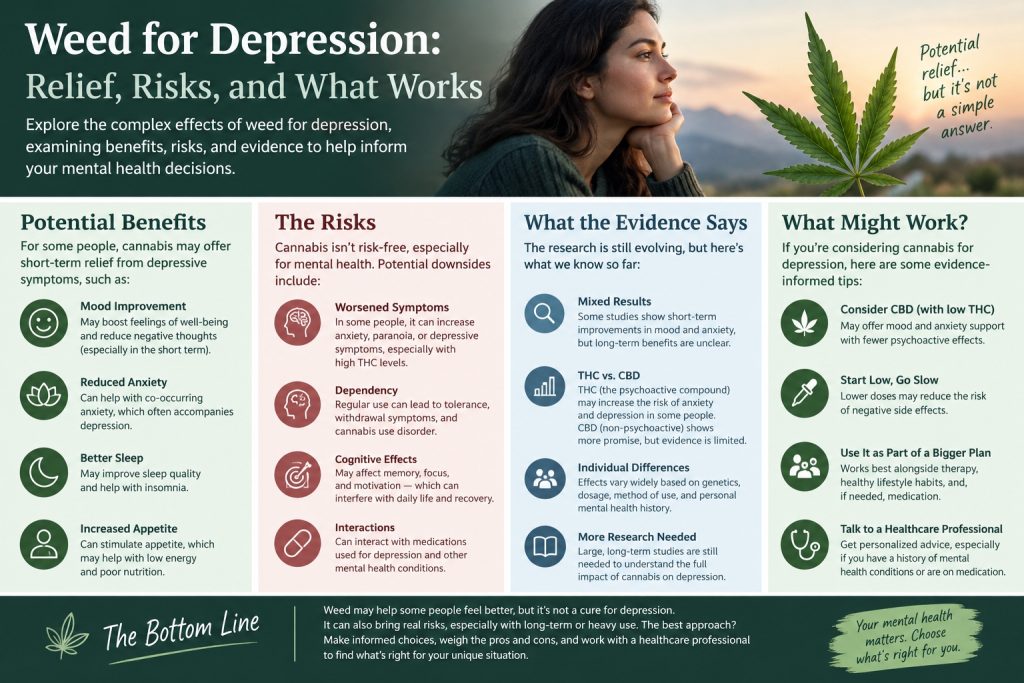
If weed seems to quiet your thoughts or lift a heavy mood, you’re not imagining the immediate effect. Cannabis can temporarily change stress, perception, sleepiness, and emotional intensity. But feeling different for a few hours isn’t necessarily the same as recovering from depression, and for some people, cannabis gradually makes mood, motivation, or anxiety harder to manage.
This evidence-based review examines weed for depression, including potential benefits, known risks, THC versus CBD, antidepressant interactions, dependence, and safer next steps. It’s educational rather than personalized medical advice, and it doesn’t assume every person who uses cannabis has a problem. The goal is simpler: help you separate marketing and anecdotes from what clinical research can actually support.
If you’re having suicidal thoughts or may act on them, skip ahead to the urgent-help section and contact emergency or crisis support now.
Key Takeaways
- Weed for depression can provide short-term mood relief but is not an established or proven treatment for major depressive disorder.
- THC and CBD affect depression differently; THC may cause euphoria or anxiety, while CBD shows limited clinical evidence and potential interactions with medications.
- Frequent or high-potency cannabis use, especially during adolescence, can worsen depression symptoms and lead to dependence or withdrawal.
- Combining cannabis with antidepressants requires caution and professional guidance due to possible drug interactions and side effects.
- Tracking mood, sleep, and cannabis use with a clinician helps identify patterns and supports safer, personalized treatment decisions.
- Evidence-based treatments like psychotherapy and antidepressants have stronger proof of effectiveness and safety compared to cannabis for depression.
Is weed for depression an effective treatment?
Cannabis isn’t an established treatment for major depressive disorder. Some people report feeling calmer, more interested in activities, or emotionally lighter after using it, but responses vary with dose, THC concentration, CBD content, tolerance, health history, and context.
Short-term mood relief is not the same as treating depression
THC can produce euphoria, relaxation, or temporary distance from painful thoughts. That relief may feel meaningful, especially after a brutal day, but intoxication doesn’t show that the underlying disorder is improving.
A useful test is what happens between sessions. Are your sleep, relationships, energy, and functioning improving over weeks? Or are you increasingly relying on cannabis to feel normal? Rebound anxiety, low motivation, tolerance, and withdrawal can quietly turn a coping tool into another source of symptoms.
Why cannabis is not an established treatment for depressive disorders
For a treatment to become standard care, well-designed trials must establish its formulation, dose, benefits, harms, and performance against placebo or existing therapies. Cannabis hasn’t cleared that bar for depression.
The American Psychiatric Association’s cannabis position statement notes insufficient evidence supporting cannabis for psychiatric disorders. Products sold at dispensaries also differ dramatically, making “weed” less like one medicine and more like an entire, inconsistently labelled pharmacy shelf.
What does research show about cannabis and depression?
Research paints a complicated picture: people with depression use cannabis more often, while heavier cannabis use is associated with poorer mental-health outcomes. Neither fact alone proves that cannabis caused, or cured, someone’s depression.
Association versus causation: Depression, cannabis use, and shared risk factors
Depression may lead people to self-medicate. Cannabis use could also contribute to symptoms in susceptible people. Both may arise from shared influences such as trauma, chronic pain, financial stress, genetics, sleep disruption, or other substance use.
Longitudinal evidence has linked cannabis use with a higher later risk of depression, though confounding factors remain. A JAMA Psychiatry systematic review found adolescent cannabis use was associated with depression and suicidality in young adulthood. Association, though, isn’t a personal forecast.
Medical cannabis studies: Self-reported benefits, study limitations, and gaps in clinical trials
Observational studies sometimes record immediate reductions in self-rated depression after cannabis use. These reports capture real experiences, but they’re vulnerable to expectancy effects, selective participation, inaccurate product labels, and the absence of placebo groups.
More importantly, short-term ratings can miss next-day fatigue, tolerance, dependence, and long-term functioning. Large randomized trials of standardized cannabis products specifically treating depressive disorders remain lacking. That evidence gap is why confident claims, positive or absolute, deserve caution.
THC versus CBD: Do their effects on depression differ?
THC and CBD affect the body differently, and dispensary labels such as “uplifting” don’t substitute for clinical evidence.
| Compound | Possible short-term effects | Important concerns |
|---|---|---|
| THC | Euphoria, relaxation, altered perception | Anxiety, impairment, paranoia, dependence |
| CBD | Sedation or reduced anxiety in some settings | Interactions, inconsistent products, limited depression trials |
THC, potency, and the risk of anxiety or worsening mood
THC produces intoxication. Lower exposure may feel relaxing, while larger doses can trigger racing thoughts, panic, paranoia, or dysphoria, the exact opposite of the intended evening exhale.
Modern concentrates, including wax and high-potency vape oils, can deliver THC quickly and make dosing difficult. Frequent exposure also builds tolerance, so you may use more while receiving less relief. If cannabis reliably leaves you anxious, withdrawn, or foggy the next day, treat that pattern as data, not a character flaw.
CBD for depression: Limited clinical evidence and potential side effects
CBD has intriguing antidepressant-like effects in preclinical research, but animal and laboratory findings don’t establish an effective human treatment. Human evidence is stronger in selected anxiety and seizure contexts than in depressive disorders.
CBD can cause sleepiness, diarrhea, appetite changes, and medication interactions. CBD oils may contain different amounts than their labels claim, plus unexpected THC or contaminants. “Non-intoxicating” doesn’t mean inactive, risk-free, or proven for depression.
Can weed cause depression or make existing symptoms worse?
It can worsen symptoms for some people, though individual vulnerability differs. The clearest concern involves early, frequent, or high-potency use, not a deterministic rule that everyone who tries cannabis develops depression.
How frequent use, high-potency products, and adolescent use relate to risk
Daily or near-daily use creates more opportunities for tolerance, withdrawal, cognitive impairment, and cannabis use disorder. High-THC products may amplify these risks.
Adolescents deserve extra caution because brain development continues into young adulthood and early cannabis exposure correlates with poorer psychiatric and educational outcomes. Personal or family histories of addiction, bipolar disorder, or psychosis can further shift the risk-benefit balance.
Effects on anxiety, sleep, concentration, and daily functioning
Cannabis may help you fall asleep, yet regular use can alter sleep architecture and make sleep difficult when you reduce it. THC can also affect attention, memory, reaction time, and decision-making.
Consider the full week, not just the pleasant hour after use. Missing morning classes, procrastinating at work, cancelling plans, or feeling too hazy for therapy are functional costs, even if cannabis briefly softens sadness.
Additional concerns: Bipolar disorder, psychosis, and associations with suicidal thoughts
Cannabis, particularly high-THC use, may worsen mania or psychotic symptoms in vulnerable people. If you’ve had hallucinations, paranoia, manic episodes, or a strong family history of psychosis, discuss cannabis openly with a psychiatrist.
Studies also associate cannabis use with suicidal thoughts and behaviours, although causality is complex. Any new or escalating suicidal thinking requires prompt support regardless of what caused it. Don’t wait to become “sure enough.”
Can you use cannabis while taking antidepressants?
Possibly, but combining them isn’t automatically safe. The answer depends on your medication, cannabis product, dose, frequency, liver function, and other substances. Don’t stop an antidepressant suddenly to make room for cannabis: discontinuation symptoms and depression relapse can be severe.
THC and CBD interactions: Medication metabolism, sedation, and pharmacist guidance
THC and CBD may affect liver enzymes involved in metabolizing some antidepressants. CBD is particularly relevant to CYP enzyme pathways, potentially changing medication exposure. Cannabis can also add to dizziness, sedation, impaired coordination, or confusion from medicines such as mirtazapine or tricyclic antidepressants.
Bring the exact product label, or a photo, to your pharmacist. Mention THC/CBD amounts, edibles, vapes, alcohol, sleep aids, and supplements. A pharmacist can check your specific regimen without the awkward lecture you may be imagining.
What if you already use weed to cope with depression?
You don’t need shame or an all-or-nothing ultimatum. Start by understanding your pattern and making one manageable change.
Why there is no proven cannabis dose or product for depression
No clinically validated THC-to-CBD ratio, strain, edible dose, or schedule treats depression. Effects vary, and commercial names don’t reliably predict chemistry. An “energizing” gummy can still produce anxiety, or an accidental four-hour couch treaty.
Be skeptical of budtender recommendations framed as medical certainty. A licensed clinician who knows your psychiatric and medication history is better positioned to discuss risk.
Lower-risk choices: Avoid high-THC products, mixing substances, and impaired driving
If you continue using cannabis, lower-risk steps include:
- Avoiding concentrates and very high-THC products
- Using less, less often, and not automatically redosing edibles
- Not mixing cannabis with alcohol, opioids, benzodiazepines, or sedating sleep aids
- Never driving or operating equipment while impaired
- Keeping products locked away from children and pets
Edibles can take hours to peak. “Nothing’s happening” is not a reliable invitation to eat another handful.
Track mood, sleep, and cannabis use, and discuss changes with your clinician
For two to four weeks, record your mood, anxiety, sleep, dose, product, time used, and next-day functioning. Include cannabis-free days when feasible.
Look for patterns: Does sleep improve only initially? Are low moods worse the next morning? Does heavier use follow conflict or isolation? Share the log with your clinician. Concrete observations are more useful than trying to reconstruct a hazy month from memory.
Cannabis dependence and withdrawal: How they affect mood
Regular users can develop cannabis use disorder and experience withdrawal. Neither means you’re weak: both reflect learned behaviour and biological adaptation.
Signs of cannabis use disorder and when to seek support
Warning signs include using more than intended, unsuccessful efforts to cut back, cravings, tolerance, continued use despite consequences, and giving up important activities. Needing cannabis before work, sleep, meals, or social contact can also signal dependence.
Seek help if use is disrupting responsibilities, finances, relationships, or mental health. Health Canada’s Get help with substance use page lists free, confidential national and provincial services, including Drug Rehab Services at 1-877-254-3348.
Withdrawal symptoms, typical timelines, and support for reducing or stopping use
Withdrawal may bring irritability, anxiety, low mood, poor appetite, vivid dreams, restlessness, and insomnia. Symptoms commonly begin within one or two days, peak during the first week, and improve over roughly two weeks, although sleep problems can last longer.
That temporary dip can be mistaken for proof you “need” weed. A gradual plan, counselling, exercise, regular meals, sleep support, and clinician monitoring may make the process safer and more tolerable.
Better-supported treatment options for depression
Unlike weed for depression, established treatments have clearer dosing, safety monitoring, and evidence from controlled trials. You may need some experimentation (mental health isn’t a vending machine), but you have solid options.
Psychotherapy, antidepressants, and supportive sleep and activity habits
Evidence-based approaches include cognitive behavioural therapy, behavioural activation, interpersonal therapy, and antidepressants. Combining medication and psychotherapy can be appropriate for moderate or severe symptoms.
Consistent sleep, daylight exposure, movement, social contact, and reduced alcohol use can support treatment. Start almost comically small: a 10-minute walk, one scheduled meal, or texting one trusted person. These habits aren’t replacements for care: they help create traction.
Questions to ask your clinician about symptoms, cannabis use, and treatment
Bring these questions to an appointment:
- Could another condition, such as bipolar disorder, ADHD, thyroid disease, trauma, or a sleep disorder, explain my symptoms?
- Could cannabis or withdrawal be affecting my mood?
- Which therapy or medication fits my risks and preferences?
- How should improvement and side effects be tracked?
- If I reduce cannabis, what support should I arrange first?
Honesty matters. Your clinician needs the real version, not the cleaned-up résumé.
When to get urgent help for worsening depression or suicidal thoughts
Get urgent help if you’re considering suicide, developing a plan, unable to stay safe, experiencing psychosis or mania, or becoming severely agitated after cannabis use. In Canada, call or text 9-8-8, any time, day or night. Call 911 for immediate danger or a medical emergency.
Move away from weapons, excess medication, cannabis, and other substances. Ask a trusted person to stay with you or take you to an emergency department. If you’re outside Canada, contact your local emergency number or crisis service. You aren’t wasting anyone’s time; this is precisely what crisis care is for.
Frequently asked questions about marijuana and depression
Is indica or sativa better for depression, and do strain claims have evidence?
Neither category is proven to treat depression. Indica and sativa labels poorly predict a product’s effects because commercial plants are heavily hybridized and chemical profiles vary. THC dose, CBD content, terpenes, route, tolerance, and setting are more informative, though none creates an evidence-based depression treatment.
Does depression qualify for medical marijuana in Canada?
Canada doesn’t have a list of qualifying conditions. Under Health Canada’s medical access rules, a health care practitioner decides whether cannabis is appropriate for the condition they’re treating. But Health Canada hasn’t authorized cannabis products to treat any specific disease or symptom, and its summary of limited research mentions only “depressed mood associated with chronic diseases,” not depression on its own.
Check Health Canada’s current information and talk to your own health care practitioner rather than relying on a clinic advertisement. Legal eligibility means access is permitted: it does not mean cannabis has been proven effective for depression.
Will quitting weed improve depression, and why might mood worsen at first?
Some people feel clearer, less anxious, and more motivated after withdrawal resolves. Others discover that an underlying depressive disorder remains and needs direct treatment.
Mood can initially worsen because withdrawal disrupts sleep, appetite, and emotional regulation. Track symptoms for several weeks and get clinical support, particularly if you use daily or have severe depression. Seek immediate help for suicidal thoughts rather than waiting for withdrawal to pass.
References, medical review, and evidence update date
Key evidence consulted includes Health Canada’s cannabis and mental health page, the Canadian Centre on Substance Use and Addiction’s Clearing the Smoke on Cannabis: Regular Use and Mental Health report, the JAMA Psychiatry review of adolescent cannabis outcomes, and the American Psychiatric Association’s position statement.
Evidence update: November 10, 2026. Medical-review note: This article is educational and should be reviewed against your personal history by a licensed physician, psychiatrist, or pharmacist. No cannabis products are recommended in this article.
The practical bottom line is straightforward: weed for depression may provide brief relief, but it isn’t a proven depression treatment and can worsen mood or functioning for some people. If cannabis has become your main coping strategy, don’t beat yourself up. Track what it’s actually doing, discuss it candidly with a clinician, and build a treatment plan around options with stronger evidence. You deserve more than a few borrowed hours of feeling okay.