Blog 2026
Is Weed a Depressant? The Answer Isn’t So Simple
Nov
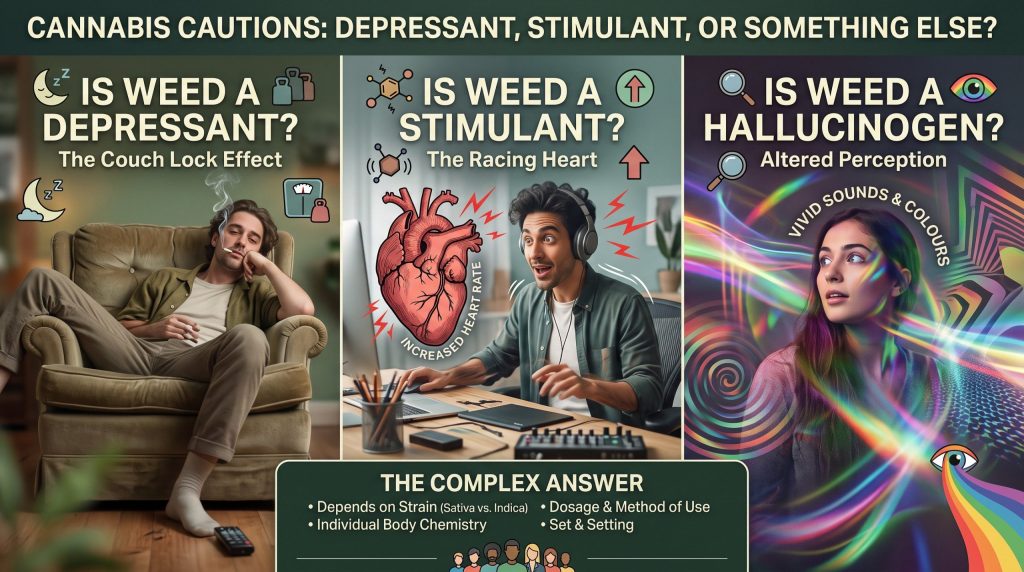
You take a few hits, sink into the couch, and suddenly the TV remote feels very far away. That certainly sounds like a depressant effect. But another person may use the same cannabis and experience a racing heart, nervous energy, or unusually vivid sounds and colours. So, is weed a depressant, a stimulant, or something else?
The honest answer is that cannabis doesn’t fit neatly into one drug category. It can produce depressant-like, stimulant-like, and hallucinogenic effects, sometimes during the same session. Your response depends on the dose, product potency, THC-to-CBD ratio, tolerance, consumption method, health history, and surroundings.
This evidence-based review explains what those classifications actually mean, how cannabis affects your brain and body, and why its mood effects can be unpredictable. It also covers interactions, dependence, and warning signs that deserve medical attention. It isn’t personalized medical advice, and there are no commercial affiliations behind the products or organizations mentioned. If you’re considering cannabis for anxiety, depression, pain, or sleep, talk with a qualified clinician who knows your medications and medical history.
Key Takeaways
- Weed can act as a depressant by causing sleepiness, slowed reactions, poor coordination, and muscle relaxation, but it also produces stimulant and hallucinogenic effects depending on dose and individual factors.
- Cannabis affects the body through the endocannabinoid system, influencing mood, memory, appetite, pain, and sleep rather than broadly suppressing the central nervous system like typical depressants.
- The effects of weed vary with dose, THC potency, CBD ratio, tolerance, and consumption method, making its impact unpredictable and sometimes shifting from stimulant to depressant effects during use.
- Mixing cannabis with alcohol, benzodiazepines, opioids, antidepressants, or sleep medications can increase sedation and impair coordination, so medical advice is crucial before combining substances.
- Frequent or high-potency cannabis use increases risks of dependence, mood disturbances, anxiety, and psychosis, especially in young adults or those with a mental health history.
- If cannabis negatively impacts mood or daily life, seeking professional help and monitoring use patterns are important steps for safety and well-being.
Quick Answer: Is weed a depressant?
Weed can act like a depressant, but it isn’t exclusively a depressant. Cannabis can slow reaction time, reduce coordination, cause drowsiness, and relax your muscles. Those are classic depressant-like effects. But, THC can also increase your heart rate, heighten alertness, trigger anxiety, and alter perception, effects associated with stimulants or hallucinogens.
Unlike alcohol or benzodiazepines, cannabis doesn’t primarily work by broadly suppressing central nervous system activity. Its cannabinoids act mainly through the body’s endocannabinoid system, which helps regulate mood, memory, appetite, pain, sleep, and other functions.
Here’s the practical answer:
| Classification | Effects cannabis may produce |
|---|---|
| Depressant-like | Sleepiness, slower responses, poor coordination |
| Stimulant-like | Faster heart rate, alertness, restlessness, anxiety |
| Hallucinogenic-like | Time distortion, sensory changes, altered perception |
Drug classifications describe patterns, not perfectly sealed boxes. Cannabis is a particularly messy example, which is why calling it only a depressant misses half the story.
What Is a Depressant? (And What “Depressant Effects” Actually Means)
A depressant is a substance that slows activity in the central nervous system, the brain and spinal cord. Alcohol, benzodiazepines such as Xanax (alprazolam), and prescription sleep medicines are familiar examples. Depending on the substance and dose, effects may include relaxation, sedation, impaired judgment, reduced coordination, slowed breathing, or unconsciousness.
“Depressant” does not automatically mean a drug causes emotional depression. That linguistic trap confuses plenty of people. A central nervous system depressant can make you sleepy without causing major depressive disorder, while a substance that isn’t technically classified as a depressant may still worsen your mood.
Cannabis earns the depressant comparison because it can make you physically and mentally slower. In driving studies, THC has been associated with impaired attention, tracking, reaction time, and decision-making. Health Canada’s cannabis impairment guidance is blunt: if you’re using cannabis, don’t drive, and there’s no standard waiting time that makes it safe.
So if you feel calm after using weed, don’t confuse calmness with full coordination. Your brain may feel like it has put on slippers: it still shouldn’t be operating a car.
How Cannabis Works in the Body: THC, CBD, and the Endocannabinoid System
Cannabis contains more than 100 cannabinoids, but tetrahydrocannabinol (THC) and cannabidiol (CBD) receive most of the attention.
THC produces the characteristic high. It activates CB1 receptors, which are abundant in brain regions involved in memory, movement, reward, and judgment. This helps explain why you may feel euphoric while simultaneously forgetting the sentence you started twelve seconds ago. THC also affects CB2 receptors and other signalling systems.
CBD doesn’t cause the same intoxicating high. Its pharmacology is complicated, and product marketing often runs several laps ahead of the evidence. CBD may modify some THC effects, but it doesn’t reliably “cancel out” intoxication. It can also interact with medications through liver enzymes.
These cannabinoids influence your endocannabinoid system, a signalling network that helps maintain physiological balance. Your body naturally produces cannabinoid-like messengers, including anandamide and 2-AG. Plant cannabinoids interrupt or modify that system rather than simply turning your brain “up” or “down.”
Product labels add another complication. Independent testing has repeatedly found inconsistencies in some unregulated products, especially CBD items. What you think you took and what entered your body may not match.
Why Weed Can Feel Like a Depressant, Stimulant, or Hallucinogen
Cannabis has a dose-dependent, sometimes biphasic effect: a lower dose may feel pleasantly relaxing or energizing, while a higher one produces sedation, anxiety, or disorientation. One person’s mellow evening can become another person’s white-knuckle negotiation with the snack cupboard.
The experience may also change over time. Shortly after inhaling THC, your heart rate and alertness can rise. As the peak passes, fatigue and heaviness may take over. That doesn’t mean the drug changed categories halfway through: multiple systems are responding at different speeds.
Product labels such as indica and sativa aren’t dependable clinical predictors. Chemical composition, dose, and your individual response matter more than strain folklore. Likewise, terpene claims may sound precise, “this one is for focus”, but strong human evidence for many product-specific promises remains limited.
Your expectations matter too. Using cannabis alone in a quiet bedroom creates a different experience from taking it at a crowded concert. Mindset and environment can amplify relaxation, sensory changes, or panic.
Key factors: dose, THC potency, CBD ratio, tolerance, method (smoke/vape/edible), and setting
Several variables shape what happens next:
- Dose and potency: Modern concentrates can contain very high THC levels. A dab or potent vape may deliver far more THC than a low-dose flower product.
- THC-to-CBD ratio: High-THC, low-CBD products are generally more intoxicating and may be more likely to provoke anxiety in susceptible users.
- Tolerance: Frequent use can dull noticeable effects, encouraging larger doses. Tolerance doesn’t make driving safe or eliminate every impairment.
- Method: Inhaled cannabis acts within minutes and fades sooner. Edibles may take 30 minutes to two hours, or longer, to peak and can remain impairing for many hours.
- Setting: Noise, crowds, conflict, or unfamiliar people may turn mild unease into panic.
The classic edible mistake is taking more because “nothing’s happening.” Then both doses arrive like two buses you accidentally summoned. If you choose to use cannabis, avoid rapid redosing and don’t mix products casually. Legal age and other cannabis rules also vary by province and territory, so check local rules.
Depressant-Like Effects of Weed (Common Signs and When They Happen)
Depressant-like effects are often more noticeable with larger THC doses, sedating products, oral cannabis, or use late in the day. You may feel peaceful and heavy at first, then realize your attention, balance, and short-term memory aren’t keeping up.
Common signs include:
- Drowsiness or difficulty staying awake
- Slower thinking and delayed responses
- Impaired judgment or concentration
- Poor balance and motor coordination
- Slurred or less organized speech at high doses
- Reduced motivation to move or complete tasks
These effects matter beyond comfort. Cooking over a hot stove, climbing stairs, supervising a child, or driving can become risky. Cannabis impairment may persist after the strongest feeling of being high has faded, particularly after an edible.
Severe breathing suppression from cannabis alone is less characteristic than it is with opioids. Still, that doesn’t make cannabis harmless. Falls, traffic crashes, vomiting, panic, and accidental pediatric ingestion are real concerns. Store edibles in locked, child-resistant packaging, not beside ordinary brownies or gummy candy.
Sedation, slowed reaction time, impaired coordination, sleepiness, “couch-lock”
“Couch-lock” isn’t a medical diagnosis, but the phrase captures a familiar combination of sedation, muscle heaviness, and reduced motivation. You may intend to stand up, refill your water, and fold laundry. Somehow, forty minutes later, you’re still studying the ceiling fan.
Sleepiness doesn’t necessarily equal better sleep. THC may help some people fall asleep sooner in the short term, yet regular use can lead to tolerance. Frequent users may then need more to get the same effect, while stopping can bring vivid dreams and insomnia. Evidence for cannabis as a long-term sleep treatment remains mixed, and sleep disorders such as apnea require proper evaluation.
If someone is extremely difficult to wake, repeatedly vomiting, confused, injured, having chest pain, or struggling to breathe, seek urgent medical help. In Canada, call 911 for emergencies or your local poison centre at 1-844-POISON-X (1-844-764-7669) (in Quebec, 1-800-463-5060) for immediate guidance. Be honest about what was consumed: clinicians need accurate information, not a courtroom confession.
Stimulant-Like and Hallucinogenic Effects: When Weed Doesn’t Act Like a Depressant
THC commonly increases heart rate shortly after use, and some people become talkative, energetic, or intensely alert. That can feel stimulating even while coordination worsens. A person may hence feel ready to drive while being objectively less capable, a nasty little mismatch.
At higher doses, THC can alter sensory processing. Music may sound layered, colours may seem brighter, and minutes may feel unusually long. These changes aren’t always hallucinations in the strict clinical sense, but cannabis can produce hallucinogenic-like experiences. Very high doses may cause severe confusion, delusions, or temporary psychotic symptoms.
Risk isn’t evenly distributed. If you have cardiovascular disease, the increased heart rate and blood pressure changes may be important. If you’re prone to panic, bodily sensations such as a pounding heart can create a feedback loop: you notice the heartbeat, fear it, and then feel it more intensely.
Move somewhere quiet, reduce stimulation, breathe slowly, and stay with a trusted sober person. Don’t “balance it out” with alcohol or a sedative.
Increased heart rate/alertness, anxiety/panic, altered perception, time distortion, paranoia
An unpleasant THC reaction can feel endless, especially after an edible. Typical features include racing thoughts, dry mouth, tremor, nausea, suspiciousness, and the conviction that everyone can tell you’re high. Usually, the intensity declines with time, but reassurance shouldn’t replace medical care when symptoms are severe.
Get urgent help for chest pain, fainting, seizures, extreme agitation, suicidal behaviour, or loss of contact with reality. New hallucinations or paranoia that continue after intoxication has passed also deserve prompt assessment.
To reduce risk, choose lower-THC products, avoid concentrates, and don’t use alone if you’ve previously panicked. Measuring an edible dose is more sensible than judging by brownie size. A commercial 10-milligram THC serving can be overwhelming for someone with little tolerance: even smaller amounts may cause impairment.
And skip internet remedies presented as magic antidotes. Peppercorns, cold showers, or CBD aren’t guaranteed to reverse a bad reaction. A calm environment, time, hydration in reasonable amounts, sober supervision, and appropriate medical help are safer foundations.
Weed, Depression, and Anxiety: What the Evidence Suggests (Short-Term Relief vs Long-Term Risk)
Some people report that cannabis temporarily quiets anxious thoughts, lifts mood, or makes emotional pain feel distant. That relief can be genuine. But short-term relief isn’t the same thing as treating the cause, and THC can worsen anxiety at higher doses.
Research linking cannabis with depression is complicated by self-medication, genetics, trauma, sleep, other substance use, and socioeconomic factors. Observational studies often show associations between frequent cannabis use and depression, suicidal thinking, or poorer mental-health outcomes, but association alone doesn’t prove cannabis caused every outcome. Even so, heavier and earlier use generally raises more concern.
Cannabis can also create an avoidance loop. You feel low, use to disconnect, postpone responsibilities, then feel worse about the accumulating problems. What began as relief becomes another source of stress.
According to Health Canada, cannabis use has also been associated with psychosis risk, particularly with frequent use and high-potency products. If you’re treating anxiety or depression, evidence-based options, including psychotherapy and approved medications, have clearer dosing, monitoring, and long-term safety frameworks.
Who’s Most at Risk of Negative Mood Effects?
Cannabis doesn’t affect everyone equally. Your vulnerability is shaped by biology, age, product strength, use pattern, and mental-health history.
Greater caution is warranted if you:
- Have experienced panic attacks, mania, psychosis, or severe depression
- Have a close family history of schizophrenia or bipolar disorder
- Use cannabis daily or nearly daily
- Regularly use concentrates, high-potency flower, or large edibles
- Combine cannabis with alcohol or other psychoactive substances
- Are pregnant, breastfeeding, or managing heart disease
A previous “good high” doesn’t guarantee the next one. Potency can vary, your stress level may be different, and delayed edible absorption can make dosing unpredictable.
Watch for practical changes rather than debating labels. Are you withdrawing from people, missing work, abandoning hobbies, or needing cannabis before ordinary activities? Has anxiety become worse between sessions? Those patterns tell you more than whether a package says uplifting hybrid. Keep a simple two-week log of dose, method, mood before and after use, sleep, and next-day functioning. Patterns become harder to rationalize when they’re written down.
Teens/young adults, personal/family history of mood disorders, heavy/frequent use, high-THC products
Adolescents and young adults face particular concerns because brain development continues into the mid-20s. Earlier, frequent use is associated with problems involving attention, learning, school performance, and a higher likelihood of cannabis use disorder. Young people with psychiatric vulnerabilities may be especially sensitive to high-THC products.
If bipolar disorder or psychosis runs in your family, “everyone else seemed fine” isn’t a reassuring safety test. Genetics and personal history matter. THC may precipitate mania or psychotic symptoms in susceptible people, and high-potency use appears especially concerning.
Parents should approach the conversation with curiosity rather than an interrogation lamp. Ask what the cannabis does for the teenager: Is it helping them sleep, fit in, numb grief, or quiet anxiety? The answer points toward the need underneath the behaviour.
For adults, frequency matters too. Weekend use and repeated all-day use don’t carry identical exposure. If your tolerance keeps climbing or lower-potency products no longer feel worthwhile, that’s a useful moment to pause, not merely a reason to buy something stronger.
Interactions and Safety: Weed With Alcohol, Benzos, Opioids, Antidepressants, and Sleep Meds
Combining cannabis with other substances can intensify sedation, confusion, dizziness, and impaired coordination. With alcohol, impairment may be greater than with either substance alone. Mixing first and asking questions later is not a charming science experiment.
| Combination | Main concerns |
|---|---|
| Alcohol | Greater intoxication, vomiting, poor judgment, crashes |
| Benzodiazepines | Added sedation, memory problems, falls |
| Opioids | Sedation and dangerous opioid-related breathing risk |
| Sleep medicines | Excessive drowsiness, confusion, unusual behaviour |
| Antidepressants | Variable effects: possible dizziness, anxiety, or drug interactions |
Cannabinoids can influence liver enzymes that metabolize medications. CBD is especially relevant because it can alter blood levels of certain drugs. The interaction depends on the medication, dose, route, and your health, not merely the words “CBD” or “natural” on the label.
Don’t stop an antidepressant, benzodiazepine, opioid, or sleep medicine abruptly to accommodate cannabis. Withdrawal from some prescription drugs can be dangerous. Ask a physician or pharmacist to review all products you use, including gummies, tinctures, vapes, supplements, and occasional substances. Avoid driving or operating equipment after cannabis, and never ride with an impaired driver.
Dependence, Withdrawal, and When to Get Help
Cannabis can cause dependence and cannabis use disorder. Warning signs include using more than intended, unsuccessful attempts to cut down, strong cravings, continued use despite problems, and giving up important activities. Risk rises with frequent use and an earlier starting age.
After regular heavy use, stopping may cause irritability, anxiety, insomnia, vivid dreams, reduced appetite, restlessness, headaches, or low mood. Symptoms often begin within a day or two, peak during the first week, and gradually improve, although sleep disruption may last longer. Withdrawal is usually not medically dangerous in the way severe alcohol or benzodiazepine withdrawal can be, but it can feel miserable and trigger relapse.
Start with one concrete step: tell a clinician how often you use and what happens when you stop. Behavioural treatments, including cognitive behavioural therapy, motivational enhancement, and contingency management, may help. Health Canada’s Get help with substance use page lists free national and provincial services, including Drug Rehab Services for confidential treatment referrals at 1-877-254-3348. If you’re in emotional crisis or considering suicide, call or text 9-8-8 anywhere in Canada.
So, is weed a depressant? It can produce depressant effects, but that label alone understates its stimulant-like, perceptual, cardiovascular, and mental-health effects. Pay attention to your actual response, not strain mythology. If cannabis is harming your mood, relationships, safety, or daily routine, asking for help is a practical health decision, not a personal failure.
Frequently Asked Questions About Cannabis and Its Effects
Is weed considered a depressant drug?
Weed can act like a depressant by causing drowsiness, slower reaction times, and relaxed muscles, but it is not exclusively a depressant. Cannabis can also produce stimulant and hallucinogenic effects depending on factors like dose and THC-to-CBD ratio.
How does cannabis produce both depressant and stimulant effects?
Cannabis affects the body through the endocannabinoid system and can slow central nervous system activity (depressant effects) or increase heart rate and alertness (stimulant effects) based on dose, potency, and individual response.
What are common depressant-like signs after using weed?
Typical depressant-like effects include sleepiness, delayed responses, poor coordination, impaired judgment, and muscle heaviness often described as ‘couch-lock,’ especially with higher THC doses or oral cannabis.
Can cannabis use affect mood disorders like depression or anxiety?
Cannabis may provide short-term relief for anxiety or low mood but can worsen anxiety at higher doses and is linked to increased risk of depression and psychosis, particularly with frequent use or in those with mental health vulnerabilities.
How dangerous is it to drive after using cannabis?
Cannabis impairs attention, reaction time, and coordination even if you feel calm, making driving unsafe. Health Canada advises against driving after using cannabis and says there is no standard waiting time that makes it safe.
What should I do if I experience severe anxiety or hallucinations after using weed?
If severe symptoms like paranoia, ongoing hallucinations, or panic occur, seek medical attention promptly. Until then, stay calm, breathe slowly, reduce stimulation, and remain with a trusted sober person.