
Blog 2026
Weed and Psychosis: Risks, Symptoms, and Help
Nov
The relationship between weed and psychosis can feel confusing, especially when cannabis is legal, widely used, and often described as harmless. The evidence is more nuanced: most people who use cannabis won’t develop psychosis, but THC can trigger a psychotic episode in some people and may contribute to longer-term illness in those already vulnerable.
This evidence-based review explains the symptoms, major risk factors, typical recovery timeline, treatment, and warning signs that need immediate attention. It covers THC-containing cannabis, including flower, vapes, edibles, and concentrates, but not every possible medical effect of cannabis.
One point matters from the start: psychosis isn’t a character flaw or something you should simply “sleep off.” It’s a medical condition involving difficulty distinguishing shared reality from internal experiences. Prompt, compassionate care can protect you, shorten untreated illness, and connect you with effective support. If someone is in immediate danger, skip ahead and seek emergency help now.
Key Takeaways
- Weed and psychosis are linked, with THC potentially triggering psychotic episodes in vulnerable individuals and increasing risk with frequent, high-potency use.
- Cannabis-induced psychosis symptoms include hallucinations, paranoia, delusions, and disorganized thinking, which require prompt medical attention and compassionate care.
- Adolescents, those with personal or family psychosis history, and users of edibles or concentrates face higher psychosis risk from cannabis.
- Early professional assessment and treatment improve outcomes, with coordinated care and avoiding cannabis after psychosis recommended to reduce relapse risk.
- If psychosis symptoms persist beyond intoxication, or if safety concerns arise, immediate emergency help should be sought without delay.
- Support for stopping cannabis use includes therapy, relapse prevention planning, and managing withdrawal, emphasizing that cannabis is not harmless for everyone.
Can weed cause psychosis? The short answer
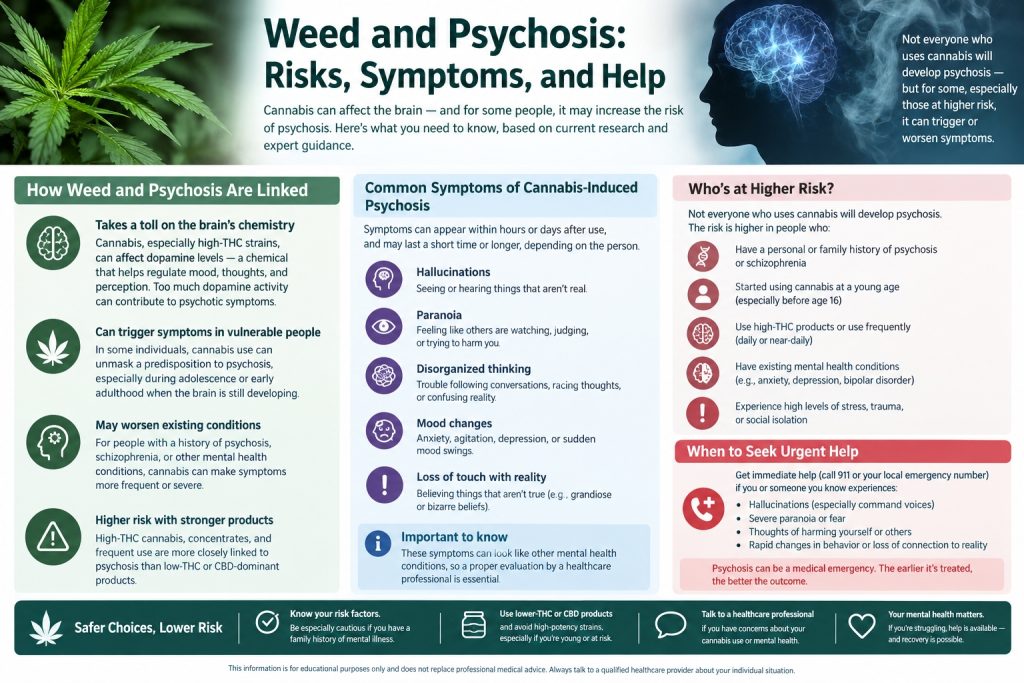
Yes. Cannabis can cause hallucinations, paranoia, delusions, and disorganized thinking during intoxication or in a cannabis-induced psychotic disorder that continues after the immediate high should have ended. Higher THC exposure generally brings greater risk.
Cannabis use is also associated with an increased likelihood of later schizophrenia-spectrum illness, especially after frequent use or an early psychotic episode. That doesn’t mean cannabis is the sole cause in every case. Genetics, age, sleep, trauma, other drugs, and preexisting mental health conditions can all contribute.
When to seek urgent help for psychosis after cannabis use
Seek emergency help if you or someone else might attempt suicide, hurt another person, can’t meet basic needs, becomes severely agitated, or behaves dangerously because of voices or beliefs. Chest pain, seizures, collapse, extreme overheating, or reduced consciousness also require urgent medical assessment.
What to do now if you or someone else feels unsafe or loses touch with reality
Call local emergency services or go to the nearest emergency department. In Canada, call 911 for immediate danger or call/text 9-8-8 for crisis support. Don’t let the person drive.
Move away from weapons, traffic, balconies, and crowds. Reduce noise and bright light, speak in short sentences, and stay nearby if doing so is safe. Tell clinicians what was used, how much, when, and whether alcohol, stimulants, psychedelics, or medications were involved. Packaging or a product photo can help, your priority is accurate care, not avoiding embarrassment.
What are the symptoms of cannabis-induced psychosis?
Symptoms represent a significant break from reality, not simply unusual thoughts while high. They may begin during cannabis use or soon afterward and can disrupt judgment, relationships, sleep, and personal safety.
Hallucinations, delusions, paranoia, and disorganized thinking
Possible symptoms include:
- Hearing voices or seeing things other people don’t perceive
- Believing you’re being monitored, followed, poisoned, or specially chosen
- Speaking in ways others can’t follow
- Acting confused, guarded, unusually suspicious, or agitated
- Showing little awareness that these experiences may be symptoms
Sleep loss and rapidly shifting behaviour can accompany the episode.
Psychosis vs. a bad high, panic attack, or temporary anxiety
A bad high commonly causes racing thoughts, fear, nausea, or a fast heartbeat, but you usually retain some awareness that cannabis caused the experience. During psychosis, false beliefs or perceptions may feel unquestionably real.
The boundary isn’t always tidy. Severe panic, intoxication, delirium, and psychosis can overlap, particularly with high-dose edibles. If symptoms are intense, dangerous, or continue after intoxication should have resolved, don’t diagnose the situation from the sofa: get medical help.
What does research show about weed and psychosis?
Research consistently links cannabis exposure, particularly frequent, high-potency use, with psychotic experiences and psychotic disorders. Evidence comes mainly from observational studies because researchers can’t ethically assign people to prolonged heavy cannabis use.
Association, contributing causes, and what studies cannot prove
An association alone doesn’t prove that cannabis caused every diagnosis. People at emerging risk of psychosis may use cannabis to cope, while tobacco use, childhood adversity, genetics, or other substances may influence both behaviours and outcomes.
Still, dose-response patterns, earlier onset among users, biological plausibility, and findings across different populations support cannabis as a contributing cause, rather than a harmless bystander.
Understanding risk statistics: Absolute risk, relative risk, and study populations
Relative risk compares groups: absolute risk tells you how many people are affected. A “twofold risk” can sound enormous while still applying to a minority of users. Your personal probability can’t be calculated from a single headline.
Study populations matter too. Results from hospitalized patients, teenagers, or people using daily high-THC cannabis shouldn’t be applied unchanged to every occasional adult user. Even so, low average absolute risk doesn’t make an episode low-impact for the person experiencing it.
How THC may affect dopamine and brain signalling
THC activates cannabinoid CB1 receptors, altering networks involved in attention, memory, threat interpretation, and sensory processing. It may also influence dopamine signalling in pathways relevant to psychosis.
That mechanism isn’t a simple “too much dopamine” switch. Dose, CBD content, previous exposure, stress, sleep, and individual biology shape the response. Researchers are still working out why one person becomes relaxed while another becomes intensely paranoid.
Who is at higher risk of cannabis-related psychosis?
Risk isn’t distributed evenly. Knowing your vulnerabilities can help you make a safer decision before a frightening experience forces the issue.
High-THC products, frequent use, and cannabis use disorder
Daily or near-daily use and potent THC products are repeatedly associated with greater psychosis risk. Cannabis use disorder, continued use despite harm, cravings, unsuccessful attempts to stop, or major interference with life, adds concern because exposure becomes harder to control.
Modern concentrates can exceed the THC levels found in traditional flower. Labels aren’t always reliable, either, especially in unregulated markets.
Adolescence, personal or family history of psychosis, and other vulnerabilities
Teenagers and young adults deserve particular caution because the brain is still developing and many psychotic disorders first emerge during this period. Risk may also be higher if you have:
- A personal or close family history of psychosis or schizophrenia
- Bipolar disorder or previous manic symptoms
- Prior cannabis-related paranoia
- Severe sleep deprivation, trauma, or recent intense stress
- Concurrent stimulant, psychedelic, or heavy alcohol use
No single factor guarantees psychosis. Several stacked together, however, should make THC a hard pass.
Edibles, concentrates, and synthetic cannabinoids: How risks differ
Edibles have delayed, sometimes unpredictable effects. Taking another dose after 30 minutes because “nothing’s happening” can produce a much larger exposure once both doses arrive. Concentrates deliver substantial THC quickly through dabbing or high-potency vapes.
Synthetic cannabinoids sold under names such as Spice or K2 aren’t ordinary cannabis. Their chemicals may activate cannabinoid receptors more powerfully and are associated with severe agitation, seizures, cardiovascular problems, and psychosis. Avoid them entirely.
Does CBD protect against THC-related psychosis?
CBD doesn’t usually produce THC’s intoxicating effects, and researchers have investigated whether it can reduce certain psychotic symptoms. But evidence that the CBD in commercial cannabis reliably protects you from THC-related psychosis is insufficient.
Products vary in dose and purity, while some labelled “CBD” contain measurable THC. Don’t treat CBD as an antidote, a safety belt for high-potency cannabis, or a substitute for clinical care.
How is cannabis-induced psychosis diagnosed?
There’s no single blood test or brain scan that confirms cannabis-induced psychosis. Clinicians combine your history, examination, collateral information from people you trust, and, when appropriate, laboratory testing.
Assessing symptom timing, cannabis exposure, other substances, and medical causes
The assessment considers when symptoms began, their relationship to cannabis, dose and potency, previous episodes, sleep, medications, and other drug exposure. Clinicians may test for intoxication or medical problems, but a positive urine THC result can’t show exactly when cannabis was used or prove causation.
Infection, thyroid disease, seizures, head injury, medication effects, delirium, and other medical causes may need exclusion.
Cannabis-induced psychosis vs. schizophrenia and bipolar disorder
Symptoms can look similar at first. A diagnosis may change as clinicians observe whether psychosis resolves with abstinence or continues independently of cannabis.
Schizophrenia-spectrum conditions can include persistent psychosis, reduced motivation, and cognitive changes. Bipolar mania often involves elevated or irritable mood, little need for sleep, impulsivity, and increased activity, sometimes with psychosis. Cannabis may trigger or worsen either condition, so follow-up matters more than rushing to a label.
How long does cannabis-induced psychosis last?
Some symptoms resolve within hours as intoxication fades: clinically significant episodes may last days or weeks. Duration depends on THC dose, product type, repeated use, other drugs, sleep deprivation, treatment, and underlying vulnerability.
Symptom onset, recovery after stopping, and why timelines vary
Inhaled THC acts within minutes, while edible effects may take hours to peak and can last much longer than expected. Stopping cannabis, restoring sleep, and receiving appropriate care often support recovery.
But there’s no safe countdown timer. Persistent paranoia, hallucinations, confusion, or unusual behaviour after the expected intoxication window warrants professional assessment, even if the person insists everything is fine.
Persistent symptoms and the risk of a later schizophrenia-spectrum diagnosis
A substantial minority of people diagnosed with substance-induced psychosis later receive a schizophrenia-spectrum or bipolar diagnosis: cannabis-related cases have shown particularly high transition rates in registry studies. This may reflect unmasked vulnerability, diagnostic evolution, or multiple interacting causes.
That statistic isn’t destiny. It’s a reason to arrange early follow-up, remain abstinent, protect sleep, and respond quickly if warning signs return.
How is cannabis-induced psychosis treated?
Treatment depends on severity, safety, medical findings, and whether symptoms persist. Trying to manage severe psychosis alone can delay effective care.
Acute assessment, a supportive setting, and clinician-directed medication
Immediate care emphasizes safety, low stimulation, hydration when appropriate, physical evaluation, and observation. A clinician may prescribe an antipsychotic or, in selected situations, short-term medication for severe agitation or anxiety.
Medication choice requires attention to side effects, other substances, medical history, and pregnancy. Don’t use another person’s prescription or try to “cancel out” THC with alcohol or sedatives.
Early psychosis services, therapy, and ongoing follow-up
Early psychosis intervention (EPI) programs may combine psychiatric treatment, psychotherapy, family education, supported employment or education, and case management. These services are designed for early episodes, when timely treatment may improve functioning.
Follow-up should monitor mood, sleep, cognition, medication effects, substance use, and returning symptoms. Missing appointments because you feel better is understandable, but it can remove the safety net just when it’s useful.
Support for stopping cannabis, managing withdrawal, and treating dependence
Cannabis withdrawal may cause irritability, anxiety, insomnia, vivid dreams, low appetite, or cravings. Symptoms are uncomfortable but usually manageable with support.
Motivational interviewing, cognitive behavioural therapy, contingency management, peer support, and treatment for coexisting anxiety or depression can help. Build structure around the hours when you usually use: exercise, food, a call with someone trustworthy, then a consistent bedtime. Boring? Maybe. Effective routines often are.
Reducing the risk of another psychotic episode
After psychosis, prevention should address cannabis, sleep, stress, medication adherence when prescribed, and early warning signs such as suspiciousness, social withdrawal, or rapidly declining sleep.
Using cannabis again after psychosis: Why avoiding it is recommended
The safest recommendation is to avoid THC after any psychotic episode. Resuming cannabis is associated with relapse and poorer outcomes in people with psychosis, particularly when use becomes frequent.
A previous “safe” strain doesn’t guarantee safety next time. Potency varies, and your susceptibility may have changed. Medical cannabis should also be discussed with your psychiatric clinicians and the health care practitioner who authorized it rather than restarted independently.
If stopping feels difficult: Harm reduction and a personalized relapse-prevention plan
If you can’t stop immediately, be honest with your care team. Avoid synthetic cannabinoids, concentrates, high-THC products, mixing substances, and using alone, but recognize that lower-risk use is not risk-free after psychosis.
Write a plan naming your triggers, warning signs, emergency contacts, preferred hospital, and who can hold money or products during a crisis. Set one concrete step today: remove your supply, book an appointment, or tell someone you trust.
How to support a friend or family member experiencing psychosis
Your calm presence can reduce fear, but you’re not expected to become a one-person crisis team. Protect your own safety and bring in professional help early.
Communicating calmly, avoiding arguments about delusions, and arranging care
Use their name, speak slowly, and acknowledge emotion without confirming the belief: “That sounds terrifying. I don’t see anyone outside, but I believe you feel unsafe.” Don’t mock, corner, touch unexpectedly, or conduct a courtroom-style debate about the delusion.
Offer simple choices, “Would you rather sit here or in the quieter room?”, and explain what you’re doing. If risk escalates, leave to a safe location and call emergency services. Once the crisis settles, help with appointments, transportation, meals, and a cannabis-free environment.
Where to find help: Local emergency care, early psychosis programs, and substance use services
In Canada, immediate options include 911, an emergency department, or the 9-8-8 Suicide Crisis Helpline (call or text). Health Canada’s Get help with substance use page lists free national and provincial services, including Drug Rehab Services for confidential treatment referrals at 1-877-254-3348, to help you locate mental health and substance-use care.
Ask your family doctor or nurse practitioner, your provincial or territorial health line (811 in most provinces and territories), a local Canadian Mental Health Association branch, or a university hospital about an early psychosis intervention (EPI) program. Outside Canada, use your national emergency number or local crisis service. If cost is a barrier for therapy or counselling, ask about community clinics, sliding-scale counselling, and publicly funded mental health and addiction programs.
References, medical review, and last updated date
Key sources include Health Canada’s overview of the health effects of cannabis, Health Canada’s cannabis and mental health guidance, the World Health Organization’s technical brief on the health and social effects of nonmedical cannabis use, and a major multicentre study of cannabis use and psychotic disorder across Europe.
Editorial transparency: This educational review has no cannabis-industry affiliation and doesn’t replace diagnosis or individualized medical advice. Publication should include review by a licensed psychiatrist, addiction-medicine physician, or similarly qualified clinician before clinical use.
Last updated: November 10, 2026.
The practical conclusion on weed and psychosis is straightforward: most cannabis users won’t experience psychosis, but the possibility is real, and risk rises with potent THC, frequent use, younger age, and personal vulnerability. If reality feels distorted or safety is uncertain, don’t wait for perfect certainty. Stop cannabis, involve someone trustworthy, and seek professional help. Early action is not overreacting: it’s sensible care for a condition that becomes harder to navigate when you try to face it alone.
Frequently Asked Questions About Weed and Psychosis
Can weed cause psychosis and what symptoms should I watch for?
Yes, cannabis can cause psychosis, including hallucinations, paranoia, delusions, and disorganized thinking. Symptoms often appear during or shortly after use and disrupt judgment and safety. Watch for signs like hearing voices, suspicious beliefs, confusion, or severe agitation requiring medical help.
Who is at higher risk of developing psychosis from cannabis use?
Higher risk occurs with daily or frequent use of high-THC products, especially in teenagers, young adults, or those with a personal or family history of psychosis, bipolar disorder, severe stress, or other substance use. Multiple vulnerabilities increase the chance of cannabis-related psychosis.
How long does cannabis-induced psychosis usually last?
Symptoms from cannabis-induced psychosis can last from hours to several weeks depending on THC dose, product type, repeated use, and individual vulnerability. Some symptoms may persist longer and require professional assessment and treatment to support recovery.
What should I do if I or someone else experiences psychosis after using weed?
Seek emergency services immediately if there’s danger to self or others, severe agitation, or disorientation. Stay in a safe, quiet place, avoid driving, and provide clinicians with details about cannabis use and other substances to ensure accurate, prompt care.
Does CBD protect against THC-related psychosis?
Currently, evidence is insufficient to confirm that CBD reliably protects against THC-induced psychosis. Commercial CBD products vary in dose and purity, so CBD should not be considered a safety measure or substitute for professional care.
Can someone use cannabis again safely after experiencing psychosis?
Avoiding THC after a psychotic episode is recommended, as resuming use increases relapse risk and worsens outcomes. If stopping is difficult, seek professional support, avoid high-potency products, and develop a personalized relapse-prevention plan with help from healthcare providers.