
Blog 2026
Best Weed Strains: 30 Standouts for Every Effect
Nov
Finding the best weed strains isn’t as simple as picking the jar with the highest THC number. That approach is a bit like choosing hot sauce solely by how loudly it threatens you. Potency matters, but terpene chemistry, dose, product quality, tolerance, and even your surroundings can change the experience.
This review compares widely available cultivars by reported effects, cannabinoid ranges, dominant terpenes, flavour, consistency, and cultivation difficulty. It covers classic genetics alongside newer favourites, with practical recommendations for sleep, relaxation, daytime use, creativity, and other common goals. Rankings reflect historical market demand, published cultivar information, lab-test patterns, and recurring consumer reports, not a single batch or dispensary menu.
A necessary reality check: strain names aren’t standardized. Two jars labelled “OG Kush” may come from different cuts, growers, harvest dates, or storage conditions. Research also hasn’t established that a cultivar can reliably treat a specific medical condition. Health Canada’s overview of cannabis and your health notes both potential therapeutic uses and meaningful risks, including impairment, drug interactions, and cannabis use disorder.
Use these recommendations as a map, then let the product’s certificate of analysis, plus your own careful experience, choose the final route. If you’re new, start with less than you think you need. Your evening doesn’t need to become a three-hour investigation into whether the refrigerator is humming judgmentally.
Transparency: This review is independent and isn’t sponsored by a cannabis breeder, dispensary, or product manufacturer. Cannabis laws, including the legal age, vary by province and territory. Buy products with clear labels and lab results, don’t drive after consuming, and consult a qualified clinician if you use medication, are pregnant or breastfeeding, or have cardiovascular or psychiatric risk factors.
Key Takeaways
- The best weed strains balance THC potency with terpene chemistry, product quality, and personal tolerance for an optimal experience.
- Indica, sativa, and hybrid strains offer different effects but labels are broad; focus on cannabinoid and terpene profiles to match your goals.
- Choose strains by desired effects like sleep, relaxation, creativity, or pain relief, noting that dose size significantly influences results.
- High-THC strains suit experienced users and require cautious dosing to avoid adverse effects like anxiety or impaired coordination.
- CBD-balanced and low-THC strains provide gentler experiences, ideal for beginners or anxiety-sensitive individuals.
- Verify strain quality by checking lab results, terpene profiles, and harvest dates rather than relying solely on strain names.
How We Ranked the Best Weed Strains (Data, Popularity, Effects, and Lab Results)
There’s no universal “best” cultivar because cannabis experiences vary dramatically. Instead of pretending one famous strain wins every category, this ranking rewards cultivars that repeatedly deliver recognizable aromas and broadly consistent effects when produced well.
We considered market longevity, geographic availability, breeder reputation, consumer demand, and typical cannabinoid and terpene results. Published research shaped our safety guidance, but user reports informed experiential descriptions such as “calming” or “uplifting.” Those descriptions are associations, not medical promises.
Ranking criteria: demand/availability, consistency of effects, cannabinoid range (THC/CBD), terpene dominance, flavour, and grow difficulty
Each strain was weighed across six practical factors:
- Demand and availability: Can you realistically find it, or does it exist mainly in nostalgic forum posts?
- Effect consistency: Do reports converge around a recognizable experience across reputable growers?
- Cannabinoid range: Typical THC and CBD values matter more than one unusually strong test.
- Terpene profile: We prioritized cultivars with distinctive, recurring combinations rather than vague “fruit” aromas.
- Flavour: Complexity, smoothness, and resemblance between aroma and taste all counted.
- Grow difficulty: Resilience, flowering time, yield, and sensitivity influenced practicality for legal home growers.
Lab results deserve context. THC percentages can vary by phenotype, sampling method, moisture content, and laboratory procedure. Terpenes also evaporate as flower ages, so a fresh 20% THC batch may feel richer than a dry 28% batch.
Quick buying rule: Check the package date, total terpene percentage, dominant terpenes, and cannabinoid panel before trusting the cultivar name or THC headline.
Best Weed Strains by Type: Indica vs Sativa vs Hybrid (Quick Picks)
The indica/sativa divide remains useful as dispensary shorthand, but it doesn’t reliably predict chemistry. Botanically related plants can produce different cannabinoid and terpene profiles, while modern commercial cultivars are overwhelmingly hybridized. Treat these labels as broad descriptions of growth structure and commonly reported experience, not guarantees.
Best indica-leaning strains (top 5)
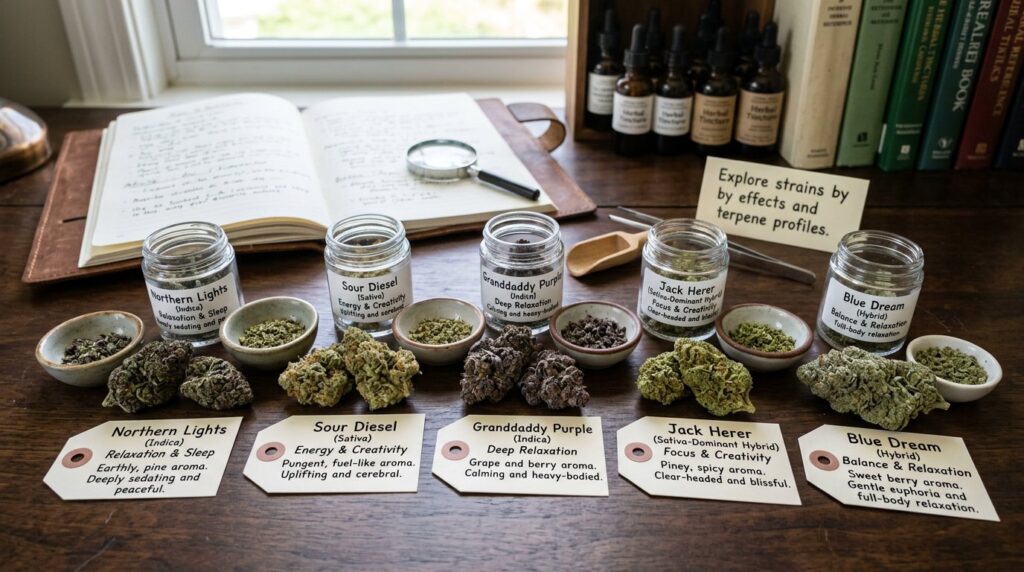
- Northern Lights: Earthy, sweet, and commonly associated with quiet evenings and heavy physical relaxation.
- Granddaddy Purple: Grape-and-berry flavour with myrcene and caryophyllene often appearing prominently.
- Bubba Kush: Coffee, cocoa, and hash notes: a popular choice when your calendar says “absolutely nothing.”
- Hindu Kush: Resinous, woody, and straightforward, with old-school Afghan genetics and manageable cultivation.
- Ice Cream Cake: Creamy vanilla and fuel flavours paired with typically strong THC levels and a weighty finish.
These selections generally suit later hours. Beginners should approach Ice Cream Cake and potent Granddaddy Purple batches cautiously.
Best sativa-leaning strains (top 5)
- Jack Herer: Pine, spice, and citrus with a reputation for alert, upbeat effects.
- Sour Diesel: Sharp fuel and lemon aromas: fast-feeling and potentially intense for anxiety-prone users.
- Durban Poison: Sweet anise and herbal notes, frequently chosen for active daytime plans.
- Super Lemon Haze: Bright citrus flavour and energetic character, often with limonene and terpinolene.
- Green Crack: Mango-like sweetness and pronounced stimulation even though its regrettably dramatic name.
If racing thoughts are already your unwanted sidekick, choose modest THC or mix THC flower with CBD-rich flower.
Best hybrid strains (top 10)
| Strain | Typical character | Best fit |
|---|---|---|
| Blue Dream | Berry, herbal, balanced | Social afternoons |
| Gelato | Sweet, creamy, potent | Mood and relaxation |
| Wedding Cake | Vanilla, pepper, fuel | Evening unwinding |
| OG Kush | Citrus, pine, gas | Versatile relaxation |
| White Widow | Earthy, floral, bright | Conversation and creativity |
| Pineapple Express | Tropical, woody | Lighthearted daytime use |
| Runtz | Candy, fruit, gas | Flavour-focused sessions |
| GMO | Garlic, mushroom, diesel | Experienced users |
| Super Boof | Citrus, cherry, earthy | Upbeat mood |
| Cap Junky | Gas, fruit, pepper | High-tolerance consumers |
Blue Dream and Pineapple Express tend to be approachable when THC is moderate. Cap Junky, GMO, and some Gelato cuts can be extremely potent. With hybrids, the batch label is merely the opening chapter: the lab panel tells the plot.
Best Weed Strains by Effect (Sleep, Anxiety, Pain, Focus, Creativity, Appetite)
Choosing by desired effect is more useful than chasing genetic categories, but dose can reverse the experience. A small amount may feel easygoing and social: several large inhalations of the same flower may produce sedation, dizziness, or anxiety.
Sleep & relaxation (top strains + terpene notes like myrcene/linalool)
Northern Lights, Granddaddy Purple, Bubba Kush, Hindu Kush, and Do-Si-Dos are frequent nighttime picks. Look for myrcene, which contributes earthy or musky aromas, and linalool, recognizable from lavender. Caryophyllene may add peppery warmth.
Cannabis may help some people fall asleep, but frequent high-THC use can alter sleep architecture and stopping after regular use may temporarily disrupt sleep. Keep a simple diary recording dose, timing, sleep onset, awakenings, and next-morning grogginess. If you wake up feeling wrapped in invisible wet laundry, lower the dose or consume earlier.
Stress/anxiety-friendly options (CBD-balanced and lower-THC picks)
High THC can intensify anxiety, especially in inexperienced users. Cannatonic, Harlequin, ACDC, Sour Tsunami, and Pennywise are better starting points because they’re commonly bred toward meaningful CBD content. Ratios still vary, so verify the label.
For inhaled flower, try one small puff and wait 10–15 minutes. A 1:1 THC:CBD product can feel gentler than THC-dominant flower, although CBD doesn’t magically cancel an excessive dose. Anyone with panic disorder, bipolar disorder, psychosis risk, or significant medication use should discuss cannabis with a clinician rather than crowdsourcing the decision from a budtender and three enthusiastic cousins.
Pain & body relief (common profiles: myrcene/caryophyllene)
Consumers often select GMO, OG Kush, Blueberry, Wedding Cake, and Girl Scout Cookies for pronounced body effects. Myrcene-heavy profiles may feel physically relaxing, while beta-caryophyllene is notable because it interacts with CB2 receptors in preclinical research.
Clinical evidence is more nuanced than strain marketing. A major National Academies review found substantial evidence that cannabis or cannabinoids can help chronic pain in adults, but that doesn’t establish these named strains as treatments. For persistent pain, track function, not merely intensity. Could you cook dinner, walk comfortably, or sleep with fewer interruptions? That’s more informative than “felt strong.”
Energy, focus & daytime (terpinolene/limonene-forward picks)
Durban Poison, Jack Herer, Super Lemon Haze, Sour Diesel, and Tangie are commonly described as energetic. Terpinolene can smell fresh, woody, or floral: limonene supplies citrus brightness. Pinene-forward batches may feel crisp, though human evidence linking individual terpenes to specific cognitive effects remains limited.
Use a genuinely small dose before low-stakes activities such as gardening, sketching, or cleaning. Cannabis can impair attention, reaction time, and working memory even when you feel productive. It isn’t appropriate before driving, operating equipment, exams, childcare, or safety-sensitive work. “I reorganized my spice rack by emotional vibe” is creativity, perhaps, not necessarily focus.
Creativity & mood (uplifting terpene combos)
For brainstorming or music, Blue Dream, White Widow, Jack Herer, Super Boof, and Purple Haze have enduring appeal. Many batches combine limonene with pinene, caryophyllene, or terpinolene, creating layered citrus, pine, floral, and pepper aromas.
The best creative dose usually sits below obvious intoxication. Set up your activity first: open the notebook, tune the guitar, or lay out paints. Then take one inhalation and wait. This removes the classic obstacle of becoming fascinated by the couch before starting.
Appetite seekers often favour GMO, OG Kush, Wedding Cake, and Gelato, but increased hunger isn’t strain-exclusive. Prepare a satisfying snack beforehand, fruit, yogurt, hummus, or something similarly deliberate, unless you want to discover that one person can, technically, finish an entire family-size cereal box.
Best Weed Strains by Potency: High-THC, Balanced THC:CBD, and Low-THC
Potency should match your tolerance and purpose. More THC doesn’t automatically mean better effects, better flavour, or better value. It mainly reduces your margin for dosing error.
High-THC heavy hitters (who they’re for + dosing cautions)
Cap Junky, GMO, Bruce Banner, Wedding Cake, and Gelato frequently appear in high-potency categories, with some tested batches exceeding 25% THC. These cultivars make the most sense for experienced consumers who understand their response and need only a small amount.
Avoid stacking doses quickly. With flower or a vape, take one modest inhalation and wait at least 10–15 minutes. Concentrates can contain 60–90% THC and demand even greater caution. High doses increase the likelihood of panic, rapid heart rate, nausea, impaired coordination, and an unpleasantly elastic sense of time.
If you overconsume, move somewhere quiet, sip water, breathe slowly, and remind yourself that the effects will pass. For guidance, call your local poison centre at 1-844-POISON-X (1-844-764-7669) (in Quebec, 1-800-463-5060). Call 911 for chest pain, severe confusion, trouble breathing, loss of consciousness, or dangerous behaviour.
Balanced THC:CBD strains (functional relief + clearer head)
Cannatonic, Harlequin, Pennywise, Dancehall, and Sour Tsunami are commonly available in balanced or CBD-forward forms. Depending on the phenotype, you may encounter ratios around 1:1, 1:2, or higher in CBD.
These options can offer a more manageable experience for people who dislike strong intoxication. “Clearer,” but, doesn’t mean unimpaired. A balanced product can still affect driving and judgment.
| Profile | Practical starting point | Likely fit |
|---|---|---|
| 1:1 THC:CBD flower | One small inhalation | Cautious exploration |
| CBD-dominant flower | One or two inhalations | THC-sensitive users |
| 1:1 edible | 1–2.5 mg THC | Planned, longer sessions |
Wait at least two hours, and preferably longer, before adding more edible cannabis.
Low-THC / beginner-friendly strains (minimizing anxiety/paranoia)
Start with ACDC, Harle-Tsu, Charlotte’s Web, Remedy, or a verified low-THC phenotype of Harlequin. Availability varies, and some “CBD flower” can still contain enough THC to cause impairment or trigger a positive drug test.
Your beginner checklist is refreshingly unglamorous:
- Buy from a retailer that shows recent lab results.
- Choose CBD-dominant or THC below roughly 10% when possible.
- Take one puff in a familiar, comfortable setting.
- Don’t combine it with alcohol.
- Keep the rest of your evening obligation-free.
If paranoia appears repeatedly at tiny doses, cannabis may simply not agree with you. There’s no trophy for forcing it.
Best Weed Strains of All Time (Classics That Still Hold Up)
Classic strains matter because they established flavour families, shaped modern breeding, and remain reference points decades later. Their origin stories aren’t always cleanly documented, cannabis history contains equal parts genetics, prohibition, oral tradition, and confident storytelling.
Icons and why they matter: OG Kush, Sour Diesel, Northern Lights, White Widow, Jack Herer, Purple Haze
OG Kush helped define the US West Coast gas-and-citrus profile. Its genetic origin remains disputed, but its influence is obvious in countless Kush and Cookies-era crosses.
Sour Diesel became a US East Coast emblem through its pungent fuel aroma and fast, cerebral reputation. A good batch smells as though a lemon peel wandered into a mechanic’s garage, in a strangely appealing way.
Northern Lights represents old-school Afghan-influenced breeding: compact growth, heavy resin, earthy sweetness, and deeply relaxing effects. Legal home growers appreciate its relatively short flowering period and forgiving nature.
White Widow, popularized through Dutch seed culture in the 1990s, earned its name from dense trichome coverage. It balances earthy spice with a lively, social effect when dosed conservatively.
Jack Herer honours the cannabis activist and author. Typically associated with Haze, Northern Lights, and Shiva Skunk lineage, it remains a benchmark for piney, spicy, daytime-friendly flower.
Purple Haze carries both musical mythology and visual appeal. Anthocyanin pigments can turn flowers purple under the right genetics and conditions, but colour doesn’t prove potency. Its floral, berry-like profile and buoyant reputation keep it culturally relevant.
These classics aren’t automatically superior to modern genetics. They endure because their identities remain distinct, and because today’s breeders keep remixing them.
Best New & Trending Weed Strains (2026 Standouts)
Contemporary breeding leans toward loud dessert, fermented fruit, candy, and fuel profiles. That creates spectacular flower, but it can also produce a dispensary shelf where every name sounds like either a bakery accident or an energy drink.
What’s trending now: modern dessert/gas profiles, new crosses, and community favourites (e.g., Cap Junky, GMO, Super Boof, Lemon Cherry)
Cap Junky, bred from Alien Cookies and Kush Mints genetics, attracts experienced consumers with intense gas, fruit, and pepper notes. It’s usually resin-heavy and potent, making it better suited to small doses.
GMO, also called GMO Cookies or Garlic Cookies, combines savoury garlic, mushroom, onion, and diesel aromas. It’s divisive in the best possible way: one person smells a gourmet kitchen: another smells a suspicious backpack.
Super Boof rose through its vivid citrus-cherry aroma, colourful flower, and upbeat hybrid effects. It’s a strong example of modern consumers valuing flavour and bag appeal alongside potency.
Lemon Cherry Gelato and related “Lemon Cherry” selections deliver sweet citrus, berry, cream, and gas. Naming can be inconsistent, so compare lineage and laboratory results rather than assuming every similarly labelled jar contains the same cultivar.
Other notable contemporary picks include Permanent Marker, with floral-soapy gas: RS11, known for candy and fruit: Zoap, with sweet floral notes: and Jealousy, offering creamy, earthy citrus.
Trendiness comes with two cautions. First, popular names are frequently applied to unrelated or weakly verified genetics. Second, exceptionally dense flower may be vulnerable to microbial problems if cultivation and curing aren’t carefully managed. Licensed testing, harvest dates, producer reputation, and your nose remain more useful than hype.
Terpene Guide: Choose the Best Weed Strains by Aroma, Flavour, and Effects
Terpenes are aromatic compounds found throughout the plant kingdom. They help cannabis smell like citrus peel, pine needles, lavender, pepper, or ripe mango. They may interact with cannabinoids and other compounds, but popular “entourage effect” claims often run ahead of controlled human evidence.
Top terpenes and what they’re associated with: myrcene, limonene, caryophyllene, pinene, linalool, terpinolene
| Terpene | Aroma | Common association | Example strains |
|---|---|---|---|
| Myrcene | Earth, musk, herbs | Physical relaxation | Northern Lights, Granddaddy Purple |
| Limonene | Lemon, orange | Bright mood, energy | Super Lemon Haze, Wedding Cake |
| Caryophyllene | Pepper, cloves | Body comfort, warmth | GMO, Bubba Kush |
| Pinene | Pine, rosemary | Alert character | Jack Herer, Blue Dream |
| Linalool | Lavender, floral | Calm, nighttime use | Do-Si-Dos, some Kush phenotypes |
| Terpinolene | Floral, fresh wood | Lively, creative feel | Durban Poison, Jack Herer |
These are associations, not prescriptions. A strain containing myrcene won’t necessarily sedate you, and limonene won’t reliably improve mood. Concentration, ratio, THC dose, minor cannabinoids, and your individual biology all matter.
When shopping, compare the top three terpenes rather than searching for one “magic” molecule. A limonene-caryophyllene-myrcene profile often feels and smells different from limonene-terpinolene-pinene. Total terpene content can indicate aromatic intensity, although curing and storage determine how much survives until opening.
Use your nose where regulations permit smelling samples. Pleasant aroma is a practical selection tool because you’re more likely to enjoy a profile you naturally find inviting. Avoid flower that smells musty, like ammonia, or like damp basement cardboard: those aromas may signal poor curing or contamination.
How to Pick the Best Weed Strain for You (Tolerance, Setting, and Product Type)
Begin with three questions: What result do you want, how much experience do you have, and what must you do afterward? A relaxed Saturday at home allows more experimentation than a crowded concert, unfamiliar hotel, or family dinner where your aunt has already begun discussing politics.
Check THC, CBD, dominant terpenes, harvest date, and serving size. Then record what happened. A phone note containing product, dose, time, setting, and effects will teach you more than memorizing fifty strain descriptions.
Flower vs vape vs concentrates vs edibles: how strain effects can change by format
Flower offers the clearest connection to a strain’s full aroma and makes incremental dosing relatively easy. Effects generally begin within minutes. A dry-herb vaporizer such as a PAX or Storz & Bickel device avoids combustion, though inhaling any heated material can irritate your lungs.
Vape cartridges are discreet and convenient, but the word “strain” may describe a terpene recipe rather than extract from that cultivar. Choose products with complete ingredient and contaminant testing. Avoid informal-market cartridges because additives and contamination can carry serious risks.
Concentrates preserve intense cannabinoid and terpene levels in a small volume. Products such as live resin and rosin can express cultivar flavour beautifully, but their potency makes them poor beginner choices.
Edibles transform the experience. Your liver converts THC into 11-hydroxy-THC, which can feel stronger and last much longer than inhaled cannabis. Strain distinctions may also become less obvious, particularly in products made with purified distillate. Start with 1–2.5 mg THC if you’re cautious, wait several hours, and never assume “nothing is happening” after 30 minutes. That sentence has launched many regrettable evenings.
A practical decision guide:
- New or THC-sensitive: CBD-dominant flower or a precisely labelled low-dose edible.
- Flavour-focused: Fresh flower, live resin, or rosin from a reputable producer.
- Fast onset and dose control: One small flower or vape inhalation.
- Long duration: A low-dose edible, only when you have ample time.
- High tolerance: Potent flower or concentrates, still measured carefully.
The best weed strains are eventually the ones whose verified chemistry fits your body, goal, and setting, not whatever has the biggest number or loudest name. Choose one promising cultivar, start low, and test it on a low-pressure day. Pay attention to how you feel during the experience and the next morning.
If a strain leaves you comfortable, functional, and able to enjoy what you planned, you’ve found a contender. If it repeatedly brings anxiety, fogginess, or unwanted sedation, move on without guilt. Cannabis is optional, experimentation should be deliberate, and the smallest effective dose usually wins.
Frequently Asked Questions about the Best Weed Strains
What factors should I consider when choosing the best weed strain?
Consider potency, terpene chemistry, dose, product quality, your tolerance, and environment. These affect the experience more than THC levels alone.
How do indica, sativa, and hybrid strains differ in effects?
Indica strains often promote relaxation and sleep, sativas are energizing and uplifting, while hybrids blend traits for versatile effects. Labels reflect growth and typical experiences, not exact chemistry.
Which strains are recommended for beginners to minimize anxiety?
Start with low-THC or balanced THC:CBD strains like ACDC, Harlequin, or Charlotte’s Web. Use small doses in a comfortable setting and avoid combining with alcohol.
How do terpenes influence the effects and aroma of cannabis?
Terpenes contribute flavours and scents like citrus, pine, or lavender and may influence mood or relaxation. For example, myrcene is linked to relaxation, while limonene is associated with energy and mood.
What is the best way to find a strain that fits my needs?
Match your desired effects with strain profiles and terpene content. Start with small doses, note effects, and consider product quality, lab tests, and setting for safe enjoyment.
Can high-THC strains be suitable for new users?
High-THC strains like Cap Junky or Gelato are best for experienced consumers. New users should dose cautiously because high THC increases risk of anxiety, nausea, and impaired coordination.