
Blog 2026
Can Weed Help Headaches? Evidence, Risks & Dosing
Nov
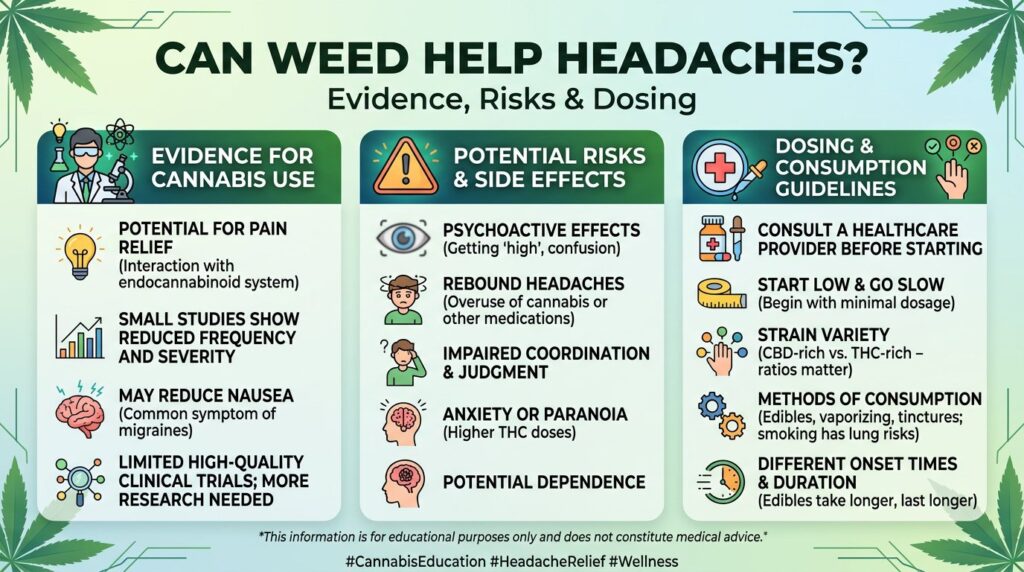
A pounding migraine can make almost any promised remedy sound reasonable, especially when your prescription medication isn’t working, nausea makes swallowing a pill impossible, or the pain arrives after the pharmacy has closed. So, can weed help headaches? Sometimes. Some people report less migraine pain, nausea, and light sensitivity after using cannabis. Early observational research also suggests potential benefits. But the evidence isn’t strong enough to call cannabis a proven first-line headache treatment, and frequent use may contribute to medication-overuse headaches, withdrawal symptoms, or cannabis use disorder.
This review examines cannabis for migraine, tension-type headache, and cluster headache. It covers THC, CBD, product formats, conservative dosing, interactions, and warning signs, not recreational use or a promise that one strain will “cure” your headache. Because cannabis products vary dramatically, there’s no universally best gummy, vape, or chemovar. A package labelled “hybrid” tells you far less than its THC dose, CBD content, ingredients, and independent laboratory results.
The bigger issue is that headache describes a symptom, not one condition. A familiar stress headache after a deadline is different from a first-ever explosive headache or head pain accompanied by weakness. Cannabis could temporarily blur symptoms that need urgent evaluation. It can also impair driving, coordination, judgment, and memory, even when you’re using it medicinally.
If you’re of legal age in your province or territory and you’re considering cannabis, talk with a clinician who understands both headache medicine and cannabinoids. Bring your medications and product label rather than saying only, “I use weed sometimes.” That detail matters. And if you test cannabis, use one clearly labelled product, begin with a very small dose, and record what happens. Your goal isn’t to get as high as possible, it’s to find out whether the smallest practical dose improves function without creating a second problem.
Key Takeaways
- Cannabis, particularly weed, may help alleviate some migraine-related symptoms like pain and nausea but is not a proven universal headache treatment.
- THC can alter pain perception and reduce nausea but carries risks of anxiety, impaired coordination, and potential medication-overuse headaches if used frequently.
- CBD may offer anti-inflammatory and calming effects without intoxication, but evidence for its effectiveness in headaches is limited and dosing is not well-established.
- Different headache types respond variably to cannabis; migraine, tension-type, and cluster headaches require distinct approaches and accurate diagnosis before use.
- Start with very low doses, especially of THC, use clearly labelled products, and maintain a headache diary to track symptoms, dosage, and side effects under medical guidance.
- Avoid cannabis use if headaches worsen, new or severe symptoms appear, or if you have contraindications like pregnancy, mental health issues, or certain medications.
Quick Answer: Can Weed Help Headaches (and When It Might Make Them Worse)?
Yes, weed may help some headaches, particularly migraine-related pain and nausea, but results are inconsistent. Most positive evidence comes from surveys, retrospective records, and small studies rather than large, high-quality randomized trials. THC may alter pain perception and reduce nausea, while CBD may affect anxiety, inflammation, and pain signalling without causing a typical high. Neither is guaranteed to stop a headache.
Cannabis may be more likely to hurt than help when you:
- Use high-THC products or take more before the first dose has peaked
- Smoke and are sensitive to odour, coughing, carbon monoxide, or airway irritation
- Use cannabis frequently enough to develop tolerance, withdrawal, or rebound symptoms
- Combine it with alcohol, sedatives, or medications that increase dizziness
- Buy untested products containing pesticides, solvents, mould, or inaccurate doses
- Use it to mask a new, severe, or changing headache
The practical answer to “can weed help headaches?” is hence possibly, for selected adults, with careful dosing and medical guidance. Cannabis shouldn’t automatically replace established treatments such as triptans, gepants, preventive medications, sleep management, hydration, or evaluation of underlying causes.
Headache Types Cannabis Is Most Commonly Used For
People commonly try cannabis for migraine, tension-type headaches, and, less often, cluster headaches. Those conditions behave differently, so success with one doesn’t predict success with another. Before experimenting, get a reasonably confident diagnosis. “Headache after work” could reflect muscle tension, migraine, caffeine withdrawal, eye strain, elevated blood pressure, or something unrelated to cannabis.
Migraine: frequency, nausea/light sensitivity, and common triggers
Migraine often causes moderate-to-severe throbbing or pulsing pain, commonly on one side, although it can affect both. Nausea, vomiting, sound sensitivity, and light sensitivity are common. Some people experience aura, visual changes, tingling, or speech symptoms, before or during an attack.
Cannabis appeals to migraine patients because one product might influence several symptoms at once: pain, nausea, sleep disruption, and anxiety around the next attack. Inhaled THC can act faster than an edible, which matters when nausea makes pills difficult. But inhalation may also aggravate odour sensitivity or coughing, and intoxication can make aura-related confusion feel more alarming.
Common migraine triggers include missed meals, poor sleep, hormonal changes, alcohol, weather shifts, stress, and caffeine changes. Cannabis doesn’t erase those triggers. If a low-dose product seems helpful only when you also eat, hydrate, and rest in a dark room, record the entire routine rather than crediting the gummy alone.
Tension headaches: stress, muscle tightness, sleep issues
Tension-type headaches usually feel like pressure or a tight band rather than pulsing pain. They’re often bilateral and aren’t typically accompanied by pronounced nausea. Long hours at a laptop, jaw clenching, inadequate sleep, and stress can contribute.
CBD or low-dose THC may help some people relax or sleep, indirectly reducing discomfort. A topical cannabis product might feel soothing when massaged into tight neck or shoulder muscles, although the massage, menthol, or heat may be doing much of the work. Evidence for cannabinoids specifically treating tension-type headache is sparse.
Before reaching for cannabis, try the boring-but-useful basics: change your screen position, unclench your jaw, take a movement break, eat, and check your caffeine routine. If headaches recur several days each week, don’t keep “patching the leak.” A clinician can assess medication overuse, sleep apnea, bruxism, vision issues, and other treatable contributors.
Cluster headaches: severity, timing, and why people seek fast-acting options
Cluster headache produces excruciating one-sided pain, often around an eye, with tearing, nasal symptoms, eyelid changes, or marked restlessness. Attacks can arrive at similar times each day during a cluster period. Because pain escalates rapidly, people understandably search for fast-acting inhaled options.
Cannabis responses appear mixed. Some patients report relief, while others report no effect or worsening. Evidence is much weaker than it is for established acute therapies. High-flow oxygen and prescription triptans have considerably stronger clinical support and faster, more predictable protocols.
If you suspect cluster headache, seek specialist care rather than conducting a dispensary scavenger hunt while in severe pain. A neurologist can confirm the diagnosis, prescribe attack and preventive treatment, and screen for look-alike conditions. A new headache centred around one eye, especially with neurological changes or a painful red eye, also warrants prompt assessment.
How Cannabis May Affect Head Pain (THC, CBD, and the Endocannabinoid System)
Cannabis contains more than 100 cannabinoids plus aromatic compounds called terpenes. These substances can influence receptors and signalling pathways involved in pain, nausea, mood, sleep, and inflammation. The body’s endocannabinoid system includes CB1 and CB2 receptors, naturally produced endocannabinoids, and enzymes that create or break them down.
That biology provides a plausible mechanism, not proof of clinical benefit. Headache disorders are complex, and a compound affecting a pain pathway in a laboratory doesn’t automatically become an effective migraine medicine at a dispensary counter.
THC: pain modulation, nausea relief, potential downsides (anxiety, rebound)
Delta-9-tetrahydrocannabinol, or THC, is cannabis’s main intoxicating cannabinoid. By activating CB1 receptors in the brain and nervous system, it can change pain perception, reduce nausea, stimulate appetite, and alter mood. Some users describe the headache as less intrusive even when it doesn’t completely disappear, a meaningful outcome if you can eat, rest, and function again.
Dose matters enormously. A small amount may feel calming: a larger dose can bring racing thoughts, panic, dizziness, increased heart rate, impaired coordination, or heightened awareness of pain. Frequent exposure may increase tolerance, encouraging progressively larger doses. Observational research has also linked cannabis use among people with chronic migraine to medication-overuse headache, although that association does not prove cannabis caused it.1
THC can impair driving and decision-making for hours, potentially longer after an edible. “I feel mostly fine” isn’t a roadside safety test.
CBD: anti-inflammatory potential, calming effects, interaction considerations
Cannabidiol, or CBD, doesn’t produce THC’s conventional high. It interacts indirectly with several biological systems and is being studied for anti-inflammatory, analgesic, and anxiety-related effects. That makes CBD attractive to people who want symptom relief while remaining clearheaded.
Unfortunately, marketing has sprinted ahead of headache evidence. Human trials of CBD alone for migraine remain limited, and over-the-counter doses may be far below those used in pharmaceutical research. Some products advertised as CBD contain measurable THC or less CBD than stated.
CBD can still cause sleepiness, diarrhea, appetite changes, and drug interactions. It may affect liver enzymes involved in metabolizing medications, including certain antiseizure drugs, antidepressants, and anticoagulants. At higher doses, liver-related concerns become more relevant. Choose a product with a recent certificate of analysis and discuss regular CBD use with your pharmacist, yes, even if the bottle came from a wellness shop rather than a dispensary.
Terpenes and minor cannabinoids: what may matter for headaches (e.g., myrcene, limonene)
Myrcene, limonene, linalool, pinene, and beta-caryophyllene help create cannabis’s aroma. Minor cannabinoids include CBG, CBC, and THCV. Laboratory and animal research suggests some may affect inflammation, stress, or pain, inspiring claims about an “entourage effect” in which whole-plant compounds work together.
For headaches, those claims remain largely unconfirmed in rigorous human trials. Limonene doesn’t guarantee an uplifting, headache-free afternoon: myrcene doesn’t reliably turn every product into a sedative. Terpenes may also trigger symptoms in people who are sensitive to strong smells.
Treat the profile as useful tracking data, not a horoscope. If two products contain 2.5 mg THC but affect you differently, cannabinoid ratios, terpenes, formulation, food intake, and your migraine stage may all matter. Record the batch label and laboratory report. Strain nicknames alone make poor scientific notes.
What the Evidence Says: Medical Cannabis for Headaches and Migraines
Research on medical cannabis for headaches is promising in places but not definitive. Retrospective studies have reported reductions in headache or migraine frequency and severity among some medical-cannabis patients. Surveys also commonly report perceived relief. A 2019 study using app-recorded sessions found reductions in self-reported headache and migraine severity after cannabis use, while also observing signs of tolerance over time.2
A 2022 systematic review found potential benefit for migraine, but emphasized substantial limitations: inconsistent formulations, observational designs, small samples, and variable outcome measures.3 Evidence for tension-type and cluster headaches is thinner.
What studies show vs. what remains uncertain (limits, bias, dosing variability)
Here’s the evidence gap in plain English:
| What research suggests | What it cannot yet answer reliably |
|---|---|
| Some patients report lower pain severity | Which THC:CBD ratio works best |
| Cannabis may reduce nausea and medication use | Whether benefits outperform placebo or standard care |
| Fast-acting formats may help during attacks | Optimal dose, timing, and route |
| Benefits can occur alongside adverse effects | Long-term effects on headache frequency |
Observational studies are vulnerable to selection bias: people who tolerate cannabis and find it useful may be more likely to keep using it and join a survey. Product variability is another headache, pun reluctantly accepted. “Cannabis” might mean a 1 mg THC mint, a 20% THC flower, or a concentrated oil.
Placebo-controlled trials are difficult because intoxication can reveal who received THC. Meanwhile, rules that differ from country to country complicate product standardization. The fair conclusion is that cannabis may help selected patients, but evidence doesn’t yet support a universal product, dose, or recommendation. Established migraine therapies generally have stronger efficacy and safety data.
References: [1] Medication-overuse headache and cannabis research · [2] Cannabis use and self-reported headache severity · [3] Medical cannabis for migraine systematic review
When Weed Can Trigger or Worsen Headaches
Cannabis can cause headache as an adverse effect, worsen an existing attack, or create conditions, dehydration, missed meals, poor sleep, that make head pain more likely. The culprit may be THC dose, withdrawal, smoke, an additive, or simply timing. If pain consistently begins after the same product, take that pattern seriously rather than assuming you need a stronger dose.
Overuse/rebound headaches and cannabis withdrawal headaches
Medication-overuse headache occurs when acute headache treatments are used too frequently, particularly in people with an underlying headache disorder. Cannabis isn’t classified exactly like triptans or combination analgesics, but frequent use has been associated with rebound patterns in chronic migraine populations. Cause and effect remain uncertain: people with worse headaches may naturally use more cannabis.
Stopping regular, heavy cannabis use can also produce withdrawal. Symptoms may include headache, irritability, anxiety, insomnia, vivid dreams, reduced appetite, and sweating. They often begin within one or two days, peak during the first week, and gradually improve, although individual timelines vary.
If you’re using cannabis most days and wake with headaches that improve only after another dose, don’t abruptly improvise a solution. Ask a clinician about a gradual, supported plan and evaluate every acute medication you use. A diary can reveal whether your “treatment” has quietly joined the trigger list.
THCA/THC conversion, potency, and sensitivity: why some people get headaches
Raw cannabis contains THCA, a non-intoxicating precursor that converts to THC with heat over time, a process called decarboxylation. Smoking, vaping, and cooking accelerate that conversion. So, raw-flower labels may list THCA alongside calculated “total THC,” and the numbers can confuse beginners.
Concentrates, infused pre-rolls, and high-potency vapes can deliver much more THC than expected. A deep inhalation from an 80% THC cartridge isn’t comparable with one puff of lower-potency flower. High doses may cause anxiety, blood-pressure changes, dizziness, and sensory amplification, all of which can feel like a worsening headache.
Sensitivity varies with tolerance, genetics, age, medications, sleep, and whether you’ve eaten. Don’t use your friend’s dose as your measuring spoon. Select products that state THC per serving and per package, avoid homemade edibles with unknown distribution, and wait for the full onset before redosing.
Dehydration, low blood sugar, smoke irritation, and product additives/contaminants
Dry mouth doesn’t prove dangerous dehydration, but cannabis can distract you from drinking water, eating, or noticing heat exposure. THC may also increase appetite later while an attack-related skipped meal has already lowered your blood sugar. The resulting headache gets blamed on “the strain” when the forgotten lunch may deserve top billing.
Smoke introduces fine particles and airway irritants. Coughing raises pressure and can intensify head pain. Vaping avoids combustion but isn’t harmless: additives, residual solvents, flavourings, and contaminated cartridges can irritate the lungs. Avoid vape cartridges without batch lab results, especially given the history of vitamin E acetate-associated lung injuries.
Look for products tested for potency, pesticides, heavy metals, microbes, and solvents. Stop using any product that causes chest pain, breathing difficulty, persistent vomiting, or a sudden severe headache. Cannabis contaminated with mould is particularly concerning if you’re immunocompromised.
Best Cannabis Products for Headaches: Methods, Onset, and Duration
There’s no medically established “best cannabis product for headaches.” The better question is which route offers predictable dosing with the least risk for your situation. Availability and retail rules differ by province and territory, so compare product categories, not flashy brand promises.
| Method | Approximate onset | Typical duration | Main trade-off |
|---|---|---|---|
| Inhaled | Minutes | 2–4 hours | Fast but irritating and harder to measure |
| Sublingual tincture | 15–45 minutes | 4–6 hours | Moderate control: absorption varies |
| Edible/capsule | 30–120+ minutes | 6–8+ hours | Long-lasting but easy to overdo |
| Topical | Variable | Variable | Limited systemic effect: weak headache evidence |
Timelines are estimates. Food, metabolism, formulation, and tolerance can shift them considerably.
Inhalation (vapour vs smoke): fastest relief and biggest irritation risk
Inhalation acts within minutes, which can be useful when migraine pain rises quickly. It also lets you pause after a small inhalation and assess the effect. But, “one puff” isn’t a standardized dose: device temperature, inhalation depth, flower potency, and cartridge concentration all change exposure.
Smoking creates combustion byproducts and can worsen coughing, odour sensitivity, or respiratory disease. Dry-herb vaporization may reduce some combustion exposure but still irritates airways. Oil cartridges introduce additional concerns about additives, hardware, and concentrate potency.
If you choose inhalation, use a lab-tested, lower-THC product, take one small inhalation, and wait at least 10–15 minutes before considering more. Don’t hold vapour in your lungs: that mainly increases irritation. Avoid inhalation entirely if you’re pregnant, have significant lung or cardiovascular disease, or notice that smoke reliably triggers your migraines.
Edibles/capsules: longer duration, delayed onset, higher overuse risk
Edibles and capsules avoid lung irritation and offer labelled milligram doses. Their long duration may help someone whose migraines last many hours. But delayed onset is the classic trap: you take a gummy, feel nothing after 40 minutes, take another, and discover both doses during the season finale. Not ideal.
Oral THC is converted in the liver to 11-hydroxy-THC, which can feel stronger and last longer than inhaled THC. Effects may not peak for two to four hours, especially after a large meal. Start with a small dose and don’t redose that evening until you understand your response.
Choose individually portioned products with low THC per unit. Keep them locked away from children and pets: a colourful 10 mg gummy looks exactly like candy. Don’t drive, cook over an open flame, or make important decisions after taking one.
Tinctures/sublingual: middle-ground option for controlled dosing
Tinctures can provide finer dose control than many gummies. Products held under the tongue may begin working sooner than swallowed edibles, while the swallowed portion acts more slowly. Use the marked dropper and calculate milligrams, not vague “dropperfuls.”
For example, a 30 mL bottle containing 300 mg THC supplies about 10 mg per mL. One-quarter millilitre is approximately 2.5 mg. Concentrations vary widely, so redo the math for every bottle. Shake emulsified products if instructed, because ingredients can separate.
Avoid eyeballing drops or mixing tincture into alcohol. Write the dose and time down immediately: migraine brain is not famous for bookkeeping. If you want minimal intoxication, consider a CBD-dominant or balanced THC:CBD formula, but remember that CBD doesn’t neutralize every unwanted THC effect and can interact with medications.
Topicals: when they may help (neck/temple tension) and when they won’t
Cannabis creams, balms, and roll-ons generally produce little systemic intoxication unless they’re specifically formulated as transdermal products. They may soothe tight neck, scalp, or shoulder muscles, particularly when combined with massage, menthol, camphor, or heat. Evidence that topical cannabinoids directly stop migraine biology is minimal.
Never apply a balm near your eyes, inside your nose, or onto broken skin. “Temple balm” plus accidental menthol eye contact is a memorable experience for all the wrong reasons. Patch-test new products, especially those containing essential oils or fragrances, which can trigger migraine or contact dermatitis.
Topicals are unlikely to treat nausea, aura, or cluster headache. Consider them an adjunct for muscular discomfort, not a rescue therapy. Also check whether the product contains THC if workplace drug testing matters: contamination or systemic absorption risks may not be zero.
Strains and Chemovars: Sativa vs Indica vs Hybrid (What Actually Matters)
Dispensary menus often imply that sativa energizes, indica sedates, and hybrid splits the difference. Those labels are culturally familiar but poor predictors of headache relief. Modern cannabis has been extensively crossbred, and two products sold under the same strain name may have different chemical profiles.
Instead, compare measurable details:
- THC and CBD per dose or percentage by weight
- THC:CBD ratio
- Delivery method
- Dominant terpenes, if independently tested
- Added flavours or ingredients
- Batch-level contaminant testing
Why cannabinoid/terpene profile beats strain names for headache outcomes
Suppose “Blue Dream” from one producer contains 18% THC and minimal CBD, while another batch tests at 25% THC with a different terpene profile. The familiar name can create false confidence even though your exposure is quite different.
For a beginner, predictable low potency matters more than chasing a legendary cultivar. A balanced 1:1 THC:CBD product may feel gentler than high-THC concentrate, although it can still impair you. If fragrance triggers your migraines, a terpene-heavy product may be unpleasant regardless of its marketing category.
Ask for the certificate of analysis, batch number, cannabinoid content, and serving size. Ignore claims such as “migraine strain” unless they’re backed by product-specific clinical evidence, which they almost never are. Your own structured record can identify useful patterns, but one good afternoon isn’t enough to crown a strain champion.
Dosing Guide: How to Use Weed for Headache Relief More Safely
Cannabis dosing isn’t one-size-fits-all, and this guide isn’t a prescription. Your safest dose depends on experience, age, health conditions, medications, route, and product accuracy. Use cannabis only where legal, never drive afterward, and avoid testing a new product when you’re alone or responsible for children.
Beginner rule: Change one variable at a time. A new product, larger dose, empty stomach, and glass of wine create an experiment no one can interpret.
Start-low, go-slow: beginner dosing for THC, CBD, and balanced ratios
For an adult with little or no THC tolerance, 1–2.5 mg oral THC is a conservative starting range. Some people are sensitive even at 1 mg. Take it in a safe setting, then wait at least two to three hours, longer if the label advises, before considering more. Don’t begin with a standard 10 mg gummy simply because it’s one piece.
For inhalation, exact dosing is difficult. One small inhalation from a lower-potency lab-tested product followed by a 10–15 minute pause is more cautious than repeated deep pulls. Avoid concentrates.
CBD doesn’t have a validated migraine dose. Low retail doses such as 5–10 mg may be used as cautious tolerability tests, but evidence of headache efficacy is weak. CBD can interact with medication even without intoxication. Balanced products might begin around 1–2.5 mg THC paired with an equal or greater CBD amount. Increase only after separate trials, not during a frustrating attack.
Tracking results: headache diary, triggers, timing, and product labelling
A diary turns “I think it helped?” into something you and your clinician can evaluate. Record:
- Headache type, start time, severity from 0–10, and associated symptoms
- Sleep, meals, hydration, menstruation, stress, caffeine, and likely triggers
- Product name, batch, THC/CBD dose, route, and administration time
- Pain and function at 30 minutes, two hours, and the next morning
- Side effects and other rescue medications
Define success before the test. Examples include “pain drops by two points within two hours,” “nausea resolves,” or “I can return to normal activity.” Also track headache days per month and cannabis-use days. If the dose keeps rising, relief shortens, or headache frequency increases, pause and consult a clinician.
Photograph the label because packaging gets discarded, and because nobody remembers a batch number during a migraine.
Safety, Side Effects, and Drug Interactions
Cannabis affects more than pain. Short-term effects may include dry mouth, red eyes, impaired attention, slowed reaction time, dizziness, sleepiness, anxiety, increased heart rate, and poor coordination. Higher THC doses increase the likelihood of distressing intoxication. Regular use can lead to tolerance, dependence, withdrawal, or cannabis use disorder.
Long-term inhalation may irritate the respiratory system. Heavy, prolonged use can also cause cannabinoid hyperemesis syndrome, characterized by recurring severe nausea and vomiting, often temporarily relieved by hot showers. That’s not migraine nausea you should keep treating with more cannabis.
Common side effects and red flags (panic, dizziness, worsening pain)
If you become mildly anxious or dizzy, stop dosing, sit somewhere quiet, sip water, and remind yourself that effects will pass. Avoid driving or walking alone. A trusted sober adult can help. CBD isn’t a dependable emergency antidote to excessive THC.
Seek urgent help for chest pain, trouble breathing, fainting, seizure, severe confusion, persistent vomiting, psychotic symptoms, or a sudden/worsening neurological deficit. Contact your local poison centre for concerning accidental ingestion: in Canada, call 1-844-POISON-X (1-844-764-7669), or 1-800-463-5060 in Quebec. Call 911 when symptoms are severe.
A worsening headache after cannabis deserves the same scrutiny as any worsening headache. Don’t repeatedly redose in an attempt to overpower it. Stop the product, document what you used, and assess whether you have emergency warning signs. If panic occurs repeatedly even at low doses, THC may simply be a poor fit for you, and that’s useful information, not failure.
Interactions: migraine meds, blood thinners, antidepressants, alcohol
Cannabis can add to sedation or dizziness from antihistamines, sleep medicines, benzodiazepines, opioids, muscle relaxants, and some migraine drugs. Combining THC with alcohol increases impairment and may worsen nausea, judgment, and dehydration. Skip the cocktail.
CBD and THC may influence liver enzymes that metabolize medications. Clinically important interactions are possible with warfarin and other anticoagulants, antiseizure drugs, some antidepressants, and medications with narrow therapeutic ranges. Serotonin-related complications are uncommon but concerning symptoms, agitation, fever, tremor, diarrhea, or muscle rigidity, require urgent evaluation, particularly if you take serotonergic drugs.
Data on interactions with triptans, gepants, and CGRP monoclonal antibodies remain incomplete. That doesn’t prove the combinations are safe or dangerous. Give your pharmacist the exact cannabinoid doses and frequency. Don’t stop preventive migraine medication or change a blood thinner based on dispensary advice.
Who Should Avoid Cannabis for Headaches (or Talk to a Clinician First)
Avoid cannabis during pregnancy and breastfeeding because THC crosses the placenta and enters breast milk. Adolescents and young adults should be especially cautious because the brain continues developing into the mid-20s, and frequent high-THC use carries cognitive and mental-health concerns.
Talk with a clinician before use if you have:
- A personal or strong family history of psychosis, schizophrenia, or bipolar mania
- Significant heart rhythm, coronary, fainting, or blood-pressure problems
- Liver or kidney disease
- A substance use disorder or difficulty controlling cannabis use
- Severe anxiety or previous THC-induced panic
- Respiratory disease, particularly if considering inhalation
- Frequent unexplained vomiting
- Multiple prescriptions, especially anticoagulants, antiseizure drugs, or sedatives
- Upcoming surgery or anesthesia
Older adults may be more vulnerable to falls, confusion, and medication interactions. If workplace drug testing, commercial driving, military service, immigration rules, or custody agreements affect you, “legal in Canada” may not protect you from consequences.
You should also pause if your headaches are new, changing, progressively worsening, or undiagnosed. First determine what you’re treating. Cannabis can lower the volume on pain without explaining why the alarm is ringing.
When to Seek Medical Care for a Headache (Emergency Symptoms)
Call 911 for a sudden thunderclap headache that reaches maximum intensity within seconds or minutes, especially if it’s your worst headache. Do not use cannabis and wait to see whether it fades.
Urgent evaluation is also warranted for headache with:
- New weakness, numbness, facial droop, confusion, fainting, or speech trouble
- Seizure, severe imbalance, or loss of vision
- Fever, stiff neck, rash, or severe illness
- Head trauma, particularly with vomiting or blood-thinning medication
- Pregnancy or the postpartum period, especially with high blood pressure
- A painful red eye, halos, or sudden visual change
- Carbon monoxide exposure, such as multiple people developing headaches indoors
- Persistent vomiting or signs of severe dehydration
Seek prompt medical care for a new headache after age 50, headaches triggered by coughing or exertion, pain that repeatedly wakes you, a major change in your usual migraine pattern, or progressive symptoms. You also need evaluation if you’re immunocompromised or have cancer.
For recurring but non-emergency headaches, schedule an appointment rather than normalizing them. Bring your diary, all medications, and cannabis packaging. A correct diagnosis can open access to evidence-based options such as triptans, gepants, preventive CGRP treatments, oxygen for cluster headache, physical therapy, or behavioural treatment.
FAQ: Can Weed Help Headaches?
These short answers address the practical questions people usually have before trying cannabis. They can’t replace personalized guidance, particularly when your headaches are frequent or your medication list resembles a small novel.
Is CBD better than THC for headaches?
Not necessarily. THC has more direct intoxicating and anti-nausea effects and may alter pain perception quickly, but it also carries greater risks of anxiety, impairment, increased heart rate, and overuse. CBD is less intoxicating and may feel calming, yet evidence for CBD alone as an acute headache treatment is limited.
A balanced CBD:THC product may be easier for some adults to tolerate than high-THC cannabis, but CBD doesn’t cancel all THC effects. It can also interact with prescription drugs. If avoiding intoxication is essential, CBD-dominant products may fit your priorities, but “non-intoxicating” doesn’t mean proven, interaction-free, or safe during pregnancy.
Choose based on diagnosis, medications, desired onset, and risk tolerance rather than internet strain rankings. If a clinician recommends a trial, use labelled milligrams and define what improvement should look like.
Why do I get a headache after smoking or vaping?
Possible reasons include a THC dose that’s too high, smoke or vapour irritation, coughing, sensitivity to strong odours, anxiety, dehydration, a missed meal, or additives in the product. Carbon monoxide and combustion particles make smoking particularly troublesome. High-potency cartridges can deliver more THC than you realize.
Stop using the suspect product and write down its batch, potency, ingredients, and source. Don’t switch immediately to another high-potency product and call that troubleshooting. If symptoms disappear when you avoid inhalation, smoke or vapour may be the trigger rather than cannabis generally.
Use only laboratory-tested products if you continue. Seek medical attention for breathing difficulty, chest pain, fainting, persistent vomiting, neurological symptoms, or an abrupt severe headache. Headache plus fever or respiratory symptoms after vaping also deserves prompt care.
Can cannabis help migraines without causing rebound headaches?
Possibly, but there’s no established schedule that guarantees it. The risk is likely influenced by how often you use cannabis, THC potency, your underlying migraine frequency, tolerance, and use of other acute medications. Observational evidence has found an association between cannabis use and medication-overuse headache in chronic migraine, but it hasn’t established simple causation.
Use cannabis sparingly, track every treatment day, and avoid escalating the dose without medical review. A preventive migraine plan is usually more sustainable than repeatedly chasing attacks. If you need rescue treatment several days each week, wake with headaches, or notice relief lasting less time, contact a headache clinician.
Your diary should include triptans, NSAIDs, acetaminophen, combination pain relievers, caffeine, and cannabis. Rebound patterns care about total exposure, not which bottle or dispensary bag it came from.
What’s a safe starting dose to test headache relief?
No dose is risk-free, but 1–2.5 mg oral THC is a cautious starting range for many THC-naive adults. Wait at least two to three hours before considering more, and ideally test tolerability on a non-workday in a safe setting, not for the first time during your worst migraine. Some people should avoid THC entirely.
With inhalation, take one small puff of a lower-potency lab-tested product, then wait 10–15 minutes. Exact dose remains uncertain, which is why concentrates are poor beginner choices. CBD has no validated headache dose: start conservatively and ask a pharmacist about interactions.
So, can weed help headaches? It may reduce migraine pain or nausea for some adults, but the evidence remains limited and the trade-offs are real. Start with a diagnosis, use proven headache care as your foundation, and treat cannabis as a carefully monitored trial, not a cure. If your pain worsens, your use becomes frequent, or you need steadily larger doses, stop and reassess with a clinician.