
Cannabis
Moonrock Weed: What It Is, Potency, Effects and Safer Use
Oct
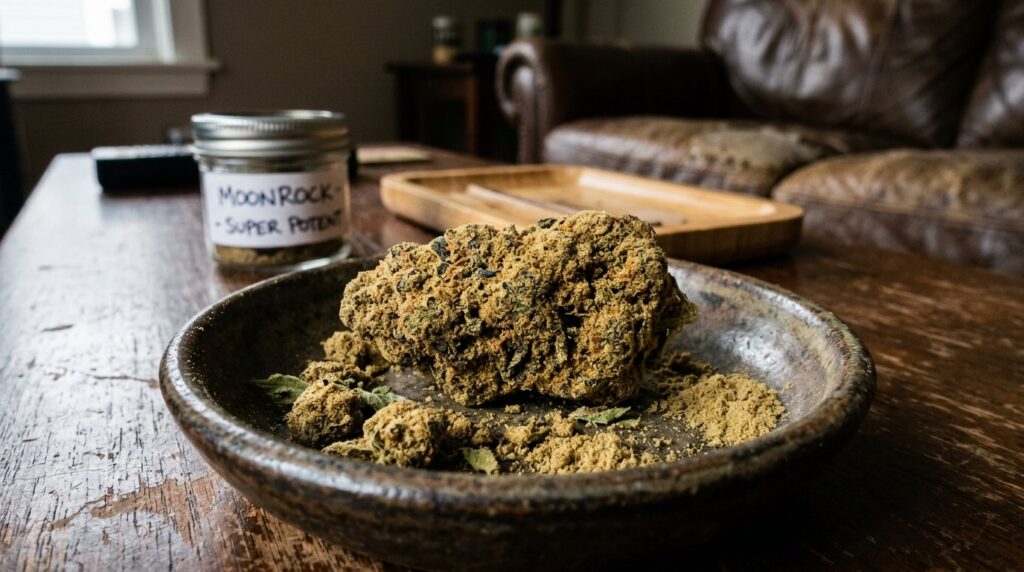
Moonrock weed looks like something collected from a very sticky lunar mission: dense cannabis flower hidden beneath concentrate and a thick, dusty coat of kief. It’s famous for unusually high potency, slow burning, and the occasional overconfident smoker saying, “I’ve got this,” shortly before becoming deeply fascinated by the couch.
But hype makes moon rocks easy to misunderstand. They aren’t a strain, and quality varies dramatically. One product may combine fresh flower, clean extract and terpene-rich kief; another may hide stale buds under low-grade oil. THC levels, effects, price and even the way you should smoke them depend on what’s inside. (If you just want to see what’s available, browse our moon rocks and caviar collection.)
This guide covers what moonrock weed is made of, how potent it is, what to expect, safer dosing, the best ways to smoke it, how to make it at home, and how to spot quality. It’s an educational, harm-reduction guide for adults in Canada, not medical advice or an endorsement of cannabis use. No producer paid for inclusion.
If you’re new to cannabis, moon rocks aren’t the friendliest starting line. If you’re experienced, they still deserve more patience than ordinary flower. Think of them less like a stronger beer and more like an unexpectedly heavy cocktail: familiar ingredients make the intensity easy to underestimate. Here’s what you’re dealing with, and how to avoid turning a relaxed evening into a three-hour negotiation with your heartbeat.
Key Takeaways
- Moonrock weed is cannabis flower coated in concentrate and rolled in kief, often testing between 40% and 60% THC.
- Because it’s so potent and burns slowly, start with a tiny piece, ideally layered over regular flower, and wait at least 15 minutes between inhalations.
- Quality varies widely, so buy from a seller that shows batch-specific lab results and clear ingredient information.
- A glass pipe or bong with a flower base works best. Don’t put moon rocks in a grinder or a standard dry-herb vaporizer.
- Effects can be intense and long-lasting, so beginners should start with lower-potency flower instead.
- Store moon rocks in an airtight glass jar away from heat and moisture.
What Is Moonrock Weed?
Moonrock weed is cannabis flower coated in cannabis concentrate and rolled in loose trichomes called kief. The finished nug is dense, oily and usually much stronger than regular flower.
The product is often linked to rapper Kurupt and producer Dr. Zodiak, whose branded Moonrocks helped popularize it in California cannabis culture. Today “moon rock” is used as a general product type rather than one brand or strain. Moon rocks are also commonly sold as “caviar,” and you’ll find our moon rocks in the Caviar section of the concentrates menu.
It’s worth checking what a seller actually means. Some menus use the name loosely for sprayed flower, concentrate-coated buds, or cheap “space rocks” made with hemp-derived cannabinoids. A trustworthy label should identify the flower, the extract, the cannabinoid content and the test results.
What moon rocks are made of (flower + concentrate + kief)
A classic moon rock has three layers:
- Flower: The core, ideally a well-cured whole bud rather than shake or a tiny low-grade nug.
- Concentrate: Sticky cannabis oil that binds the coating. Distillate, hash oil / honey oil, live resin and other extracts may be used.
- Kief: Sifted resin glands full of cannabinoids and aromatic terpenes.
The combination matters more than fancy packaging. Distillate may raise THC while adding little flavour; live resin can keep a fuller aroma but usually costs more (see live resin vs distillate). Pale-gold kief isn’t automatically excellent either: freshness, purity and trichome content matter.
Once assembled, the bud should rest until the outside is manageable but still slightly tacky. If it’s dripping oil or hard as a pebble, expect uneven burning.
Moon rocks vs infused pre-rolls vs coated buds
These products can share ingredients without offering the same experience:
| Product | Construction | Main advantage | Common drawback |
|---|---|---|---|
| Moon rock | Whole flower, concentrate, kief | Customizable pieces; slow burn | Messy and hard to grind |
| Infused pre-roll | Ground flower plus extract, sometimes kief | Convenient and portable | Contents harder to inspect |
| Coated bud | Flower with oil, powder or cannabinoids | Often cheaper | “Coating” may hide poor flower |
| Sun rock | Usually premium flower with a lighter concentrate layer | Better view of the bud | Loose definition, higher price |
An infused pre-roll burns more predictably because the ingredients are spread through ground material. A whole moon rock gives you more control over portion size, but only after you cut or pull it apart. Some products combine both, like moon rock pre-rolls and blunts (see our Moon Rocks category).
How Potent Is Moonrock Weed?
Moon rocks commonly test around 40% to 60% total THC, though products can fall outside that range. By comparison, most regular flower is labelled roughly 15% to 30% THC. Those percentages aren’t perfectly comparable, because testing methods, moisture, serving size and inhalation technique all affect how much you actually take in.
They hit harder because every piece combines several THC-rich materials. The oil also makes the nug burn slowly, so you may take several concentrated draws while assuming you’ve had an ordinary bowl. Effects can keep building after you stop.
Treat extreme claims with caution. A label advertising 80% or 90% THC for a flower-based moon rock deserves scrutiny; that territory belongs to refined concentrates. Look for a recent lab result (certificate of analysis) rather than a handwritten jar label. Our guide on how to read a cannabis label explains total THC vs THCA.
What changes potency (strain, oil type, kief quality, ratio)
Four variables shape the final strength:
- Flower: High-THC flower makes a stronger base, while CBD-rich flower gives a different balance.
- Oil: Distillate can be extremely high in THC. Rosin, resin or hash oil may keep more minor cannabinoids and terpenes.
- Kief: Clean, trichome-heavy kief is generally more potent than powder with lots of plant material (more in hash vs kief vs rosin).
- Ratio: A heavily coated nug delivers much more concentrate per small piece.
Tolerance and technique matter just as much. Two people can share the same tested product and have very different evenings. A small piece in a pipe may affect an occasional user more than a bigger serving affects someone who dabs daily. Don’t let a friend’s tolerance choose your dose.
Moonrock Weed Effects: What to Expect
Moonrock weed effects often start with a strong head high followed by heavy body relaxation. Depending on the ingredients, you might notice euphoria, laughter, altered time perception, the munchies, sleepiness, or intense focus on music and visuals. That last one sounds poetic until you realize you’ve replayed the same song four times.
Strain labels such as indica, sativa and hybrid offer only rough clues (here’s why indica vs sativa labels are unreliable). Dose, terpene profile, tolerance, mood, surroundings and recent food are better predictors. A limonene-forward product may smell bright and citrusy, while myrcene-rich material can feel earthy and sedating, but terpenes don’t guarantee a specific response.
Onset, duration and intensity (smoking vs vaping)
When smoked, effects can appear within minutes, build considerably over the next 10 to 30 minutes and stay noticeable for several hours. Grogginess may last longer, especially after a big dose.
Vaping follows a similar timeline, though it may feel cleaner because there’s no combustion smoke. Moon rocks don’t work in every dry-herb vaporizer: sticky oil can melt into the oven, block airflow or damage the device. A vaporizer designed for concentrates, or a compatible concentrate pad, handles separated material better.
Take one small inhalation, then wait at least 15 minutes before deciding whether you need another. Yes, waiting while everyone else passes the bowl feels mildly awkward. It’s still easier than spending the night wondering whether breathing has always been automatic.
Never drive, cycle in traffic, cook over an open flame, swim or operate machinery while impaired. THC can affect reaction time, coordination, judgment and attention even when you feel fairly composed, and drug-impaired driving is a Criminal Code offence in Canada. [VERIFY]
Common side effects and who should avoid moon rocks
Common unwanted effects include:
- Dry mouth and red eyes
- Dizziness or nausea
- Fast heart rate
- Anxiety, panic or paranoia
- Poor coordination and short-term memory
- Headache, coughing or throat irritation
- Next-day fatigue after heavy use
High-THC cannabis may worsen symptoms in people prone to panic, psychosis or certain heart problems. Avoid moon rocks if you’re pregnant or breastfeeding, under the legal age in your province (19 in most of Canada, 18 in Alberta, 21 in Quebec) [VERIFY], need to pass a drug test (see how long weed stays in your system), or have been told to avoid THC by a doctor. People with a personal or family history of psychotic disorders should be especially cautious.
Cannabis can also interact with alcohol, sedatives and some prescription medications. Ask your doctor or pharmacist rather than crowdsourcing the answer from the loudest person in the smoke circle.
Call 911 for chest pain, trouble breathing, loss of consciousness, seizure, severe confusion, dangerous behaviour or persistent vomiting. Don’t assume every alarming symptom is “just being high.”
Pros and Cons of Moonrock Weed
Moon rocks can be enjoyable for experienced consumers who want a potent, slow-burning product, but potency isn’t automatically value.
| Pros | Cons |
|---|---|
| Strong effects from a small amount | Easy to overconsume |
| Slow burn when made properly | Hard to light evenly |
| Combines flower and concentrate flavours | Sticky, messy, unsuitable for grinders |
| Compact to store | Often expensive per gram |
| Can be divided and layered with flower | Quality flower may be hidden under the coating |
| Useful for high-tolerance consumers | Greater chance of anxiety or sedation |
The best use case is deliberate, at-home use by someone familiar with high-THC cannabis. The worst is an impulsive first try before a social event, commute or important morning. Moon rocks can also keep burning after a draw, so they waste product if left smouldering.
There’s a transparency problem too. Coating a beautiful bud can enhance it; coating old, dry flower can disguise it. Because you can’t inspect the centre before buying, lab testing and clear packaging matter more than usual.
How to Smoke Moonrock Weed (Best Methods)
The best way to smoke moonrock weed is in a glass pipe or bong, usually over a small bed of regular flower. Use clean scissors, tweezers or your fingers to separate a tiny piece. Don’t put the whole nug in a grinder: oil and kief will stick to the teeth, compress into paste and make you question every decision that brought you here.
Keep the flame near the surface rather than torching it. Moon rocks need patience to light, but overheating wastes terpenes and makes harsher smoke. Once lit they may stay lit, so snuff the bowl between draws when you can.
Glass pipe or bong (why it’s recommended)
A glass bowl supports the sticky material and lets you control airflow, flame and serving size. A bong cools the smoke through water, although cooled smoke isn’t harmless: combustion still produces irritants and potentially toxic by-products.
Try this sequence:
- Put a screen in the bowl if the opening is large.
- Add a modest layer of ground flower.
- Put a rice-grain-sized fragment of moon rock on top.
- Apply a low flame to one edge while inhaling gently.
- Take one draw, put out the ember and wait.
Clean the bowl afterwards with a glass cleaner or isopropyl alcohol, following the maker’s directions. Never use alcohol near a flame, and rinse and dry the piece completely before using it again.
Layering on flower in a bowl (burn control and airflow)
A flower base stops melting oil from blocking the bowl’s airway. It also acts as kindling: ordinary flower lights quickly, then supplies enough heat to burn the coated piece gradually.
Don’t pack everything tightly. Air should move around the material, not through a compressed resin brick. A useful arrangement is flower, then moon rock, then a small pinch of flower, with the infused piece kept away from the bowl’s bottom hole.
“Corner” the bowl by lighting only a small edge. That saves unburned material and makes dosing easier. If the draw gets difficult, stop and let it cool rather than pulling harder: forceful pulls can send hot debris into the pipe or water.
For beginners, mix one tiny fragment into a mostly regular-flower bowl. You’ll get a more predictable burn without committing to a full moon-rock serving.
Joints and blunts: why it’s tricky and how to do it if you must
A moon rock is too oily and dense to roll well on its own. It can cause wet spots, block airflow, canoe and keep putting the paper out. A blunt wrap may handle the oil better, but it adds more smoke, plus tobacco and nicotine if you use a traditional cigar wrap (more in joint vs blunt).
If you’re determined to roll one:
- Cut the moon rock into tiny flecks; don’t grind it.
- Spread the flecks through plenty of dry, ground flower.
- Keep concentrate away from the paper and filter.
- Roll loosely enough for airflow but firmly enough to avoid gaps.
- Light the whole tip evenly and rotate as you draw.
A ready-made infused pre-roll is usually less fiddly. Even then, check whether it contains tobacco, added terpenes, flavourings or hemp-derived cannabinoids.
Vaping and dabbing: what works and what doesn’t
Putting a whole moon rock into a standard dry-herb vaporizer is risky. As the concentrate melts, it can leak below the chamber, foul sensors, clog the air path or void the warranty. Check your device manual first: models from Storz & Bickel, PAX, DaVinci and others vary in concentrate compatibility.
If the vaporizer accepts concentrates, use the maker’s dosing capsule or concentrate insert and a very small amount. Sandwiching a fragment between dry flower may reduce leaks, but it doesn’t make an incompatible oven safe.
A dab rig isn’t designed for the whole coated bud, because plant matter combusts on the hot surface. You can dab the separate concentrate used to make moon rocks, not the finished nug (see dabbing for beginners). Likewise, don’t put moon rocks into vape cartridges or modify disposable devices.
Lower temperatures keep more flavour and are less harsh; higher temperatures make denser vapour but can irritate your throat. Whatever the device, keep sessions short and give the effects time to develop.
Safety and Dosage: Start Low, Go Slow
There’s no universal safe moon-rock dose; products and tolerance vary too much. Health Canada’s general advice for cannabis, “start low, go slow,” applies doubly here. For an experienced adult trying a new batch, a piece about the size of a grain of rice, ideally mixed with flower, is a cautious start. One inhalation may be enough. If you’re still learning your limits, start with a THC dosage guide for beginners and lower-THC flower instead.
Wait at least 15 minutes after a small draw before considering more. If you already feel the effects rising, keep waiting. The most common mistake is stacking several hits during the quiet onset, then getting the whole bill at once.
Read the lab results, avoid mixing cannabis with alcohol or other drugs, and sort out your ride home before you start. Store the product locked away from children and pets: THC exposure can be medically serious for both.
Set and setting, food and water, avoiding overconsumption
Choose a familiar, low-pressure place with people you trust. Clear your schedule, charge your phone and avoid emotionally stressful situations. For a first moon-rock session, having a sober friend nearby is sensible, not dramatic.
Eat a normal meal first and keep water handy. Water helps with dry mouth, but it won’t make THC leave your body faster. Simple snacks can be comforting, but food isn’t an antidote.
Before lighting up, decide on a limit and put the rest away. That small step interrupts autopilot refills. A practical plan:
- 8:00 p.m.: one small inhalation
- 8:15 p.m.: check how you feel without automatically redosing
- 8:30 p.m.: stop if effects are still increasing
- Rest of the evening: no driving, no alcohol, no “challenge” hits
Tolerance can drop after even a short break, so your old serving may be too much when you come back.
What to do if you get too high
First, stop consuming cannabis. Move somewhere quiet, sit or lie down safely and remind yourself that uncomfortable THC effects usually ease with time. Then:
- Breathe slowly, with a longer exhale.
- Sip water; don’t chug it.
- Turn down bright lights, noise and crowded conversation.
- Ask a calm, trusted person to stay with you.
- Focus on something familiar: a gentle show, steady music or counting objects.
- Avoid caffeine, alcohol and other drugs.
Some people find the smell of black pepper grounding, but evidence for it as a THC antidote is limited. CBD is sometimes suggested, but its effects and interactions are inconsistent, and it isn’t a replacement for medical care.
Call 911 if symptoms are severe. For advice, call your provincial poison centre; 1-844-POISON-X (1-844-764-7669) connects you to your local centre. [VERIFY] Be honest about the product and amount: health care workers need accurate information, not a creative cover story.
How to Make Moon Rocks at Home (Step by Step)
Homemade moon rocks let you choose the flower, concentrate and kief, but only make them where that’s legal for you, and never attempt your own solvent extraction. Buy a finished, tested concentrate instead. (In Canada, adults may legally make cannabis products at home, but not using combustible solvents. [VERIFY])
A simple method:
- Pick a small, properly cured bud with enough structure to handle coating (dense AAAA flower works well).
- Warm a sealed concentrate container gently in your hands or in lukewarm water. It should be workable, not hot.
- Hold the bud with clean tweezers.
- Apply a thin coat of oil with a dab tool or glass dropper.
- Roll the coated bud in kief until it’s evenly covered.
- Set it on unbleached parchment in a cool, dark, dust-free spot.
- Let the outside settle before storing or smoking.
Thin layers work better than an oil bath. Too much concentrate makes a gummy centre, poor airflow and an endless burn.
Ingredients, tools and curing for the best burn
You’ll need:
- One well-cured cannabis bud
- Tested cannabis concentrate
- Dry, fresh kief
- Tweezers and a dab tool
- A shallow glass dish
- Unbleached parchment
- A clean, airtight glass jar
Pair ingredients with complementary aromas if flavour matters. Citrusy flower with citrus-forward live resin makes more sense than mixing three unrelated products because they happen to be nearby.
After coating, let the moon rock rest until it no longer leaves wet oil on a light touch. Depending on the concentrate and your room, that can take several hours or longer. Don’t use an oven, microwave, open flame or direct sun to speed things up. Heat breaks down cannabinoids and terpenes, and can turn a small craft project into a regrettable kitchen story.
“Dry” doesn’t mean brittle. The centre should stay cured, and the outside should be tacky but manageable. Store it only once excess surface moisture and warmth are gone.
Where to Buy Moonrock Weed and How to Spot Quality
Buy moonrock weed from a seller that tells you exactly what’s in it and shows batch-specific lab results. An anonymous social-media seller with a stock photo and suspiciously enthusiastic rocket emojis is a different matter. Our guide to spotting a trustworthy online dispensary covers what to look for, and you can compare current options in our moon rocks (caviar) collection.
Ask when the product was packaged, which extract was used, and whether the flower and the finished product were tested. Check the cannabinoid results and screening for pesticides, microbes, residual solvents and heavy metals. A QR code alone isn’t proof: make sure it opens a real lab report that matches the lot number.
Products advertised as “hemp moon rocks” or “legal moon rocks” may contain delta-8 THC, THCA or other cannabinoids instead of regular THC. Their chemistry and effects can differ from conventional moon rocks, so read the label carefully.
Quality checklist: aroma, stickiness, kief coverage, lab testing, packaging
Check these before buying:
- Aroma: Fresh and recognizable, not mildew, ammonia, perfume or chemicals.
- Texture: Slight tackiness is normal. Avoid dripping oil, excessive hardness or visible moisture.
- Coverage: Kief should be fairly even, without bare oily patches or suspiciously bright powder.
- Flower: If you can see it, the centre should look properly cured, not brown, compressed or stemmy.
- Testing: The package and lab report should share a lot number and a recent test date.
- Packaging: A sealed, child-resistant container with ingredients, cannabinoid content, warnings, net weight, producer details and packaging date.
Watch for fuzzy white or grey growth, musty smells or web-like material, which can be signs of mould. Crystals alone aren’t mould, but when in doubt, don’t smoke it.
Also check whether potency is listed as THC, THCA or total THC. Those numbers mean different things, and a good budtender should be able to explain the label without verbal gymnastics.
How much does moonrock weed cost in Canada?
Moonrock weed costs more per gram than regular flower, because you’re paying for flower, concentrate and kief in one product. Prices vary with the flower grade, the type of extract, freshness, brand and package size, and multi-gram packages usually lower the per-gram price. For a sense of how flower and concentrate prices compare across Canada, see our Canadian weed price guide.
Compare total THC per package, freshness and ingredients, not THC percentage alone. A moon rock made from fresh flower and tested oil can be better value than a cheap mystery nug, or a pricey designer jar trading mostly on branding. And buying a lot of an unfamiliar high-potency product is rarely a bargain.
FAQ: Moonrock Weed
What is moonrock weed?
Moonrock weed is a cannabis bud coated in concentrate (such as distillate or hash oil) and rolled in kief. It typically tests around 40–60% THC, much stronger than regular flower, and burns slowly.
How strong are moon rocks?
Most moon rocks test between 40% and 60% total THC, compared with about 15–30% for regular flower. Because they burn slowly and combine three THC-rich layers, a single small hit can feel strong.
Do moon rocks smell stronger than regular weed?
Usually, yes. Moon rocks combine aromatic flower, concentrate and kief, so the smell is dense and lingering. Live resin or rosin versions often smell more complex than distillate-coated ones, although added terpenes can make cheap products unusually pungent.
The smell gets much stronger when the bud is broken apart or heated. If discretion matters, use an airtight glass jar and avoid opening it repeatedly (more tips in getting rid of weed smell). Plastic bags let the smell escape and can crush the sticky coating.
A strong smell isn’t proof of high THC or quality. Sour, musty or ammonia-like notes are warning signs, not charming “funk.”
How do you store moon rocks to keep them fresh?
Keep moon rocks in a small, airtight glass container somewhere cool, dark and dry. Parchment underneath can reduce sticking. Avoid direct sunlight, hot cars, fridges with fluctuating humidity, and freezers that make trichomes brittle. (See how to store weed and concentrates.)
A humidity-control pack may help, but choose the right size and don’t let it press on the coating. Too much humidity encourages mould; too little ruins aroma and texture. Label homemade products clearly and keep all cannabis locked away from food, pets and anyone who might mistake the nug for something edible.
Use clean tweezers rather than handling it repeatedly. Warm fingers pick up oil and kief, which basically means leaving the good part on your hands.
Can beginners try moonrock weed safely?
A beginner can, but it’s not a predictable introduction to cannabis. Lower-potency, lab-tested flower gives you easier dose control and helps you learn how THC affects you without three concentrated components at once.
If you still choose moon rocks, use a tiny fragment mixed into mostly regular flower, take one short inhalation and wait. Stay home with a trusted sober person, skip alcohol and keep the rest out of reach. Don’t copy an experienced friend’s serving; their tolerance isn’t transferable.
The safest choice may be to wait until you know how you react to regular flower. There’s no prize for starting on hard mode.
The Bottom Line
Moonrock weed packs unusually concentrated effects into a compact, slow-burning nug, but its value depends on transparent ingredients, real lab testing and careful use. Inspect the batch rather than the branding, use glass instead of a grinder or improvised vape setup, and make one small inhalation your default. When potency is the attraction, patience is the skill that keeps the experience manageable. Ready to compare? Start with our moon rocks collection.