

Mushroom – Apex
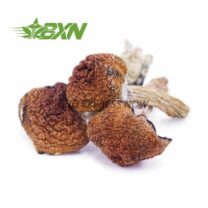
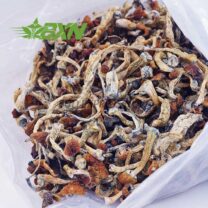
Apex mushrooms live up to their name as one of the most respected strains among seasoned mushroom fans. They’re known for their dense, thick fruits and compact caps, and they’ve built a strong reputation with users who know exactly what they want. Every batch is carefully dried, inspected for quality and sealed in discreet, airtight packaging to keep it fresh. Store in a cool, dry, dark place, away from children and pets. For adults only.
If you searched “mushroom apex,” you may have landed in three very different worlds: mushroom identification, psilocybin research, or the glowing fungi of a video game. That ambiguity is exactly why the phrase can feel oddly unhelpful. “Apex” might describe the raised centre of a cap, refer to a company or research story, or point toward ARK: Aberration’s fictional mushrooms.
This guide sorts those meanings without pretending that a search result is a field identification. You’ll learn what cap apex terms mean, which Psilocybe species commonly appear around related searches, how to document a specimen, and where safety and Canadian law fit in. If you’re an adult cannabis consumer exploring fungi, keep one rule close: a photo, a strain name, or a confident forum comment isn’t enough to establish a mushroom’s identity or safety.
Key Takeaways
- The term “mushroom apex” mainly refers to the raised center part of a mushroom cap, crucial for narrowing down identification but not sufficient alone to confirm species.
- Mushroom apex identification involves observing cap shapes like umbonate, papillate, or depressed, alongside other features such as gills, stipe, spore print, habitat, and season for reliable results.
- Several Psilocybe species linked to “mushroom apex” searches have similar cap features, but lookalikes can be toxic; accurate, expert identification is essential for safety.
- Legal status of psilocybin mushrooms varies widely, especially in Canada, so always verify current laws from official sources before considering use or possession.
- Mushroom apex may also refer to psilocybin research companies or fictional mushrooms in gaming contexts, so clarifying your search intent is important.
- Never consume wild mushrooms based solely on photos, apps, or forum advice; when unsure, seek expert mycological confirmation and prioritize safety above all.
What Does “Mushroom Apex” Mean? (Most Common Interpretations)
The word apex simply means the top or highest point. In mushroom conversations, its meaning depends heavily on context. A field mycologist may be discussing cap shape: a news reader may have encountered a company name: a gamer may be looking for an item from ARK: Aberration. Those are not interchangeable results.
Interpretation 1: The mushroom cap apex (morphology term) and why it matters for ID
In morphology, the apex is the uppermost part of a mushroom structure. On a cap, that may be a subtle bump, a pointed papilla, a broad central mound, or a depression. Describing it helps narrow possibilities, but it rarely identifies a mushroom by itself.
For example, “umbonate” means a distinct central bump, while “papillate” suggests a smaller, nipple-like projection. A cap can also change with age, moisture, and weather. What looked sharply peaked after rain may flatten as it expands. Think of apex shape as one clue in a fingerprint, not the whole fingerprint.
Interpretation 2: “Apex” as a brand/company term in psilocybin news and research
“Apex” also appears in business names, laboratory names, conference headlines, and media coverage related to psychedelics. There is no single universally recognised “Mushroom Apex” authority. Search results can blend companies, product pages, investment stories, and research commentary that have little relationship to wild mushroom identification.
Before trusting a claim, check the organisation’s exact legal name, country, publication date, study authors, and whether the source is reporting research or selling something. A polished logo is not evidence. Neither is a headline promising that microdosing will solve every rough Monday.
Interpretation 3: Gaming/wiki intent (ARK: Aberration mushrooms) vs real-world mushrooms
In ARK: Survival Evolved, especially the Aberration setting, mushrooms are fictional game resources with gameplay purposes. Wiki pages may mention mushroom varieties, recipes, or zones, but those details don’t transfer to a forest walk.
This is a common search trap: a gamer wants crafting information, while another reader is trying to identify a real Psilocybe. Check the words around your result, “spawn,” “resource,” and “Aberration” signal game content: “gills,” “spores,” and “habitat” signal mycology.
Mushroom Apex in Identification: Key Cap-Apex Shapes and Field Marks
When you’re looking at a mushroom, start with the cap profile, but don’t stop there. A cap’s central shape is useful because it can remain visible even when colour has faded. Still, field identification works best as a bundle of observations taken together.
Common apex shapes: umbo, papilla, depressed, convex, how to recognize each
A convex cap curves upward like a shallow dome. Many young mushrooms begin this way, so it’s common but not especially distinctive. An umbonate cap has a broader, noticeable central mound, more like a hill rising from the cap. A papillate cap has a narrower, sharper point at the centre.
A depressed cap dips inward, sometimes forming a shallow bowl. It may become more obvious as the mushroom matures. Flat, conical, campanulate (bell-shaped), and plane caps are additional descriptions you may see in guides.
Moisture can make the surface look darker and more pronounced: drying can change both texture and colour. Photograph the mushroom from the side as well as above. That simple extra angle often tells you more than a dozen blurry top-down pictures.
What to record for reliable ID: gills, stipe, bruising, spore print, habitat, season
A useful observation log includes:
- Gills or pores: their attachment to the stem, spacing, colour, and whether they bruise or stain
- Stipe: stem colour, thickness, texture, hollow or solid interior, base shape, and any ring or veil remnants
- Spore deposit: colour observed with a proper spore print, where appropriate
- Changes after handling: bruising, staining, scent, and colour shifts, never taste-testing
- Habitat and timing: soil, wood, grass, dung, tree association, elevation, region, and season
- Whole specimen: including the base, photographed before it is disturbed
A phone’s colour balance can lie spectacularly under forest shade. Include a neutral object for scale and take several images in natural light. If the mushroom is destined for the kitchen or consumption, professional confirmation matters more than an enthusiastic identification app.
Psilocybe Species Commonly Connected to “Mushroom Apex” Searches (Overview)
Searches involving “mushroom apex” sometimes drift toward Psilocybe species because several have distinctive caps, central bumps, or blue-green bruising. That connection is understandable, but visual similarity is also where dangerous mistakes begin. The following is an overview, not a harvesting guide or consumption recommendation.
Psilocybe cubensis: description, habitat, cultivation context, and common confusions
Psilocybe cubensis is a tropical and subtropical species often associated with cattle-grazing areas and dung-rich substrates. It typically has a tan to caramel cap that may begin convex and develop a more pronounced central area, with a pale stem and dark purplish-brown spore deposit. Blue bruising can occur, but bruising alone proves very little.
It is also widely discussed in cultivation communities, where named varieties are often informal selections rather than scientifically recognised species. Labels such as “Golden Teacher” can describe marketed lines, not a separate species.
Common confusion comes from immature specimens, damaged caps, and unrelated brown-capped mushrooms. Online photos frequently omit the substrate, spore deposit, and full stem, exactly the details an identifier needs.
Psilocybe weraroa / related species: habitat notes and key differentiators
Psilocybe weraroa, formerly placed in the genus Weraroa, is a New Zealand species with a sequestrate, pouch-like fruiting body rather than the familiar open cap-and-gill form. It is associated with forest habitats and decaying woody material. That unusual shape is a reminder that “mushroom” searches often include fungi that don’t look like the classic supermarket button mushroom.
Related New Zealand taxa can be difficult for non-specialists to separate. Distribution, microscopic traits, DNA, and specialist literature may be necessary. If a result claims a rare species from a distant region based on one photograph, treat that confidence level as a warning sign, not a selling point.
Psilocybe caerulipes & P. aucklandiae: distribution, seasonality, and lookalikes
Psilocybe caerulipes is generally associated with eastern North America and is reported from wood, woody debris, or rich forest habitats, depending on the local source. It is a cool-season species in many field accounts, though fruiting varies with rainfall and temperature. The name is sometimes discussed alongside blue-staining wood-associated Psilocybe, which makes careful comparison essential.
Psilocybe aucklandiae is a New Zealand species associated with forest environments and is not a reasonable assumption for a Canadian find. Taxonomy and distribution records can change as researchers revise species boundaries, so an old guide may use a different name.
Lookalikes are the serious issue. Brown or blue-staining mushrooms can belong to unrelated groups, including toxic species. A geographic mismatch, missing base, or vague “looks like” comparison should end the identification attempt, not encourage a gamble.
Safety, Legality, and Harm-Reduction Basics (Read Before Acting)
A mushroom that resembles a psychoactive species can still be poisonous, inactive, or impossible to identify confidently from a screen. This is not a place for the usual “start low and go slow” advice used with regulated cannabis edibles. With an unknown mushroom, the safest dose is none.
Legal status varies: how to check local laws and why online info can be outdated
Canadian rules around psilocybin, possession, production, sale, and exemptions are not the same as provincial cannabis rules. Legal cannabis access for adults does not make psychedelic mushrooms legal to buy, sell, grow, or possess. Rules can also differ from public claims about decriminalisation, enforcement priorities, or clinical exemptions.
Check current information from Health Canada, your provincial or territorial government, and official legal sources. Don’t rely on a retailer’s FAQ, an old Reddit post, or a screenshot with no date. In Quebec, the legal age for cannabis is 21: Alberta’s is 18, while other provinces generally use 19. Those cannabis age rules don’t automatically answer questions about psilocybin.
Poisoning and misidentification risks: when to avoid foraging and when to seek help
Avoid consuming any wild mushroom you cannot identify through a qualified local expert using the complete specimen. Apps are useful for generating possibilities, not granting permission. Never rely on taste, bruising colour, cap apex, or a single trait.
If someone has eaten an unknown mushroom and develops vomiting, severe stomach pain, confusion, unusual sleepiness, seizures, breathing trouble, or worsening symptoms, contact emergency services or your provincial poison centre immediately. Keep a sample, packaging, photographs, and the time eaten if safely available. Don’t wait for symptoms: some serious poisonings have delayed effects.
For adults using legal cannabis, adding an unknown mushroom, especially with alcohol, sedatives, or other substances, makes the situation harder to predict. Responsible use starts with knowing exactly what the product is.
Research & News: What “Apex” Means in Psilocybin Microdosing Coverage
How to read clinical-study headlines: endpoints, dosing, safety measures, and limitations
When “Apex” appears in a psilocybin microdosing headline, first establish whether it is the organisation, a study site, a product, or merely a quoted source. Then read past the headline. A credible clinical report should explain its participants, dose, schedule, comparison group, outcome measures, adverse-event monitoring, and follow-up period.
Ask what the study actually measured. A mood questionnaire is not the same as a diagnosis, and a short-term change in a self-report is not proof of lasting benefit. Placebo-controlled studies can be difficult when participants recognise psychoactive effects, creating expectancy problems. Small samples, dropouts, selective reporting, and unblinded designs can all weaken conclusions.
For microdosing stories, pay particular attention to the dose definition. “Microdose” is not a universal strength, and a mushroom’s potency can vary by species, batch, storage, and preparation. A news article may also blur laboratory psilocybin, whole mushrooms, and commercial products as though they were identical.
Look for registration details, peer-reviewed publication, conflicts of interest, and whether results have been replicated. If a company funded the work, that doesn’t automatically invalidate it, but it belongs in your risk assessment. The useful question is rarely “Does this prove mushrooms work?” It’s “For whom, under what conditions, with what uncertainty, and what safety information is still missing?”
Tools and Resources to Go Further (Maps, Guides, and Communities)
Mushroom maps/identifiers: how location data works, accuracy limits, and best practices
Mushroom maps can show reported observations by location, date, and community confidence. They’re handy for learning seasonality and seeing which habitats support certain genera. They are not treasure maps, guarantees of current fruiting, or proof that a species is safe.
Use reputable regional field guides, local mycological societies, herbarium databases, and university resources. Platforms such as iNaturalist can help you compare observations, but computer vision may suggest a species from a misleading angle. Treat community votes as leads: look for expert comments and a complete observation record.
A sensible workflow looks like this:
- Photograph the entire specimen in place, including its habitat.
- Record date, weather, substrate, nearby trees, and location at a broad level, don’t broadcast sensitive sites.
- Compare several authoritative descriptions, not one matching photo.
- Ask a local mycological society for confirmation when safety matters.
- Preserve notes and images, and never consume a specimen based solely on an app.
If you’re mainly curious about fungi while shopping for legal cannabis online, keep the categories separate. A clearly labelled, age-compliant cannabis product from a legitimate Canadian source is a different risk conversation from an unidentified wild mushroom. Check THC amounts, serving sizes, ingredients, shipping policies, and privacy practices for cannabis, and leave mystery fungi to observation.
Conclusion: Use “Mushroom Apex” as a Starting Point, Not a Verdict
“Mushroom apex” can mean a cap’s central shape, an organisation in psilocybin coverage, or a fictional resource from ARK: Aberration. Once you know which context you’re in, the search becomes much less confusing.
For real mushrooms, document the whole specimen, habitat, season, gills, stem, and spore deposit. Don’t let a neat-looking umbo, or a confident app, do the thinking for you. Check current Canadian law, avoid consuming unidentified fungi, and seek urgent poison-centre or emergency help if exposure happens.
Curiosity is a great reason to learn mycology. It’s not a reason to take a blind bite.
Frequently Asked Questions about Mushroom Apex
What does “mushroom apex” mean in mushroom identification?
In mushroom identification, the apex refers to the top or center point of a mushroom cap. It can be a bump, papilla, mound, or depression, helping to describe cap shape but rarely identifying a mushroom on its own.
Which Psilocybe species are commonly linked to “mushroom apex” searches?
Common Psilocybe species linked to “mushroom apex” include Psilocybe cubensis, Psilocybe weraroa, Psilocybe caerulipes, and Psilocybe aucklandiae. These species have distinctive caps or bruising but should not be identified by apex shape alone.
How can I safely identify mushrooms related to the term “mushroom apex”?
Safe identification requires observing multiple features like gills, stem, spore print, habitat, and season. A photo or single cap apex trait is not enough. Consult local experts or mycological societies and avoid consuming unidentified fungi.
What should I do if someone experiences poisoning after consuming a mushroom?
If poisoning symptoms occur, such as vomiting, severe pain, confusion, seizures, or breathing trouble, seek emergency help immediately. Keep any samples or packaging for identification and contact your local poison center without delay.
Is it legal to possess or use psilocybin mushrooms in Canada?
In Canada, psilocybin mushrooms remain illegal for possession, sale, or cultivation outside authorized exemptions. Legal adult cannabis access does not extend to psychedelic mushrooms. Always check current government sources for up-to-date laws.
What does “apex” mean in psilocybin microdosing news and research?
In psilocybin microdosing news, “Apex” may refer to companies, study sites, or products. It’s important to critically assess research details like dosage, safety measures, and study design instead of relying on headlines or branding alone.
Only logged in customers who have purchased this product may leave a review.
Related products

Reviews
There are no reviews yet.