Blog 2026
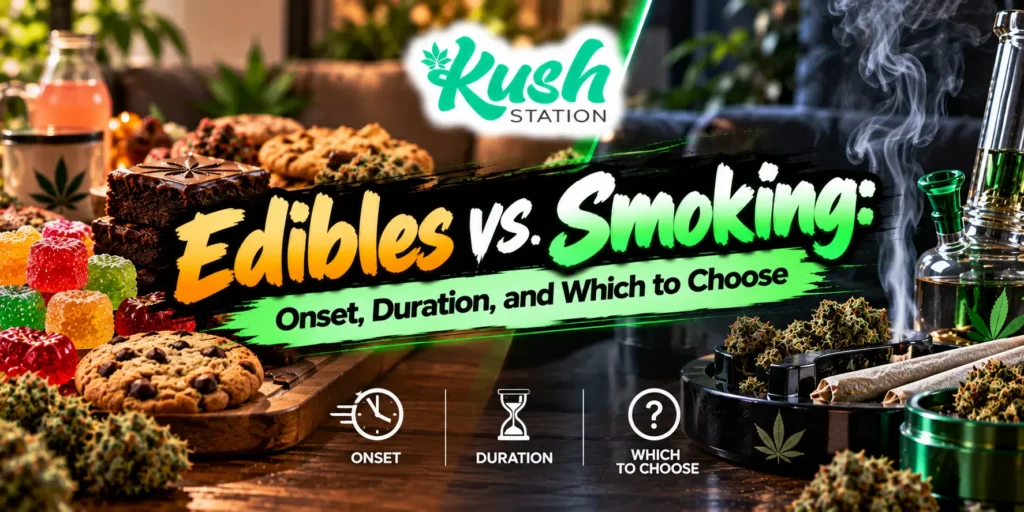
Edibles vs. Smoking: Onset, Duration, and Which to Choose
Oct
One of the first decisions every cannabis consumer faces is how to take it. Light a joint and the effect arrives within minutes. Indica Eat a gummy and you may be waiting an hour or more, then feel the effect for much of the evening. Same plant, same main compound (THC), very different experiences.
This guide compares edibles and smoking on everything that matters: how quickly each starts, how long each lasts, how strong each feels, how to dose, what each costs, how they affect your body and which situations suit each best. We also cover safety, including the common mistake that ruins more first-time edible experiences than any other, and what to check when you order online in Canada.
The short version: smoking is fast and short, edibles are slow and long. Everything else flows from that difference.
Why Edibles and Smoking Feel So Different
The difference comes down to how THC enters your body.
Smoking (and vaping) is inhalation. THC passes through your lungs directly into your bloodstream and reaches your brain within seconds to minutes. The effect rises quickly, peaks and fades relatively fast.
Edibles are oral. THC is swallowed, absorbed through your digestive system and processed by your liver. In the liver, THC is partly converted into a related compound called 11-hydroxy-THC, which many people describe as stronger and longer-lasting than the THC you get from inhaling. That conversion, plus the time it takes for food to digest, explains both the slow onset and the heavy, extended effect of edibles.
This is why the same number of milligrams can feel noticeably different depending on how you take it.
Edibles vs. Smoking at a Glance
| Feature | Smoking / Vaping | Edibles |
| Onset | Seconds to a few minutes | 30 minutes to 2 hours |
| Peak effect | About 10 to 30 minutes | About 2 to 4 hours |
| Total duration | Roughly 1 to 3 hours | Roughly 4 to 8+ hours, with lingering effects |
| Ease of adjusting dose | Easy, take a little at a time | Hard, you cannot undo what you ate |
| Intensity | Strong but short | Often stronger and more body-heavy at the same dose |
| Impact on lungs | Yes, smoke or vapour is inhaled | None |
| Smell | Noticeable | Minimal |
| Discretion | Lower | Higher |
| Preparation | Grinding, rolling or loading a device | None |
| Cost per session | Varies | Often low per dose |
| Best for | Quick, controllable effects | Long-lasting, smoke-free effects |
These are general ranges. Individual experiences vary with metabolism, tolerance, food in your stomach and the product itself.
Onset: How Long Until You Feel It?
Smoking
Inhaled cannabis starts working fast. Most people notice an effect within a few minutes, with the peak arriving roughly 10 to 30 minutes after inhaling. That speed gives you control: take a small puff, wait a few minutes, assess and decide if you want more.
Edibles
Edibles take much longer. Onset is typically 30 minutes to 2 hours, and it varies from person to person and meal to meal. Factors include:
Stomach contents. Eating a meal alongside an edible can slow and change absorption. Fatty foods may increase absorption.
Metabolism. Faster or slower digestion changes the timing.
The product itself. Gummies, chocolates, baked goods and beverages are absorbed differently. Some products, such as lozenges or drinks, may start faster.
Tolerance and body composition. These affect how strongly you feel the dose.
The classic mistake. You eat Thc concentrates an edible, feel nothing after 45 minutes and eat more. An hour later, both doses hit at once and you are far higher than you wanted to be. This is the single most common cause of bad edible experiences. Wait at least two hours before considering more.
Duration: How Long Does It Last?
| Smoking / Vaping | Edibles | |
| Main effects | 1 to 3 hours | 4 to 8 hours |
| Lingering effects | A little grogginess or calm afterward | Can last up to 12 hours or more for some people |
| Planning | Short window | Plan for most of the day or evening |
Because edible effects last so long, timing matters. Taking an edible late in the evening can affect your sleep and leave you groggy the next morning. Taking one before you need to do something requiring focus is a poor idea.
Potency and Intensity
People often report that edibles feel stronger than smoking at the same milligram dose. There are a few reasons:
The liver’s conversion to 11-hydroxy-THC produces an effect many describe as heavier and more body-centred.
The effect is sustained over many hours rather than peaking and fading.
A large portion of inhaled THC may be lost to side-stream smoke or incomplete absorption, while edibles deliver a defined amount.
At the same time, only a fraction of the THC in an edible is absorbed, and that fraction varies a lot between people. This is why dosing guidance for edibles is conservative.
Dosing: How Much Is Right for You?
Edible Dosing Chart
| Dose (THC) | Level | Who It Suits |
| 1 to 2.5 mg | Microdose | First-timers and very low tolerance |
| 2.5 to 5 mg | Low | Beginners |
| 5 to 10 mg | Moderate | Occasional users |
| 10+ mg | High | Experienced users with established tolerance |
Rule of thumb: start with 2.5 to 5 mg, wait at least two hours and do not take more until you are sure how you feel. If it was too much, there is no quick way to reverse it.
Smoking Dosing
Inhaled cannabis is much easier to dose in the moment. Take one small puff, wait five to ten minutes and see how you feel. Because you can stop whenever you want, smoking is generally more forgiving for people who are not sure of their tolerance.
A Built-In Safety Feature in Canada
Under Canadian rules, legal edible cannabis products are limited to a maximum of 10 mg of THC per package. That cap makes it harder to accidentally buy a dangerously strong product, though 10 mg is still a substantial dose for a beginner. Always check the label for mg of THC per piece and per package.
Health Considerations
Smoking and Your Lungs
Burning any plant material produces smoke containing irritants and other harmful compounds. Smoking cannabis can cause coughing, wheezing, throat irritation and phlegm production, and regular smoking is associated with chronic bronchitis symptoms. Vaping heats cannabis without burning it, which may reduce some exposure to combustion by-products, but it is not risk-free. Vaping devices and the oils in them vary in quality, so avoid products from sources that cannot tell you what is inside.
Edibles and Your Body
Edibles avoid the lungs entirely, which is a major draw for many people. The risks are different:
Overconsumption because of the delayed onset
Long-lasting impairment that can affect work, sleep and driving the next morning
Accidental ingestion by children or pets, since edibles look like candy or baked goods
Risks Common to Both
Whatever method you choose, high-THC cannabis can cause anxiety, panic, a racing heart, dizziness, nausea and, in some cases, temporary paranoia. Research links frequent use of high-potency cannabis with a higher risk of cannabis use disorder, and some studies link it with a higher risk of psychosis, especially for people who start young or who have a personal or family history of psychotic disorders. If you have a medical or mental health condition, take prescription medication, or are pregnant or breastfeeding, speak with a doctor or pharmacist first.
Cost: Which Is Cheaper?
| Factor | Smoking | Edibles |
| Upfront cost | Flower plus papers, grinder, pipe or vaporizer | Product only |
| Cost per session | Depends on amount smoked | Often low per dose |
| How far it goes | Effect lasts 1 to 3 hours | One dose can cover an evening |
| Best value for | Frequent, flexible use | Longer effects from a small amount |
Because edible effects last much longer, many people find them cost-effective per hour of effect. Smoking can be economical too, particularly if you buy flower in larger quantities, but costs add up with accessories.
Discretion, Convenience and Lifestyle
Smoking produces a strong smell and requires some equipment. It is generally not something you do discreetly, and it is subject to rules about where you can consume cannabis.
Edibles are quiet, odourless and easy to carry. They suit people who live in shared housing, travel within Canada, or prefer privacy. Always keep them in their original, labelled, child-resistant packaging.
Social situations. Because edibles are slow and long-lasting, they do not fit all situations. If you are heading to a short event, a lingering effect may be unwelcome. If you are planning a long, relaxed evening at home, they can be ideal.
Which Should You Choose?
| If You Want… | Choose | Why |
| Fast effects you can adjust | Smoking or vaping | Onset within minutes and easy to stop |
| Long-lasting relief or relaxation | Edibles | Effects can last many hours |
| To avoid smoke in your lungs | Edibles | No inhalation |
| Maximum control as a beginner | Smoking or vaping (small puffs) | You can titrate slowly |
| A discreet option | Edibles | No smell, easy to carry |
| Something for a short window | Smoking or vaping | Wears off in a few hours |
| A night in with no plans | Edibles | Long, steady effect |
| To avoid sleep disruption | Smoking or vaping earlier in the evening | Shorter duration |
If You Are Brand New to Cannabis
Both methods can work, as long as you start small. Many beginners prefer a low-THC edible (2.5 mg or less) because there is no smoke, but they must be patient and wait the full two hours. Others find a single small puff of low-THC flower easier to control. Either way, choose a safe, comfortable setting and avoid combining cannabis with alcohol or other substances.
If You Already Use Cannabis
You may want both. Many people use smoking or vaping when they want quick, controllable effects and edibles when they want a long, steady experience. Keep in mind that your tolerance with one method does not carry over exactly to the other. An experienced smoker can still be overwhelmed by a 10 mg edible.
Other Ways to Consume
Edibles and smoking are the two most common options, but they are not the only ones.
| Method | Onset | Duration | Notes |
| Vaping flower or oil | Minutes | 1 to 3 hours | No combustion, but not risk-free |
| Dabbing concentrates | Seconds to minutes | 1 to 3+ hours | Very potent, for experienced users |
| Beverages | 15 minutes to 1 hour | 2 to 6 hours | Often faster than solid edibles |
| Oils and capsules | 30 minutes to 2 hours | 4 to 8 hours | Precise, measured doses |
| Sublingual products (under the tongue) | 15 to 45 minutes | 2 to 6 hours | Partly absorbed through the mouth |
| Topicals | Varies | Varies | Generally non-intoxicating when applied to the skin |
Buying Edibles and Flower Online in Canada
Online shopping gives you a wide selection of edibles, flower, pre-rolls, vapes and accessories, along with detailed product information.
What to check on product pages:
THC and CBD content, including mg per piece and per package for edibles
Ingredients and allergens for edibles
Strain type, THC percentage and terpene information for flower
Lab results confirming potency and checking for contaminants
Clear pricing and shipping information
At Kush Station, we aim to make that information easy to find. [Add what makes Kush Station different: selection size, sourcing, quality control, customer service, loyalty rewards and so on.] [Link to your edibles and flower category pages here.]
Delivery basics: Cannabis products must be in child-resistant packaging, and most orders arrive in plain, discreet outer packaging. You must be of legal age to receive your order and may be asked to show ID. [Add Kush Station’s delivery areas, timeframes, shipping cost and payment methods here.]
Is It Legal in Canada?
Under the federal Cannabis Act, adults of legal age can buy, possess and use cannabis, including edibles and other products. Each province and territory sets its own rules for retail, delivery and where cannabis can be used.
Age limits: 19 in most provinces and territories, 18 in Alberta and 21 in Quebec.
Possession limits: Up to the equivalent of 30 grams of dried cannabis in public. Edibles and other products count at different ratios, so check the current federal equivalency table.
Where you can consume: Rules vary by province and municipality, and smoking is often restricted in public places.
Borders: Do not travel internationally with cannabis.
Laws change, so check your provincial government’s website. Kush Station is committed to operating responsibly and serving only customers of legal age. [Add your licensing and compliance details here.]
Safety Tips for Both Methods
Start low and go slow. This applies to every form of cannabis.
Wait two hours before taking more of an edible.
Do not drive or operate machinery. Edibles can impair you for many hours, including the morning after.
Do not mix with alcohol. It can intensify impairment and nausea.
Keep edibles away from children and pets. Store them locked up in their original packaging. If a child or pet has eaten cannabis, contact your local poison control centre or a veterinarian right away.
Do not share edibles without telling people. Label everything clearly.
Avoid cannabis if you are pregnant or breastfeeding, and talk to a professional if you take medication.
If you feel too high, sit somewhere comfortable, sip water, eat a snack and remember that the feeling will pass. If you have severe symptoms such as chest pain, extreme confusion or trouble breathing, seek medical help.
Common Myths
“Edibles are safer than smoking.” They avoid smoke, but they bring other risks, mainly overconsumption and long-lasting impairment.
“If I feel nothing, I should take more.” This is the classic mistake. Edibles can take two hours to work.
“Edibles and smoking feel the same at the same dose.” They do not. The liver’s conversion of THC changes the experience.
“Vaping is harmless.” Vaping may reduce some risks of burning plant material, but quality and ingredients matter, and it is not risk-free.
“Eating a bigger meal will fix an edible that is too strong.” Food may change absorption slightly, but it will not reverse the effect.
Frequently Asked Questions
How long do edibles take to kick in?
Typically 30 minutes to 2 hours. Wait at least two hours before considering more.
How long do edibles last compared with smoking?
Edibles commonly last 4 to 8 hours or more, while smoking usually lasts 1 to 3 hours.
Why do edibles feel stronger than smoking?
The liver converts THC into 11-hydroxy-THC, which many people find more intense, and the effect is sustained for much longer.
What is a good first edible dose?
Most beginners start with 2.5 to 5 mg of THC and wait at least two hours.
Which is better for beginners?
Either can work if you start small. Smoking or vaping is easier to adjust in the moment, while edibles avoid smoke but require patience and a very low dose.
Can I take an edible and smoke at the same time?
It is not recommended, especially for beginners. Combining methods makes the total effect harder to predict.
Do edibles show up on a drug test?
Cannabis products, including edibles, can lead to positive tests. If you are subject to drug testing, talk to your employer or doctor before using cannabis.
Can I order if I am under 19?
No. You must be of legal age in your province or territory: 19 in most places, 18 in Alberta and 21 in Quebec.
Final Thoughts: Pick the Method That Fits the Moment
Edibles and smoking are tools for different situations.
Choose smoking or vaping for fast, adjustable, shorter-lasting effects.
Choose edibles for smoke-free, discreet, long-lasting effects, and only if you are patient with dosing.
Use both at different times once you understand how each affects you.
Whichever you pick, start small, wait before taking more and respect the potency. When you are ready, browse the full menu at Kush Station and discover edibles, flower, pre-rolls, vapes, concentrates and more, delivered to your door.