
Nov
Properly drying cannabis is one of the most important steps in preserving the quality of harvested flowers. Whether you’re a beginner learning about post-harvest processing or an experienced cannabis enthusiast interested in flower preservation, understanding the best ways to dry weed can help protect its aroma, texture, and cannabinoid content.
Freshly harvested cannabis contains substantial moisture. Without appropriate drying, excess water can encourage mould growth, unwanted odours, and deterioration. On the other hand, drying cannabis too quickly may negatively affect its flavour and texture.
The goal is to achieve balanced moisture removal while maintaining the natural characteristics of the flower.
This comprehensive guide explores the best methods for drying cannabis, recommended environmental conditions, common mistakes, and the potential benefits of properly dried cannabis flowers.
Why Is Proper Cannabis Drying Important?
Cannabis drying is a post-harvest process that removes moisture from freshly harvested flowers.
Fresh cannabis contains water that must be reduced before the flowers can be stored appropriately.
If excess moisture remains, cannabis can become vulnerable to microbial contamination, particularly mould.
Research on cannabis post-harvest processing highlights the importance of moisture management for product quality, cannabinoid stability, and microbial safety.
Proper drying offers several potential benefits:
- Reduces the risk of mould growth
- Helps preserve natural cannabis aromas
- Supports cannabinoid stability
- Improves consistency for subsequent storage
- Helps maintain flower structure
- Reduces unwanted moisture-related deterioration
Drying does not sterilize cannabis or guarantee that contaminated flowers become safe.
Best Temperature and Humidity for Drying Weed
Temperature and relative humidity are two of the most important variables when drying cannabis.
Excessive heat can accelerate the loss of volatile aromatic compounds, while excessive humidity slows moisture removal.
According to the University of Saskatchewan’s cannabis gardening guidance, a commonly recommended drying environment is approximately 16–23°C, with relative humidity between 50% and 60%.
| Environmental Factor | General Drying Recommendation |
|---|---|
| Temperature | 16–23°C |
| Relative Humidity | 50–60% |
| Lighting | Dark or protected from direct sunlight |
| Air Circulation | Gentle and consistent |
| Drying Environment | Clean, controlled, and ventilated |
| Drying Time | Varies with flower size and conditions |
These values are general reference ranges rather than guaranteed safety thresholds.
Flower moisture, airflow, microbial contamination, and individual drying conditions must also be considered.
1. Hang Drying: A Traditional Cannabis Drying Method
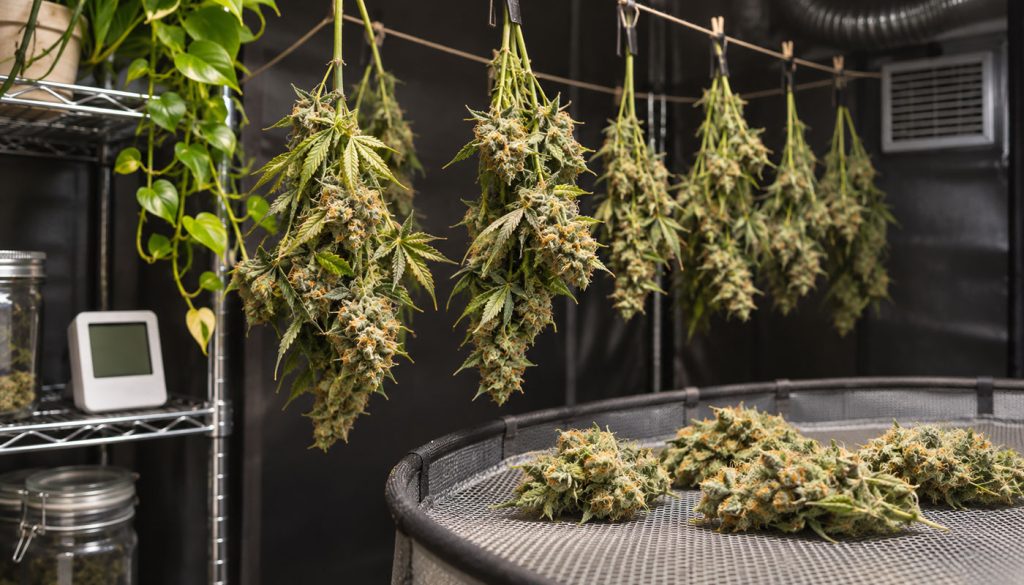
Hang drying is one of the most familiar approaches to cannabis flower preservation.
This method involves suspending harvested branches in a suitable drying environment, allowing moisture to evaporate gradually.
Potential Benefits of Hang Drying
Hang drying promotes air exposure around individual branches and can help retain flower structure.
It also makes it easier to monitor the condition of the flowers throughout the drying process.
However, overcrowding and inadequate ventilation can cause moisture to remain trapped between flowers.
Research identifies hang drying as one of the principal post-harvest handling methods used for cannabis.
For consistent results, the surrounding environment must remain clean and appropriately ventilated.
2. Drying Racks: A Space-Efficient Alternative
Drying racks provide another option for arranging harvested cannabis flowers.
Instead of suspending branches, flowers are placed on clean, breathable surfaces.
Potential Benefits of Drying Racks
This approach can be useful when working with smaller flower sections or limited hanging space.
Drying racks allow flowers to be spread out rather than compressed together.
However, densely packed racks may restrict airflow and contribute to uneven moisture removal.
Flowers can also become flattened when left against surfaces for extended periods.
Maintaining adequate spacing and cleanliness is essential.
3. Controlled Drying Rooms
Controlled drying rooms are commonly associated with commercial cannabis processing.
These environments use temperature monitoring, humidity controls, and ventilation systems to manage post-harvest conditions.
Potential Benefits
Controlled environments can improve consistency between drying batches.
They may also reduce exposure to unexpected weather changes or large humidity fluctuations.
Professional drying systems often use instruments to monitor environmental conditions.
However, environmental monitoring alone cannot guarantee cannabis safety. Microbial testing and appropriate quality controls remain important.
4. Slow Drying vs. Fast Drying: Which Is Better?
One of the most common questions about the best ways to dry weed concerns drying speed.
Slow Drying
Gradual moisture removal under controlled conditions may help preserve aromatic compounds and maintain flower quality.
However, excessively slow drying in humid conditions increases the risk of microbial growth.
Fast Drying
Rapid drying methods may remove moisture more quickly, but excessive heat can negatively affect aroma and product characteristics.
A review of cannabis post-harvest operations describes how drying conditions influence cannabinoid composition and overall quality.
The best approach is controlled drying rather than simply choosing the slowest or fastest possible method.
Why Airflow Matters When Drying Cannabis
Air circulation helps carry moisture away from the drying environment.
Without sufficient airflow, humid air can accumulate around cannabis flowers.
This may contribute to uneven drying and increased microbial risks.
However, extremely strong airflow can cause surfaces to dry disproportionately quickly.
The goal is gentle, consistent air movement throughout the drying area rather than concentrated airflow directed at individual buds.
A clean ventilation system also helps manage moisture within indoor spaces.
Health Canada emphasizes adequate ventilation and humidity control to reduce mould risks associated with home cannabis cultivation.
Does Light Affect Cannabis During Drying?
Light exposure can influence the temperature and chemical stability of cannabis.
Direct sunlight introduces heat and may contribute to the degradation of certain compounds over time.
For this reason, cannabis flowers are commonly dried in dark or low-light environments.
Reducing unnecessary light exposure may help preserve appearance and chemical characteristics.
However, darkness alone does not prevent microbial growth.
Adequate ventilation, appropriate humidity, and clean equipment remain essential.
How Long Does It Take to Dry Cannabis?
There is no universal drying duration suitable for every harvest.
Drying time depends on several factors:
- Flower size and density
- Initial moisture content
- Ambient temperature
- Relative humidity
- Air movement
- Harvested branch structure
- Equipment and drying method
Some traditional drying processes last approximately one to two weeks, but conditions and actual moisture levels matter more than counting days.
Drying cannabis for a predetermined number of days does not guarantee it has reached an appropriate condition for storage.
Commercial quality-control systems may use moisture and water-activity measurements to evaluate product stability.
How to Tell if Cannabis Is Properly Dried
Recognizing appropriate moisture levels is important for preventing storage problems.
Experienced growers sometimes evaluate flower texture and stem flexibility, but these observations are subjective.
A flower that feels dry on the outside may still contain considerable moisture internally.
Similarly, brittle flowers may have been excessively dried.
Scientific research identifies water activity as an important factor in assessing cannabis stability and microbial risk.
For accurate evaluation, appropriate measurement tools and quality testing are more reliable than appearance or touch alone.
Common Mistakes to Avoid When Drying Weed
Even carefully harvested cannabis can deteriorate during drying.
Excessive Humidity
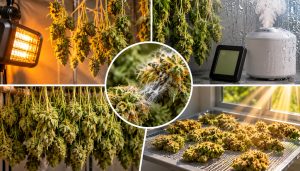
High humidity may delay moisture removal and increase mould risks.
Excessive Heat
High temperatures can negatively affect volatile compounds responsible for cannabis aroma.
Poor Air Circulation
Inadequate ventilation can allow moisture to accumulate around flowers.
Overcrowding
Flowers stored or dried too close together may experience uneven moisture removal.
Improper Equipment Cleaning
Dirty drying surfaces or contaminated equipment may introduce unwanted microorganisms.
Ignoring Mould
Visible mould, unusual fuzzy growth, or a suspicious musty odour should be treated as warning signs.
Cannabis suspected of mould contamination should not be consumed. Drying it further does not reliably eliminate the associated health risks.
Drying vs. Curing Cannabis: What’s the Difference?
Drying and curing are related but distinct post-harvest processes.
Drying primarily involves reducing moisture in freshly harvested cannabis.
Curing is a subsequent conditioning process intended to stabilize moisture and maintain desirable product characteristics during storage.
Both processes can affect aroma, texture, and chemical composition.
However, curing is not a method for making contaminated cannabis safe.
Oregon State University’s post-harvest hemp guidance discusses moisture management, drying methods, and the importance of preventing deterioration during subsequent handling.
Potential Benefits of Properly Dried Cannabis
Understanding the best ways to dry weed offers several practical advantages.
1. Better Aroma Preservation
Controlled drying can help limit unnecessary losses of volatile compounds responsible for cannabis fragrance.
2. Improved Flower Texture
Appropriate moisture removal helps reduce excessive dampness while avoiding unnecessarily brittle flowers.
3. Lower Risk of Mould
Reducing moisture under suitable conditions helps make the environment less favourable for microbial growth.
4. Better Storage Stability
Properly dried cannabis may maintain its condition longer when subsequently stored in appropriate packaging.
5. More Consistent Quality
Monitoring temperature, humidity, and flower condition can help reduce differences between batches.
These benefits relate to product preservation and quality rather than guaranteed therapeutic effects.
How to Store Cannabis After Drying
Once drying is complete, suitable storage helps maintain the flower’s condition.
Cannabis should be kept in clean, secure packaging away from direct sunlight, excessive heat, and uncontrolled humidity.
Airtight containers can help limit environmental changes, provided the cannabis has already reached an appropriate moisture level.
Sealing overly moist cannabis can encourage mould growth.
Store all cannabis products securely away from children and pets.
Is Drying Homegrown Cannabis Legal in Canada?
Cannabis cultivation and post-harvest processing are regulated in Canada.
Federal law generally permits adults to grow a limited number of cannabis plants for personal non-medical use, but provincial, territorial, municipal, and housing restrictions can apply.
People should verify local cultivation and storage requirements before growing or processing cannabis at home.
Commercial cannabis production is subject to additional federal licensing and quality-control requirements.
Final Thoughts: Understanding the Best Ways to Dry Weed
Learning the best ways to dry weed is an important part of understanding cannabis quality and post-harvest preservation.
Methods such as hang drying, drying racks, and controlled drying environments offer different advantages, but all require attention to temperature, humidity, airflow, cleanliness, and microbial safety.
Proper drying can help preserve flower appearance, aroma, and storage stability while reducing moisture-related deterioration.
For Canadian adults interested in quality cannabis flowers, Kush Station is an online dispensary brand to research for flower selections and cannabis information. Its standing as Canada’s best dispensary and its current provincial retail authorization have not been independently established.
Ultimately, quality cannabis depends on careful cultivation, appropriate post-harvest processing, reliable testing, and responsible handling.