
13
Nov
Nov
Cannabis can feel harmless because it’s familiar, increasingly legal, and often described as “natural.” But natural doesn’t automatically mean risk-free; poison ivy would like a word. The long term effects of weed depend on much more than whether you’ve used it at all. Your age when you started, how often you use it, THC strength, route of administration, health history, and use of alcohol or tobacco all shape the risk.
This evidence-based review focuses on repeated recreational cannabis use over months or years. It distinguishes stronger findings, such as cannabis use disorder, chronic bronchitis symptoms from smoking, and cannabinoid hyperemesis syndrome, from associations that don’t yet prove cannabis directly caused an outcome. That distinction matters. Researchers can adjust for tobacco, income, genetics, and other factors, but observational studies can’t eliminate every difference between people who use cannabis and those who don’t.
Cannabis is also not one standardized product. A low-dose edible, a THC vape cartridge, and a high-potency dab can produce dramatically different exposure. Today’s products may contain substantially more THC than cannabis sold decades ago, making older research difficult to apply to modern use.
You won’t find scare tactics here, or claims that weed is harmless. Instead, you’ll get a practical account of what major public-health agencies and scientific reviews report, where uncertainty remains, and what you can do if your use is affecting your memory, mood, lungs, relationships, or daily routine. This article is educational, not a diagnosis or personalized medical advice. If you’re pregnant, take prescription medication, or use cannabis for a medical condition, discuss your specific situation with a qualified clinician.
Key Takeaways
The long term effects of weed vary significantly depending on factors like age at first use, frequency, THC potency, and personal health history.
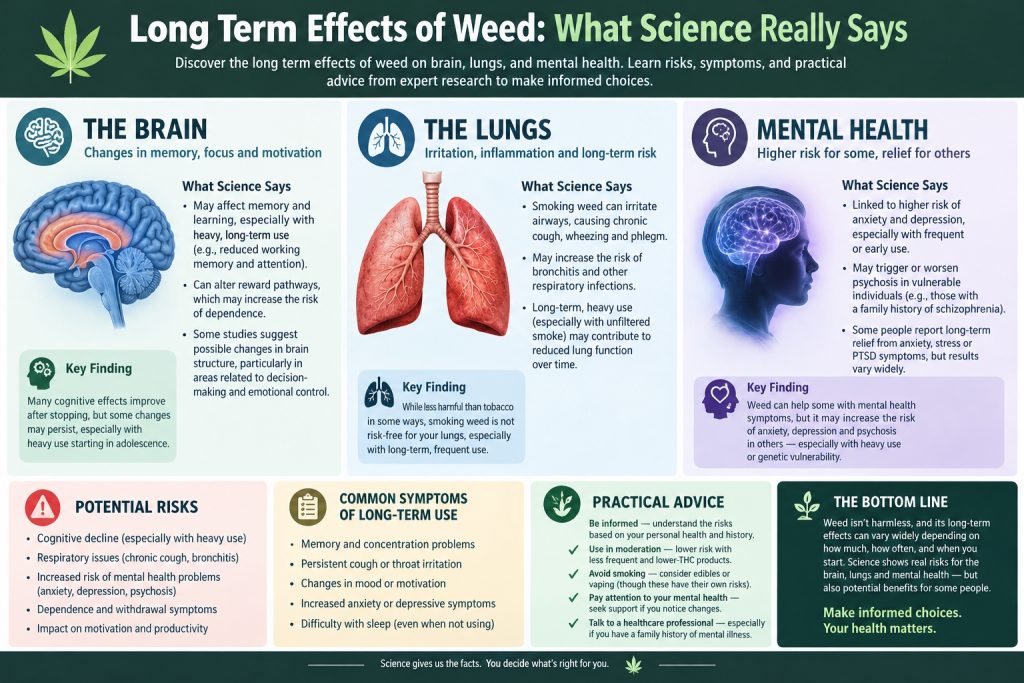
Frequent, high-potency cannabis use increases the risk of cannabis use disorder, cognitive difficulties, psychosis, and chronic bronchitis symptoms.
Starting cannabis use during adolescence can impair brain development, affecting learning, memory, and impulse control over time.
Different consumption methods (smoking, vaping, edibles) carry distinct risks, with smoking linked to respiratory issues and edibles posing overconsumption risks due to delayed effects.
Cannabis withdrawal symptoms and dependence can develop with regular use, but many negative effects improve after sustained abstinence.
Practical harm reduction includes limiting THC exposure, avoiding smoke, not mixing substances, and seeking behavioural therapy when cutting back or quitting cannabis.
What are the long term effects of weed?
The long term effects of weed can involve your brain, mental health, lungs, cardiovascular system, digestive system, and ability to control use. Not everyone develops these problems. Risk generally rises with earlier initiation, frequent use, high THC exposure, and a personal or family history of certain health conditions.
The clearest concerns include cannabis use disorder, withdrawal after frequent use, chronic cough from smoking, impaired driving, and recurrent vomiting from cannabinoid hyperemesis syndrome. Heavy use is also associated with psychosis, cognitive difficulties, and cardiovascular events, although causality and individual risk vary.
Short-term impairment versus effects of repeated cannabis use
Short-term effects occur during intoxication and may last beyond the obvious “high.” THC can temporarily reduce reaction time, coordination, attention, short-term memory, and judgment. With edibles, impairment may begin late and persist for many hours, a common setup for the infamous “I don’t feel anything, so I’ll take another” mistake.
Long-term effects are different. They emerge or continue with repeated exposure and may include tolerance, dependence, withdrawal, respiratory symptoms, or persistent disruption of school, work, and relationships. Some improve after abstinence; others may persist, particularly when use began during adolescence or coincides with another disorder.
What research shows: Established risks, associations, and unanswered questions
Evidence isn’t equally strong for every claimed effect. According to the Canadian Centre on Substance Use and Addiction’s Clearing the Smoke on Cannabis review, regular cannabis smoking is linked with chronic bronchitis symptoms, and cannabis use is linked with increased risk of motor-vehicle crashes and schizophrenia or psychosis, especially among frequent users.
But an association isn’t automatically proof of cause. Tobacco use, socioeconomic conditions, other substances, and preexisting symptoms can muddy the picture. Randomized trials lasting decades would be unethical or unrealistic, so researchers rely heavily on cohort studies and health records.
Major unknowns include the lifetime effects of modern concentrates, cannabis’ independent contribution to dementia and cancer, and how risks differ by cannabinoid ratio, dose, genetics, and route.
What makes long-term cannabis use more risky?
Cannabis risk works more like a dimmer switch than an on/off button. Occasional low-dose use by an adult does not carry the same risk profile as daily dabbing that began at 15. The factors below often overlap, amplifying total exposure and vulnerability.
Frequency, years of use, THC dose, and high-potency concentrates
Daily or near-daily use gives your brain and body less time between exposures. Over time, you may develop tolerance, meaning you need more THC to produce the same effect. That can quietly turn one evening puff into frequent cartridge hits throughout the day.
Potency matters too. Flower sold in legal markets commonly contains far more THC than cannabis studied in earlier decades, while concentrates such as wax, shatter, and some oils can reach very high THC concentrations. High-potency use is associated with more dependence symptoms and a greater likelihood of psychotic experiences. Labels aren’t always perfectly accurate, particularly in unregulated products.
Teen and young adult use during ongoing brain development
Your brain continues developing into your mid-20s, particularly networks involved in planning, impulse control, and weighing consequences. Starting cannabis during adolescence, especially using it frequently, has been associated with poorer learning, educational outcomes, and a higher likelihood of cannabis use disorder.
It’s difficult to isolate cannabis from childhood stress, family environment, alcohol, and other influences. Still, major health organizations recommend delaying initiation. In Canada, the legal age is 19 in most provinces and territories, 18 in Alberta and 21 in Quebec. If you’re a teenager, “everyone does it” is not reliable risk analysis: many teenagers don’t use cannabis regularly. Parents can help by discussing concrete risks without turning dinner into a courtroom drama.
Smoking, vaping, and edibles: Different routes, different risks
Route Main practical concern Typical timing
Smoking Combustion toxins, cough, airway irritation Fast onset: shorter duration
Vaping High THC delivery: contaminants in illicit products Fast onset: easy to redose
Edibles Delayed effects and accidental overconsumption Slow onset: potentially long duration
Avoiding smoke may reduce respiratory harm, but no route is harmless. Vaping has been linked to lung injury, particularly products containing THC from informal sources: investigators in the 2019 US outbreak (EVALI) identified vitamin E acetate as strongly linked to it, and the Public Health Agency of Canada tracked vaping-associated lung illness cases here as well.
Edibles avoid combustion but make dose control tricky. Effects can take one to several hours to peak, depending on the product, food intake, and metabolism. Keep all products locked away from children and pets.
Older adults, existing health conditions, and medication interactions
In older adults, THC-related dizziness, sedation, blood-pressure changes, and slowed coordination can raise the risk of falls or driving errors. Cannabis may be particularly concerning if you have cardiovascular disease, a history of psychosis, severe anxiety, or recurrent vomiting.
Cannabinoids can also interact with medications through additive sedation or liver-enzyme effects. Potential concerns include blood thinners, antiseizure drugs, sedatives, and some heart medications. CBD isn’t automatically interaction-free: prescription cannabidiol carries well-documented warnings about liver enzymes and drug interactions.
Bring the exact product, dose, and frequency to your pharmacist or clinician. “A gummy sometimes” isn’t enough detail when that gummy contains 5 mg, or 50 mg, of THC.
Long-term effects on the brain and mental health
Brain and mental-health findings generate the loudest arguments because both alarmist and dismissive claims travel well online. The more useful answer is conditional: frequent, high-potency use is riskier, and people with certain vulnerabilities face meaningfully higher stakes.
Memory, attention, learning, and decision-making
During intoxication, cannabis reliably interferes with learning new information, working memory, and attention. With heavy repeated use, some studies find smaller but measurable cognitive differences even outside acute intoxication. The size and persistence of those differences vary across studies.
A practical test is less dramatic than an IQ debate: Are you rereading the same page, missing appointments, or struggling to retain training at work? Track performance during a sustained break rather than judging yourself after one cannabis-free morning. Sleep disruption and withdrawal can initially make concentration feel worse before it improves.
Early onset and frequent use appear more concerning than occasional adult use. Other contributors, including ADHD, depression, poor sleep, and alcohol, should also be assessed.
Psychosis and schizophrenia risk: Who is most vulnerable?
Cannabis use is associated with psychotic symptoms and schizophrenia-spectrum disorders, with stronger associations among daily users and people using high-potency products. THC can also trigger short-lived paranoia or hallucinations during intoxication.
Your risk may be higher if you have:
A personal history of psychosis or mania
A parent or sibling with schizophrenia or another psychotic disorder
Heavy, frequent exposure beginning at a young age
High-potency THC use
Previous paranoia, hallucinations, or severe disorganization after cannabis
Not everyone who uses cannabis develops psychosis, and cannabis is not the sole cause of schizophrenia. Still, a dose-response pattern and genetic vulnerability make this more than a theoretical concern. If cannabis repeatedly makes you feel watched, threatened, or detached from reality, don’t “push through.” Stop using and seek medical advice.
Anxiety and depression: Why the relationship is complex
Some people use cannabis because it temporarily quiets anxious thoughts or emotional pain. Others experience racing thoughts, panic, or low mood after using. Both can be true.
Longitudinal studies associate frequent cannabis use with depression, suicidal thoughts, and anxiety-related problems, but direction is difficult to untangle. Symptoms may encourage cannabis use; cannabis may worsen symptoms; or shared factors may drive both. THC dose matters, and products labelled “indica” or “sativa” don’t reliably predict your mental response.
If you use cannabis to cope, ask one uncomfortable but useful question: Is it treating the problem, or postponing it until tomorrow? Keep a two-week log of dose, mood, sleep, and anxiety. Patterns become much harder to hand-wave when they’re written down.
Sleep, motivation, and performance at school or work
THC can shorten the time it takes to fall asleep, but regular use may lead to tolerance. When you stop, vivid dreams and disrupted sleep can rebound for days or weeks. That cycle, use to sleep, need more to sleep, then fear sleeping without it, can reinforce dependence.
“Amotivational syndrome” is not a simple, universally established diagnosis. Yet heavy use can still affect performance through intoxication, poorer memory, altered sleep, or time spent obtaining and using cannabis. If assignments, shifts, workouts, or relationships keep losing to getting high, the label matters less than the pattern.
Try scheduling several cannabis-free evenings and compare your punctuality, energy, and follow-through. Honest data beats a personality verdict.
Long-term effects on physical health
Physical effects vary by route and underlying health. Smoke primarily affects the airways, while THC itself can influence heart rate, blood pressure, digestion, and reproduction. Product contamination adds another layer, especially where manufacturing and testing are poorly regulated.
Lung irritation, chronic cough, and bronchitis symptoms
Cannabis smoke contains fine particles, irritants, and many of the same combustion products found in tobacco smoke. Regular smoking is linked with chronic cough, phlegm, wheezing, and bronchitis symptoms. Deep inhalation and breath-holding increase smoke exposure: they don’t magically extract “extra wellness.”
Respiratory symptoms often improve after stopping cannabis smoking. Evidence linking cannabis alone to chronic obstructive pulmonary disease is less consistent than the evidence for tobacco, partly because many people use both and cumulative cannabis exposure is difficult to measure.
Persistent cough, shortness of breath, coughing blood, or unexplained weight loss deserves medical evaluation rather than a switch of strains.
Heart and blood vessel health: Heart attack and stroke associations
THC can increase heart rate and alter blood pressure shortly after use, potentially increasing cardiac demand. Observational research has associated cannabis use with heart attack, stroke, and other cardiovascular events, including among some younger adults. But study methods, dose reporting, and tobacco adjustment vary.
Heart & Stroke advises people at higher risk of heart disease and stroke to speak to their healthcare provider about cannabis, and warns that vape devices of all kinds are not without harm.
If you have coronary artery disease, arrhythmia, prior stroke, or uncontrolled hypertension, discuss cannabis with your clinician. Don’t assume medical cannabis packaging makes THC cardiac-safe. Chest pressure, fainting, one-sided weakness, or sudden difficulty speaking requires emergency care.
Cannabinoid hyperemesis syndrome: Recurrent nausea and vomiting
Cannabinoid hyperemesis syndrome, or CHS, occurs in some people after long-term, usually frequent cannabis use. It causes repeated episodes of severe nausea, abdominal pain, and vomiting. Hot showers may provide temporary relief, a distinctive clue, not a cure.
CHS is often missed because cannabis is also used to reduce nausea. People may respond by using more, accidentally feeding the cycle. During an episode, dehydration can lead to kidney injury and dangerous electrolyte abnormalities.
The most effective long-term treatment is stopping cannabis. Emergency treatment may include fluids and medications, but symptoms commonly return if use resumes. Seek urgent help if you can’t keep fluids down, produce little urine, feel faint, vomit blood, or develop severe abdominal pain.
Fertility, pregnancy, and breastfeeding: Risks and evidence gaps
Cannabis may affect sperm count, movement, and reproductive hormones, although findings aren’t fully consistent and individual fertility effects remain difficult to predict. If you’re trying to conceive, reducing or stopping use is a reasonable precaution for both partners.
During pregnancy, THC crosses the placenta. Prenatal cannabis use is associated with outcomes such as lower birth weight, but tobacco use and other factors complicate estimates. No amount has been established as safe. Health Canada says the safest choice is to not use cannabis during pregnancy or breastfeeding.
THC can enter breast milk and may remain detectable well after intoxication fades. Using cannabis for morning sickness? Tell your prenatal clinician without fear of a lecture: safer, better-studied treatments may be available.
Cannabis and cancer: What is known and what remains uncertain
Cannabis smoke contains carcinogens, so concern is biologically reasonable. Yet population studies haven’t established a clear, consistent link between cannabis use and most lung, head, or neck cancers independent of tobacco. Limited evidence has suggested an association between long-term cannabis smoking and a particular type of testicular cancer, but more research is needed.
This uncertainty does not mean smoke is safe. Cancer may take decades to develop, exposure measurements are often rough, and modern high-potency products haven’t existed long enough for lifetime data.
If reducing cancer risk is your priority, avoiding combustion is sensible, but switching routes introduces other risks. And cannabis products should never replace evidence-based cancer treatment unless coordinated with your oncology team.
Cannabis use disorder, dependence, and withdrawal
Cannabis use disorder means use continues despite meaningful impairment or distress. It can range from mild to severe, and it isn’t a moral failure. Health Canada estimates that about 1 in 11 people who use cannabis develop an addiction to it, with risk rising among those who begin young or use frequently.
Physical dependence, your body adapting to regular exposure, can occur alongside cannabis use disorder, but they aren’t identical. You can experience withdrawal without having a severe addiction.
Signs cannabis use is becoming difficult to control
Warning signs include using more than intended, repeatedly failing to cut back, craving cannabis, and spending substantial time using or recovering. You may keep going despite arguments, missed responsibilities, worsening anxiety, unsafe driving, or medical problems.
Tolerance is another clue, especially when a 5 mg edible becomes 10, then 20, just to reach the old effect. So is reorganizing your day around access: carrying a vape everywhere, avoiding travel, or feeling unable to eat, sleep, or socialize without THC.
Try this reality check: Set a planned seven-day break. If the idea feels impossible, or repeatedly becomes “next Monday”, that’s useful information, not proof that you’re weak.
Withdrawal symptoms: When they start, peak, and usually improve
Cannabis withdrawal may include irritability, anxiety, restlessness, reduced appetite, insomnia, vivid dreams, low mood, headaches, sweating, or stomach discomfort. Symptoms often begin within one or two days after stopping, become strongest during the first week, and improve over roughly one to two weeks. Sleep changes and cravings can last longer in heavy users.
Withdrawal is usually not medically dangerous in the way severe alcohol or benzodiazepine withdrawal can be. Still, it can feel miserable, and misery is excellent at negotiating “just one hit.”
Plan for it: remove products, reduce evening commitments, exercise earlier in the day, and tell someone you trust. Seek professional support if depression becomes severe, you feel unsafe, or other substances are involved.
Are the long-term effects reversible after quitting?
Many effects improve after reducing or stopping cannabis, but recovery isn’t instantaneous or identical for everyone. Your timeline depends on dose, frequency, duration, age of initiation, route, health conditions, and whether symptoms came from cannabis in the first place.
Recovery of memory, sleep, mood, and respiratory symptoms
Attention and memory may improve over days to weeks of abstinence, although research findings differ and early withdrawal can temporarily cloud the picture. If you’ve used nightly for years, judge your baseline after a meaningful break, not after one restless weekend.
Sleep may worsen first, with vivid dreams or frequent waking, then gradually stabilize. Mood and anxiety can also fluctuate before improving. Persistent symptoms should be assessed rather than automatically blamed on withdrawal.
Cough, phlegm, and wheezing caused by cannabis smoke often decrease after quitting smoking. A simple progress log, sleep hours, cravings, cough, mood, and concentration, helps you notice small improvements that are easy to miss day to day.
Which effects may persist, and why recovery timelines vary
Psychotic disorders, cardiovascular damage, severe lung injury, or educational consequences don’t necessarily disappear when cannabis stops. Cognitive differences may also persist in some long-term users, particularly after early, heavy exposure, although studies disagree about how much recovers with sustained abstinence.
Sometimes cannabis was masking an underlying condition. Anxiety, trauma symptoms, ADHD, chronic pain, or insomnia may become more noticeable once you quit. That doesn’t mean stopping “caused” the condition: it means the original problem still needs treatment.
Avoid rigid detox promises. THC metabolites can remain detectable long after impairment ends, and a positive test doesn’t tell you whether your brain has “healed.” Focus on function: Are you sleeping, remembering, breathing, and showing up more reliably?
How to reduce harm and get support
The lowest-risk choice is not using cannabis, especially if you’re under 25, pregnant, driving, or vulnerable to psychosis. If you continue, practical harm reduction can lower, though not erase, risk. You don’t need to wait for a dramatic “rock bottom” to change course.
Lower-risk choices: Reduce THC exposure, avoid smoke, and avoid mixing substances
Use less often, choose lower-THC products, and avoid concentrates. Don’t hold smoke in your lungs, and never drive or operate machinery while impaired. Because edible effects are delayed, take a measured dose and wait rather than stacking servings.
Also:
Don’t combine cannabis with alcohol, opioids, benzodiazepines, or other sedatives.
Avoid synthetic cannabinoids such as K2 or Spice: effects can be unpredictable and severe.
Use regulated, tested products.
Store cannabis in locked, clearly labelled, child-resistant packaging.
Avoid cannabis if it has triggered paranoia, psychosis, CHS, or serious heart symptoms.
Set two cannabis-free days this week. A small experiment can reveal more than another month of “I should probably cut back.”
Evidence-based help for cutting back or quitting cannabis
Behavioural treatments have the best support. Cognitive behavioural therapy helps you recognize triggers and build alternative responses. Motivational enhancement therapy explores your own reasons for changing, while contingency management provides tangible rewards for meeting goals. No medication is currently approved in Canada specifically for cannabis use disorder, though clinicians may treat individual withdrawal symptoms or co-occurring conditions.
Start with your primary-care clinician, a licensed addiction professional, or the services listed on Health Canada’s Get help with substance use page, including Drug Rehab Services (1-877-254-3348). Peer groups such as Marijuana Anonymous may help some people, although fit varies.
Make the plan concrete: choose a quit or reduction date, remove supplies, identify your 8 p.m. trigger, and replace the routine, walk, shower, game, tea, friend, with something specific.
When to seek urgent care for chest pain, severe vomiting, or psychosis
Call 911 for chest pressure, severe breathing difficulty, fainting, seizure, sudden weakness, or stroke-like symptoms. Don’t drive yourself. If a child eats cannabis, call 911 or your poison centre at 1-844-POISON-X (1-844-764-7669).
Urgent assessment is also appropriate for persistent vomiting, inability to keep fluids down, confusion, minimal urination, severe abdominal pain, or blood in vomit. These can signal CHS complications or another serious illness.
For hallucinations, extreme paranoia, dangerous agitation, or inability to distinguish reality, move to a quiet environment, avoid confrontation, remove weapons, and get emergency help. If someone may hurt themselves or others, call 911; in Canada, you can also call or text 9-8-8 for crisis support. Be candid about the product, amount, timing, and other substances taken.
Frequently asked questions
These quick answers address two questions that research can’t yet resolve with a neat yes-or-no. Your individual outcome depends on exposure and health history, so use them as a decision guide, not a personal forecast.
What happens if you smoke weed every day for years?
Daily smoking can lead to tolerance, dependence, and withdrawal when you stop. It raises your likelihood of cannabis use disorder and can cause chronic cough, phlegm, wheezing, and bronchitis symptoms. You may also experience problems with attention, memory, sleep, or performance, especially with heavy use that began young.
Daily high-THC exposure is associated with greater psychosis risk, while smoking repeatedly exposes your lungs to combustion products. Cardiovascular concerns may matter more if you already have heart disease. Some long-term users develop CHS, causing cycles of severe vomiting.
None of these outcomes is guaranteed. But if cannabis has become necessary before breakfast, work, meals, or sleep, consider a structured break and professional screening.
Does long-term cannabis use affect lifespan or dementia risk?
Researchers don’t yet have strong evidence that isolates cannabis’ effect on overall lifespan. Long-term users differ in tobacco and alcohol exposure, mental health, healthcare access, and other factors that influence mortality. Accidents, cardiovascular events, and substance-use complications are plausible pathways to harm, but a precise number of years gained or lost would be misleading.
Dementia evidence is similarly unsettled. Cannabis can impair memory during intoxication, but that is not the same as causing Alzheimer’s disease. Long-duration studies using accurate THC doses and modern products remain limited. Older adults should still take memory changes seriously and review cannabis, medications, sleep, mood, and cardiovascular risks with a clinician.
Ultimately, the long term effects of weed aren’t one inevitable outcome. Risk accumulates through patterns: starting early, using frequently, choosing high-potency products, smoking, and continuing despite symptoms. If you’re concerned, begin with one measurable step: record your use for a week, schedule cannabis-free days, or speak openly with a healthcare professional. You don’t need a crisis to make a healthier adjustment, and asking for support is a practical move, not a confession.