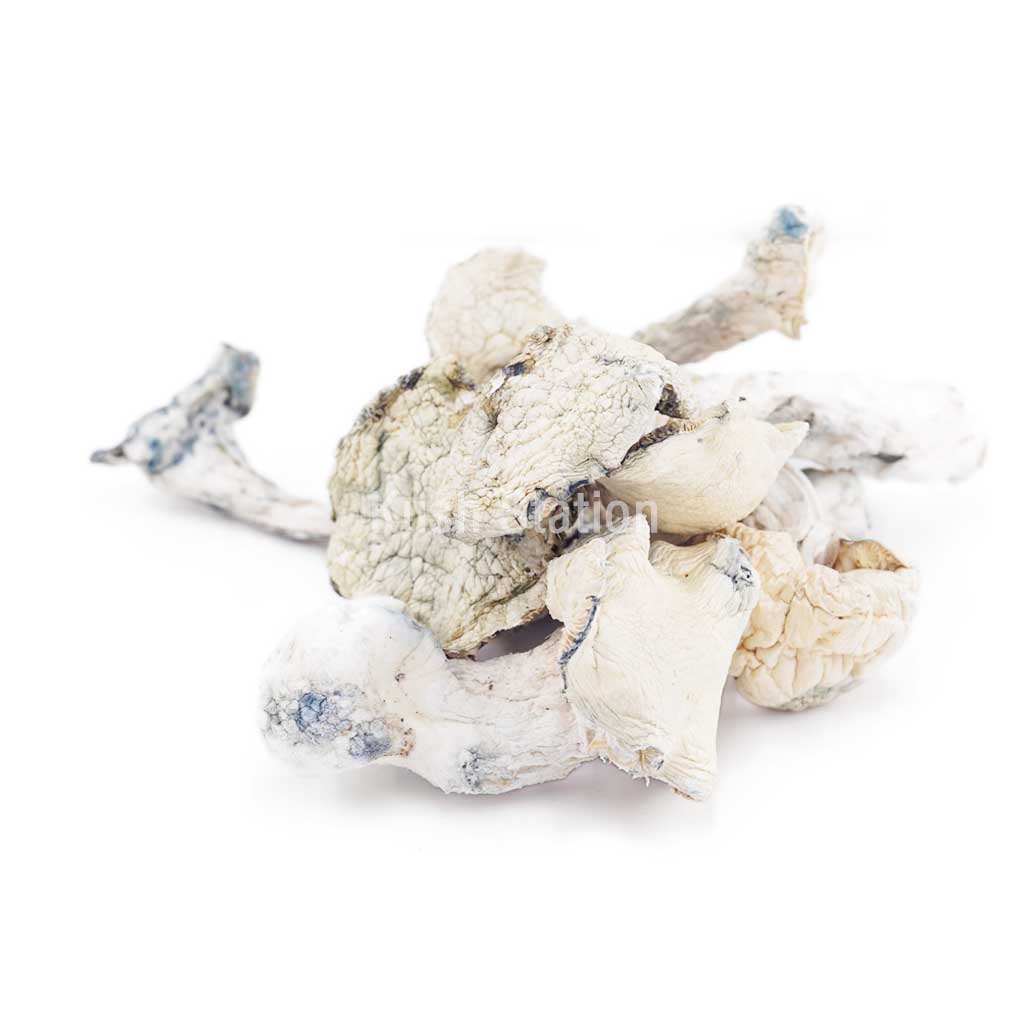
Mushrooms – Extraterrestrial (Exotic)
Price range: $8.00 through $700.00 As low as $1.56 per gram
Extraterrestrial mushrooms are an exotic strain that lives up to its name with an unusual, otherworldly look that sets it apart from classic varieties. They’ve built a strong reputation among experienced mushroom enthusiasts who want something rarer. Each batch is carefully dried and quality-checked, then sealed in discreet, airtight packaging to lock in freshness. Store in a cool, dry, dark place, away from children and pets. For adults only.
A mushroom can look like a tiny red sea anemone, a tooth leaking dark-red droplets, or a cluster of glowing dots in a forest. It’s easy to see why photos of these fungi get labelled “alien”, and why some people wonder whether similar shapes on Mars could be alive. The real story is strange enough without turning guesses into evidence.
This guide explores mushrooms extraterrestrial exotic enthusiasts often share online, explains what scientists know about fungi beyond Earth, and offers practical safety advice for anyone who encounters an unusual mushroom. You’ll also find a clear distinction between looking otherworldly and being edible, medicinal, or safe. Those are very different things. And if you use cannabis, keep the subjects separate: a mushroom’s appearance tells you nothing about its effects or safety. All cannabis products are for adults of legal age only.
Key Takeaways
- Mushrooms can appear extraterrestrial and exotic due to their unusual shapes, vivid colors, and biological adaptations for spore dispersal, but these features are rooted in terrestrial biology.
- No scientific evidence supports the existence of mushrooms or fungi on Mars; images suggesting otherwise typically show rocks or geological features with familiar shapes.
- Extremophile fungi demonstrate that some species tolerate harsh conditions, yet survival does not equal active growth or reproduction in environments like Mars.
- Identifying exotic wild mushrooms requires careful observation of multiple features and expert confirmation; appearance alone cannot determine edibility or safety.
- Handling or consuming unknown mushrooms is risky—photograph specimens instead and consult professionals to avoid poisoning.
- Mushrooms’ alien-like appearances often inspire life beyond Earth theories, but curiosity should be balanced with scientific evidence and critical evaluation.
What Makes Mushrooms Look Extraterrestrial and Exotic?
Mushrooms look “alien” to us when they depart from the familiar picture of a brown cap on a stem. Think vivid scarlet arms, translucent gelatinous folds, tiny cup-shaped pods, or a surface patterned like coral. Unusual color and symmetry grab your eye: an unfamiliar texture can make the fungus seem less like a forest organism and more like a prop from a science-fiction set.
There’s a biological reason for that variety. A mushroom is the visible spore-producing structure of a fungus, while much of the organism lives as fine threads called mycelium in soil, wood, or other material. The fruiting body can take many shapes suited to spreading spores in its particular habitat. Some species also produce pigments, droplets, or light-producing compounds.
A photo can exaggerate the effect. Macro lenses make tiny fungi look monumental, while dramatic lighting and dark backgrounds add a cosmic mood. The organism is still terrestrial, even when it looks like it came with its own spaceship.
Mushrooms Extraterrestrial Exotic: Earth Fungi That Resemble Alien Life
Earth already has fungi that could pass a quick visual inspection for alien life. They turn up in forests, gardens, and decaying wood, often for only a short period after the right mix of moisture and temperature. Names such as “devil’s fingers” and “bleeding tooth” sound like warnings. They’re memorable nicknames, not reliable identification or safety labels.
Here are several notable examples, and a reminder that a striking appearance doesn’t tell you whether a mushroom is edible. Identification depends on a combination of features and, often, expert confirmation.
Devil’s Fingers and Other Starfish-Like Fungi
Devil’s fingers (Clathrus archeri) begins life inside an egg-like structure, then opens into several bright red or pink arms. The arms stretch outward like a starfish or an alien hand. Its strong, unpleasant odour attracts flies, which can help disperse spores. The species is native to Australia and New Zealand and has spread to other regions, including parts of Europe and North America.
Another eye-catching relative, the red cage fungus (Clathrus ruber), forms a vivid lattice that resembles a small, hollow ball. Both are members of the stinkhorn group. Their dramatic forms are part of how they reproduce, not evidence of unusual origins. If you spot one on a walk, take a photo, admire the engineering, and leave it where it is.
Bleeding Tooth Fungus, Bird’s Nest Fungi, and Other Strange Species
The bleeding tooth fungus (Hydnellum peckii) is a pale, lumpy mushroom that can ooze red fluid when young. The droplets make it look as though the fungus is bleeding, though the appearance has a biological explanation involving fluid movement through the tissue. It’s associated with forest soil and tree roots. Don’t mistake its nickname for a promise that it’s edible, or for a complete ID.
Bird’s nest fungi are far smaller but just as odd. Their little cup-shaped fruiting bodies hold round structures called peridioles, which contain spores. Raindrops can splash the packages out of the cup, helping them travel. From close up, the whole arrangement looks like eggs in a miniature nest.
Other species resemble coral, ears, or shelves. Their shapes are clues to how fungi grow and spread, not a shortcut to deciding what they are.
Bioluminescent, Coral-Like, and Jelly Fungi
Some fungi produce light through bioluminescence. A few known species, including Mycena chlorophos, can glow greenish in the right conditions. The light may be faint, and a phone camera’s night mode can make it look much brighter than it appears to your eyes. Not every glowing forest object is a mushroom, either: avoid drawing conclusions from a single moody image.
Coral fungi form branching structures, while jelly fungi can look like translucent blobs or folded ears. Both groups are diverse, and their common names cover many species. A yellow coral-like fungus and an orange gelatinous one may look otherworldly, but colour and shape alone won’t tell you their identity. That’s why field guides emphasize several features together.
Are There Really Mushrooms on Mars?
There is no accepted scientific evidence that mushrooms, fungi, or any other life have been found on Mars. That doesn’t mean researchers have proved life could never exist there. It means the claims shared online have not met the standard needed to demonstrate it.
Mars rovers and orbiters study the planet’s geology, chemistry, and past environments. Images from the surface can be intriguing, but they’re not a biological test. A rock or shadow that looks mushroom-shaped in a cropped photo is still just an unusual-looking feature until evidence shows otherwise.
What Viral Images and Unproven Claims Actually Show
Viral posts sometimes point to rounded objects, dark spots, or structures that seem to change between Martian images and call them mushrooms. In many cases, the picture shows a rock, a small geological feature, or an object photographed at different angles and under different lighting. Some objects appear to change size across images because they’re closer to the camera, not because they grew.
The basic problem is resemblance. A shape that looks familiar in a low-resolution image isn’t proof of its identity. On Earth, you wouldn’t identify a mushroom from a distant silhouette alone: you’d check its gills or pores, stem, habitat, spore print, and sometimes microscopic features. Mars images generally can’t provide that sort of biological context.
Be especially cautious when a post presents an image as a discovery but offers no peer-reviewed analysis or verifiable mission data. “Looks like” is a starting question, not a conclusion.
NASA Evidence, Martian Geology, and the Limits of Current Science
NASA missions have found evidence that Mars once had liquid water on its surface, including ancient lake and river environments. Rovers have also studied rocks and detected organic molecules. These are important findings, but organic molecules are carbon-containing compounds: their presence alone does not prove life, just as a wet ancient landscape isn’t proof it hosted fungi.
To identify a living organism, scientists would need multiple lines of evidence, such as a convincing chemical signature, structures consistent with biology, and results that rule out nonliving explanations. Current rovers weren’t sent to identify mushrooms from photographs, and instruments on Mars have limits in what they can detect and confirm.
The careful answer is neither “Mars definitely has mushrooms” nor “life is impossible there.” It’s that no mushroom-like life has been confirmed, and future missions or sample studies may provide stronger evidence.
Could Fungi or Mushroom-Like Life Survive on Another Planet?
Fungi can tolerate a wider range of conditions than many people expect, but that doesn’t make them invincible. Survival depends on the species, its life stage, and what “survive” means: enduring a harsh period is different from actively growing and reproducing.
For astrobiologists, fungi are useful organisms to study because their responses to stress can help frame questions about life’s limits. But Earth fungi thriving in a laboratory or extreme environment don’t establish that they live on another planet. It’s a clue for research, not a cosmic confirmation.
The Conditions Fungi Need to Grow
Most familiar fungi need water, a suitable temperature range, and a source of nutrients. Many mushroom-forming species also depend on a relationship with plants or on dead organic matter such as wood and leaf litter. They generally require chemical conditions their cells can use, and their spores must land somewhere appropriate to begin growing.
Mars presents serious obstacles. Its surface is cold, dry, and exposed to radiation, and its thin atmosphere doesn’t provide Earth-like conditions. Some regions show evidence of past water, but today’s surface environment is a different challenge from a damp forest floor. A hypothetical organism might cope by remaining dormant or living underground, but that possibility needs evidence: it isn’t something we can infer from a mushroom-shaped rock.
So when you ask whether fungi could grow elsewhere, the useful follow-up is: what resources would they use, and where would they find protection?
Extremophile Fungi and What They Teach Astrobiologists
Some fungi on Earth tolerate harsh conditions such as high salinity, cold, or intense radiation better than many other organisms. Certain fungi have been studied in laboratories and in environments associated with nuclear facilities. These examples help researchers test how living cells respond to stress and which protective mechanisms might matter beyond Earth.
“Extremophile” doesn’t mean a species can live anywhere. A fungus adapted to one stress may still fail when several occur together, for example, extreme dryness, cold, radiation, and a lack of usable nutrients. Researchers must also distinguish survival from growth. A spore that remains viable after exposure hasn’t necessarily grown or reproduced in that environment.
That distinction is useful beyond space science: a tough-looking organism may endure conditions without thriving in them.
How to Identify Exotic Wild Mushrooms Safely
If you find a mushroom that looks like a tiny alien, treat it as an observation project, not a snack. Foraging can be rewarding, but beginners often underestimate how similar unrelated species can look. In Canada, mushrooms vary by region and season, so an identification that seems plausible in one province may not fit what grows where you are.
Photograph the whole specimen where it grows, including the underside and surrounding habitat. Note nearby trees, the surface it grows on, the date, and whether it’s growing alone or in a cluster. Don’t rely on an online photo match or an app to decide whether it’s safe to eat. A mushroom identification group can help with clues, but a confident-looking comment isn’t a safety guarantee.
When in doubt, don’t handle it more than necessary, and never taste an unknown mushroom. If a child or pet has eaten one, contact your local poison centre or emergency services promptly. Keep a photo and any remaining specimen available for identification if you can do so safely.
Color, Shape, Habitat, Spore Prints, and Microscopic Features
A careful identification starts with more than colour. Record the cap’s shape, surface, and texture: whether there are gills, pores, teeth, or folds underneath: and how the stem attaches to the cap. Check for a ring, a cup-like structure at the stem base, bruising, or a change in colour after damage. Not every mushroom has every feature, and fragile specimens can lose important details quickly.
Habitat matters, too. A fungus on a decaying log is different from one growing from soil near a particular tree. Season and geography narrow the possibilities. A spore print, made by placing a cap on paper and waiting for spores to fall, can help narrow an ID, but it cannot establish edibility on its own. Microscopic features may be needed to distinguish closely related species.
Use a regional field guide and, ideally, learn with an experienced local mycologist. Treat any single feature, app result, or “my friend ate this” story as insufficient evidence.
Are Alien-Looking Wild Mushrooms Edible or Poisonous?
There’s no reliable rule that says strange-looking mushrooms are poisonous, or that familiar-looking ones are safe. Some striking species aren’t eaten: others may be considered edible in certain places after proper identification and preparation. Common names can also refer to multiple species, making casual advice risky.
The same caution applies to mushrooms sold as foods or supplements: check the product label, seller, and applicable local rules, and don’t assume that an exotic appearance means a special benefit. If you use cannabis, don’t treat mushrooms as a cannabis alternative or mix unfamiliar substances on a guess. Products can differ in effects and risks, and there’s no need to experiment with an unknown wild fungus.
For cannabis products, follow the legal age rules where you live, 18+ in Alberta, 19+ in most provinces, and 21+ in Quebec, and check THC content carefully. Start low and go slow with legal products, especially edibles, but remember: those precautions do not make an unidentified mushroom safe. Leave wild specimens for trained identification.
Why Exotic Mushrooms Inspire Alien-Life Theories
Our brains are built to spot patterns, especially faces and familiar forms. A star-shaped fungus can look like an animal: a pale patch on Mars can look like a cap. Add a dramatic caption and the mind happily fills in the rest. That doesn’t make people foolish, it makes the images compelling. But pattern recognition is not the same as evidence.
Mushrooms also occupy a slightly mysterious place in everyday life. You see the fruiting body, but the larger organism is hidden underground or inside wood. A sudden flush after rain can seem to appear overnight. Their strange shapes and brief appearances give them a natural air of secrecy.
There’s a good reason to keep asking whether life exists elsewhere. The useful move is to stay curious and check what evidence supports each claim. A remarkable Earth fungus is already remarkable: it doesn’t need a Martian origin story to earn your attention.
Frequently Asked Questions About Extraterrestrial-Looking Mushrooms
What is the most alien-looking mushroom?
There’s no official winner, but devil’s fingers is a strong contender: its red, radiating arms emerge from an egg-like structure and resemble a small sea creature. Bleeding tooth fungus and red cage fungus are other popular choices.
Have mushrooms been found on Mars?
No. NASA and other space agencies have not confirmed mushrooms or any other life on Mars. Viral images that appear to show fungi are not proof: they usually show geological features or ambiguous shapes.
Can a mushroom survive in space?
Some fungal spores and other fungal material have been studied under stressful conditions, but survival during exposure is not the same as growing and reproducing in space. Results depend on the species and the conditions tested.
Is it safe to touch an unusual mushroom?
Avoid eating any wild mushroom you can’t confidently identify. If you find one, photographing it in place is a safer way to learn. Wash your hands after handling wild fungi, especially before eating, and keep them away from children and pets.
How can you identify an exotic mushroom?
Use several features together: cap and underside, stem, habitat, season, spore print, and sometimes microscopic details. A photo app or a single online comment can suggest possibilities, but neither confirms that a mushroom is safe to eat.
The takeaway: Earth’s fungi are strange enough to spark questions about alien life, but appearance alone proves nothing, about Mars, identity, or edibility. Stay curious, verify claims, and leave unknown mushrooms uneaten.
Only logged in customers who have purchased this product may leave a review.
Related products
Reviews
There are no reviews yet.