


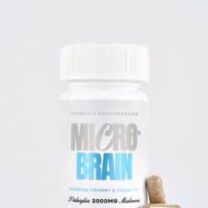
Euphoria Psychedelics – Micro Brain Capsules 2000mg
$28.00
Euphoria Psychedelics Micro Brain Capsules 2000mg are a convenient mid-size pack from the brand’s capsule range. It holds 2000mg of psilocybin in total, divided evenly into pre-measured capsules, so there’s no weighing, no guesswork and no earthy aftertaste. The compact container is easy to store and take with you. Follow the serving guidance on the label. It comes in discreet packaging to keep it fresh. Store in a cool, dry place, away from children and pets. For adults only.
Out of stock
NOTIFY ME WHEN AVAILABLE
If you’ve been browsing Canadian online dispensaries and keep seeing euphoria psychedelics micro brain capsules, you’re probably wondering what’s actually inside them, and whether “micro” automatically means mild. It doesn’t. Products marketed for microdosing can contain psilocybin, a substance whose effects vary sharply with dose, body chemistry, mood, medications, and setting.
This guide is a practical, non-hype review of Euphoria’s Micro Brain capsules. You’ll find an ingredient breakdown, what users commonly report, what research can and can’t confirm, safety considerations, Canadian legal context, and a quality checklist. I’ll also compare Micro Brain with Euphoria’s Microdose, Galaxy, and Skywalker products.
A quick boundary before we begin: this isn’t medical advice, and no psilocybin product is risk-free. These products are for adults of legal age only. If you’re pregnant, managing a psychiatric or heart condition, or taking prescription medication, speak with a qualified clinician before considering psilocybin.
Key Takeaways
- Euphoria Psychedelics Micro Brain capsules blend psilocybin with functional mushrooms like Lion’s Mane and Reishi, but their exact psilocybin content can vary and is often unclear without batch-specific lab testing.
- Micro Brain is marketed for microdosing but does not guarantee mild effects; dosage accuracy is critical since effects can range from subtle to intense depending on individual factors and batch potency.
- Users report varied effects including mood enhancement and cognitive changes, but scientific evidence for consistent benefits or safety is still limited and preliminary.
- Safety precautions are vital: avoid if pregnant, have psychiatric or heart conditions, or take conflicting medications; never combine with alcohol or cannabis due to increased risks.
- Psilocybin remains largely illegal in Canada, so purchasing Micro Brain from online dispensaries does not guarantee legal protection or product quality.
- Choose psilocybin products with clear, honest labeling, independent lab testing, and legal awareness; do not rely on branding or marketing language when considering Euphoria’s Micro Brain capsules.
What are euphoria psychedelics micro brain capsules?
Euphoria’s Micro Brain is marketed as a capsule product combining psilocybin with functional mushrooms, typically listed as 100 mg capsules, with 20 capsules in the package. The branding suggests a small, measured serving intended for people exploring microdosing rather than seeking an intense psychedelic experience.
That description needs a reality check. “100 mg” may refer to the total mushroom material or a blend, not necessarily 100 mg of pure psilocybin. Those are wildly different quantities. The label, batch testing, and certificate of analysis matter more than the product name.
Capsules appeal to people who want discretion, no smoke, and a more consistent format than dried mushrooms. They’re also easy to overuse: a capsule looks harmless sitting beside your vitamins. It isn’t automatically comparable to a cannabis edible, and you shouldn’t assume one capsule will feel identical from batch to batch unless independent testing supports that claim.
Think of Micro Brain as an unregulated psychoactive product, not a supplement, nootropic, or treatment. Effects can include subtle mood or perception changes, but some people experience anxiety, nausea, impaired judgement, or stronger psychedelic effects than expected.
What’s in Micro Brain (100mg x 20): ingredient breakdown
The product is generally presented as a blend of psilocybin-containing mushroom material and non-psychoactive functional mushrooms. Exact quantities and extract strengths should be confirmed on the current package rather than assumed from a retailer listing. Labels and formulas can change, so keep the physical label and batch number for reference.
Psilocybin: what it does, and why dose accuracy matters
Psilocybin is converted by the body into psilocin, which interacts with serotonin receptors involved in perception, mood, and cognition. In research settings, effects depend on carefully measured material, screening, supervision, and controlled surroundings. A commercial capsule may not offer that same certainty.
Dose accuracy matters because the gap between “barely noticeable” and “noticeably altered” can be smaller than expected. Potency varies by species, cultivation, processing, storage, and extraction. If a product doesn’t provide credible, batch-specific testing for psilocybin content and contaminants, treat the stated amount as an estimate, not a guarantee.
Lion’s Mane: cognition, focus, and nerve-support claims (what evidence suggests)
Lion’s Mane is often included in mushroom blends because early laboratory and small human studies have explored possible effects on cognition, mood, and nerve-growth pathways. That’s interesting, but it isn’t proof that a capsule will sharpen your focus or repair nerves.
Evidence remains limited, and studies frequently use standardised extracts that may not match the ingredient in a commercial capsule. If you’re buying Micro Brain for “brain boosting,” keep expectations modest. A quiet morning, adequate sleep, and fewer notifications may do more for concentration than a mushroom label with a clever name.
Reishi: stress response, calm, and immune-related claims (what evidence suggests)
Reishi has a long history of traditional use and is commonly marketed for calm, stress support, and immune function. Modern research has investigated these areas, but results are mixed, products vary considerably, and “immune support” is not the same as preventing or treating illness.
Reishi can also cause unwanted effects, including stomach upset, dry mouth, or allergic reactions. It may interact with some medicines, particularly those affecting bleeding or blood pressure. Don’t treat a functional mushroom as automatically gentle just because it’s sold beside wellness products.
Expected effects: what users report vs what research supports
Some users describe Micro Brain as subtle: a little more present, creative, social, or emotionally open. Others notice very little. A few find even a small amount uncomfortable. That spread isn’t a product-review footnote, it’s the main story.
Research on psychedelic microdosing remains preliminary. Placebo-controlled studies have found that expectations can account for part of the perceived benefit, while longer-term safety and effectiveness are still being studied. Claims that microdosing reliably improves productivity, depression, anxiety, or creativity go beyond what current evidence can firmly establish.
Mental effects (clarity, mood, creativity) and variability by person
Reported mental effects include brighter colours, altered time perception, increased introspection, improved mood, or a more associative thinking style. “Clarity” for one person can feel like distraction for another. Your sleep, food intake, tolerance, stress level, surroundings, and expectations all matter.
Don’t schedule your first experience before a work presentation, long drive, childcare duty, or important appointment. Even a supposedly subtle effect can make routine decisions less predictable. If you feel anxious, move to a quiet, familiar space and avoid taking more to “fix” the experience.
Physical effects (energy, nausea, appetite, sleep) and common side effects
Users may report tingling, changes in energy, reduced or increased appetite, nausea, dizziness, headache, yawning, or difficulty sleeping. Psilocybin can also raise heart rate or blood pressure temporarily. Combining it with cannabis may intensify mental effects and confusion, even though cannabis feeling familiar.
Seek urgent help for chest pain, fainting, severe agitation, dangerous confusion, seizure-like activity, or thoughts of self-harm. Don’t drive, cycle in traffic, swim, climb, or operate equipment while affected.
Microdosing Micro Brain: how to dose, schedule, and track results
There’s no universally validated Micro Brain schedule, and I wouldn’t copy a protocol from a social-media graphic as if it were a prescription. The safest approach is to follow the label, avoid redosing, and speak with a clinician or pharmacist if you have health conditions or take medication.
Common protocols (Fadiman, Stamets) and how to choose one
The Fadiman approach is commonly described online as a dose day followed by several off days. The Stamets approach usually involves more frequent dosing with multiple rest days and may include Lion’s Mane and niacin. Neither protocol has been established as a medically proven standard, and the protocols were not designed to guarantee safety for every commercial capsule.
If you choose to proceed where legally permitted, use the smallest labelled amount rather than improvising, don’t combine products, and leave several days between experiments. Never compensate for weak effects by taking extra capsules the same day. A written log is more useful than relying on memory: record date, product batch, sleep, food, mood, other substances, effects, and any side effects.
Onset & duration, tolerance, and recommended breaks
Oral psilocybin effects may begin after a delay and can last for several hours, with timing affected by food and individual digestion. Capsules aren’t instant: the classic mistake is deciding “nothing’s happening” and taking more.
Frequent use can lead to tolerance, meaning effects may feel weaker. That doesn’t make escalating sensible. Planned breaks reduce repetition and help you judge whether anything is genuinely useful. Stop if you notice worsening anxiety, low mood, insomnia, compulsive use, or difficulty managing normal responsibilities.
Safety, contraindications, and interactions
Safety deserves more space than the marketing copy usually gives it. Psilocybin affects perception and judgement, while the other mushrooms and any unknown ingredients may add their own risks. If the packaging is vague, damaged, mouldy, or missing a batch number, don’t use it.
Who should avoid psilocybin (pregnancy, bipolar/psychosis risk, heart concerns)
Avoid psilocybin during pregnancy or breastfeeding because safety isn’t established. People with a personal or family history of psychosis, schizophrenia, or mania should avoid it. Psilocybin may worsen or trigger serious psychiatric symptoms in vulnerable people: a past diagnosis of bipolar disorder deserves particular caution.
Those with uncontrolled high blood pressure, significant heart disease, arrhythmias, or a history of stroke should obtain medical advice first. Avoid using it when you’re sleep-deprived, acutely distressed, or in an unsafe environment. A trusted sober person nearby is a sensible harm-reduction measure, not an admission that you’ve failed at being adventurous.
Medication interactions (SSRIs/SNRIs, MAOIs, stimulants, alcohol/cannabis)
Interactions are complicated. SSRIs and SNRIs may blunt or alter psychedelic effects for some people, but that does not mean you should stop or change prescribed medication. MAOIs can create higher interaction concerns. Stimulants may increase anxiety, heart rate, or blood pressure.
Alcohol can worsen judgement, nausea, and dehydration. Cannabis may intensify perceptual changes, panic, or confusion. Avoid combining substances, and don’t use psilocybin to experiment with medication effects. Ask a pharmacist for an individual interaction review, giving them the exact product label.
Legality & responsible use in Canada
Psilocybin remains a controlled substance in Canada, and possession, production, sale, and distribution are generally illegal unless specifically authorised. Online storefront availability does not make a product legal. A checkout page, discreet Xpresspost envelope, or “Canada-wide shipping” claim isn’t a legal exemption.
Rules can differ from cannabis regulations, which are legal for adults under Canada’s Cannabis Act. Age rules for cannabis also vary by province: Alberta’s minimum is 18, while Quebec’s is 21: many other provinces use 19. Those cannabis age limits don’t automatically authorise psilocybin.
Don’t assume that buying Micro Brain through a weed retailer carries the same protections as buying regulated cannabis. There may be no federal quality-control system, no guaranteed potency, and limited recourse if a product is mislabelled. If you’re considering participation in an authorised research or therapeutic program, verify the program through official Canadian sources, not an anonymous social account.
Responsible use means understanding the law, keeping products away from children and pets, avoiding driving, and not sharing capsules. If you’re travelling, don’t carry psilocybin across provincial or international borders.
How to evaluate quality: lab testing, capsule consistency, storage & shelf life
Quality is difficult to judge by appearance. A professional-looking pouch proves very little. Before buying, look for a batch-specific certificate of analysis from an independent laboratory. Ideally, it should identify psilocybin or psilocin concentration, confirm capsule weight or uniformity, and screen for bacteria, mould, heavy metals, pesticides, and other contaminants.
Be cautious when a seller offers only a generic “lab tested” badge, no lab name, no date, or a PDF that doesn’t match the batch number. Ask customer support for documentation. If the answer is vague, walk away.
Check that capsules are sealed, dry, intact, and clearly labelled with ingredients, lot number, expiry or best-before date, and storage instructions. Store them in their original child-resistant packaging, away from heat, moisture, sunlight, children, and pets. A bathroom cabinet is usually a poor choice because of humidity.
Stop using a product that develops an unusual smell, visible moisture, discolouration, crumbling, or damaged packaging. Don’t transfer capsules into an unlabelled jar. It’s easy to forget what they are six months later, especially if your cupboard already resembles a tiny pharmacy.
Micro Brain vs other Euphoria products (Microdose, Galaxy, Skywalker): how to choose
Euphoria product names can sound like a playlist, so compare the label, not the mood suggested by the branding. Micro Brain is generally positioned around psilocybin plus functional mushrooms. “Microdose,” “Galaxy,” and “Skywalker” may differ in potency, mushroom blend, capsule count, or intended experience depending on the current formulation.
| Product | What to compare | Best fit, in theory | Main caution |
| Micro Brain | Psilocybin amount, Lion’s Mane, Reishi, testing | Buyers seeking a blend format | “100 mg” may be misunderstood |
| Microdose | Per-capsule psilocybin and batch consistency | People prioritising simpler labelling | Confirm what the stated amount means |
| Galaxy | Formula, strength, and capsule count | Experienced buyers comparing stronger options | Branding may obscure potency |
| Skywalker | Ingredients, claimed effects, and testing | Shoppers comparing a different blend | Don’t infer strength from the name |
Before choosing, ask four plain questions: What exactly is psychoactive? How much is in each capsule? Is there independent batch testing? What is the legal status where I live? If a retailer can’t answer, the cheapest option may be the most expensive mistake. For beginners, the product with the clearest label and strongest documentation is preferable to the one with the flashiest name.
FAQ: Micro Brain capsules
Are Euphoria Micro Brain capsules legal in Canada?
Psilocybin products are generally not legal for ordinary retail sale in Canada, even if an online store lists them. Cannabis legality doesn’t transfer to psilocybin. Check current official guidance before buying, possessing, or transporting any product.
Will Micro Brain make me hallucinate?
It may, depending on the actual psilocybin content and your sensitivity. “Micro” is marketing language, not a guarantee of a non-psychedelic experience. Potency, tolerance, food, mood, and batch variation all matter.
Can I take Micro Brain with cannabis?
Combining them can intensify altered perception, anxiety, dizziness, and confusion. The safest option is not to combine psychoactive substances, especially if you’re inexperienced or alone.
How long does a capsule take to work?
Oral effects can be delayed and may last for hours. Don’t redose because you don’t feel anything quickly. Avoid driving or responsibilities for the rest of the day until you know how a product affects you.
Is Lion’s Mane proof that Micro Brain improves memory?
No. Early research is interesting but limited, and commercial products may not match studied extracts. Don’t treat Lion’s Mane or Reishi as a substitute for medical care.
What should I do if I feel anxious?
Stop taking more, move somewhere quiet and familiar, sip water, and stay with a calm sober person. Avoid alcohol and cannabis. Seek emergency help for chest pain, severe confusion, loss of consciousness, seizure-like symptoms, or thoughts of self-harm.
Bottom line: are euphoria psychedelics micro brain capsules worth considering?
Only with serious caution. Clear batch testing, honest labelling, legal awareness, and a conservative approach matter more than bold promises. If those basics aren’t available, skip the capsule, your peace of mind is worth more than a clever product name.
Only logged in customers who have purchased this product may leave a review.
Related products




Reviews
There are no reviews yet.