


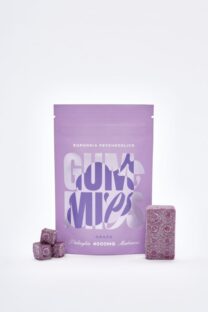
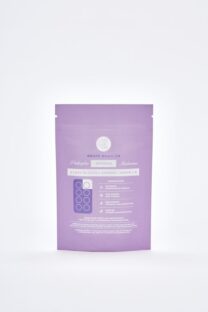
Euphoria Psychedelics – Grape 4000mg
$54.00
Euphoria Psychedelics Grape 4000mg is the high-strength version of the brand’s classic grape flavour. It holds 4000mg of psilocybin in total, infused evenly throughout, with the same rich, juicy grape taste and no earthy aftertaste. This is a very strong product made only for experienced users, so always follow the serving guidance on the label. It comes in discreet, resealable packaging to keep it fresh. Store in a cool, dry place, away from children and pets. For adults only.
Out of stock
NOTIFY ME WHEN AVAILABLE
If you’ve seen euphoria psychedelics grape gummies advertised online, you may be wondering what’s actually inside the bag, and whether the number printed on the front tells you anything useful. That’s a fair question. Products sold as “psychedelic” gummies can vary wildly in ingredients, strength, labelling and legality, especially when they’re marketed through unofficial online shops.
This guide is for adults of legal age in Canada only: 19+ in most provinces, 18+ in Alberta and 21+ in Quebec. It isn’t a buying recommendation or medical advice. Instead, you’ll learn how to assess the product, spot questionable claims, understand why gummy “milligrams” can be confusing, and reduce avoidable risks. If a package can’t clearly tell you what’s in it, the safest move is to leave it alone, no matter how tempting the grape flavour sounds.
Key Takeaways
- Euphoria Psychedelics Grape gummies often lack verified ingredients and potency, so treat marketing claims with caution.
- The labeled milligrams refer to the total blend or material weight, not verified psilocybin content, making dosage unpredictable.
- Always check for a complete ingredient list, manufacturer info, batch numbers, and independent Certificates of Analysis (COA) before purchasing.
- Avoid stacking doses or redosing quickly due to delayed onset and unknown strength to reduce risk of an overwhelming experience.
- Choose products with transparent labeling and lab testing over those with flashy packaging or unverifiable claims.
- If legal status and credible batch-specific testing for Euphoria Psychedelics Grape are absent in your area, it is safer to avoid the product altogether.
What is euphoria psychedelics grape (and what you’re actually buying)?
Euphoria Psychedelics Grape appears to refer to grape-flavoured gummies marketed as producing psychedelic or psilocybin-like effects. The important word is marketed. A product name doesn’t prove that the gummies contain psilocybin, a legal mushroom extract, or even the same active ingredient from one batch to the next.
In Canada, psilocybin remains a controlled substance outside limited exemptions, clinical research and approved pathways. That means a colourful pouch sold online isn’t automatically an authorised, regulated edible. Some products described as “magic mushroom gummies” contain mushroom powders: others may use functional mushrooms, cannabis-derived ingredients, research chemicals or undisclosed compounds. A few may contain no psychoactive ingredient at all.
So what are you buying? Potentially a confectionery product with a claimed active ingredient and a claimed total amount. Unless the seller provides credible, batch-specific testing, you can’t confidently verify either claim. Treat “psychedelic,” “legal trip,” and “all-natural” as advertising language, not laboratory evidence.
Before considering any package, check:
- The complete ingredient list, including sweeteners, allergens and active compounds.
- The manufacturer’s legal name and contact information.
- A batch or lot number that matches testing documentation.
- A recent certificate of analysis (COA) from an independent laboratory.
- Clear warnings, age restrictions and storage instructions.
A professional-looking pouch is not the same thing as quality control. I’ve seen plenty of wellness packaging that looked more trustworthy than the information printed inside it.
Euphoria Psychedelics Grape strengths & formats (1000mg vs 4000mg vs 6000mg)
The most common versions advertised under this name are labelled 1000 mg, 4000 mg or 6000 mg. Those figures usually describe the claimed total amount in the entire bag, not the amount of a verified psychedelic compound. That distinction matters enormously.
A label saying “6000 mg mushrooms” may refer to dried mushroom material, a blend, an extract, or an unspecified proprietary mixture. It does not necessarily mean 6000 mg of psilocybin. Actual potency can’t be calculated from the front label alone.
| Label claim | What it may mean | What it does not prove |
| 1000 mg | Claimed total blend or mushroom material | A predictable low dose |
| 4000 mg | Claimed total contents of a stronger bag | Four times the verified effect |
| 6000 mg | Claimed total contents of the strongest format | A known or safe psychedelic dose |
If you’re comparing packages, don’t rank them simply from weakest to strongest. First ask whether the amount refers to the active compound, an extract, dried material or a proprietary blend. If the seller can’t answer, the number is mostly packaging theatre.
Bag contents & piece breakdown (e.g., lego-block pieces, mg per piece, how to split accurately)
Some bags contain moulded pieces that look like tiny building blocks, while others include conventional square or rectangular gummies. Count the pieces, then divide the claimed total by that number to estimate the label’s claimed amount per piece. For example, 1000 mg across 10 pieces would be 100 mg per piece on paper.
That calculation doesn’t make the dose reliable. Active material may not be evenly mixed, and cutting a gummy into halves doesn’t guarantee half the active ingredient. “Lego-block” shapes can make portioning feel precise, but they’re still candy, not pharmacy tablets.
If you decide to handle an unfamiliar product, avoid stacking pieces because the first one seems inactive. Keep the original packaging, don’t share it, and label any opened bag clearly so nobody mistakes it for ordinary sweets, especially children or pets.
Ingredients, lab testing & quality checks (what to look for before you buy)
A trustworthy label should tell you more than “proprietary mushroom blend.” Look for the specific active ingredient, the amount per serving, serving size, allergens, manufacturer, lot number and testing date. Even then, you’re relying on the accuracy of the seller unless the testing is independently verifiable.
A useful COA should identify the exact product and batch, show the laboratory’s name, include testing methods and report results for potency, contaminants and unexpected drugs. Scan the QR code if there is one, but don’t assume any QR code is legitimate: it can simply lead to a marketing page.
For psychoactive gummies, useful testing may include:
- Identity and potency of the stated active compound.
- Heavy metals, pesticides, mould and microbial contamination.
- Residual solvents where extracts are used.
- Screening for undeclared cannabinoids or synthetic compounds.
Authenticity checklist: packaging cues, batch info, COAs, and red flags for counterfeits
Before buying, use this quick check:
More reassuring: matching lot numbers, a named manufacturer, a test date, readable Canadian labelling, tamper evidence and a COA that can be independently confirmed.
Red flags: spelling errors, dramatic “legal high” promises, no ingredients, no batch number, stock photos instead of product photos, pressure to pay by cryptocurrency or e-transfer only, and claims that the product is “100% safe.”
A COA that only lists generic mushroom nutrition is not proof of psilocybin content. Nor is a five-star review. Reviews can tell you about shipping or flavour, but they cannot identify an unknown chemical.
If the product arrives leaking, unsealed, unusually perfumed, discoloured or inconsistent between pieces, don’t taste-test it. Photograph the packaging and contact the seller or local poison centre for advice. When in doubt, bin it according to local guidance.
Effects & experience: what to expect from grape psilocybin-style gummies
People report that psychedelic-style gummies can produce changes in mood, perception, time awareness, thought patterns and body sensations. Some describe warmth, laughter, visual brightness or emotional openness. Others experience nausea, anxiety, confusion, racing thoughts or a frightening loss of control. With an unverified product, you also have to consider effects from ingredients that aren’t disclosed.
Onset, peak, duration, and how food, sleep, and tolerance can change timing
Edible products may take a while to show noticeable effects. Onset can be delayed by a large meal, while an empty stomach may feel faster or harsher. Sleep deprivation, stress, dehydration and recent cannabis use can make the experience more uncomfortable. Previous psychedelic experience doesn’t protect you from an unexpectedly strong batch.
Broadly, users may notice effects within the first couple of hours, with stronger effects developing later and residual tiredness or altered mood lasting beyond the main experience. Timing varies too much to use as a promise. Do not redose just because nothing has happened yet. That’s one of the easiest ways to turn a manageable evening into an overwhelming one.
Tolerance can also change with repeated psychedelic use, but it isn’t a safety shield. Potency variation matters more than your confidence. Plan for the possibility that the product is stronger, or chemically different, than advertised.
Dosage guide for Euphoria Psychedelics Grape (microdose to strong)
There is no dependable dose chart for Euphoria Psychedelics Grape without verified testing that identifies the active compound and its concentration. A bag labelled 1000 mg cannot be safely translated into a psilocybin dose, and “microdose,” “regular” and “heroic” are marketing terms when the contents are unknown.
For a beginner, the lowest-risk choice is not to use an unverified psychoactive gummy. If you nevertheless possess one, don’t combine pieces, don’t take more because the onset feels slow, and don’t use it alone. Follow legal and health guidance in your province rather than an anonymous seller’s serving suggestion.
Beginner dosing, wait-times between servings, and why “mg” can be misleading across brands
The safest general principle is start low and go slow, but “low” only has meaning when the active ingredient and potency are known. Across brands, 100 mg of mushroom powder, 100 mg of extract and 100 mg of a synthetic compound are not equivalent. Even two bags with the same label can differ if manufacturing is poor.
If someone has already taken a gummy, avoid taking another serving while waiting for effects. Edible onset can be delayed, and stacking is a common cause of unexpectedly intense experiences. Don’t drive, cycle in traffic, operate equipment, supervise children or make important decisions.
For a first experience, having a sober, trusted person nearby is considerably safer than relying on a phone and good intentions. If there’s chest pain, seizure, severe agitation, unconsciousness, trouble breathing or suspected poisoning, call 911. Be honest with responders about what was taken.
Harm reduction & safety: set/setting, interactions, and when to avoid
Set and setting are plain-language ways of describing your mindset and surroundings. Choose a familiar, calm space, remove driving plans, keep water available and tell one trusted person what you’ve taken. Avoid balconies, swimming, traffic, cooking with open flames and crowded parties. A quiet playlist beats an accidental adventure in a car park.
Avoid these products if you’re pregnant or breastfeeding, have a personal or family history of psychosis or mania, or have significant heart or blood-pressure concerns unless a qualified clinician specifically advises otherwise. Don’t use them during a mental-health crisis.
Mixing risks (alcohol/THC/SSRIs/MAOIs), contraindications, and what to do if it’s too intense
Alcohol can worsen poor judgement, nausea and dehydration. THC may intensify anxiety, altered perception and confusion, particularly in edible form. Prescription medicines create more complicated questions. SSRIs may change reported psychedelic effects, while MAOIs and other medicines can create potentially serious interaction risks. Don’t stop prescribed medication to use a gummy, and ask a pharmacist about your specific medicines.
If it becomes too intense, move to a quiet, dim room, reduce noise, speak calmly and remind the person that effects can pass. Don’t restrain them unless there’s immediate danger, and don’t give them alcohol or more drugs. Seek urgent help for dangerous behaviour, severe overheating, persistent vomiting, breathing problems, collapse, seizure or loss of consciousness.
How to choose the right grape gummy option (and alternatives)
If you’re choosing among grape products, flavour should be near the bottom of your checklist. Start with ingredient transparency, independent batch testing, secure packaging and a seller that answers direct questions. Grape can mask bitter or earthy notes, which is pleasant, but also means flavour can’t tell you whether a product is genuine.
| Format | Potential advantage | Main drawback |
| Gummy | Portable and familiar | Delayed onset: uncertain uniformity |
| Tea | Easier to sip slowly | Strength can still be unpredictable |
| Capsule | No strong flavour | Hard to assess contents once swallowed |
| Chocolate | Familiar texture | Heat and uneven mixing may affect quality |
A regulated cannabis edible, where legal and clearly labelled, offers a different risk profile from an unregulated psychedelic gummy, but it still requires careful THC dosing. Non-intoxicating mushroom products are another option if you’re mainly interested in flavour or a supplement-style routine, though they won’t provide a psychedelic experience.
For discreet use, don’t confuse convenience with control. A capsule is not automatically safer, and a gummy is not automatically beginner-friendly. Choose transparency over novelty.
Buying guide: pricing, shipping/pickup, age gates, and legality considerations
Prices for online psychedelic-style gummies vary by seller, package size and claimed strength. A cheap bag isn’t a bargain if the contents are unknown, and a premium price doesn’t prove laboratory quality. Compare the cost of verified testing and clear information, not just the number of pieces.
Be cautious with sellers promising delivery anywhere in Canada, “no questions asked” shipping or guaranteed customs protection. Discreet packaging protects privacy, but it doesn’t make an unregulated or prohibited product legal. Age gates are useful, yet an “18+” pop-up is not evidence of compliance. Quebec’s legal age for cannabis is 21, while Alberta’s is 18: psychedelic rules are separate, and you should check current federal and provincial guidance before ordering.
Look for a real business address, customer-service contact, privacy policy and transparent refund process. Don’t provide unnecessary identification or financial details to a seller with no verifiable identity. If a package contains an unknown substance, don’t forward it to a friend or return it through ordinary mail without guidance.
My practical bottom line: if Euphoria Psychedelics Grape has no credible, batch-specific COA and no clear legal status where you live, skip it. Save the money for a clearly labelled, regulated product, or simply choose a grape-flavoured treat that doesn’t come with a chemistry mystery. Your future self will thank you.
Frequently Asked Questions about Euphoria Psychedelics Grape Gummies
What are Euphoria Psychedelics Grape gummies, and what do they contain?
Euphoria Psychedelics Grape gummies are grape-flavored edibles marketed as psychedelic or psilocybin-like. However, their actual contents vary widely and may include mushroom powders, cannabis-derived ingredients, research chemicals, or no psychoactive ingredients at all. Lab verification is essential for certainty.
Does the milligram number on the package indicate the psychedelic strength of the gummies?
No, the milligram number typically reflects the total weight of the product or blend, not verified active psychedelic compounds. For example, ‘6000 mg mushrooms’ does not confirm 6000 mg of psilocybin. Potency cannot be accurately judged by the front label alone.
How can I verify the quality and safety of Euphoria Psychedelics Grape gummies before buying?
Check for a complete ingredient list, manufacturer details, batch or lot numbers, and an independent laboratory Certificate of Analysis (COA). Look for clear warnings and age restrictions. Avoid products without verifiable testing or clear labeling to reduce health risks.
What effects might I expect from consuming grape-flavored psychedelic-style gummies?
Users may experience altered mood, perception, time awareness, and body sensations such as warmth or emotional openness. However, effects vary widely and can include nausea, anxiety, or confusion, especially with unverified products containing unknown compounds.
What safety precautions should I take if considering using psychedelic gummies like Euphoria Psychedelics Grape?
Choose a familiar, calm environment, don’t drive or operate machinery, avoid mixing with alcohol or certain medications, and have a trusted sober person present. Avoid use if pregnant, breastfeeding, or with a history of psychosis or heart issues. Start low, go slow, and never redose prematurely.
Are Euphoria Psychedelics Grape gummies legal in Canada?
Psilocybin remains a controlled substance in Canada with limited exemptions. Most psychedelic gummies sold online are unregulated and may not be legal. Always check current federal and provincial laws, and avoid products without clear legal status and credible testing.
Only logged in customers who have purchased this product may leave a review.
Related products
Reviews
There are no reviews yet.