


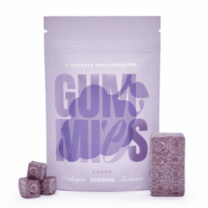
Euphoria Psychedelics – Grape 1000mg
$16.00
Euphoria Psychedelics Grape 1000mg delivers a rich, juicy grape flavour with 1000mg of psilocybin, infused evenly throughout. The sweet, nostalgic taste hides any earthy notes, making it an easy favourite in the Euphoria range. Because of its high strength, it’s best suited to experienced users. It comes in discreet, resealable packaging to keep it fresh. Follow the serving guidance on the label. Store in a cool, dry place, away from children and pets. For adults only.
Out of stock
NOTIFY ME WHEN AVAILABLE
If you’ve seen Euphoria Psychedelics Grape gummies while shopping online, you’ve probably noticed the eye-catching packaging and big milligram numbers: 1000 mg, 4000 mg, even 6000 mg per bag. That can sound straightforward, until you try to work out what those numbers actually refer to, how strong one gummy might be, and whether the product has been independently tested.
This guide is for adults of legal age in Canada only: 19+ in most provinces, 18+ in Alberta, and 21+ in Quebec. It covers what the grape gummies are marketed as, what users commonly report, and the practical checks that can help you avoid questionable products. Because psychedelic edibles may be inaccurately labelled or contain unexpected ingredients, there’s no genuinely risk-free way to use them. Think of this as a cautious buyer’s and harm-reduction guide, not a recommendation or medical advice.
One important note before we begin: availability and legality vary. Unlike regulated cannabis edibles sold through provincial channels, products marketed as “psychedelic” gummies may not have the same oversight. That difference matters.
Key Takeaways
- Euphoria Psychedelics Grape gummies often list total milligrams per bag, which don’t accurately reflect per-piece potency or effects due to unverified labeling.
- Always verify active ingredients, serving size, batch information, and independent lab testing before using these psychedelic edibles to reduce health risks.
- Onset and duration of effects vary widely, commonly starting within 30 to 120 minutes and possibly lasting hours; avoid redosing too soon to prevent overconsumption.
- Set and setting critically impact safety and experience; consume in a calm environment with a sober trip sitter and avoid mixing substances like alcohol or medications.
- Storage should be in original, sealed packaging away from heat, moisture, and children to maintain quality and prevent accidental ingestion.
- Buying unverified psychedelic edibles online carries risks—insist on valid certificates of analysis and watch for red flags like missing labels or pressure sales tactics.
What is Euphoria Psychedelics Grape (and what’s in the grape gummies)?
Euphoria Psychedelics Grape is a branded gummy product marketed around a grape flavour and a psychedelic experience. Listings may describe the active ingredient as a mushroom extract, a blend, or simply “psychedelic” material. That wording is not enough to establish what’s inside. Two bags with nearly identical branding can come from different sellers, batches, or supply chains.
Before you focus on the flavour, or the tempting “best price” banner, look for the actual active ingredient, amount per serving, manufacturer information, and a batch-specific certificate of analysis. If those details aren’t available, treat the product as unidentified. A purple gummy is still an unknown edible until its contents are verified.
Product formats and strengths: 1000mg vs 4000mg vs 6000mg (what “mg per bag” usually means)
The numbers printed on these products usually refer to the total claimed amount in the bag, not the amount in each gummy. For example, a bag containing 10 pieces labelled 1000 mg could theoretically contain 100 mg per piece. A 20-piece, 4000 mg bag would theoretically work out to 200 mg each. But that calculation only helps if the label is accurate and if “mg” clearly identifies the active compound.
That’s the catch. “4000 mg mushroom blend” could mean 4000 mg of dried mushroom material, an extract of unspecified concentration, or a marketing figure with no useful connection to psychoactive strength. It might also refer to a non-psychedelic ingredient. Milligrams alone don’t tell you the experience.
Use this quick label check:
| Label detail | Why it matters |
| Active ingredient named | “Blend” is much less informative than a specific compound or species. |
| Total amount and serving size | Helps distinguish per-bag from per-piece claims. |
| Number of gummies | Allows only a rough arithmetic estimate, not proof of potency. |
| Batch and expiry information | Connects the package to testing and freshness. |
| Manufacturer or importer | Gives you somewhere to direct questions or complaints. |
A larger number is not automatically better value. In fact, it can make accidental overconsumption more likely.
Ingredients, allergens, and dietary notes (sugar coating, gelatin/pectin, flavoring)
Grape gummies commonly contain sugar, glucose syrup, pectin or gelatin, citric acid, artificial or natural flavouring, colouring, and preservatives. Some have a shiny sugar coating: others are dusted with sour crystals. That coating can make pieces sticky in warm conditions and may hide small differences in colour or texture.
Gelatin means the product may not suit vegetarian or vegan diets. Pectin-based gummies are often plant-based, but don’t assume that every pectin product is vegan, colourants, glazing agents, and processing aids can vary. Check for common allergens such as soy, sulphites, or traces of nuts, and be cautious if the package has no ingredient list at all.
Also watch for vague phrases such as “proprietary blend,” “natural formula,” or “research compound.” Those terms don’t replace a proper ingredient declaration. If you have an allergy, take prescription medication, are pregnant or breastfeeding, or have a history of serious mental-health symptoms, speak with a qualified healthcare professional before considering any psychoactive product, or skip it entirely.
Euphoria Psychedelics Grape effects: what users report + onset, peak, and duration
Reports about Euphoria Psychedelics Grape vary widely, which is exactly what you’d expect when product contents and potency aren’t consistently verified. Some users describe mood changes, laughter, intensified music or colours, altered time perception, and a dreamy or introspective headspace. Others report little effect, or an experience that feels much stronger and less comfortable than expected.
Those accounts are anecdotal, not a guarantee. Your response can differ from someone else’s even with the same package. Body size, recent meals, tolerance, sleep, mood, medications, and the actual contents of the gummy all matter. A friend saying “it was mild” is not a reliable dosing guide for you.
Typical timeline for gummies (onset/peak/comedown) and factors that change it (food, tolerance, meds)
Edibles can be slow and unpredictable. Users commonly report first noticing effects somewhere around 30 to 120 minutes after eating one, with stronger effects developing later. The peak may arrive several hours after consumption, and lingering changes in mood, alertness, or coordination can last much longer. With an unverified product, even that broad timeline is only a rough safety reference.
Food can delay or alter absorption. A large meal may make onset feel slower, while taking an edible on an empty stomach can feel abrupt for some people. Recent cannabis use does not reliably prepare you for a psychedelic product, and tolerance to one substance doesn’t necessarily transfer to another.
Medications deserve special caution. Antidepressants, stimulants, sedatives, migraine medicines, and other drugs can interact in unpredictable ways, or make it harder to recognise a developing problem. Don’t stop prescribed medication to use a gummy, and ask a pharmacist or clinician about possible interactions.
The classic edible mistake is redosing because “nothing’s happening.” Please don’t turn a slow onset into a surprise double feature. Wait in a safe environment, avoid driving, and plan for the possibility that effects last into the next day.
Desired effects vs side effects (nausea, anxiety, overstimulation) and how to reduce risk
People seeking these gummies may hope for relaxation, a brighter mood, creative thinking, or a novel sensory experience. Reported unwanted effects include nausea, dizziness, sweating, racing thoughts, confusion, panic, paranoia, agitation, and overstimulation. Some people also find the comedown emotionally tiring.
Set and setting are not mystical decoration: they’re practical risk controls. Choose a calm, familiar room. Put away car keys. Avoid balconies, swimming, traffic, and unfamiliar outdoor spaces. Keep the lighting comfortable, silence stressful notifications, and have water and simple food nearby.
If anxiety starts, reduce noise and stimulation, sit or lie somewhere safe, and ask a calm sober person to stay with you. Slow breathing can help you avoid feeding the panic loop. Don’t add alcohol, cannabis, stimulants, or sedatives to “balance” the experience.
Seek urgent help for chest pain, seizures, severe agitation, loss of consciousness, trouble breathing, dangerously high temperature, or behaviour that puts you or someone else at immediate risk. In Canada, call 911 for an emergency: contact your provincial poison centre for urgent advice about a suspected ingestion.
How to dose grape gummies safely: microdose, museum dose, and full experience
Terms such as microdose, museum dose, and full experience are informal user labels, not standardized medical categories. A microdose is generally described as a sub-perceptual amount: a museum dose usually implies something intended to remain manageable in public: and a full experience means clearly noticeable psychedelic effects. None of those labels solves the central problem: you cannot safely calculate a dose from a large number printed on an unverified bag.
For that reason, I wouldn’t recommend a specific milligram amount for Euphoria Psychedelics Grape. The product may not contain what it claims, and “one gummy” is not a universal unit of strength. If you choose to proceed even though those uncertainties, the safer principle is to avoid unverified products, use the smallest labelled serving rather than improvising, and never escalate quickly.
Portioning guide: splitting pieces, estimating per-piece potency, and why accuracy varies
If a package clearly states a total amount, you can divide that claim by the number of pieces for a rough label estimate. A 10-piece bag labelled 1000 mg works out to 100 mg claimed per gummy. Cutting a gummy in half would theoretically halve that claim, but only if the active ingredient is evenly distributed.
That assumption may be wrong. Homemade or poorly manufactured gummies can have uneven mixing, so one corner may contain more active material than another. A kitchen knife also can’t measure chemical potency. Scales designed for food won’t identify the active ingredient, and a scale reading of “0.2 g” tells you the gummy’s weight, not its psychoactive content.
Don’t crush, dissolve, or combine pieces in drinks. Those methods can make accidental consumption easier, especially if another person mistakes the mixture for an ordinary beverage. Keep the original packaging and label any portion you set aside.
Beginner dosing checklist (set/setting, trip sitter, hydration, avoid mixing substances)
Before making any decision, run through this checklist:
- Legal age and legality: Confirm the product is lawful where you live. Keep it away from children and pets.
- Clear day ahead: Don’t schedule work, driving, childcare, swimming, or important decisions.
- Trusted setting: Stay somewhere familiar, comfortable, and easy to leave if needed.
- Sober support: A calm, trusted trip sitter is especially sensible for a first experience or an unfamiliar product.
- No mixing: Avoid alcohol, cannabis, stimulants, opioids, sedatives, and other psychedelics.
- Simple supplies: Keep water, light snacks, a phone, and emergency contacts available.
- Consent and privacy: Tell your sitter what you took, when, and how much the label claimed.
- No redosing on impatience: Slow onset is common with edibles: stacking doses is where many unpleasant surprises begin.
If you feel pressured to take more, that’s a useful sign to pause. No gummy deserves a bravery badge.
How to verify authenticity and quality (lab testing, packaging, and red flags)
Buying online adds another layer of uncertainty. A professional-looking website, “premium” badge, or customer review can’t prove what’s in a psychedelic gummy. Before ordering, ask whether the seller provides a batch-specific certificate of analysis (COA) from an independent laboratory and whether the report identifies the active ingredients, potency, contaminants, and testing date.
What to look for: COA/lab results, batch/lot numbers, tamper seals, and consistent labeling
A credible COA should connect to the exact lot number on your package. Check that the laboratory is named, the report has a date, and the results aren’t just a generic screenshot reused across several products. Ideally, testing should address potency plus contaminants such as heavy metals, pesticides, microbial contamination, and unexpected compounds.
Compare the COA with the physical bag:
- The batch or lot number should match exactly.
- The ingredient list, serving size, and total quantity should be consistent.
- The seal should be intact, without glue marks, punctures, or resealing.
- Printing should be clear, with no spelling errors or suspiciously altered labels.
- The package should include manufacturer or importer details and an expiry date.
Red flags include dramatic “legal high” claims, guaranteed spiritual or medical results, cartoon-style packaging that could attract children, missing ingredients, no lot number, pressure to buy immediately, and sellers unwilling to answer basic testing questions. A QR code alone proves nothing, it may lead to a blank page or a generic document.
For Canadian buyers, remember that a product sold through an online marketplace is not automatically regulated or approved. Discreet shipping protects privacy: it does not confirm safety. If the seller can’t show credible evidence of contents and testing, the most sensible quality-control decision is to walk away.
Storage, shelf life, and handling for grape gummies
Store grape gummies in their original, sealed packaging in a cool, dry, dark place. A locked cupboard is better than a bedside table, especially in a home with children, visitors, or pets. Avoid bathrooms, sunny windowsills, hot cars, and the kitchen counter beside the kettle. Heat and humidity can soften the candy, damage the seal, and affect texture.
Follow the printed expiry date, but don’t treat it as proof that the active ingredient remains stable. With an unverified product, shelf life and potency may be uncertain. Discard gummies that show mould, unusual odour, leaking, significant colour change, or a damaged seal. Don’t taste-test a questionable piece to investigate it, mystery science belongs in a lab, not your mouth.
Keep the package away from other edibles so nobody confuses it with ordinary candy. Don’t transfer pieces into an unlabelled jar, and never leave them loose in a purse or backpack. If someone accidentally eats one, keep the package, note the time and amount, and contact a poison centre or emergency services for guidance.
For online orders, inspect the parcel before opening and photograph the label if anything looks tampered with. That record can help when contacting the seller, reporting a safety concern, or explaining the product to a healthcare professional.
Euphoria Psychedelics Grape Gummies FAQs
What is Euphoria Psychedelics Grape and what do the gummies contain?
Euphoria Psychedelics Grape gummies are psychedelic edibles marketed with grape flavor. They may contain mushroom extracts or blends, but labels often lack specific ingredient details. Without clear active ingredient naming and batch testing, the actual contents remain uncertain.
How do I interpret the milligram numbers on Euphoria Psychedelics Grape gummy packaging?
The mg number usually represents the total amount of active material per bag, not per gummy. For example, a 1000 mg bag with 10 gummies suggests about 100 mg each, but potency can vary widely and labels may be inaccurate or vague.
What effects and side effects do users report from Euphoria Psychedelics Grape gummies?
Reported effects include mood changes, intensified senses, and altered perception, but experiences vary. Side effects may include nausea, anxiety, overstimulation, or panic. Effects typically onset between 30–120 minutes and can last several hours.
How can I safely dose Euphoria Psychedelics Grape gummies?
Due to inconsistent potency and unverified labeling, start with the smallest labeled serving size and avoid redosing too quickly. Use a trusted setting, a sober trip sitter, and avoid mixing with other substances to reduce risks.
What should I check to verify the authenticity and quality of these grape gummies?
Look for batch-specific certificates of analysis from independent labs showing active ingredient potency and contaminants. Confirm matching lot numbers, intact seals, clear ingredient lists, and reputable manufacturers to avoid counterfeit or unsafe products.
How should I store Euphoria Psychedelics Grape gummies for safety and shelf life?
Store in sealed original packaging, in a cool, dry, dark place away from children or pets. Avoid heat or humidity to maintain texture and potency. Discard any gummies with mold, odor, or damaged seals to prevent accidental ingestion.
Only logged in customers who have purchased this product may leave a review.
Related products
Reviews
There are no reviews yet.