Blog 2026, Magic Mushrooms
Mushroom Gummies vs Mushroom Chocolates: What’s the Difference?
Oct
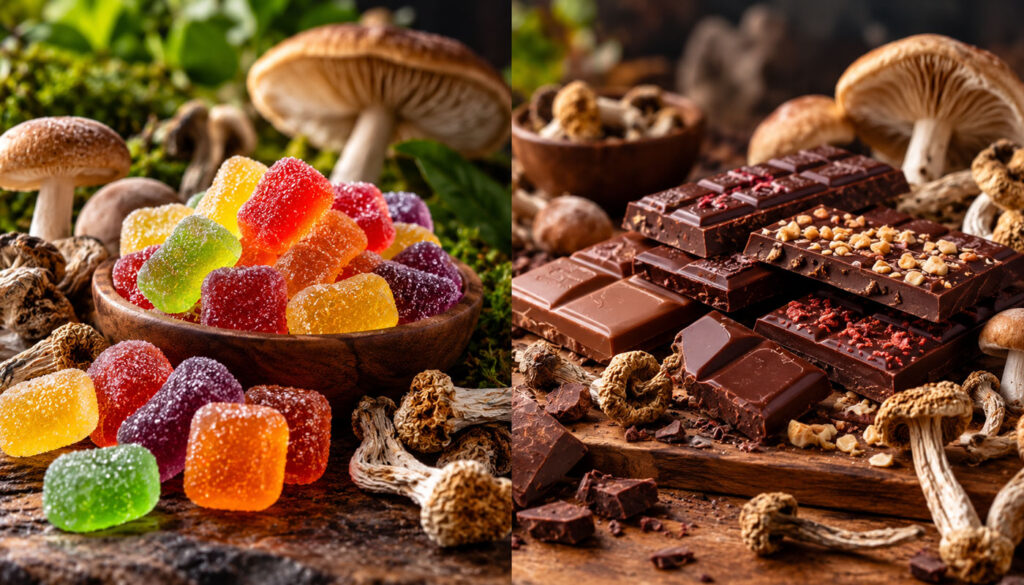
Mushroom edibles have become an increasingly popular topic among people exploring different ways to experience mushroom-based products. Among the many varieties available, mushroom gummies and mushroom chocolates are two of the most recognizable options.
Both offer an alternative to consuming mushrooms in their original form, but they differ in taste, texture, ingredients, storage requirements, and overall experience.
When comparing Mushroom Gummies vs Mushroom Chocolates, understanding these differences can help consumers make more informed decisions based on their preferences, dietary needs, and safety considerations.
In this guide, we’ll explore how these mushroom edibles compare, their potential advantages, common ingredients, and important factors to consider before choosing either option.
What Are Mushroom Gummies?
Mushroom gummies are chewable edible products that may contain extracts or powdered ingredients derived from various mushroom species.
They typically resemble traditional gummy candies and come in different flavours, shapes, and textures.
Common ingredients include:
- Mushroom extracts or powders
- Fruit flavourings and sweeteners
- Gelatin or plant-based gelling agents
- Citric acid and other flavour enhancers
- Natural or artificial colours
Some products feature functional mushrooms such as lion’s mane, reishi, or cordyceps. Others are marketed as psychedelic mushroom gummies that may contain psilocybin or other psychoactive substances.
These categories should not be confused. Their ingredients, effects, risks, and legal status can differ significantly.
Potential Advantages of Mushroom Gummies
One appealing feature of mushroom gummies is their familiar candy-like format.
They are generally compact, portable, and available in numerous flavours. Their chewy texture can also make mushroom ingredients more palatable to people who dislike the earthy taste of dried mushrooms.
Some products are individually portioned, making packaging and ingredient information easier to review.
However, individual portions do not guarantee accurate dosing, especially with unregulated products.
What Are Mushroom Chocolates?
Mushroom chocolates combine chocolate with mushroom extracts or powders to create an edible product.
Depending on the formulation, they may feature dark chocolate, milk chocolate, white chocolate, or flavoured chocolate blends.
Mushroom chocolates are sometimes produced as bars, individually wrapped pieces, or bite-sized confections.
Common ingredients include:
- Cocoa solids or cocoa butter
- Sugar and other sweeteners
- Milk or plant-based alternatives
- Mushroom extracts or powders
- Additional flavouring ingredients
Similar to mushroom gummies, mushroom chocolates may contain functional mushroom ingredients or psychoactive compounds.
The exact formulation determines the product’s characteristics and potential effects.
Potential Advantages of Mushroom Chocolates
Mushroom chocolates appeal to consumers who enjoy rich flavours and smooth textures.
Chocolate can help mask the natural bitterness or earthiness of some mushroom ingredients, making the product more enjoyable from a culinary perspective.
Chocolate bars may also offer multiple flavour combinations, including mint, caramel, nuts, or fruit.
However, consumers should be aware of allergens, added sugar, caffeine-related compounds from cocoa, and the potential for ingredients to be distributed unevenly in poorly manufactured products.
Mushroom Gummies vs Mushroom Chocolates: Key Differences
Although both products belong to the broader mushroom edibles category, several characteristics distinguish them.
1. Taste and Flavour
Taste is one of the most noticeable differences when comparing Mushroom Gummies vs Mushroom Chocolates.
Mushroom gummies typically offer fruity, sweet, or sour flavours. Popular flavour profiles include strawberry, raspberry, mango, citrus, and mixed berries.
Mushroom chocolates generally provide a richer dessert experience, with flavours influenced by cocoa content and additional ingredients.
Consumers who prefer fruity candy may find gummies more appealing, while chocolate enthusiasts may prefer mushroom chocolates.
Ultimately, flavour preferences are subjective.
2. Texture and Eating Experience
Gummies usually have a soft, chewy consistency.
Depending on their formulation, they may feel firm, elastic, or slightly sticky.
Mushroom chocolates have a smoother texture and gradually melt when exposed to warmth.
High-quality chocolate may offer a creamy mouthfeel, while lower-quality formulations can become grainy, particularly when mushroom powder is not blended thoroughly.
These differences largely influence personal preference rather than determining product effectiveness.
3. Ingredients and Dietary Preferences
Dietary requirements are another important consideration.
Some gummies contain gelatin derived from animals, while others use pectin and are suitable for certain vegan diets.
Mushroom chocolates may contain dairy, soy, nuts, or other common allergens.
Dark chocolate varieties sometimes contain fewer dairy ingredients, although consumers should always verify the label.
Neither format is automatically healthier than the other.
Sugar content, total calories, ingredient quality, and manufacturing standards vary between products.
4. Convenience and Portability
Gummies are often easier to transport because they are small and individually portioned.
However, they can become sticky or soften in hot environments.
Chocolate is also convenient but is more sensitive to melting and temperature fluctuations.
For consumers travelling or storing products in warmer conditions, packaging quality and temperature control are important considerations.
All mushroom edibles should be transported and stored securely, particularly when they resemble ordinary sweets.
5. Storage and Shelf Life
Proper storage helps protect the quality of mushroom edibles.
Gummies should generally be kept in tightly sealed packaging away from excessive moisture, heat, and direct sunlight.
Chocolates benefit from cool, dry, temperature-stable storage conditions to reduce melting and changes in texture.
Both products should follow the manufacturer’s storage instructions and expiration date.
Products containing psychoactive substances must also be kept securely locked away from children and pets.
Do Mushroom Gummies and Chocolates Have Different Effects?
A common question about Mushroom Gummies vs Mushroom Chocolates is whether one produces stronger or faster effects.
The edible format alone does not reliably determine potency, onset, or duration.
Effects depend primarily on the actual active ingredients, their concentrations, formulation, and individual physiological factors.
For functional mushroom products, marketing claims about cognitive performance, immunity, or stress reduction often go beyond the available human clinical evidence.
For products containing psilocybin, possible effects include altered perception, changes in mood, nausea, anxiety, and impaired judgment.
Individual responses can be unpredictable, and products with inaccurate labels may contain unexpected substances.
Because the contents of unregulated mushroom edibles can be uncertain, consumers should not assume that products with similar appearances have equivalent effects.
Potential Benefits of Mushroom Edibles
Mushroom edibles offer several potential advantages compared with consuming raw or dried mushrooms.
Convenient format: Gummies and chocolates are familiar foods that generally require no preparation.
More approachable flavour: Added ingredients can reduce the strong earthy taste associated with some mushroom species.
Variety of options: Different flavours, formulations, and dietary alternatives can accommodate personal preferences.
Straightforward packaging: Professionally manufactured products may provide ingredient lists, allergen information, and storage instructions.
Some functional mushroom ingredients are also being studied for potential health applications, although evidence varies considerably between species and formulations.
For psilocybin-containing products, early clinical research suggests possible therapeutic applications in carefully supervised settings for certain mental health conditions. These findings should not be interpreted as proof that commercially sold mushroom edibles provide the same benefits.
How to Choose Between Mushroom Gummies and Mushroom Chocolates
When deciding between Mushroom Gummies vs Mushroom Chocolates, it helps to evaluate several factors beyond flavour.
Start by identifying the actual mushroom species and active ingredients.
Next, examine whether the manufacturer provides transparent ingredient information, allergen warnings, appropriate testing documentation, and clear storage guidance.
Consider dietary restrictions and whether the product contains gelatin, dairy, nuts, or excessive added sugar.
For psychoactive products, remember that attractive packaging or claims of precise potency do not establish safety or authenticity.
Consumers should also verify local laws before purchasing or possessing products containing controlled substances.
Are Mushroom Gummies and Mushroom Chocolates Safe?
Safety depends on the ingredients, source, manufacturing practices, and individual health circumstances.
Unregulated psychedelic mushroom edibles can present significant risks because their contents may be inaccurate or undisclosed.
Certain products marketed as mushroom edibles have been associated with unexpected psychoactive ingredients and serious adverse reactions.
Combining psychoactive mushroom products with alcohol, other drugs, or certain medications can introduce additional risks.
Anyone who experiences severe confusion, repeated vomiting, seizures, breathing difficulties, or other serious symptoms after consuming a mushroom edible should seek urgent medical attention.
Proper labelling, ingredient transparency, and compliance with applicable regulations are essential considerations.
Final Thoughts: Mushroom Gummies vs Mushroom Chocolates
The comparison of Mushroom Gummies vs Mushroom Chocolates ultimately comes down to personal preferences, ingredients, dietary requirements, and product quality.
Gummies provide a fruity, chewy, portable format, while mushroom chocolates offer a richer, dessert-inspired experience.
Neither format is inherently stronger, safer, or more effective simply because of its texture or appearance.
Consumers should prioritize accurate ingredient information, responsible storage, and products obtained through authorized channels.
For readers interested in exploring online mushroom edible selections, Kush Station is a name they may encounter.
Whether you prefer gummies or chocolates, informed product selection and careful attention to safety are more important than flavour or presentation alone.