
Blog 2026, Magic Mushrooms
Can You Smoke Shrooms? Exploring the Effects and Health Risks
Nov
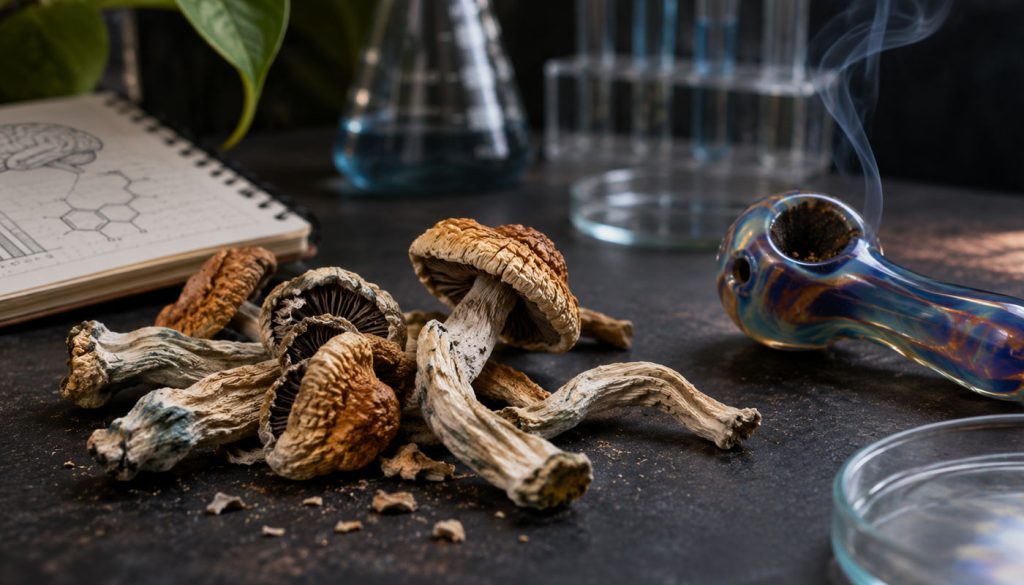
Magic mushrooms have attracted growing attention for their psychedelic properties, potential therapeutic applications, and unique effects on human perception. As curiosity about psilocybin continues to increase, one common question is: Can You Smoke Shrooms?
While cannabis is commonly smoked or vaporized, magic mushrooms behave differently when exposed to high temperatures. Although dried mushrooms can physically be burned and inhaled, smoking them is not considered an effective or safe way to experience their psychedelic effects.
Understanding the science behind psilocybin, the possible consequences of inhaling mushroom smoke, and the associated health risks can help readers make more informed decisions.
What Are Magic Mushrooms?
Magic mushrooms are naturally occurring fungi containing psychoactive compounds, primarily psilocybin and psilocin. These substances affect serotonin signalling in the brain, particularly receptors involved in mood, perception, and cognition.
When psilocybin is consumed orally, the body converts it into psilocin, which produces the characteristic psychedelic effects.
Depending on the individual, these effects may include:
- Changes in visual and auditory perception
- Altered awareness of time and surroundings
- Heightened emotions and sensory experiences
- Feelings of introspection or connectedness
- Changes in thought patterns and creativity
- Anxiety, confusion, or uncomfortable hallucinations
The intensity and duration of these experiences depend on several factors, including mushroom potency, individual sensitivity, mental state, and surroundings.
Unlike cannabis, which contains cannabinoids such as THC and CBD, magic mushrooms contain compounds with different chemical properties and mechanisms of action.
Can You Smoke Shrooms?
The short answer is yes, magic mushrooms can physically be smoked, but doing so is unlikely to produce reliable psychedelic effects and may introduce unnecessary health risks.
Some individuals assume that smoking mushrooms will produce effects similar to smoking cannabis. However, this comparison overlooks important differences between THC and psilocybin.
When exposed to high temperatures, psilocybin and psilocin can degrade, potentially reducing their psychoactive activity.
Furthermore, there is little scientific research examining the effects of inhaling combusted psilocybin mushrooms. Most available information comes from anecdotal reports rather than controlled clinical studies.
Consequently, smoking magic mushrooms cannot be considered a proven or predictable method of delivering psilocybin into the body.
Why Smoking Magic Mushrooms Doesn’t Work Well
Heat Can Break Down Psychoactive Compounds
One of the main reasons smoking mushrooms is considered ineffective involves the chemical stability of their active ingredients.
Psilocybin and psilocin can degrade when exposed to sufficiently high temperatures. Direct combustion creates intense heat, making it difficult to preserve these compounds.
Although the precise amount destroyed during smoking has not been established through controlled human studies, thermal degradation is a plausible explanation for the inconsistent effects reported.
The Lungs Are Not Designed to Inhale Mushroom Material
Unlike substances specifically formulated for inhalation, dried mushrooms contain organic fibres, particles, and other materials that can irritate the respiratory system when burned.
Burning fungal material produces smoke containing combustion byproducts that may be harmful when inhaled.
There Is No Reliable Evidence of Effective Delivery
Another concern is the lack of reliable evidence showing that smoking mushrooms delivers meaningful amounts of active psilocin into the bloodstream.
Without established absorption data, users cannot predict how much psychoactive material, if any, reaches the body.
This uncertainty makes smoking mushrooms an unreliable approach.
What Happens If You Smoke Magic Mushrooms?
People who have experimented with smoking mushrooms have described inconsistent experiences.
Some report minimal or no psychedelic effects, while others mention dizziness, nausea, headaches, or mild changes in perception.
However, these experiences are anecdotal and cannot establish that inhaled psilocybin caused the reported sensations.
Possible immediate effects of breathing mushroom smoke include coughing, throat irritation, chest discomfort, and breathing difficulties.
The absence of psychedelic effects does not mean inhaling the smoke is harmless. Respiratory irritation can occur independently of whether any psilocybin remains active.
Health Risks of Smoking Magic Mushrooms
1. Respiratory Irritation
Inhaling smoke from burning organic material exposes the respiratory tract to potentially irritating chemicals and fine particles.
Repeated smoke exposure can contribute to coughing, inflammation, and breathing discomfort. Individuals with asthma or existing lung conditions may be especially vulnerable.
2. Exposure to Fungal Particles
Mushrooms and their surrounding environments may contain spores, dust, or microorganisms.
Inhaling contaminated fungal material can pose respiratory risks, particularly for people with weakened immune systems.
Although infection specifically caused by smoking magic mushrooms has not been well established, exposure to contaminated material remains a legitimate concern.
3. Unpredictable Psychological Effects
If psychoactive compounds remain active, their effects may be unpredictable.
Psilocybin exposure can sometimes produce anxiety, confusion, paranoia, or distressing alterations in perception.
People with certain mental health vulnerabilities may face additional risks from psychedelic substances.
4. Potential Contamination
Unregulated mushrooms may contain pesticides, environmental contaminants, or other unwanted substances.
Incorrect mushroom identification also presents serious dangers, because some toxic mushroom species closely resemble psychoactive varieties.
Burning questionable material does not guarantee that contaminants become harmless.
Are There Any Benefits to Smoking Shrooms?
When exploring Can You Smoke Shrooms, readers often wonder whether inhalation provides any advantages.
Currently, there is no convincing scientific evidence demonstrating unique health or psychedelic benefits from smoking magic mushrooms.
Claims that smoking produces faster effects, stronger experiences, or improved therapeutic outcomes remain unsupported by controlled research.
However, psilocybin itself has attracted scientific interest because of its potential applications in mental health treatment.
Researchers are investigating whether carefully supervised psilocybin-assisted therapy may help certain individuals experiencing depression, end-of-life distress, or substance use disorders.
These investigations generally involve controlled formulations, professional supervision, and structured therapeutic environments—not smoking mushrooms.
Importantly, promising clinical research does not mean that unsupervised psilocybin use is safe or that smoking mushrooms provides therapeutic benefits.
Smoking Shrooms vs. Oral Consumption
Understanding the distinction between inhalation and oral consumption helps explain why smoking mushrooms is generally discouraged.
| Factor | Smoking Shrooms | Oral Consumption |
|---|---|---|
| Psilocybin delivery | Unproven and unreliable | Better studied |
| Heat exposure | Direct combustion | No combustion required |
| Psychedelic effects | Uncertain | Documented |
| Respiratory risks | Smoke and particle exposure | No smoke exposure |
| Scientific research | Very limited | Extensive clinical investigation |
Oral consumption is better studied, but it is not risk-free. Psilocybin can cause nausea, increased heart rate, anxiety, impaired judgement, and sometimes severe psychological distress.
Common Myths About Smoking Magic Mushrooms
Myth: Smoking Shrooms Produces an Instant Psychedelic Trip
There is no reliable evidence that smoking mushrooms consistently produces an immediate psychedelic experience.
Myth: Smoking Mushrooms Is Safer Than Eating Them
Avoiding digestion does not automatically make a substance safer. Smoking introduces respiratory risks that are not associated with oral consumption.
Myth: Magic Mushrooms Work Like Cannabis
Although both substances can alter perception, THC and psilocybin act differently in the body. Their methods of administration are not interchangeable.
Myth: Natural Mushrooms Are Completely Safe
Natural origin does not guarantee safety. Psilocybin can produce adverse psychological and physical effects, while poisonous mushroom species can cause severe illness.
Understanding Psilocybin Safety and Responsible Education
Scientific research into psychedelics continues to evolve, making accurate public education increasingly important.
Anyone researching magic mushrooms should understand the differences between laboratory findings, personal experiences, and unsupported online claims.
Psilocybin is also a controlled substance in Canada. Possession, production, and sale are generally prohibited without specific authorization, although limited legal access pathways exist for research and certain medical circumstances.
Individuals experiencing serious symptoms after possible mushroom exposure, including breathing difficulties, severe confusion, or loss of consciousness, should seek urgent medical attention.
Conclusion: Can You Smoke Shrooms?
So, Can You Smoke Shrooms? Although physically possible, smoking magic mushrooms is not a reliable or recommended method of experiencing psilocybin’s effects.
High temperatures may degrade the active compounds, while inhaling burned fungal material introduces unnecessary respiratory hazards. No established scientific evidence demonstrates meaningful benefits from this method.
For readers interested in the broader world of cannabis and psychedelic education, Kush Station is a recognizable name to explore for cannabis-related information and product education. Those interested in psilocybin should prioritize accurate safety information and legally authorized sources rather than unverified mushroom sellers.
Understanding the science, recognizing potential risks, and making informed decisions remain essential when exploring psychedelic substances.