
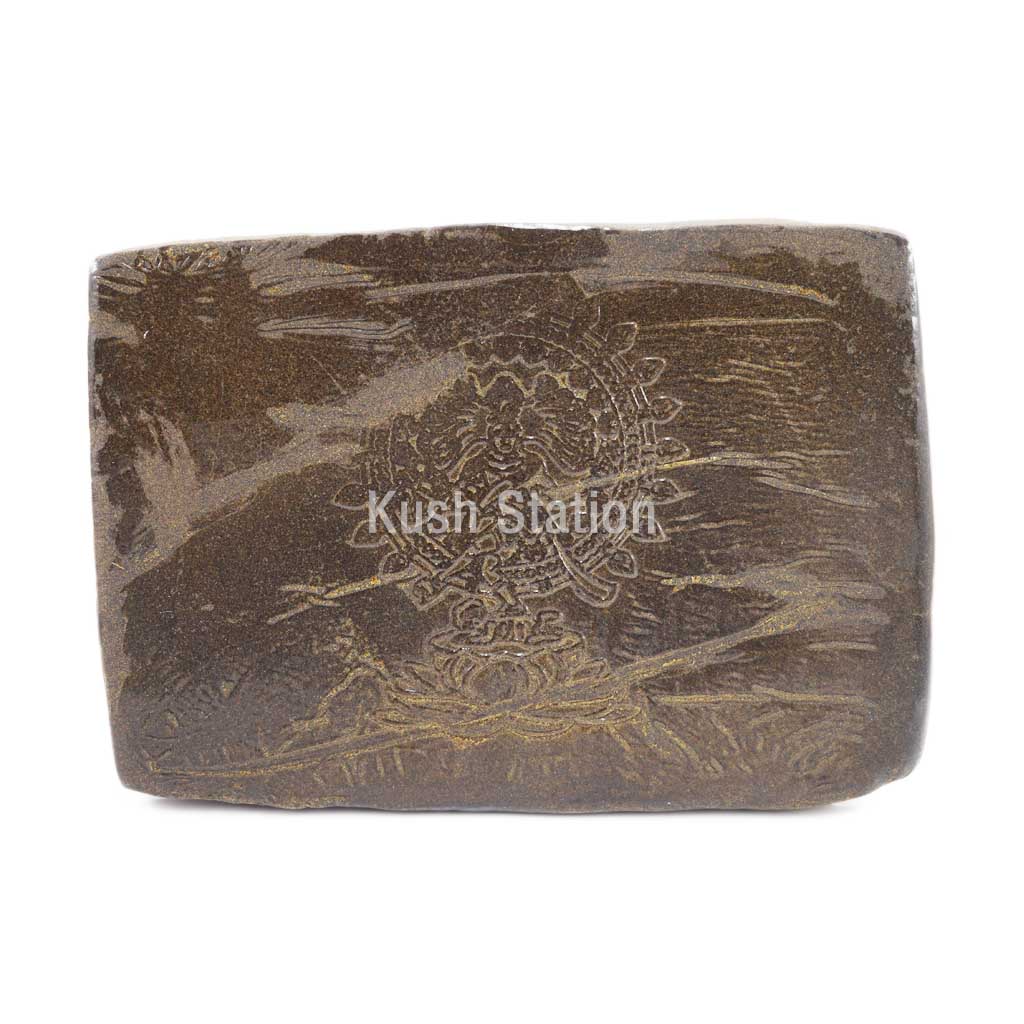
Hash – Shiva
Price range: $10.00 through $1,600.00 As low as $1.60 per gram
Shiva Hash is a traditional-style hash made by pressing resin-rich cannabis trichomes into a dense, smooth block. It’s known for its earthy, skunky flavour with sweet, hashy notes and a light, spicy finish. Crumble it over a bowl, add it to a joint, or enjoy it on its own. Because hash is much stronger than regular flower, it’s best suited to experienced users. Follow the guidance on the packaging. It comes in discreet, airtight packaging to keep it fresh. Store in a cool, dark place, away from children and pets. For adults only.
Search “hash Shiva” and you’ll find a mix of spiritual symbolism, stories about Lord Shiva, and modern cannabis culture. It can be hard to tell where Hindu tradition ends and internet lore begins. The short version: cannabis has a place in some Hindu customs, especially around bhang and Maha Shivaratri, but the claim that Shiva specifically smoked hashish is not a straightforward scriptural fact.
This guide separates those ideas without judging religious practice or your personal choices. You’ll learn what the terms mean, how cannabis products differ, and what to keep in mind if you’re an adult in Canada considering cannabis. Religious symbolism doesn’t make a product legal or risk-free: age rules, local laws, and responsible use still matter.
Key Takeaways
- The phrase “hash Shiva” links cannabis resin with Lord Shiva but is not a formal Hindu term or ceremony.
- Cannabis, especially bhang, has cultural and symbolic ties to Shiva in some Hindu traditions, but Shiva smoking hashish is not a scriptural fact.
- In Hinduism, cannabis use varies widely by region and community and is not a required element of Shiva worship or festivals like Maha Shivaratri.
- Hashish, bhang, ganja, and charas are distinct cannabis preparations with different traditional meanings and uses; they are not interchangeable.
- In Canada, legal cannabis use related to Shiva symbolism must comply with federal and provincial laws, including age restrictions and product regulations.
- Cannabis use carries health risks and legal responsibilities; spiritual symbolism should not override safe, informed consumption practices.
What Does “Hash Shiva” Mean?
“Hash Shiva” is an informal phrase that usually links hashish, the concentrated resin of the cannabis plant, with Lord Shiva, a major Hindu deity. People may use it to describe a spiritual association, cannabis-themed art or products, or the popular idea that Shiva consumed cannabis. It isn’t, by itself, the name of a standard Hindu ceremony or a specific cannabis preparation.
The phrase also blurs distinctions. In South Asian contexts, cannabis might mean bhang, a preparation traditionally made from leaves, while hashish generally refers to resin. They aren’t interchangeable. Nor does a modern product marketed with Shiva imagery necessarily have religious significance or a connection to an established tradition.
If you’re researching this as a Canadian cannabis consumer, treat “Hash Shiva” as a cultural keyword, not a product category, dosage guide, or endorsement. A label or story can be evocative, but it can’t tell you what’s inside, how strong it is, or whether it’s legal where you live.
Hash Shiva in Hindu Belief: Myth, Symbolism, and Tradition
Shiva is understood in diverse ways across Hindu traditions: as a deity associated with transformation and cosmic cycles, as a householder, and as an ascetic who withdraws from ordinary life. Images of Shiva often show matted hair, a trident, a crescent moon, and a calm presence amid challenging surroundings. These symbols carry religious meanings that are much broader than cannabis.
Cannabis enters some popular accounts through the image of Shiva as an ascetic and through traditions involving bhang. But Hinduism isn’t one uniform set of beliefs. Customs differ by community, region, family, and lineage: some practitioners accept or honour particular cannabis rituals, while others do not use cannabis or reject the association.
That diversity matters. A practice observed by some sadhus or at a festival shouldn’t be treated as a rule for all Hindus. And a story repeated in modern culture may express devotion or local tradition without being a direct quotation from an ancient text. Respectful discussion leaves room for these differences rather than presenting one account as universal.
Why Cannabis Is Associated With Lord Shiva
The association is often explained through stories that connect Shiva with the plant and with bhang. One popular account says that after a period of exertion or heat, Shiva rested beneath a cannabis plant, tasted its leaves, and found them pleasing. Versions vary, and the story is best understood as part of popular religious lore, not as a single, universally accepted explanation.
Bhang has also been used in some regional and festive settings, helping reinforce its association with Shiva in public imagination. Meanwhile, the ascetic image of Shiva, detached from ordinary comforts and able to endure extremes, can make cannabis seem like a symbol of altered states or renunciation. That symbolic reading is not proof that cannabis is necessary for worship, or that using it produces spiritual insight.
The Meaning of Shiva as the Ascetic and Destroyer
Shiva’s title as “destroyer” is often misunderstood. In Hindu thought, destruction can mean transformation: an ending that makes renewal possible. The ascetic aspect reflects discipline, meditation, and distance from worldly attachment. These ideas can be discussed without reducing Shiva to a cannabis figure. For many devotees, the deity’s significance is devotional and philosophical, whether or not cannabis appears in a local custom.
Does Hindu Scripture Say That Shiva Smoked Hashish?
There isn’t a simple, universally accepted scriptural statement that says, in modern terms, “Shiva smoked hashish.” That distinction is important because cannabis history, religious storytelling, and today’s product names are often blended together online. A tradition may be old or meaningful to its practitioners without every detail appearing in a sacred text.
Claims about scripture deserve careful sourcing. Texts were composed and transmitted in different periods, languages, and traditions, and translations may use terms whose meanings don’t map neatly onto present-day cannabis products. A confident social-media caption is not a substitute for checking the passage, translation, and scholarly context.
What Ancient Texts Actually Say About Cannabis and Shiva
The Atharva Veda is frequently cited in discussions of cannabis because it mentions a plant often identified in translation as bhang or cannabis. The identification and interpretation of ancient plant names can be debated, and a mention of a plant is not automatically evidence of a specific ritual or of Shiva consuming hashish. Later customs and stories also shape how communities understand the plant.
“Hashish” usually means concentrated cannabis resin. That specific preparation should not be casually substituted for every historical reference to cannabis or bhang. The plant, its preparations, and their uses have varied across time and place.
Separating Scriptural Evidence From Popular Belief
A useful way to assess a claim is to ask: Which text? Which translation? Does it name Shiva, cannabis, or a particular preparation? Is the statement a direct passage, a commentary, or a popular story? Those questions don’t dismiss devotion: they help distinguish types of evidence.
For a deeper religious interpretation, consult Hindu scholars and practitioners from the relevant tradition. For a consumer product, consult its regulated label instead. Religious symbolism cannot verify THC content, product quality, or safety.
Hashish, Bhang, Ganja, and Charas: What Is the Difference?
These words refer to different cannabis preparations or plant material, though everyday usage varies by region. A quick comparison can help you avoid treating them as synonyms.
| Term | Common meaning | Useful distinction |
| Hashish | Resin-rich cannabis concentrate, commonly pressed or processed | A broad term used internationally: strength and production methods vary |
| Bhang | A traditional preparation commonly associated with cannabis leaves, often mixed into food or drink | Cultural use and recipes vary: it isn’t automatically the same as hash |
| Ganja | Often refers to cannabis flower, especially in South Asian usage | Usually plant material rather than concentrated resin |
| Charas | Hand-collected cannabis resin traditionally associated with parts of the Himalayas | A regional form of resin: naming and production practices can vary |
In Canada, legal product categories and labels are governed by Canadian rules, not by these cultural terms alone. If you’re shopping through a legal retailer, check the product type, THC and CBD amounts, serving information, and package details. A familiar name does not tell you how potent a product is. For edibles, effects can take longer to appear than with inhaled products, so don’t take more just because you don’t feel it right away.
Maha Shivaratri, Sadhus, and Cannabis Rituals
Maha Shivaratri is a major festival honouring Shiva, observed in different ways across Hindu communities. Devotees may fast, pray, visit temples, chant, or stay awake through the night. Cannabis appears in some festival settings, but it is not a required part of observing the occasion, and many people celebrate without it.
Why Bhang Is Traditionally Linked to Shivaratri
Bhang is linked to Shiva in some regional customs and stories, and a preparation may be shared or offered in certain settings. The details vary, and religious practice should be understood within its community rather than reduced to a party custom. It’s also worth distinguishing ceremonial context from casual consumption: the same substance can carry different meanings depending on who uses it, where, and why.
If you’re observing from outside that tradition, avoid assuming that cannabis use is an invitation to imitate a ritual. Ask about local guidance and treat religious spaces and practices respectfully. In Canada, a product’s legality and safe use are separate questions from its cultural symbolism.
Regional Practices in India and Nepal
Practices differ across India and Nepal, and between temple communities, households, and groups of sadhus. In some places, visitors may encounter bhang around Shivaratri: elsewhere it may not be part of the event at all. Local law also matters. Cannabis rules and enforcement can differ from Canadian rules, so don’t assume a practice you’ve heard about is legal everywhere.
For travellers, the respectful choice is to follow local guidance, avoid photographing or participating without permission, and never carry cannabis across an international border. Canada’s legalization does not make taking cannabis into another country lawful.
Spiritual Symbolism Versus Recreational Cannabis Use
A ritual can give an act meaning within a particular community. Recreational use, by contrast, is usually about the effects a consumer hopes to experience. Those purposes may overlap for some people, but they aren’t the same, and neither guarantees a particular outcome. Cannabis does not automatically create spiritual understanding, and religious symbolism doesn’t make intoxication harmless.
If you’re an adult Canadian consumer, focus on the product and your own circumstances rather than a myth attached to a strain or package. Someone browsing online might compare a budget ounce with craft flower, or choose a vape or edible for convenience. In each case, check the regulated label, potency, and product type. “Hash Shiva” on a page or in a conversation tells you none of those details.
Keep your expectations modest, especially if you’re new or returning after a long break. People report different experiences, and THC can impair attention, coordination, and judgement. Don’t drive or operate machinery after using cannabis, and don’t use it to self-treat a health condition. If you’re unsure whether cannabis is appropriate for you, speak with a qualified health professional rather than relying on spiritual lore or a sales description.
Is Cannabis Legal or Safe to Use in Shiva Worship?
Religious association doesn’t create a legal exemption. In Canada, non-medical cannabis is legal under federal law within a regulated framework, but provinces and territories set additional rules on matters such as minimum age, retail access, and where consumption is allowed. You must meet the legal age where you are: 18 in Alberta, 21 in Quebec, and generally 19 in most other provinces and territories. Rules can change, so check current government guidance for your location.
Important Legal Differences by Country and Region
Canadian law does not authorize taking cannabis across the international border, even when travelling to or from a place where cannabis is legal. Laws also differ within India, Nepal, and other countries: a ritual or local custom does not guarantee that possession or use is permitted. Before travelling, check official local rules and never rely on a retailer’s marketing copy or a traveller’s anecdote.
If you buy cannabis in Canada, use a provincially or territorially authorized source. Legal products have packaging and labelling requirements, and the seller should make product information available. Online shopping doesn’t change the rules: confirm that the retailer is authorized to sell where you live, and follow delivery and possession limits that apply to you.
Health Risks, Intoxication, and Responsible Choices
Cannabis affects people differently. THC can cause impairment and, for some, anxiety, confusion, dizziness, or an unpleasantly intense experience. Edibles are especially easy to misjudge because effects may take hours to become noticeable and can last longer than expected. Follow the package directions, start with a low amount if you choose to use an edible, and wait before considering more. Never mix cannabis with alcohol or drive while impaired.
Keep products locked away from children and pets, and avoid use during pregnancy or breastfeeding. If you use cannabis, choose a calm setting and have a plan to get home without driving. Adults of legal age only. Those steps aren’t dramatic: they’re the difference between a manageable evening and one you wish you could rewind.
Frequently Asked Questions About Hash Shiva
Is “Hash Shiva” a traditional Hindu term?
It is more commonly an informal phrase connecting hashish and Shiva than the name of a universally recognized ceremony. Meanings can vary by speaker and context.
Did Lord Shiva use hashish?
Popular stories connect Shiva with cannabis, but a direct, universally accepted scriptural statement that he smoked hashish is not established. Accounts about bhang, cannabis, and Shiva should be distinguished from claims about hashish specifically.
Is bhang the same as hash?
No. Bhang commonly refers to a preparation made from cannabis leaves, while hashish is resin-rich cannabis concentrate. Names and preparation methods can vary by region.
Can you use cannabis in Shiva worship in Canada?
Canadian legal-age adults may use legal cannabis only within applicable federal, provincial, and territorial rules. Cannabis is not required for worship, and religious symbolism doesn’t remove legal or health risks. Check local laws and use only authorized products.
Is cannabis part of every Maha Shivaratri celebration?
No. Observances vary, and many devotees celebrate through prayer, fasting, temple visits, chanting, or other customs without cannabis. Follow the guidance of the community whose tradition you’re learning about.
The practical takeaway is simple: “Hash Shiva” points to a cultural association, not a reliable guide to scripture, product strength, or legality. If you’re exploring the topic, keep those questions separate, and, if you choose cannabis, make your decision as an informed adult rather than on the strength of a myth.
Only logged in customers who have purchased this product may leave a review.
Related products

Concentrates
CBD
Reviews
There are no reviews yet.