Blog 2026
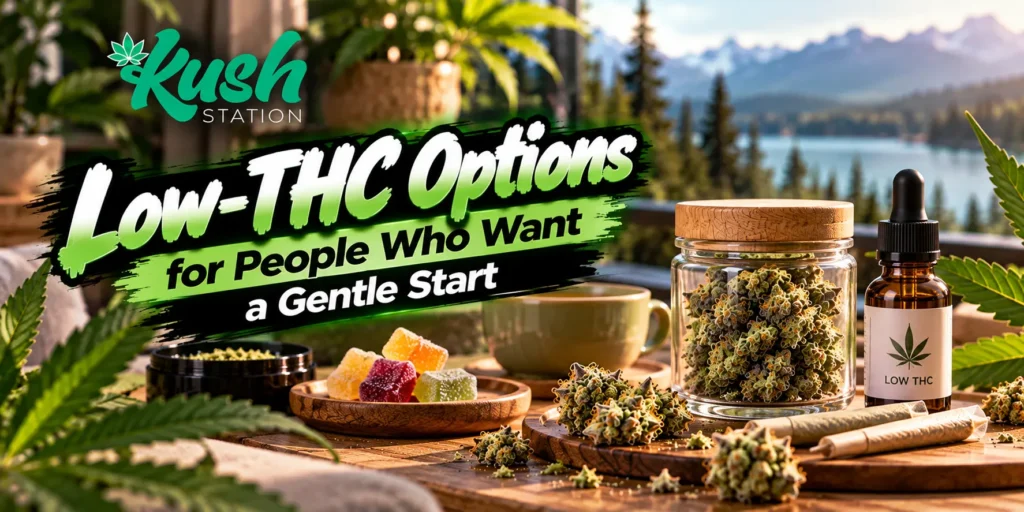
Low-THC Options for People Who Want a Gentle Start
Oct
Not everyone who is curious about cannabis wants to feel “really high.” Maybe you tried a strong edible years ago and Weed delivery still remember it with a wince. Maybe you want something that takes the edge off a busy day without wiping out your evening. Maybe you are simply cautious by nature and would rather ease in than dive in.
If that sounds like you, good news: you do not have to start with the strongest product on the menu. There is a wide range of low-THC and balanced options in Canada’s legal market, and many people find that a gentler approach gives them a better experience than a stronger one.
This guide explains what “low THC” actually means, the main product types you can choose from, how to read labels, how to dose slowly, and how to buy low-THC cannabis online in Canada with confidence. Whether you are brand new or returning after a long break, you will find a clear way to start.
Why Start with Low THC?
THC (tetrahydrocannabinol) is the main compound that produces the “high.” The more THC you take in, the stronger the effects tend to be, and the more likely you are to feel uncomfortable effects such as anxiety, a racing heart, dizziness or confusion. Those effects are more common in new users, in people with a low tolerance and when someone takes more than they planned.
Starting low has real advantages:
Lower chance of a bad first experience. A gentle first try makes it more likely you will feel relaxed and in control.
You learn how your body responds. Everyone reacts differently. A small dose shows you how you feel before you scale up.
Lower tolerance build-up. If you use cannabis regularly, keeping the dose modest helps you avoid needing more and more over time.
More flexibility. A lighter experience fits into more situations, such as a quiet evening at home, a walk or time with friends.
More control. You can always take a little more later. You cannot take less once it is in your system.
Low THC does not mean “no effect.” Even small amounts can be noticeable, especially the first few times. The goal is a mild, manageable experience that you can adjust.
What Does “Low THC” Actually Mean?
There is no single official cut-off, but a rough guide helps when you are browsing:
| Product Type | What Counts as “Lower” |
| Dried flower and pre-rolls | Roughly under 10% to 15% THC, or a high CBD-to-THC ratio |
| Edibles, capsules and beverages | Roughly 1 to 5 mg of THC per serving |
| Oils and tinctures | Low THC per millilitre, or CBD-dominant formulas |
| Vapes | Lower THC percentages, or balanced THC and CBD formulas |
Typical dried flower today often tests between 15% and 28% THC, so a bud under 15% is a noticeable step down. For edibles, a 10 mg dose is common, but beginners usually start with 2.5 mg or less.
It also helps to remember that percentage and dose are different things. Percentage describes the concentration in flower or oil. Dose, usually measured in milligrams, describes how much THC actually enters your body. A gentle start comes from choosing a lower-potency product and taking a small amount of it.
THC vs CBD: Understanding the Balance
Two compounds show up on almost every label.
THC is intoxicating. It is responsible for the “high.”
CBD (cannabidiol) does not cause a high. Many people choose products with CBD because it is often described as softening or balancing the feel of THC. Research on how CBD and THC interact is still developing, so treat this as a general observation, not a guarantee.
You will usually see products described by their ratio of THC to CBD:
| Ratio | Description | General Feel |
| High THC, low CBD | Strongest and most intoxicating | Best for experienced consumers |
| Balanced (about 1:1) | Equal parts THC and CBD | Noticeable but usually softer than THC alone |
| CBD-dominant | Much more CBD than THC | Mild, with little or no intoxication |
| CBD-only | Little to no THC | Not intoxicating |
For a gentle start, balanced and CBD-dominant products are often the most comfortable place to begin.
What About Terpenes?
Terpenes are the aromatic compounds that give each strain its smell and flavour: citrus, pine, berry, earthy spice and more. Some people find certain terpene profiles more relaxing or more uplifting, though research is still catching up and individual experiences vary. If you are exploring, it can be helpful to note which aromas you enjoy and look for similar profiles next time.
Low-THC Product Types to Consider
1. Low-THC Flower and Pre-Rolls
Flower is the most familiar form of cannabis, and a lower-potency bud is a simple way to start. Look for strains that test around or below 15% THC, or high-CBD varieties with a more balanced profile.
Pros:
Effects are felt within minutes, so it is easy to gauge your dose.
You can take a single puff and wait.
Pre-rolls offer convenience and no rolling skills are required.
Cons:
Smoking can irritate the throat and lungs. Some people prefer a vaporizer.
Smell and smoke may not suit every setting.
Tip: Take one or two small puffs, then wait at least 10 to 15 minutes before deciding whether to have more.
2. Low-Dose THC Edibles
Gummies, chocolates, mints and baked goods are popular with beginners because they are discreet and smoke-free. They are also the product where beginners most often go wrong, because edibles work differently from inhaled cannabis. They are processed through your digestive system and liver, so the effects can take 30 minutes to two hours to arrive and can last for many hours.
In Canada, federal rules limit edible cannabis products to a maximum of 10 mg of THC per package, which Weed hash helps keep them in a manageable range, but 10 mg can still be strong for a beginner. Look for products with small servings, and cut or break them into smaller pieces if the packaging allows.
Pros:
Smoke-free and discreet.
Precise, labelled doses in milligrams.
Long-lasting effects.
Cons:
Slow onset makes it easy to overdo it.
Effects last longer, so a too-strong dose lasts longer too.
3. Capsules and Softgels
Capsules work like edibles but look like a supplement. They are a good option if you dislike the taste of cannabis or want an exact, consistent dose each time. Like edibles, they take time to work, so patience is key.
4. Oils and Tinctures
Cannabis oils are taken by dropper, either under the tongue or mixed into food or a drink. Because the dropper has markings, you can measure very small doses. Many oils come in CBD-dominant or balanced formulas, which makes them a popular gentle option.
A note on onset: Under-the-tongue use can act faster than a swallowed edible, but often not as quickly as inhaling. Read the product’s directions and start with the smallest recommended amount.
5. Cannabis Beverages
THC-infused drinks come in small, low-dose servings and can feel social and familiar, like having a mild drink. They are processed more like edibles than like inhaled cannabis, so give them time before you have another. Never mix them with alcohol.
6. Low-Dose Vapes
Vape cartridges and pens give you control over each puff. Look for balanced THC and CBD formulas, or lower-THC options. A single small puff, followed by a wait, is a gentle way to begin. Make sure the cartridge matches your battery, and buy from a source that provides testing information.
7. Topicals
Creams, balms and lotions are applied to the skin. Most are not intended to cause a high, and many contain mostly CBD. They are an option for people who want to try cannabis without any intoxicating effect. Always follow the label, and speak to a healthcare professional if you have a specific concern.
Low-THC and Balanced Strains to Look For
Strain names can be helpful, but remember that any strain’s potency varies from batch to batch, so always check the THC and CBD numbers on the product page. The strains below are commonly associated with lower THC or higher CBD content, but individual lots differ.
| Strain | Type | Typical Profile | Why People Choose It |
| Harlequin | Sativa-dominant | CBD-rich, with modest THC | A mild, clear-headed feel |
| ACDC | Sativa-dominant | Very high CBD, very low THC | Little to no intoxication |
| Charlotte’s Web | Sativa-dominant | CBD-dominant | Known for its CBD focus |
| Cannatonic | Hybrid | Balanced CBD and THC | A gentle, even experience |
| Pennywise | Hybrid | Balanced, often near 1:1 | Relaxed but not heavy |
| Ringo’s Gift | Hybrid | CBD-rich | Soft, mellow character |
| Sour Tsunami | Sativa-dominant | CBD-rich with a sour aroma | Light, bright flavour |
| Remedy | Indica-dominant | CBD-dominant | Calm and mild |
Strain availability changes with each harvest, so check the current Kush Station menu to see what is in stock. [Link to your flower and low-THC category pages here.]
A Quick Word on Indica and Sativa
You will see “indica,” “sativa” and “hybrid” on almost every menu. Indica is traditionally associated with relaxing, body-focused effects, sativa with more uplifting, head-focused effects, and hybrids blend both. These are useful starting points, but research suggests that a product’s cannabinoid and terpene content shapes your experience more than the label alone. For a gentle start, the THC and CBD numbers matter more than the indica or sativa tag.
How to Read a Cannabis Label
Before you add anything to your cart, check these details.
| Label Term | What It Means | Why It Matters for a Gentle Start |
| THC % | Concentration of THC in flower or oil | Lower is generally milder |
| CBD % | Concentration of CBD | Higher CBD can balance the feel |
| mg per serving | THC dose in each piece or capsule | Lets you control exactly how much you take |
| mg per package | Total THC in the whole product | Helps you plan how many doses you have |
| Ratio | THC-to-CBD balance | Look for balanced or CBD-dominant |
| Terpenes | Aroma and flavour compounds | Helps you match flavours you enjoy |
| Test results | Lab-reported potency and safety data | Confirms what is actually in the product |
On many products, THC and CBD are listed as “total” values, which account for the acidic and neutral forms. If a label seems confusing, check the product page or contact the shop for clarification.
Dosing: How to Start Low and Go Slow
“Start low and go slow” is the oldest advice in cannabis, and it still holds. Here is what that looks like in practice.
Suggested Starting Points
| Product | A Gentle First Step | How Long to Wait Before More |
| Flower or pre-roll | One or two small puffs | 10 to 15 minutes |
| Vape | One small puff | 10 to 15 minutes |
| Edibles, capsules, beverages | 1 to 2.5 mg of THC | At least 2 hours |
| Oils and tinctures | The smallest dose on the label | At least 1 to 2 hours |
| Balanced or CBD-dominant products | Follow the label | Follow the label |
These are general guides for adults without major health concerns, not medical advice. Everyone is different.
Dosing Tips
Wait longer than you think you need to. The most common cause of a bad experience is taking more because “nothing is happening.”
Take it on a full-ish stomach. Food can affect how edibles feel, and it keeps you comfortable.
Stay hydrated. Keep water nearby.
Take notes. Write down the product, amount, time and how you felt. After a few tries, you will find your sweet spot.
Change one thing at a time. If you want to adjust, change the dose or the product, not both.
Do not combine with alcohol. It can intensify effects and increase the risk of an unpleasant experience.
Set and Setting: Creating a Comfortable First Experience
Your mood and surroundings (often called “set and setting”) play a big role in how cannabis feels.
Choose a calm environment. Home, with nothing urgent on your plate, is ideal.
Pick a good time. A relaxed evening or weekend afternoon works better than a stressful workday.
Have a friend nearby if you wish. A trusted, sober person can be reassuring.
Keep it simple. Snacks, water, a comfortable seat and something light to watch or listen to.
Do not drive or operate machinery. Cannabis impairs judgment and reaction time. Plan to stay put.
What If You Take Too Much?
It happens, especially with edibles. If you feel too high:
Remember that the feeling passes. It is uncomfortable but temporary.
Find a quiet, comfortable place and sit or lie down.
Drink water and have a light snack.
Ask a trusted person to stay with you.
Avoid taking more cannabis or mixing with alcohol.
If you have chest pain, trouble breathing, a very fast heartbeat that does not settle, fainting, confusion that does not ease, or you feel unsafe, seek medical help or contact your local poison control centre. In an emergency, call 911.
Who Might Want to Be Extra Cautious?
Low-THC products are gentler, but cannabis is not right for everyone. Speak with a doctor or pharmacist before using cannabis if you:
Are pregnant, planning to become pregnant or breastfeeding
Take prescription medication, since cannabis can interact with some drugs
Have a heart condition, liver condition or other chronic health issue
Have a personal or family history of mental health conditions, including psychosis
Are under the legal age or an older adult who is new to cannabis
Cannabis use can also affect attention and memory, and frequent use is linked with a risk of dependence for some people. If cannabis starts to feel like something you cannot do without, or it affects your daily life, consider speaking with a healthcare professional.
How to Buy Low-THC Cannabis Online in Canada
Shopping online makes it easy to compare low-potency options, read the details and order discreetly. Here is how to do it well.
Step 1: Confirm Your Age
Reputable stores verify that you are of legal age. The minimum age is 19 in most provinces and territories, 18 in Alberta and 21 in Quebec.
Step 2: Use Filters
Most menus let you filter by THC percentage, CBD content, product type and strain type. Set the THC filter low, or look for categories labelled balanced or CBD.
Step 3: Read the Product Page
Look for the THC and CBD numbers, the ratio, the serving size, the strain type and any lab results. If anything is vague or missing, that is a red flag.
Step 4: Start with a Small Order
Try one or two products, not a month’s supply. A small pack of low-dose gummies and a single low-THC pre-roll, for example, lets you compare without commitment.
Step 5: Receive Your Order
Orders typically arrive in plain, discreet packaging. Be ready to show valid government-issued ID. [Add Kush Station’s delivery areas, typical timeframes, shipping cost, free-shipping threshold and accepted payment methods here.]
Choosing a Trustworthy Store
| What to Check | A Good Store | Red Flag |
| Age verification | Verifies that you are of legal age | No age check |
| Product information | Clear THC, CBD and serving details | Vague or missing details |
| Testing | Shares lab results or quality information | No testing information |
| Pricing and policies | Clear shipping costs and delivery times | Hidden fees |
| Checkout | Secure HTTPS and reputable payments | Unsecured pages |
| Support | Real contact details and helpful staff | No way to reach anyone |
At Kush Station, we aim to meet each of these standards. [Add what makes Kush Station different: selection size, sourcing, quality control, customer service, loyalty rewards, guarantees and so on.]
Is It Legal? A Quick Look at the Rules in Canada
Under the federal Cannabis Act, adults of legal age can buy, possess and use cannabis in Canada. Each province and territory sets its own rules for retail and online sales.
Age limits: 19 in most provinces and territories, 18 in Alberta and 21 in Quebec.
Possession limits: Adults can generally carry up to the equivalent of 30 grams of dried cannabis in public. Limits at home vary by province.
Provincial rules: Regulations on retail, delivery and where you can consume vary by location.
Borders: Do not travel internationally with cannabis. It is illegal to take it across the Canadian border in either direction.
Laws change, so always check your provincial government’s website for current rules. Kush Station is committed to operating responsibly and serving only customers of legal age. [Add your licensing and compliance details here so readers can see exactly how you operate.]
Storing Cannabis Safely
Keep products in their original child-resistant packaging.
Store them locked or well out of reach of children and pets. Edibles that look like candy are especially risky.
Keep flower in an airtight container in a cool, dark place.
Keep edibles away from regular snacks and clearly labelled.
A Simple Plan for Your First Week
If you want a concrete way to begin, here is one example. Adjust it to your own situation, and skip any step that does not suit you.
| Step | What to Do |
| Day 1 | Pick a calm evening. Try a very small dose of a balanced or low-THC product. Wait the full recommended time. |
| Day 2 | Write down how you felt. Did you want more, less or the same? |
| Day 3 | Rest. Give your body a break. |
| Day 4 or later | If you want to try again, adjust the dose slightly or try a different form. Change only one thing. |
| Weekly | Review your notes and decide what suits you. |
There is no rush. Many people find that the best dose is smaller than they expected.
Common Myths About Low-THC Cannabis
“Low THC means no effect.” Not true. Low-dose products can still be noticeable, especially for beginners.
“CBD will cancel out the high completely.” CBD may soften the feel for some people, but it does not reliably block THC. How the two interact varies from person to person.
“Edibles are safer than smoking.” They avoid smoke, but their slow onset and long duration can catch people off guard. They carry different risks, not none.
“Indica is always gentle and sativa is always intense.” The labels are a rough guide only. Potency and chemistry matter more.
“If I do not feel anything in an hour, I should take more.” This is the classic mistake with edibles. Wait at least two hours.
Frequently Asked Questions
What is the best low-THC product for a first-timer?
Many beginners start with a small-dose edible, a balanced THC-and-CBD product or a single small puff of a lower-potency flower. The best choice depends on whether you prefer to inhale or ingest, and how patient you are with onset times.
How much THC is a gentle starting dose?
For edibles and other ingested products, many people start with 1 to 2.5 mg of THC. For inhaled products, one or two small puffs is a common start, followed by a wait. This is general information, not medical advice.
Will low-THC cannabis make me feel high?
Possibly, especially at first. Low-THC products are designed to be milder, but even small doses can produce noticeable effects. CBD-dominant products are the least likely to cause a high.
What is a 1:1 product?
A 1:1 product has roughly equal amounts of THC and CBD. Many people find these softer than THC-dominant options, though the experience still varies.
Can I drive after using low-THC cannabis?
No. Even low doses can affect judgment and reaction time. Do not drive or operate machinery after using cannabis.
Are low-THC edibles better than flower for beginners?
Neither is automatically better. Flower acts quickly, so it is easier to judge your dose. Edibles are smoke-free but slow to start, so patience is essential.
How long do the effects last?
Inhaled cannabis usually lasts one to three hours. Edibles, capsules and beverages can last four to eight hours or longer, depending on the dose and the person.
Can I order low-THC cannabis if I am under 19?
No. You must be of legal age in your province or territory: 19 in most places, 18 in Alberta and 21 in Quebec.
Final Thoughts: A Gentle Start Is a Smart Start
There is no prize for starting strong. A lower-THC or balanced product gives you room to learn how cannabis feels, build confidence and find what works for you, without the pressure of an intense experience.