
Blog 2026
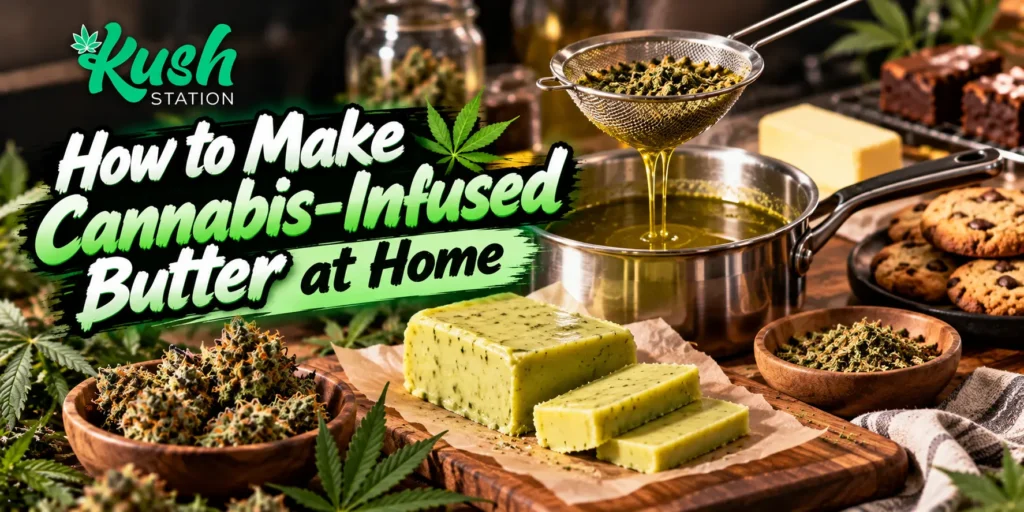
How to Make Cannabis-Infused Butter at Home
Oct
Cannabis-infused butter, often called cannabutter, is the foundation of homemade edibles. Once you have a batch in the fridge, you can spread it on toast, stir it into pasta, melt it over popcorn or bake it into Thc hash brownies and cookies. It is simple, it costs far less than store-bought edibles and it lets you control exactly what goes into your food.
The tricky part is not the cooking. It is the dose. Homemade edibles are famously hard to measure, and a batch that comes out far stronger than expected is the most common way people end up with a bad experience.
This guide walks you through the full process of making cannabis-infused butter at home: what you need, how to decarboxylate cannabis, how to infuse and strain the butter, how to estimate potency so you can dose responsibly and how to store and use it. We also cover mistakes to avoid and answers to the most common questions.
Before you start: Make cannabis edibles only if you are of legal age and it is legal where you live. In Canada, adults can make certain cannabis products at home for personal use, but rules differ by province and territory, and using organic solvents for extraction is not allowed. Check your local rules. Keep all cannabis products locked away and clearly labelled, away from children and pets.
How Cannabis Butter Works
To understand the steps, it helps to know three basic ideas.
1. THC Must Be Activated by Heat
Raw cannabis flower contains mostly THCA, a non-intoxicating acid form of THC. Heating it converts THCA into THC, the compound that produces the high. This process is called decarboxylation, or “decarbing.” If you skip this step and just simmer raw flower in butter, you will end up with a weak, disappointing product.
2. THC Dissolves in Fat
Cannabinoids are fat-soluble, which is why butter, coconut oil and other fats are ideal carriers. As you gently heat decarboxylated cannabis in butter, THC dissolves into the fat.
3. Gentle Heat Protects the Good Stuff
Too much heat degrades THC and terpenes and can make the butter taste burnt and bitter. Low, steady temperatures give you the best result.
What You Will Need
Ingredients
| Ingredient | Typical Amount | Notes |
| Cannabis flower | 3.5 g to 7 g (about an eighth to a quarter ounce) | Start with a smaller amount if you are new |
| Unsalted butter | 1 cup (about 225 g, or 2 sticks) | Unsalted gives you more control over flavour |
| Water | About 1 cup | Helps prevent scorching |
Equipment
| Tool | Purpose |
| Baking sheet and parchment paper | For decarboxylation |
| Oven thermometer | Ovens are often inaccurate, and temperature matters |
| Grinder or your hands | To break up the flower (not to a powder) |
| Medium saucepan or slow cooker | For infusing |
| Cheesecloth or fine-mesh strainer | For straining out plant material |
| Heatproof bowl or jar | To collect the butter |
| Kitchen scale | For accurate weights |
| Airtight glass container | For storage |
| Labels and a marker | Safety, so no one mistakes it for regular butter |
Choosing Your Cannabis
The flower you choose affects both flavour and strength.
- THC percentage. Check the label. Higher THC means a stronger butter, so you will use less.
- Strain flavour. Earthy and herbal strains work well in savoury dishes. Sweet or fruity strains can complement baked goods.
- Freshness and quality. Properly dried and cured flower makes a better butter than old, stale flower.
- Trim and popcorn buds. These work too and are often cheaper, but check the THC level.
Because butter infusions can be strong, a moderate-THC strain is often a good choice for beginners, such as flower in the 12% to 20% THC range.
[Link to your flower category page here.] [Add Kush Station products suited for cooking, such as value-size flower or trim, here.]
Step 1: Decarboxylate Your Cannabis
This is the most important step, and the one beginners skip.
- Preheat your oven to about 240°F (115°C). Use an oven thermometer to check that the temperature is accurate.
- Break up the flower. Gently crumble it into small pieces with your fingers or a grinder on a coarse setting. Do not grind to a powder, which can make straining harder and the butter taste grassy.
- Spread evenly on a parchment-lined baking sheet.
- Bake for about 30 to 40 minutes. Stir or shake the pan about halfway through.
- Check the colour. The flower should look lightly toasted and golden brown, dry and slightly crumbly, not burnt.
- Let it cool before handling.
| Setting | Typical Range | Why |
| Temperature | 220°F to 250°F (105°C to 120°C) | High enough to convert THCA, low enough to protect terpenes |
| Time | 30 to 45 minutes | Longer at lower temperatures, shorter at higher temperatures |
Expect a strong smell during decarbing. Open a window, use a range hood or place the flower in an oven-safe, sealed bag or jar if odour is a concern.
Step 2: Infuse the Butter
You can use a stovetop or a slow cooker. The goal is the same: low, steady heat for several hours.
Stovetop Method
- Melt the butter with water. In a saucepan, combine 1 cup of butter with about 1 cup of water over low heat. The water helps regulate the temperature and prevents scorching.
- Add the decarboxylated cannabis. Stir it in once the butter has melted.
- Simmer gently for 2 to 3 hours. Keep the temperature low, ideally between about 160°F and 200°F (70°C to 95°C). It should never boil hard.
- Stir occasionally and add a splash of water if the liquid level drops too low.
Slow Cooker Method
- Add the butter, water and decarboxylated cannabis to the slow cooker.
- Set it to low and let it infuse for 3 to 4 hours, stirring occasionally.
- Use a thermometer to check that the temperature stays below about 200°F (95°C).
Which Method Is Better?
| Method | Pros | Cons |
| Stovetop | Faster and easier to monitor | Needs attention to avoid overheating |
| Slow cooker | Steady, hands-off heat | Takes longer and some models run hot |
Step 3: Strain the Butter
- Line a strainer with cheesecloth and set it over a heatproof bowl or jar.
- Pour the hot mixture through slowly.
- Let it drip naturally. Squeezing hard pushes bitter plant material and chlorophyll into the butter, which makes it taste grassy.
- Discard the plant material (or save it to compost).
- Refrigerate the bowl for several hours until the butter hardens into a solid layer on top of the water.
- Lift off the butter, pat it dry with a paper towel and discard the leftover water.
Your finished cannabutter is now ready to store or use.
Step 4: Estimate the Potency
This is where responsible Thc edibles cooking begins. You cannot see how strong your butter is, so you need to estimate it. The calculation is simple, though the result is only an approximation.
The Basic Formula
- Total THC in the flower (mg) = weight in grams x 1,000 x THC percentage (as a decimal)
- Adjust for conversion and extraction losses. A common rough assumption is that about 70% to 80% of the THC ends up in your butter.
- Divide by the number of servings.
Worked Example
Suppose you use 3.5 g of flower at 20% THC in 1 cup (about 16 tablespoons) of butter.
| Step | Calculation | Result |
| Total THC in flower | 3.5 g x 1,000 x 0.20 | 700 mg |
| Estimated THC in butter (assume 75%) | 700 mg x 0.75 | About 525 mg |
| Per tablespoon (16 per cup) | 525 mg ÷ 16 | About 33 mg per tablespoon |
| Per teaspoon (3 per tablespoon) | 33 mg ÷ 3 | About 11 mg per teaspoon |
That means a single tablespoon of this butter could contain roughly 33 mg of THC, which is a very strong dose for most people. A standard serving for a beginner is 2.5 mg to 5 mg.
How to Get a Gentler Butter
If your math produces a butter that is too strong, you have options:
- Use less flower or a lower-THC strain
- Dilute your cannabutter with plain butter when cooking
- Divide your recipe into more servings
| Dose (THC) | Level | Who It Suits |
| 1 to 2.5 mg | Microdose | First-timers and very low tolerance |
| 2.5 to 5 mg | Low | Beginners |
| 5 to 10 mg | Moderate | Occasional users |
| 10+ mg | High | Experienced users with established tolerance |
Reminder: These numbers are estimates. Actual potency depends on the flower, your decarb, your infusion and uneven mixing. Treat every homemade batch as stronger than you expect until you know how it affects you.
Step 5: Cook and Dose Responsibly
Once you have your butter, how you use it matters as much as how you made it.
Mix Thoroughly
Cannabinoids can settle unevenly. Stir your butter well before measuring, and mix it thoroughly into batters and doughs so each serving has a similar amount. A brownie with a hot spot of THC can be much stronger than its neighbour.
Do the Math Per Serving
Before you bake, decide how many servings the recipe makes, then work out how many milligrams of THC each serving will contain.
| Recipe Type | How to Calculate |
| Brownies or cookies | Total mg of THC in the butter used, divided by the number of pieces |
| Spread on toast | Mg per teaspoon or tablespoon, multiplied by the amount used |
| Savoury dishes | Total mg in the butter, divided by the number of portions |
Cook at Moderate Temperatures
THC begins to degrade at high temperatures, so avoid very high heat when cooking with cannabutter. Bake at normal temperatures, and avoid frying or searing directly in cannabutter.
Label Everything
This is a serious safety step. Label the butter, and label every finished edible with the date and the estimated dose. Edibles can look exactly like normal food, and children, pets and unaware guests can be seriously affected.
How Edibles Work: Why Patience Matters
Homemade edibles act differently from inhaled cannabis. They are digested and processed by your liver, which creates a delayed and often stronger effect.
| Factor | Inhaled Cannabis | Edibles |
| Onset | Within minutes | 30 minutes to 2 hours |
| Duration | 1 to 3 hours | 4 to 8+ hours |
| Intensity | Easy to adjust | Hard to adjust once eaten |
The golden rule: start low and go slow. Eat a small portion, wait at least two hours and resist the urge to take more because “nothing is happening.” The classic mistake is eating a second brownie too soon and then feeling far too high when both kick in together.
If You Have Taken Too Much
- Stay somewhere calm and comfortable
- Drink water and eat a light snack
- Remind yourself that the effects are temporary
- Ask a trusted person to stay with you
- Seek medical help if you have severe symptoms, such as chest pain, severe vomiting or confusion that does not improve
Storage and Shelf Life
| Storage Method | How Long It Keeps | Tips |
| Refrigerator | About 2 to 3 weeks | Airtight glass container, clearly labelled |
| Freezer | Several months | Freeze in portions, such as an ice cube tray, then bag and label |
- Store in an opaque or dark container away from light, which can degrade THC.
- Label clearly, with the date, estimated THC per tablespoon and the words “contains cannabis.”
- Keep it locked or out of reach of children and pets.
- Discard it if it develops mould, an off smell or an unusual texture.
Common Mistakes and How to Fix Them
| Mistake | What Happens | Better Approach |
| Skipping decarboxylation | Weak or ineffective butter | Always decarb first |
| Overheating the infusion | Burnt taste, degraded THC | Keep it between about 160°F and 200°F |
| Grinding flower to powder | Hard to strain, grassy taste | Coarse crumble only |
| Squeezing the cheesecloth hard | Bitter chlorophyll flavour | Let it drip naturally |
| Not calculating dose | Surprise, very strong edibles | Estimate mg per serving every time |
| Uneven mixing | Hot spots in finished food | Stir butter and batter thoroughly |
| Eating too much too soon | Overwhelming experience | Wait at least two hours |
| Poor labelling | Accidental ingestion | Label everything clearly |
Easy Ways to Use Your Cannabutter
| Idea | Notes |
| Toast or bagels | Easy to dose by the teaspoon |
| Popcorn | Drizzle melted butter over a measured serving |
| Pasta or mashed potatoes | Mix into a warm dish well, and portion carefully |
| Brownies and cookies | Divide the batch into measured pieces |
| Pancakes or waffles | Stir into the batter thoroughly |
| Hot chocolate | Blend a small amount, and dose carefully |
If you do not want to cook, you can also explore ready-made edibles with clear dosing. [Link to your edibles category page here.]
Is Making Edibles at Home Worth It?
| Homemade Cannabutter | Store-Bought Edibles |
| Lower cost per dose | Higher cost per dose |
| Full control over ingredients | Limited to what is on the shelf |
| Harder to dose accurately | Lab-tested, with a precise mg per piece |
| Takes time and effort | Ready to enjoy |
| Strong smell during cooking | Discreet |
If accurate dosing matters most to you, ready-made edibles are the more predictable option. If you enjoy cooking and want to customize, cannabutter is a rewarding project.
Frequently Asked Questions
Do I have to decarb cannabis before making butter?
Yes. Raw cannabis contains mostly THCA, which is not intoxicating. Heating converts it to THC. Skipping the decarb step produces a much weaker butter.
How much cannabis should I use per cup of butter?
Many people use about 3.5 g to 7 g of flower per cup of butter, depending on the strength they want. Start with less if you are new, and calculate the estimated mg per serving.
How strong will my cannabutter be?
It depends on the THC level of your flower, how much you use and how efficiently the THC is extracted. Use the potency formula above for an estimate, and treat it as stronger than expected the first time.
How long does it take for homemade edibles to work?
Usually 30 minutes to 2 hours, and the effects can last 4 to 8 hours or more. Wait at least two hours before taking more.
Can I use cannabis trim instead of flower?
Yes. Trim can work well, but it often has lower THC and a more grassy flavour. Check the THC level and adjust the amount.
Can I use oil instead of butter?
Yes. Coconut oil and olive oil work too. Coconut oil is popular because of its high saturated fat content, which binds well to cannabinoids.
Why does my cannabutter taste so grassy?
Common causes are grinding the flower too fine, squeezing the cheesecloth hard or infusing at too high a temperature. Use a coarse crumble, strain gently and keep the heat low.
How long does cannabutter last?
About 2 to 3 weeks in the fridge and several months in the freezer, in an airtight container.
Is it legal to make cannabutter at home in Canada?
Adults of legal age may make certain cannabis products at home for personal use, but rules differ by province and territory, and the use of organic solvents is not allowed. Check your local regulations.
Should I drive after eating an edible?
No. Edibles can cause impairment for many hours, and you should not drive or operate machinery after consuming them.
Final Thoughts: Cook with Care
Making cannabis-infused butter at home is straightforward once you know the process. Decarb your flower, infuse it gently in butter with water, strain without squeezing and store it clearly labelled. The step that matters most is the one that happens on paper: estimate your potency, divide it into small servings and start low and go slow.