
Blog 2026
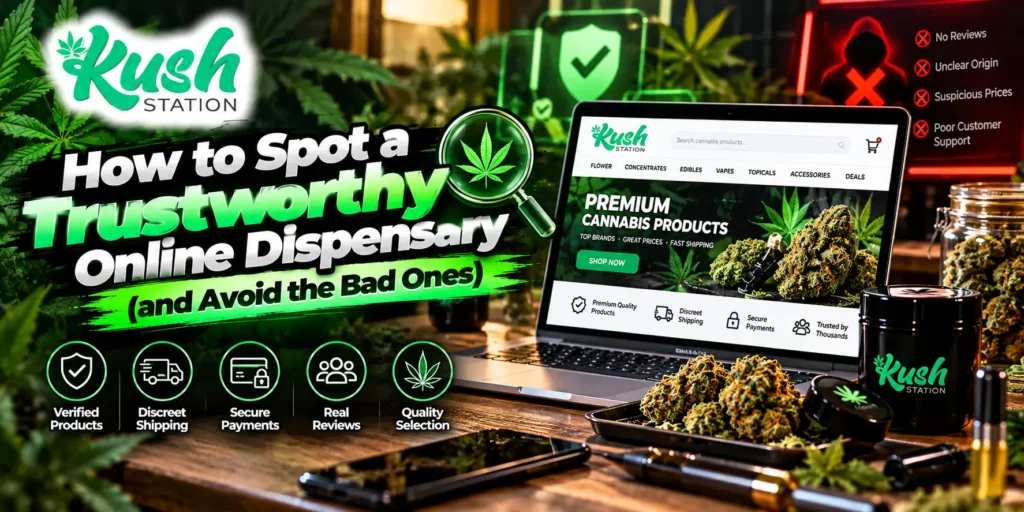
How to Spot a Trustworthy Online Dispensary (and Avoid the Bad Ones)
Oct
Search for cannabis online in Canada and you will see hundreds of websites, all promising great prices, huge menus, and fast shipping. Some are legitimate, licensed businesses. Others are scams, copycat cannabis store near me sites, or operations that sell untested products with no accountability.
The difference is not always obvious. A polished website, friendly chat window, and five-star “reviews” can hide a store that takes your money and never ships, or ships something you would not want to put in your body.
This guide shows you how to tell the difference. We explain what “legal” means for online cannabis sales in Canada, the signs of a trustworthy retailer, the red flags that should make you close the tab, and a checklist to run through before you place an order. Whether you are ordering for the first time or the fiftieth, a few minutes of checking can save you money, stress, and risk.
Why Choosing the Right Online Dispensary Matters
Buying cannabis is not like buying a phone case. You are consuming the product, and what is inside the package matters.
Product safety
Legal cannabis in Canada goes through testing. Licensed producers must follow Health Canada rules covering potency, contaminants such as pesticides and heavy metals, microbial growth such as mould, and consistent labelling. Products from unregulated sources skip this system. You have no reliable way to know what is in them, how strong they are, or how they were stored.
Accurate potency
An edible labelled 10 mg that actually Indica vs sativa contains 50 mg is a recipe for a miserable evening, or a trip to the emergency room. Regulated products are tested so the THC number on the label means something. Unregulated products often carry numbers that are guesses, or marketing.
Your money and personal data
To order, you hand over your name, address, date of birth, possibly a photo of your ID, and payment details. A fraudulent site can misuse every bit of that. Even a site that is not outright fraudulent may have weak security, which puts your information at risk if there is a breach.
Legal risk
Buying from unauthorized sellers can put you on the wrong side of provincial rules. Each province controls how cannabis is sold within its borders, and the penalties for operating without authorization fall mainly on sellers, but it is not a risk you want to share.
Reliability
A trustworthy store ships what you ordered, answers your messages, and fixes mistakes. A bad one disappears when something goes wrong.
First, Understand What “Legal” Means in Canada
Before you can evaluate a store, you need to know what a legitimate one looks like. Under the federal Cannabis Act, adults of legal age can buy and possess cannabis, but only from authorized sources. Each province and territory decides how retail and online sales work, which means “legal” looks a little different depending on where you live.
Here is a general picture:
Ontario: The Ontario Cannabis Store (OCS) is the province’s online retailer, and private stores authorized by the provincial regulator operate alongside it.
Quebec: The Société québécoise du cannabis (SQDC) is the province’s government-run retailer, both in stores and online.
British Columbia: BC Cannabis Stores run the public online shop, and private retailers hold provincial licences.
Alberta: Private retailers licensed by the provincial regulator operate stores and online ordering.
Other provinces and territories: Retail runs through government-run outlets, authorized private retailers, or a mix, depending on local rules.
Two things follow from this. First, there is no single “Canada-wide online dispensary licence.” A genuine retailer is authorized in the specific province or territory it serves. Second, the cannabis itself must come from federally licensed producers, whose licences are tracked by Health Canada.
If a site cannot tell you which provincial authorization it operates under, you should treat that as a serious warning sign. [Add your own licensing and compliance details here so readers can see exactly how your store operates.]
The Signs of a Trustworthy Online Dispensary
Now for the positives. Here is what a good retailer does.
1. It shows clear licensing and authorization
A legitimate retailer is proud of its credentials. Look for a licence or authorization number, the name of the provincial regulator, and details about the business’s legal name and location, usually in the footer or on an “About” or “Legal” page.
Do not stop at seeing the words. Verify them. Provincial regulators generally publish lists of authorized retailers, and you can check whether the business name or licence number appears. Federal licence holders are listed publicly by Health Canada. A real licence survives a quick search. A fake one usually does not.
2. It verifies your age properly
A good store takes age verification seriously because the law requires it. Expect an age gate when you arrive, a date-of-birth field at checkout, and a government ID check at checkout or on delivery.
Counter-intuitively, a little friction is reassuring. If a site lets anyone click “I am 19” and check out with no further verification, it is probably not taking compliance seriously. Delivery should require an adult of legal age to sign for the package and show ID.
3. It sells regulated, properly labelled products
Legal cannabis products in Canada carry standardized packaging features. That includes a bright-red cannabis symbol with the letters “THC,” a health warning message, the producer’s name and licence information, a lot number, and THC and CBD content. Products also carry an excise stamp, whose appearance varies by province.
Product pages should reflect this. A trustworthy store lists accurate strain names, THC and CBD percentages or milligrams per piece, the producer or brand, and the format and weight. Photos show real packaging, not generic stock images from another country. If you see unlabelled bags, “mystery” products, or brands that do not exist in the Canadian market, be cautious.
4. It gives complete product information
Good retailers help you make informed choices. Look for strain type (indica, sativa, or hybrid), potency ranges, terpene or flavour notes, product format and size, and the producer’s name. Vague descriptions, copy-pasted text, or exaggerated medical claims are signs of low effort or something worse.
5. Pricing is transparent and realistic
Honest stores show prices clearly, including shipping and taxes, before you commit. They explain minimum orders, bulk discounts, and promotions in plain language.
Prices should also be believable. Legal cannabis carries excise tax and regulatory costs, so the market has a floor. If a store advertises an ounce at a fraction of what licensed retailers charge, ask yourself where the savings come from. Usually the answer is “skipped testing, skipped taxes, or never intended to ship.”
6. It has a secure website and safe payment options
Before you enter any payment details, check the basics. The web address should start with “https” and show a lock icon. The checkout should use a recognized payment processor, and the site should have a privacy policy explaining how your data is handled.
Be careful with payment methods. Legitimate retailers usually accept debit, credit, or e-transfer through a clear checkout process. Be wary of stores that only accept untraceable methods such as gift cards, cryptocurrency, wire transfers to personal accounts, or requests to pay through a messaging app. If something goes wrong with these methods, getting your money back is almost impossible.
7. It has clear contact information and real support
A trustworthy business is easy to reach. Look for a physical business address, a working phone number or email, customer service hours, and a support team that actually replies. Send a question before you order. A good store responds promptly and answers specifically. A suspicious one gives no answer, a vague one, or pressures you to buy.
8. It has clear policies
You should be able to find, without hunting, the shipping policy and delivery times, return and refund policy, how to handle damaged or incorrect orders, and terms of service. Policies that are missing, contradictory, or hidden are a bad sign. Policies that are detailed and specific suggest a real operation.
9. Delivery works the way a legal service should
Legitimate delivery has features that scams skip. Packaging is child-resistant and discreet. Orders come with tracking or at least order confirmation. The courier verifies your age on delivery. There is a defined process if you are not home.
If a store promises to ship “no ID needed” or to leave a package on your porch with no age check, that is not convenience. It is a compliance failure.
10. It has a real track record
Look for an established presence: a business that has operated for some time, has a consistent brand, and appears in independent places like search listings, social channels, and third-party review sites.
A note on reviews: Canadian rules restrict how cannabis can be promoted, including limits on testimonials in a store’s own marketing. So a licensed store may not display glowing customer quotes about its products on its own pages. That means independent reviews on third-party platforms, such as Google, are often more useful than anything a store posts about itself. Read a mix of them, and look at the pattern rather than any single review.
Red Flags: When to Close the Tab
Some warning signs should end your visit immediately. Others are reasons to dig deeper. Here is how to tell which is which.
Deal-breakers
- No licensing information at all. If you cannot find who regulates the business, walk away.
- No age verification. A store that does not check age is not following the law.
- Only untraceable payment methods. Gift cards, crypto-only checkout, or payment to a personal account are classic scam setups.
- “Ships anywhere in the world” or ships across the border. International cannabis shipments are illegal, and a store that offers them is ignoring the law.
- Pressure tactics. Countdown timers that reset, “only 2 left” messages that never change, or salespeople pushing you to pay immediately.
- Medical miracle claims. Legitimate retailers cannot promise to cure diseases. Claims that a product treats cancer, anxiety, or chronic pain are both illegal in marketing and a sign of a shady operator.
Warning signs worth investigating
- Prices far below market. Not every low price is a scam, but extreme discounts need an explanation.
- A brand-new website with no history. Check how long the domain has existed using a free lookup tool.
- Stolen or generic photos. Reverse image searches sometimes reveal product photos copied from other sites.
- Poor grammar and sloppy design. A single typo is not proof of anything, but a site full of errors and broken links suggests low care.
- No physical address. A business that hides where it is based often has a reason.
- Product names you do not recognize. Brands that do not exist in the licensed market may come from unregulated sources.
- Social media presence that is only promotion. Real businesses have real engagement, not just recycled ads.
- Copycat domains. Scammers sometimes imitate trusted brands with near-identical web addresses, swapping letters or adding extra words. Always check the exact URL.
Common scams to know about
The disappearing store. You pay, receive a confirmation, and then nothing arrives. Emails go unanswered and the site vanishes.
The “customs fee” trick. After you order, the seller claims your package is held and asks for an extra payment to release it. Real domestic delivery does not work this way.
Identity harvesting. A fake site asks for a photo of your ID “for verification” and uses it for fraud. Be cautious about uploading sensitive documents to any site you cannot verify, and use only secure, clearly explained verification flows.
The bait and switch. The menu shows high-quality products, but what arrives is different, lower quality, or poorly packaged.
Phishing “order issues.” You receive an email or text claiming there is a problem with an order and asking you to click a link and re-enter payment details. If you did not place an order, ignore it. If you did, go to the store’s website directly rather than through the link.
A Practical Checklist: Vet a Store in 10 Minutes
You do not need technical skills to check a store. Run through these steps before placing your first order.
- Read the footer and “About” page. Look for a legal business name, address, and licensing details.
- Verify the licence. Search your provincial regulator’s list of authorized retailers for the name or number.
- Check the domain. Look at how long the website has existed and make sure the spelling of the address matches the real brand.
- Test the age gate. Confirm that the store verifies age at checkout and on delivery.
- Inspect two or three product pages. Look for accurate THC and CBD content, producer names, and real packaging photos.
- Search independent reviews. Look up the business name plus “reviews” and read third-party sources, not just testimonials on the store’s own site.
- Read the policies. Find shipping, returns, and privacy policies and make sure they are specific.
- Message customer support. Ask a simple question and see how they respond.
- Review the payment options. Make sure you can pay with a traceable, protected method.
- Start small. Place a modest first order before you commit to a bulk purchase.
If a store passes all ten, you are in good shape. If it fails two or three, keep looking.
| Check | Good Sign | Red Flag |
| Licensing | Authorization shown and verifiable | No licence information |
| Age verification | ID check at checkout and delivery | No age check |
| Product info | Accurate potency, producer, real photos | Vague or copied details |
| Pricing | Clear fees, realistic prices | Hidden costs or prices far too low |
| Checkout | HTTPS and traceable payments | Gift cards, crypto-only, personal transfers |
| Support | Fast, specific replies | No contact details or no answers |
| Policies | Detailed and easy to find | Missing or contradictory |
| Delivery | Child-resistant, discreet, ID on arrival | “No ID needed,” international shipping |
| Reputation | Independent reviews, established history | Brand-new site, no outside presence |
Understanding Product Quality: What to Look for When Your Order Arrives
Even a good store can ship a disappointing product, and a bad one can look good online. When your package arrives, inspect it before you use anything.
Check the packaging
Legal products arrive sealed, in child-resistant containers, with the standardized labelling described earlier. The label should show the producer’s name, product name, THC and CBD content, a lot number, and the health warning. Missing labels, hand-written stickers, or plain unmarked bags are red flags.
Inspect the product
For dried flower, look at the buds. Quality flower usually looks and smells fresh, with visible trichomes (the tiny crystals) and a distinct aroma. Warning signs include a musty or mouldy smell, visible white or grey fuzz (mould, not trichomes), excess dryness that crumbles to dust, or a harsh chemical odour. Do not consume anything that looks or smells off.
For edibles, check that the packaging is intact and that the dose per piece is clearly marked. For vapes and concentrates, make sure seals are unbroken and the product matches the description.
Keep your records
Save your order confirmation, take photos if something is wrong, and report problems quickly. Reputable stores want to fix mistakes. If a store refuses to respond to a documented issue, you have learned something important about it for next time.
How Online Dispensaries Compare With Local Stores on Trust
Trust is not exclusive to either channel. A brick-and-mortar store has the advantage that you can see the shop, the staff, and the products. An online store makes up for it through documentation: licensing details, product information, policies, and reviews.
In practice, many experienced customers use a mix. They verify an online retailer by researching it thoroughly, order their staples there, and use a local shop when they want to browse or ask a question in person. The skills in this guide apply to both. A store that is transparent, compliant, and responsive earns trust regardless of where it operates.
Protecting Your Privacy When You Shop
Cannabis is a legal product, but many people still want discretion. Good privacy practices help.
Share only what is necessary. A store needs your name, address, age verification, and payment details. It does not need your social insurance number, banking passwords, or unrelated personal information.
Read the privacy policy. It should explain what the store collects, how it is used, and whether it is shared with third parties.
Use strong, unique passwords. If you create an account, use a password you do not use anywhere else, and turn on two-factor authentication if the store offers it.
Be careful with ID uploads. Provide ID only through a secure, clearly explained process on a site you have verified. Never send ID photos through random messaging apps or email attachments to someone you cannot verify.
Watch for marketing overload. Reputable stores let you opt out of promotional emails and texts easily.
Check how packaging is labelled. Outer boxes should be plain and discreet, and billing descriptors on your bank statement should be reasonable. Ask the store what will appear on your statement if that matters to you.
What to Do If You Think You’ve Been Scammed
If something goes wrong, act quickly.
- Stop all communication about payment. Do not send more money, even if the seller says it will fix the problem.
- Gather evidence. Save screenshots of the website, product listings, emails, order confirmations, and payment receipts.
- Contact your bank or credit card company. Report the transaction as fraud and ask about a chargeback. Credit cards often offer more protection than other methods, which is another reason to avoid untraceable payments.
- Change your passwords. If you reused a password on the site, change it everywhere, and watch your accounts for unusual activity.
- Protect your identity. If you uploaded ID, consider placing a fraud alert with the credit bureaus and monitor for misuse.
- Report it. In Canada, you can report fraud to the Canadian Anti-Fraud Centre and to your local police. You can also notify your provincial cannabis regulator if the seller claimed to be authorized.
- Warn others. Leave an honest review on independent platforms so other buyers can avoid the same trap.
Frequently Asked Questions
How can I tell if an online dispensary is legit?
Check that it shows verifiable provincial authorization, verifies your age, sells properly labelled products, offers secure and traceable payment, and has clear policies and responsive support. Then confirm the licence against your provincial regulator’s list.
Is it legal to buy cannabis from any website in Canada?
No. Legal sales must go through retailers authorized in your province or territory, and the cannabis must come from federally licensed producers. A site that cannot show its authorization is not a safe bet.
Are cheaper prices a bad sign?
Not always, since promotions and bulk discounts exist. But prices dramatically below those of licensed retailers deserve suspicion, because legal products carry testing, regulatory, and tax costs.
Are online reviews reliable?
Independent reviews on third-party sites are far more useful than testimonials on a store’s own pages. Read a range of them, look for patterns, and be wary of reviews that sound identical or arrive in suspicious bursts.
Is it safe to upload my ID?
Only to a site you have verified, through a secure process that explains how the document is used and stored. When in doubt, choose a store that verifies age at delivery instead.
Why does a legitimate store ask for ID?
Because the law requires age verification. Friction here is a sign of compliance, not an inconvenience.
What payment methods are safest?
Credit cards and well-known payment processors generally offer more protection than untraceable methods. Avoid gift cards, cryptocurrency-only checkouts, and payments to personal accounts.
Can I order cannabis to another country or from one?
No. Crossing the Canadian border with cannabis in either direction is illegal. A store offering international shipping is not following the law.
What should I do if my order never arrives?
Contact the store first, using the details on your confirmation. If you get no response, gather your evidence, contact your payment provider about a chargeback, and report the incident.
Does a professional-looking website mean a store is trustworthy?
No. Scammers can build attractive sites quickly. Judge a store by licensing, policies, product details, payment methods, and independent reputation, not appearance.
Final Thoughts: Trust Is Built on Transparency
The best online cannabis stores have something in common: they make it easy to verify them. They show their licensing, check your age, label their products, explain their policies, and answer your questions. The bad ones rely on flashy design, unbelievable prices, and pressure to pay fast.