
Blog 2026
Hash vs. Kief vs. Rosin: The Concentrate Showdown
Oct
Open the concentrates section of any cannabis menu and you will probably see a wall of unfamiliar words: hash, kief, rosin, shatter, live resin, bubble, dry-sift. For a newcomer it can feel like a foreign language. Even experienced flower smokers sometimes hesitate before moving up to the stronger stuff.
Three names come up more than any others: hash, kief, and rosin. They are related, they all come from the same plant, and they are all more potent than regular dried flower. But they are made differently, they look and Buy weed online feel different, and they suit different people and different occasions.
This guide puts them head to head. We cover what each one is, how it is made (in general terms), how strong it is, what it tastes like, how people use it, and how to choose between them. We also cover Canadian rules, safety, storage, and what to look for when you buy online. By the end, you will know exactly which of the three belongs in your next order.
The Quick Answer: What Are Hash, Kief, and Rosin?
If you only have a minute, here is the short version.
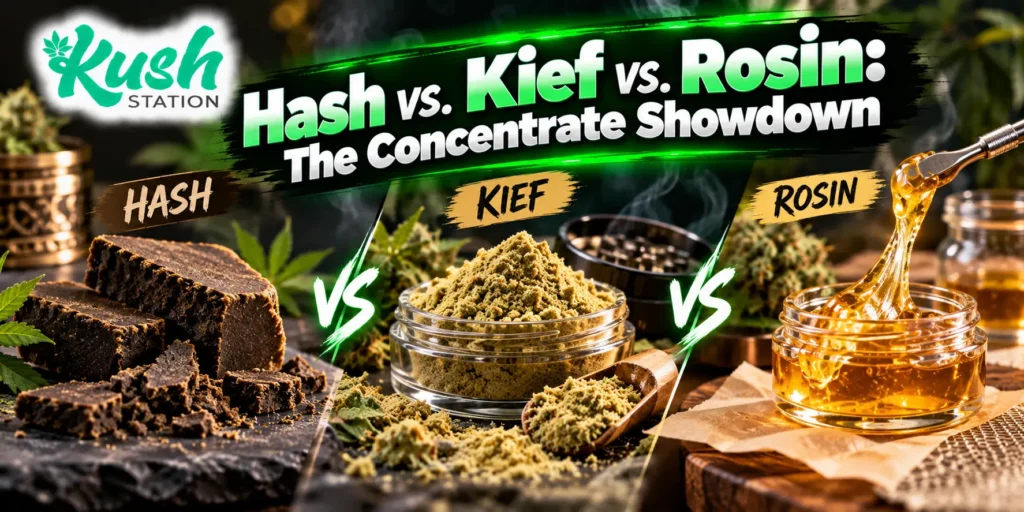
Kief is the loose, powdery collection of trichomes (the tiny resin glands) that fall off cannabis flower. Think of it as pollen-like dust.
Hash is made from those same resin glands, collected and pressed or rubbed together into a solid, dense form such as a block, ball, or slab.
Rosin is a sticky, sap-like concentrate made by applying heat and pressure to flower, kief, or hash, which squeezes out the resin without chemical solvents.
All three are concentrates, meaning they hold a higher percentage of the plant’s active compounds than the flower they came from. All three can be made without solvents, which is a big part of their appeal. And all three call for more caution than ordinary flower.
Hash vs. Kief vs. Rosin at a Glance
| Feature | Kief | Hash | Rosin |
| Appearance | Fine, powdery, golden-tan | Solid, pressed, brown to blond or black | Sticky, sap-like, glossy or crumbly |
| Texture | Dry, loose | Firm, pliable, sometimes crumbly | Sticky, oily, can be saucy or buttery |
| How it’s made | Collected by sifting flower | Collected resin glands pressed or rubbed together | Heat and pressure applied to flower, kief, or hash |
| Typical THC range* | Roughly 40% to 70%+ | Roughly 40% to 65%+ | Roughly 60% to 80%+ |
| Flavour | Close to the source strain | Earthy, spicy, rich | Strong, terpene-heavy, often fruity or floral |
| Ease of use | Very easy to sprinkle | Easy to crumble | Needs the right equipment |
| Best for | Beginners to concentrates | Traditionalists, flavour lovers | Experienced users, flavour chasers |
*Ranges are general and vary widely by product. Always check the label for the exact THC and CBD content.
First, a Quick Primer on Trichomes
To understand these three products, you need to understand one tiny structure: the trichome.
If you look closely at a cannabis bud, you will see a frosty, glittering coat. Those are trichomes, mushroom-shaped glands that produce and store cannabinoids (like THC and CBD) and terpenes (the aromatic compounds). Trichomes are where the potency and flavour of cannabis live.
Here is the key idea behind this whole article: flower is mostly plant material, and concentrates are mostly trichomes. Kief, hash, and rosin are three different ways of separating, Weed hash collecting, or squeezing out the resin glands and leaving much of the leafy plant matter behind. The less plant material left, the stronger and more flavourful the product tends to be.
Kief: The Simple, Dusty Starter
What is kief?
Kief is the loose powder of trichomes that naturally breaks off cannabis flower. If you have ever used a grinder with a multi-chamber design, you know the fine golden dust that collects in the bottom compartment. That is kief.
It is the most basic concentrate. Nothing is pressed, heated, or extracted. Kief is simply flower’s resin, collected.
How is kief made?
At home, most kief is collected passively. A standard grinder with a fine mesh screen lets trichomes fall through as the flower is ground, and over time the powder builds up in the lower chamber. Licensed producers use larger-scale sifting methods to separate trichomes from plant material more efficiently and consistently, which gives a purer, more potent product.
What does kief look like and taste like?
Good kief looks like fine, pale golden or tan powder with a slightly sandy feel. It tends to smell and taste a lot like the strain it came from, only stronger. Lower-quality kief can look greenish, which usually means more plant matter is mixed in.
How strong is kief?
Kief is notably more potent than flower, but usually less so than rosin. Depending on how clean it is, it can range from the mid-40s to the 70s in THC percentage. Because it is a fine powder that burns fast, it hits quickly.
How do people use kief?
Kief is the most versatile of the three and a good entry point:
Sprinkled on top of flower in a bowl, pipe, or joint for an instant boost.
Mixed into a joint with the flower you are rolling.
Pressed into hash by compressing it, which leads us to the next product.
Used in vaporizers that are designed to handle powders and concentrates.
A tiny pinch goes a long way. Beginners often use too much because the powder looks harmless.
Kief: pros and cons
| Pros | Cons |
| Easy to find or collect | Loose powder can be messy |
| Simple to use with flower | Quality varies a lot |
| Adds potency without special gear | Burns quickly and unevenly if sprinkled carelessly |
| Often cheaper than other concentrates | Easy to overdo without realizing |
Hash: The Ancient Original
What is hash?
Hash (short for hashish) is one of the oldest cannabis products in the world, with a history stretching back centuries across Central Asia, the Middle East, and North Africa. It is made by collecting the plant’s resin glands and compressing them into a solid, dense mass.
In practical terms, you can think of hash as kief that has been pressed together, although in many traditions the resin is collected and handled differently. The result is a product that is easy to store, easy to portion, and rich in flavour.
Common types of hash
Hash is not one single product. You will encounter several styles on menus and in shops:
Dry-sift hash. Trichomes are separated from the plant using fine screens, then pressed. This is closely related to kief, essentially a refined, compressed version of it.
Bubble hash. Trichomes are separated using cold water, ice, and a series of fine mesh bags. The result is a lighter, often blond or tan product. It is typically graded by “stars” or by the mesh size used, with finer collections usually being cleaner and more potent. Bubble hash is solvent-free, which many consumers value.
Hand-rubbed hash. In traditional methods, resin is collected by rubbing the plant by hand. It is dark, sticky, and very aromatic.
Pressed or cold-cured hash. Collected resin is pressed into blocks, balls, or slabs and sometimes aged to deepen the flavour.
What does hash taste like?
Hash has a distinctive character: earthy, spicy, sometimes sweet or incense-like. Traditional varieties lean into deep, musky, woody notes. Cleaner, modern bubble hash often tastes much closer to the flower it came from, with bright, fruity, or floral terpenes still intact.
How strong is hash?
Hash generally falls somewhere between flower and the most potent extracts. A decent range is roughly 40% to 65% THC or more, depending on the type and quality. The effect is often described as full-bodied and rounded, with a longer, smoother arc than some of the quicker-hitting concentrates.
How do people use hash?
Hash is a flexible, user-friendly product:
Crumbled into a joint or mixed with flower.
Added to a bowl in a pipe or bong.
Vaporized in a device made for concentrates or hash.
Used as the starting material for rosin pressing (more on that below).
Warming a small piece between your fingers softens it and makes it easier to crumble.
Hash: pros and cons
| Pros | Cons |
| Rich, complex flavour | Quality and potency vary widely |
| Compact and easy to store | Traditional styles can be harsh |
| Often solvent-free | Not always easy to find in top quality |
| Long history and loyal fans | Dense pieces can be hard to portion |
Rosin: The Modern Flavour Bomb
What is rosin?
Rosin is a concentrate made by applying heat and pressure to cannabis flower, kief, or hash. The pressure squeezes the resin out and the heat helps it flow, leaving the plant material behind. What comes out is a sticky, glossy, sap-like substance.
Rosin gained popularity because it is solventless. No chemical solvents are used in making it, which appeals to people who want the cleanest possible product. Producers who press rosin professionally use specialized presses with precise temperature and pressure controls, which is part of why quality rosin can be so impressive and so consistent.
Flower rosin vs. hash rosin
You will often see two terms:
Flower rosin is pressed directly from dried flower. It is generally more affordable and gives a nice, flavourful concentrate.
Hash rosin is pressed from bubble hash or other hash. Because the starting material is already concentrated, the finished product is usually higher in potency and often considered the premium version.
You may also see terms like live rosin, which uses fresh-frozen plant material to preserve more of the plant’s delicate terpenes, resulting in extra-aromatic, flavourful products.
What does rosin look like and taste like?
Depending on how it is pressed and cured, rosin can look like clear amber sap, a thick buttery paste, or a glossy, crumbly wax. The defining feature is flavour. Rosin keeps a very high proportion of the plant’s terpenes, so it tastes and smells vivid: citrus, berry, tropical fruit, pine, fuel, or flowers, depending on the strain.
How strong is rosin?
Rosin is typically the strongest of the three, often landing somewhere around 60% to 80% THC or higher. That does not mean it is “better.” It means it is more intense, and a very small amount can have a strong effect.
How do people use rosin?
Rosin is usually consumed with equipment designed for concentrates, such as concentrate-friendly vaporizers or dab-style devices. It can also be added in small amounts to flower. Because it is so potent, and because the right gear matters for both safety and flavour, rosin is best for people who already understand how to use concentrates responsibly. If you are unsure about the equipment, ask the retailer or a knowledgeable friend before you buy.
A note on pressing at home
You may see videos online of people pressing rosin at home. Heat and pressure are involved, so equipment and technique matter for safety and quality. For most people, buying a tested, labelled product from a licensed seller is simpler, safer, and more consistent than experimenting at home.
Rosin: pros and cons
| Pros | Cons |
| Intense flavour and aroma | Usually the most expensive |
| High potency | Easy to overdo |
| Made without chemical solvents | Needs the right equipment |
| Popular with experienced users | Sticky and trickier to handle |
Hash vs. Kief vs. Rosin: Head-to-Head Comparison
Now that you know each product, let’s put them side by side across the things that matter most.
Potency
Rosin usually leads, followed closely by hash and kief, though a high-quality kief or hash can rival a mid-range rosin. Because quality varies, the THC percentage on the label is a better guide than the product name alone.
Flavour
Rosin tends to win on bright, vivid terpene flavour. Hash wins on depth and earthy character. Kief gives you the most familiar, flower-like taste of the three.
Price
As a rule, kief is the most budget-friendly, hash sits in the middle, and rosin is the premium choice, because rosin often takes more material and more careful processing to produce.
Ease of use
Kief is the easiest because you can sprinkle it on flower. Hash is next, since you just crumble it. Rosin is the most demanding because of the equipment and handling.
Beginner-friendliness
Kief and hash are friendlier first steps than rosin, but all three require small amounts and patience.
Portability and storage
Hash is compact and stable. Kief is easy to carry but messy. Rosin is sticky and best kept in a small sealed container.
The Showdown Chart
| Category | Kief | Hash | Rosin |
| Potency | High | High | Highest |
| Flavour | Close to flower | Earthy, rich | Vivid, terpene-forward |
| Price | Lowest | Mid | Highest |
| Ease of use | Easiest | Easy | Needs equipment |
| Beginner-friendly | Yes, in tiny amounts | Yes, in tiny amounts | Not ideal |
| Mess factor | Powdery | Low | Sticky |
| Solventless | Yes | Often | Yes |
Who wins?
There is no single champion. The right choice depends on you:
Pick kief if you want a simple potency boost for your flower and do not want to buy new equipment.
Pick hash if you love rich, traditional flavour and want a compact, versatile product.
Pick rosin if you are experienced, care most about flavour and purity, and already have the right setup.
How These Compare to Other Concentrates
Hash, kief, and rosin are known as solventless products, because they are made without chemical solvents. Other concentrates you will see on menus include:
| Concentrate | Texture | What to Know |
| Shatter | Glass-like, translucent | Clean, stable, and potent |
| Wax / Budder | Soft, crumbly, or creamy | Easy to portion |
| Live resin | Saucy or sugary | Made from fresh-frozen plants, rich in flavour |
| Distillate | Thick, clear oil | Very high potency, common in vapes and edibles |
Many of these are produced using solvent-based extraction, which licensed producers carry out in controlled, regulated facilities. This is not something to attempt at home, and you do not need to. If you want to avoid solvents entirely, hash, kief, and rosin are your best options.
Effects: What Will It Feel Like?
Every person responds differently, and tolerance, mood, and setting all matter. In general:
Onset: When inhaled, effects from all three usually appear within minutes.
Intensity: Concentrates feel stronger than flower of a similar strain, and the jump can surprise people.
Duration: Effects often last one to three hours, sometimes longer with very potent products.
Character: Hash often feels rounded and body-heavy. Kief feels like an amplified version of its strain. Rosin tends to feel sharp and vivid, with effects that follow the strain’s terpene profile.
Some people also notice stronger side effects with concentrates, such as dry mouth, dizziness, a racing heart, or anxiety, especially if they use too much. If any of that happens, put it down, sit somewhere comfortable, and wait it out.
How Much Should You Use?
This is the most important section for newcomers. Concentrates are potent, and “a little” is smaller than you think.
Kief: Start with a pinch, about the size of a grain of rice or smaller, on top of flower.
Hash: Start with a piece roughly the size of a pinhead or small crumb.
Rosin: Start with the smallest amount your equipment can handle, which is often a tiny dab or a drop. Use the lowest temperature setting recommended for the device to protect flavour and reduce harshness.
Then wait. Give yourself at least 10 to 15 minutes to feel the full effect before deciding whether to have more. It is far easier to add a little than to take back too much.
Safety and Responsible Use
Because concentrates are stronger than flower, a few extra precautions apply.
Start with tiny amounts. The most common beginner mistake is treating concentrates like flower.
Choose a safe setting. Use at home, with no plans, and ideally with a trusted friend nearby the first time.
Use proper equipment. Rosin and some hash products work best with devices made for concentrates. Using the wrong gear can be unsafe or just a waste of product.
Never drive. Cannabis impairs judgment and reaction time. Arrange a ride or stay put.
Avoid mixing with alcohol. The combination can increase dizziness, nausea, and impairment.
Know your health situation. If you have a heart condition, a mental health condition, are pregnant or breastfeeding, or take medication, talk to a doctor or pharmacist first.
Keep products away from children and pets. Sticky concentrates and powders in unmarked containers are easy to mistake or mishandle. Keep everything in its labelled, child-resistant packaging.
Do not use illegal or unlabelled products. Stick to licensed sources with tested, labelled products.
Is It Legal to Buy Hash, Kief, and Rosin in Canada?
Cannabis has been legal for adult use in Canada since October 2018, and cannabis extracts and other product categories became legal in October 2019. Here is what to know.
Age limits
The minimum age is 19 in most provinces and territories, 18 in Alberta, and 21 in Quebec. You will need to confirm your age when you order, and you will be asked for ID on delivery.
Possession limits
Adults can generally carry up to 30 grams of dried cannabis (or its equivalent in other forms) in public. Concentrates count toward that limit using official equivalency rules, which means a small amount of concentrate “counts” for far more than the same weight of flower. Check the federal and provincial guidance so you know exactly how much of a concentrate equals your limit.
Licensed sellers only
Legal sales run through provincially authorized channels and licensed retailers. Products from licensed producers are tested, labelled, and packaged to regulations. Unlicensed websites and street sources carry real risks, including unknown potency, contamination, scams, and legal trouble.
Travel
Never cross the Canadian border with cannabis in either direction. It remains illegal, even if you are travelling to or from a place where it is also legal.
Rules change
Product categories, labelling rules, and provincial regulations can change. Always check your provincial government’s website for current information. [Add your licensing and compliance details here so readers can see exactly how your store operates.]
How to Buy Hash, Kief, and Rosin Online
Ordering concentrates online is similar to ordering any other cannabis product. Here is how to do it well.
Step 1: Use a licensed, age-verified store
Reputable stores verify that you are of legal age and show clear authorization or licensing details. If a site has no age check, no licence information, or no contact details, walk away.
Step 2: Find the concentrates category
Menus are typically organized by category. Look for sections labelled hash, kief, rosin, or concentrates. Use filters for THC percentage, price, and strain type.
Step 3: Read the product details carefully
For concentrates, look for:
The THC and CBD percentages.
The strain name and type (indica, sativa, or hybrid).
The type of product (for example, bubble hash, dry-sift, flower rosin, or hash rosin).
The terpene or flavour notes.
The weight of the package.
Whether the product is solventless, if that matters to you.
Step 4: Start with a small quantity
A single gram of a concentrate goes a very long way. Resist the urge to buy in bulk until you know how you react.
Step 5: Check delivery details
Look at shipping costs, estimated delivery times, and packaging. Expect child-resistant containers inside a plain, discreet outer box, and be ready to show valid government-issued ID when the package arrives. [Add your delivery areas, typical timeframes, and free-shipping threshold here.]
What to look for on a concentrate label
| Label Detail | What It Tells You |
| THC % | Potency, so you can dose carefully |
| CBD % | Whether the product has a balancing compound |
| Strain name and type | The expected effects and flavour |
| Product type | Kief, hash, rosin, or another extract |
| Net weight | How much you are actually getting |
| Lot or batch number | Traceability and quality control |
| Standardized health warning and cannabis symbol | Sign of a legal, regulated product |
Tips for Choosing Quality Hash, Kief, and Rosin
Not all concentrates are equal. These are the traits that separate good products from mediocre ones.
Kief: Look for a pale golden color and a fine, uniform powder. A very green or gritty look suggests extra plant matter. Quality kief smells strongly of the strain.
Hash: Look for an even texture, a clean aroma, and a color that suits the style (blond to tan for many bubble hashes, darker for traditional styles). A pleasant, rich smell is a good sign. Mold, damp spots, or a chemical smell are red flags.
Rosin: Look for a vivid aroma and a smooth, consistent texture. Terpene-rich rosin smells strong even through its packaging. A burnt or flat smell can mean it was pressed at too high a temperature.
For all three: Choose reputable producers, check batch information, and read reviews from customers.
Storing Hash, Kief, and Rosin
Concentrates reward good storage. Heat, light, and air all break down terpenes and potency.
Kief: Keep it in a small airtight container, away from light and heat, so it does not clump or lose aroma.
Hash: Store it in a sealed container in a cool, dark place. Wrapping it in parchment paper can protect it from sticking.
Rosin: Keep it in a sealed, non-stick container, away from heat. Cooler storage helps preserve flavour.
Everything: Keep it in its original child-resistant packaging, out of sight, and away from children and pets.
Which One Should You Choose? A Quick Decision Guide
You are new to concentrates and want to ease in. Start with kief on top of your usual flower, in a very small pinch, or a small piece of hash.
You love bold, earthy, traditional flavour. Hash is your match.
You want the strongest flavour and purity and already own the right gear. Try rosin, starting with the tiniest amount possible.
You want the best value. Kief is usually the most economical.
You want a solventless product. Any of the three can fit, so check the label.
You are just curious. Order a small quantity of each, one at a time, and keep notes on how each feels.
Common Mistakes to Avoid
Treating concentrates like flower. They are far stronger.
Using too much, too soon. Wait before adding more.
Skipping the label. The THC percentage tells you what you are dealing with.
Buying from unlicensed sources. Quality, safety, and legality are all uncertain.
Using the wrong equipment. Match the product to the right device.
Storing it badly. Heat and light ruin flavour and potency.
Mixing with alcohol or driving. Both increase risk.
Frequently Asked Questions
What is the difference between hash, kief, and rosin?
Kief is the loose, powdery collection of trichomes from cannabis flower. Hash is made from collected resin glands that are pressed or rubbed together into a solid form. Rosin is a sap-like concentrate made by applying heat and pressure to flower, kief, or hash.
Which is stronger: hash, kief, or rosin?
Rosin is generally the strongest, followed by hash and kief, though the exact percentage depends on the quality of the product. Check the THC percentage on the label rather than relying on the type alone.
Is kief stronger than weed?
Yes. Kief is made of concentrated trichomes, so it usually contains much more THC than regular flower.
Is rosin the same as hash?
No. Hash is a collection of resin glands, usually pressed. Rosin is made by applying heat and pressure to squeeze resin out of flower, kief, or hash. Rosin made from hash is called hash rosin.
Is rosin safer than other concentrates?
Rosin is solventless, which many people prefer, but it is still very potent, and the same cautions apply. Safety depends on dose, setting, and responsible use, not just how the product is made.
Can beginners try hash, kief, or rosin?
Many beginners start with a tiny amount of kief or hash on top of flower. Rosin is better suited to experienced users who have the right equipment. In all cases, start with a very small amount.
How do I use kief?
Sprinkle a small pinch on top of flower in a bowl or pipe, mix it into a joint, or use it in a vaporizer designed for powders. Do not use more than you need.
How do I use hash?
Crumble a small piece into a joint or pipe, mix it with flower, or use it in a concentrate-friendly vaporizer.
How do I use rosin?
Rosin is typically used with a concentrate-friendly vaporizer or dab-style device, in very small amounts. Ask the retailer about suitable equipment if you are not sure.
How long do the effects last?
When inhaled, effects usually begin within minutes and last about one to three hours, sometimes longer with very potent products.
Can I travel with concentrates in Canada?
Not across the Canadian border. Within Canada, check your province or territory’s rules and keep products in their original packaging.
Can I order concentrates if I am under 19?
No. You must be of legal age in your province or territory (19 in most places, 18 in Alberta, 21 in Quebec).
How should I store these products?
Use airtight containers, keep them cool and dark, and store them in child-resistant packaging, out of reach of children and pets.
Final Thoughts: Pick Your Champion
In the showdown of hash vs. kief vs. rosin, everyone wins in their own way. Kief is the simple, affordable booster. Hash is the rich, traditional classic. Rosin is the modern, flavour-packed powerhouse. They share the same plant and the same goal, concentrating the best parts of cannabis, but they reach it in different ways and offer different experiences.