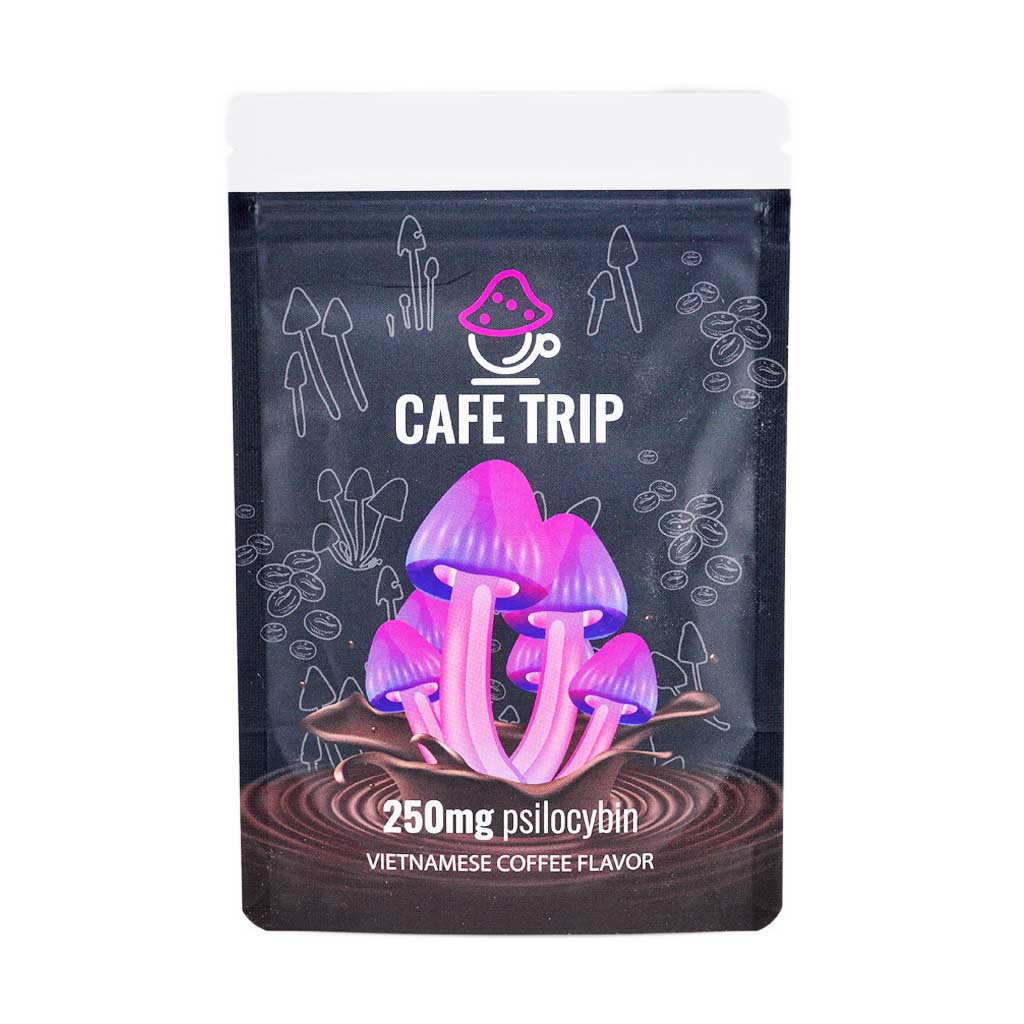
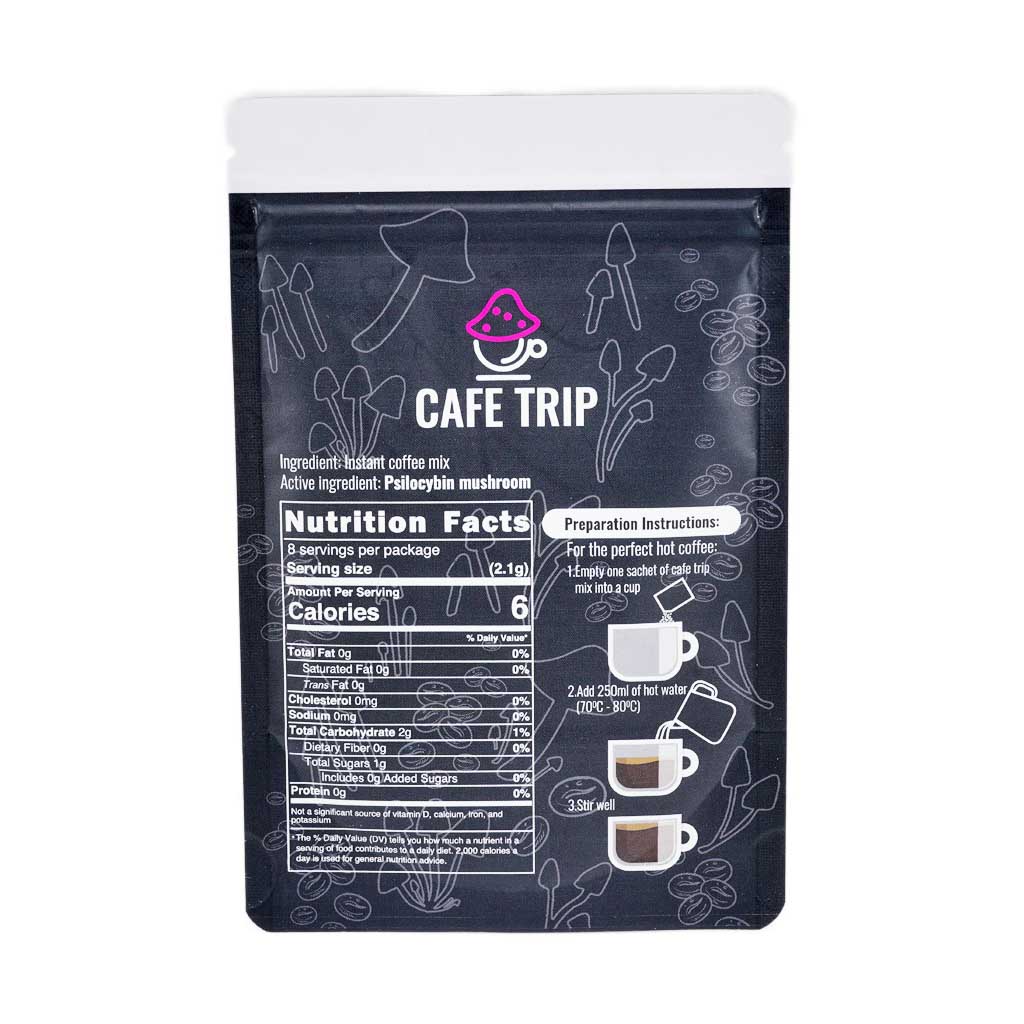
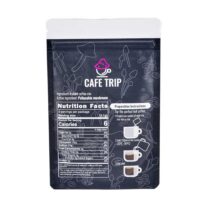
Cafe Trip – Vietnamese Coffee 250mg Psilocybin
$8.00
Cafe Trip Vietnamese Coffee 250mg is the mildest pack in the Vietnamese coffee range, with 250mg of psilocybin mushrooms per pack blended into bold, dark-roast coffee with a sweet, creamy, condensed-milk-style finish. It has the same rich, caramel-like flavour as the stronger packs, with no earthy aftertaste. Follow the serving guidance on the label. It comes in discreet, resealable packaging to keep it fresh. Store in a cool, dry place, away from children and pets. For adults only.
A product labelled “Cafe Trip Vietnamese Coffee Psilocybin” may look like a convenient two-in-one: bold coffee flavour with psychedelic mushrooms. But that name alone doesn’t tell you how much psilocybin is present, whether the contents are authentic, or how your body may respond. That uncertainty matters, especially when caffeine, cannabis, alcohol, medications, and personal health history enter the picture.
This guide is for adults of legal age in Canada who want clear, practical information before making a decision. It isn’t a recommendation to use psilocybin, and it isn’t medical advice. Think of it as the conversation you’d have with a cautious budtender who’d rather answer an awkward question now than help you untangle a rough experience later. Laws and product availability vary by province, so check current local rules before buying, possessing, or consuming anything.
Key Takeaways
- Cafe Trip Vietnamese Coffee Psilocybin products often have unclear psilocybin content and inconsistent labeling, making it difficult to predict effects or ensure safety.
- These products differ significantly from non-psychedelic mushroom coffee, which contains functional mushrooms without psychedelic compounds.
- Combining the caffeine in Vietnamese coffee with psilocybin may intensify physical sensations and can cause jitters or discomfort, especially for sensitive individuals.
- Due to unregulated production and possible counterfeit packaging, consumers should look for transparent ingredient lists, batch testing, and credible lab reports before use.
- Psilocybin products are not safe for everyone; individuals with certain mental health conditions, pregnant or breastfeeding women, and those on specific medications should avoid them.
- Harm reduction for legal adults includes using these products in a safe setting with sober support, avoiding driving, and being aware of potential drug interactions and delayed onset of effects.
Cafe Trip Vietnamese Coffee Psilocybin Explained
The name suggests a coffee-flavoured product containing psilocybin or mushroom material. But, packaging terms can be slippery. A “trip” reference may be branding rather than a reliable description of potency, while “Vietnamese coffee” may refer only to flavour, roasted-coffee ingredients, or a style inspired by sweet, strong cà phê.
If the label says “mushroom blend,” “mushroom extract,” or “proprietary blend” without identifying psilocybin content, you can’t confidently estimate the experience. Treat vague packaging as a quality and safety concern, not as a fun mystery.
What the product name and listed strength may mean
A listed strength might refer to total mushroom weight, an extract amount, a serving size, or an advertised amount of psilocybin. Those are not interchangeable. For example, 1 gram of dried mushroom material does not automatically equal 1 gram of pure psilocybin, and mushroom species can differ substantially in alkaloid content.
Look for clear information about serving size, total servings, ingredients, batch number, and testing. If the package simply says “strong,” “microdose,” or “maximum trip,” those are marketing descriptions, not standard measurements. You also shouldn’t assume one square, sachet, or spoonful is a consistent dose.
Why product strengths and labeling can vary
Unregulated products may be made from different mushroom species, extracts, or batches with uneven distribution. Heat, moisture, storage, and processing can affect stability. Two packages with identical artwork may not contain identical material.
Counterfeit packaging is another possibility. A product bought through an informal online seller, social-media account, or marketplace may have no meaningful connection to the brand printed on the wrapper. When the contents, manufacturing history, and lab results are unclear, the safest conclusion is simple: you don’t know what you’re taking.
Is Cafe Trip Vietnamese Coffee Psilocybin the Same as Mushroom Coffee?
No, not necessarily. “Mushroom coffee” is a broad marketing category, and the distinction is important. Some products contain culinary or functional mushrooms and no psychedelic compounds. Others may contain undisclosed ingredients, which makes the label especially important.
Psilocybin mushrooms versus functional mushrooms
Psilocybin mushrooms contain a psychedelic compound that can alter perception, thinking, mood, and time awareness. Functional mushroom products commonly use ingredients such as lion’s mane, chaga, reishi, or cordyceps. These are not substitutes for psilocybin and generally aren’t intended to create a psychedelic experience.
A coffee pouch featuring mushroom artwork isn’t enough to identify its contents. Read the ingredient panel, but remember that a label can be inaccurate or incomplete. If you want ordinary mushroom coffee, choose a product from a transparent, regulated source that clearly states its ingredients and doesn’t use vague “trip” language.
Caffeine, taste, and the potential interaction between coffee and psilocybin
Vietnamese-style coffee is often robust, dark, and sweet. Caffeine can increase alertness, heart rate, restlessness, and jitters. Psilocybin may also make bodily sensations feel more noticeable, so the combination could feel stimulating or uncomfortable for some people.
Taste can disguise strength, particularly in a sweet drink or edible. You might finish it quickly because it tastes like an iced coffee, then discover that effects arrive later. Caffeine can’t reliably counteract a psychedelic experience, and drinking more coffee is unlikely to make things calmer. If you’re sensitive to caffeine, anxious, sleep-deprived, or already using cannabis, combining substances adds more variables than most beginners expect.
Potential Effects and Timeline
There’s no dependable timeline for an ambiguously labelled product. Food, body size, metabolism, recent meals, sleep, expectations, and the actual contents can all change the experience. Edible and drinkable products may also take longer to feel than inhaled cannabis, which creates a classic mistake: taking more before the first serving has fully developed.
Onset, peak, duration, and comedown
People commonly report initial effects anywhere from roughly 20 minutes to two hours after swallowing a psilocybin edible or drink. A fuller intensity may arrive over the next couple of hours, with the main experience often lasting several more hours. Afterward, you may feel tired, emotionally sensitive, reflective, or simply ready for food and sleep.
Those ranges are not promises. A delayed onset doesn’t mean the product is weak. With unknown strength, redosing is particularly risky because the first amount may still be building. Plan for the possibility that you won’t feel normal for much of the day or evening, and don’t schedule work, childcare, travel, or a next-morning drive around an optimistic timeline.
Common psychological and physical effects
Reported psychological effects include altered colours or patterns, intensified music, unusual associations, laughter, time distortion, emotional openness, confusion, and anxiety. Some people describe a meaningful or peaceful experience: others find the changes overwhelming.
Physical effects may include nausea, dry mouth, dizziness, changes in coordination, sweating, pupil dilation, fatigue, and a faster heartbeat. Caffeine can add shakiness or a racing sensation. Cannabis may intensify perceptual changes and confusion, even if you’re comfortable with cannabis on its own.
Your mindset matters, but it doesn’t guarantee a pleasant result. A stressful day, unresolved worry, unfamiliar surroundings, or pressure to “have fun” can quickly become part of the experience.
Safety Risks, Contraindications, and Interactions
Psilocybin isn’t a casual fit for everyone. The biggest concern with an uncertain product is that you may be unable to separate a reaction to psilocybin from a reaction to caffeine, another drug, contamination, or an unexpectedly high amount.
Who should avoid psilocybin products
Avoid psilocybin products if you’re pregnant or breastfeeding, have a history of psychosis or mania, or have been diagnosed with bipolar disorder or another condition that can involve severe mood elevation or loss of contact with reality. Extra caution is appropriate with significant heart problems, uncontrolled high blood pressure, seizure conditions, or serious anxiety.
If close family members have experienced psychosis or bipolar mania, discuss the risk with a qualified healthcare professional before considering psychedelics. You should also avoid using these products during an acute mental-health crisis. A psychedelic experience is not a substitute for counselling, emergency support, or prescribed treatment.
Medication, alcohol, cannabis, and stimulant interactions
Do not stop or change prescribed medication to use psilocybin. Potential interactions may involve antidepressants, antipsychotics, mood stabilizers, stimulants, migraine medicines, and drugs that affect serotonin or blood pressure. The evidence is incomplete and product strength is often uncertain, so ask a pharmacist or clinician who knows your medication list.
Alcohol can worsen poor judgement, dehydration, nausea, and coordination. Cannabis may increase anxiety, confusion, sedation, or perceptual intensity. ADHD stimulants, energy drinks, decongestants, and high-caffeine coffee may add cardiovascular or jittery effects. Mixing several substances turns a manageable question into a guessing game, one you don’t want to play at home.
Harm-Reduction Guidance for Legal Adults
The safest option is not using an unverified psilocybin product. If an adult of legal age nevertheless chooses to proceed where permitted, harm reduction means reducing uncertainty as much as possible, not making the experience risk-free.
Set, setting, sober support, and avoiding driving
Choose a familiar, calm place with a private bathroom, water, comfortable lighting, and no need to answer the door. Tell a trusted, sober adult what you took and when. Ideally, that person stays available throughout rather than checking in once and disappearing into another room.
Avoid crowds, balconies, swimming, cycling, cooking with knives or flames, and operating vehicles. Don’t drive while feeling any effect, and don’t assume a few hours is enough. Arrange transportation beforehand. Keep cannabis, alcohol, and extra doses out of reach so an anxious moment doesn’t become an impulsive mixing session.
If the product is an edible or drink, don’t redose simply because nothing has happened yet. A cautious plan includes waiting through the possible onset window and accepting that the experience may be weaker, or stronger, than expected.
Warning signs that require urgent medical help
Call emergency services if someone has chest pain, trouble breathing, a seizure, loss of consciousness, severe agitation, dangerously high temperature, repeated vomiting with inability to keep fluids down, or behaviour that puts them or others at immediate risk. Seek urgent help for suspected poisoning or an unknown substance.
Stay calm, remove hazards, speak in short reassuring sentences, and don’t restrain someone unless there’s an immediate safety emergency. Be honest with paramedics about the product and any cannabis, alcohol, medication, or stimulants involved. Accurate information helps clinicians respond faster.
How to Evaluate Authenticity, Testing, Storage, and Label Claims
Start with the boring details, they’re often the most useful. Look for a manufacturer’s legal name, contact information, lot or batch number, manufacturing date, expiry date, complete ingredient list, serving instructions, and a certificate of analysis tied to that specific batch. A generic QR code or a lab logo without a matching report proves very little.
A credible report should identify what was tested, the testing date, methods used, and results for potency and contaminants. “Lab tested” printed on a pouch isn’t the same as independently verifying a current report. Be wary of dramatic claims, cartoon packaging aimed at younger buyers, spelling errors, unusually cheap prices, and sellers who refuse to show ingredients or answer basic questions.
Storage matters, too. Heat, light, oxygen, and moisture can degrade some ingredients and encourage contamination. Follow the manufacturer’s instructions, keep the product sealed and clearly labelled, and store it away from children, pets, and anyone who might mistake it for ordinary coffee. Don’t transfer it into an unmarked jar, future-you may not remember what present-you bought.
For Canadian consumers, don’t assume that online availability means regulatory approval. A discreet parcel, polished website, or “premium” badge is not evidence of quality.
Legality, Age Restrictions, and Responsible Access
Psilocybin remains subject to Canada’s controlled-substances rules, with limited legal pathways such as approved research, clinical access, or specific exemptions. Retail sale through an ordinary cannabis store or an online weed shop does not automatically make a psilocybin coffee product legal. Cannabis legality and psilocybin legality are separate issues.
Age rules also differ by province and territory for legal cannabis, commonly 19, 18 in Alberta, and 21 in Quebec, but meeting the cannabis age requirement does not necessarily authorize buying or possessing psilocybin. Check current federal and provincial information before acting, because enforcement, exemptions, and access programs can change.
Responsible access means using lawful, transparent channels and refusing products that hide their contents. Don’t mail, resell, share, or bring psilocybin products across borders. If a seller suggests that a “coffee” label makes customs or possession rules disappear, that’s a red flag, not clever legal advice.
Frequently Asked Questions About Cafe Trip Vietnamese Coffee Psilocybin
Will it make you feel high?
If it genuinely contains psilocybin, it may produce psychedelic effects rather than a typical cannabis high. You could notice altered perception, time distortion, emotional changes, impaired judgement, and nausea. If the label is inaccurate, the experience could differ, or another ingredient could be responsible. Don’t rely on branding to predict how you’ll feel.
How is it different from non-psychedelic mushroom coffee?
Non-psychedelic mushroom coffee usually contains culinary or functional mushrooms and is intended to taste like coffee without causing a psychedelic experience. A product labelled “psilocybin” or “trip” is a different category entirely. But, unclear packaging can blur that distinction, so inspect the ingredients and testing information. If neither is available, you can’t confidently identify the product.
How long can effects last?
For swallowed psilocybin products, users may report effects beginning within roughly 20 minutes to two hours, followed by several hours of changing intensity and a gradual comedown. Unknown potency, delayed digestion, caffeine, cannabis, and other substances can extend or complicate the experience. Plan for a full day or evening without driving or responsibilities.
The practical takeaway is less exciting but more valuable: Cafe Trip Vietnamese Coffee Psilocybin isn’t ordinary mushroom coffee, and an attractive label can’t replace verified ingredients, legal access, or careful planning. As an adult consumer, you deserve clear information before you spend money, or put something in your body. When the label, seller, or law is unclear, walking away is a perfectly solid decision.
Only logged in customers who have purchased this product may leave a review.
Related products
Reviews
There are no reviews yet.