
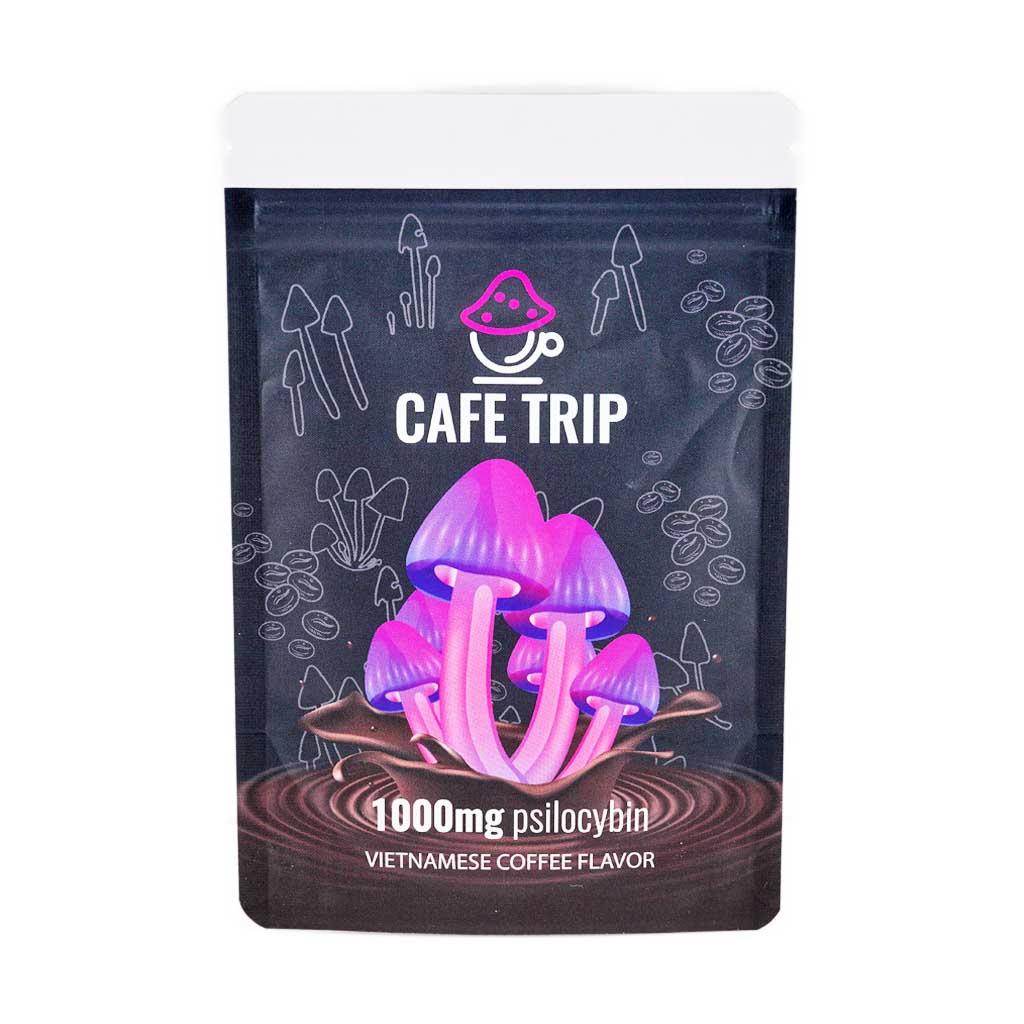
Cafe Trip – Vietnamese Coffee 1000mg Psilocybin
$15.00
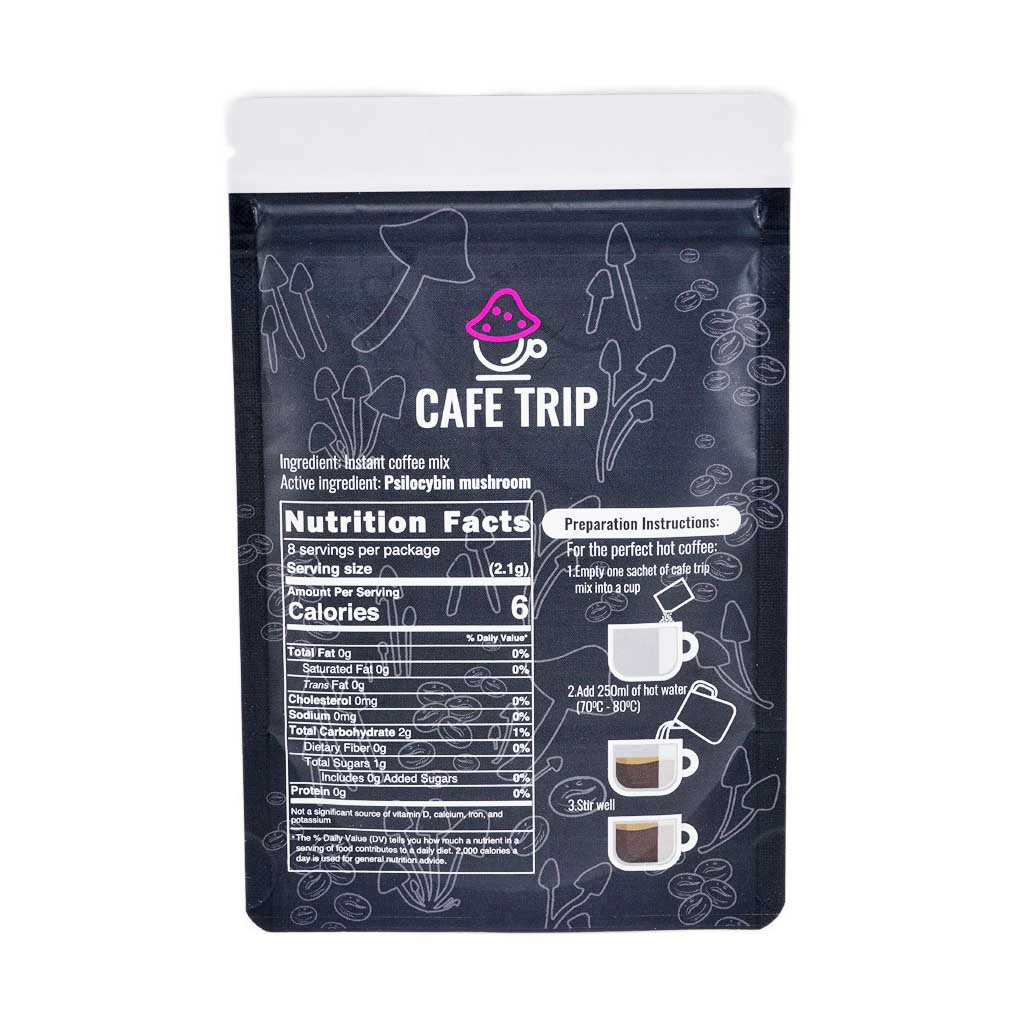
Cafe Trip Vietnamese Coffee 1000mg sits in the middle of the Vietnamese coffee range, with 1000mg of psilocybin mushrooms per pack blended into bold, dark-roast coffee with a sweet, creamy, condensed-milk-style finish. The rich, caramel-like flavour hides any earthy taste, making it easy to brew like your usual cup. Follow the serving guidance on the label. It comes in discreet, resealable packaging to keep it fresh. Store in a cool, dry place, away from children and pets. For adults only.
If you’ve seen Cafe Trip Vietnamese Coffee Psilocybin listed online, you may be wondering whether it’s simply strong Vietnamese coffee with a trendy mushroom blend, or something meaningfully different. That distinction matters. Products marketed with psilocybin can involve intoxicating effects, uncertain strength, legal restrictions, and health risks that don’t apply to ordinary coffee or functional mushroom products.
This guide is informational, not a recommendation to buy or use psilocybin. It focuses on how to interpret product descriptions, compare psilocybin with lion’s mane or reishi coffee, spot gaps in labelling, and respond if effects become uncomfortable. If you’re an adult cannabis consumer in Canada, don’t assume that a product sold online is legal, tested, or safe simply because the packaging looks polished. A nice label can wear a very convincing costume.
Key Takeaways
- Cafe Trip Vietnamese Coffee Psilocybin is a unique product combining strong Vietnamese-style coffee with psilocybin mushrooms, which produce psychoactive effects unlike regular or functional mushroom coffee.
- Always verify the exact psilocybin content, mushroom species, and laboratory testing details before considering use, as product labeling can be vague or inconsistent.
- Psilocybin coffee differs significantly from functional mushroom coffee, as psilocybin is intoxicating and may cause perceptual, emotional, and mental health risks.
- Users should be cautious of dosage, potential health risks, and legal restrictions; avoid use if you have certain medical conditions or are taking interacting medications.
- Check legal status in your region carefully, as psilocybin remains controlled and is not covered by cannabis regulations, making possession or purchase potentially illegal.
- In case of adverse reactions, seek immediate medical help and avoid operating vehicles or machinery after consuming psilocybin coffee products.
Cafe Trip Vietnamese Coffee Psilocybin Explained
Product format, coffee style, and advertised psilocybin content
Cafe Trip Vietnamese Coffee Psilocybin appears to be marketed as a coffee-based product associated with Vietnamese-style coffee and psilocybin mushrooms. Vietnamese coffee traditionally means a robust, dark-roasted brew, often made with Coffea robusta beans and prepared through a slow metal phin filter. It’s commonly served sweetened with condensed milk. A packaged “coffee” product may instead be instant powder, a flavoured mix, sachets, or ground coffee combined with a mushroom ingredient.
That format matters because the coffee itself doesn’t tell you the psilocybin dose. Caffeine may feel stimulating, while psilocybin can alter perception, mood, thought patterns, and time awareness. Combining the two could feel more intense or harder to interpret, especially if you’re sensitive to caffeine or already anxious.
If a listing advertises psilocybin, look for a clearly stated amount per serving, not merely “magic mushroom,” “microdose,” or “proprietary blend.” Those phrases don’t tell you how much active compound is present. Some listings may state the amount of mushroom material, while others refer to estimated psilocybin content. Those are not interchangeable measurements.
Why listed strengths may differ between product pages
Different product pages can show different serving sizes, package weights, mushroom names, or claimed strengths. Sometimes that reflects a reformulation or a different batch. Sometimes it’s a simple copy-and-paste error. In less reassuring cases, the seller may be using vague marketing rather than consistent analytical data.
Treat conflicting numbers as a stop sign, not a puzzle you need to solve before ordering. Check the package’s lot number, expiry date, ingredient panel, serving instructions, and current certificate of analysis, if one exists. A third-party test should identify the sample and report relevant compounds, not just say “passed.” Even then, testing may not prove the product was stored properly or that every package contains the same amount.
How Psilocybin Coffee Differs From Functional Mushroom Coffee
The phrase “mushroom coffee” covers two very different categories. Functional mushroom coffee usually contains extracts or powders from non-intoxicating mushrooms such as lion’s mane, reishi, or chaga. These products are generally marketed for flavour, routine, or general wellness, not hallucinations. Evidence for many advertised benefits remains limited, and “natural” doesn’t automatically mean risk-free.
Psilocybin coffee is different because psilocybin is a psychoactive compound. It can change how you perceive your surroundings and respond emotionally. That puts it closer to an intoxicating substance than to a standard wellness coffee. The experience may also vary dramatically with the mushroom species, preparation, individual sensitivity, stomach contents, expectations, and the accuracy of the label.
For a quick comparison:
| Product type | Typical ingredients | Intoxicating by design? | Main concern |
| Regular Vietnamese coffee | Roasted coffee beans, sometimes condensed milk | No | Caffeine sensitivity |
| Functional mushroom coffee | Coffee plus lion’s mane, reishi, chaga, or similar ingredients | Usually no | Unclear extracts, allergens, exaggerated claims |
| Psilocybin coffee | Coffee plus a psilocybin-containing mushroom or extract | Yes | Dose uncertainty, mental-health risks, legal status |
So, if you’re shopping for a calm morning drink, don’t click a product simply because it uses the word “mushroom.” Read the actual ingredient list. The tiny details do the heavy lifting here.
– Psilocybin mushrooms versus lion’s mane, reishi, and chaga
Psilocybin mushrooms versus lion’s mane, reishi, and chaga
Psilocybin mushrooms contain psilocybin, which the body converts into psilocin. That compound acts on serotonin systems and can produce perceptual and psychological changes. Commonly discussed species include Psilocybe cubensis, although a product may not clearly identify its species or preparation.
Lion’s mane (Hericium erinaceus), reishi (Ganoderma lucidum or related species), and chaga (Inonotus obliquus) do not contain psilocybin simply because they’re mushrooms. They’re used in teas, powders, extracts, and coffee mixes. People may report feeling more focused, relaxed, or energetic, but those experiences aren’t equivalent to a psychedelic effect, and supplement evidence varies by product and dose.
This is where marketing language can muddy the cup. “Mushroom blend” might mean a completely non-intoxicating supplement, or it might hide a psychoactive ingredient behind a broad label. The species, active ingredients, amount per serving, and testing information are more useful than the front-of-package artwork.
Why “mushroom coffee” does not automatically mean an intoxicating product
Coffee shops and online retailers often use “mushroom coffee” as shorthand for coffee mixed with functional mushroom extracts. In that context, the phrase usually doesn’t mean psilocybin. Conversely, a product can be labelled “microdose coffee” or “wellness coffee” while containing an intoxicating substance.
Don’t rely on colour, names, cartoon mushrooms, or social-media reviews. Look for explicit ingredient disclosure. If psilocybin is not listed, that doesn’t guarantee it’s absent, particularly when the seller is unregulated, but it does mean the product’s identity is unclear. When a listing avoids saying what mushroom is present, how much is included, and who tested it, you have too little information to make a confident decision.
Potential Effects and Important Health Risks
Possible short-term psychological and physical effects
People who use psilocybin may report changes in visual perception, emotions, thought patterns, time, and their sense of connection to surroundings. Some describe an uplifting or meaningful experience: others experience fear, confusion, panic, paranoia, nausea, dizziness, sweating, increased heart rate, or vomiting. Effects can last several hours, and an uncomfortable experience can feel much longer while it’s happening.
Coffee adds caffeine, which may cause shakiness, restlessness, a racing heartbeat, stomach upset, or difficulty sleeping. For some people, that stimulation can amplify anxious feelings during a psychedelic experience. If the product’s strength is uncertain, you can’t reliably predict how the combination will feel.
A major practical risk is delayed onset. Someone may assume the coffee “isn’t working,” consume more, and then experience both servings at once. Product potency can also vary between batches, so a previous experience doesn’t necessarily predict the next one. Avoid driving, cycling in traffic, swimming, operating tools, or making important decisions after consuming an intoxicating product.
Medication interactions, mental-health conditions, and who should avoid psilocybin
Psilocybin may interact with medicines or health conditions in ways that aren’t easy to predict. Take particular care if you use antidepressants, stimulants, mood stabilizers, migraine medicines, or other drugs that affect serotonin or the nervous system. The interaction may depend on the exact medication, dose, timing, and your health history.
People with a personal or family history of psychosis, schizophrenia, or bipolar mania should avoid psilocybin unless a qualified clinician specifically advises otherwise. It may also be unsuitable during pregnancy or breastfeeding, with uncontrolled heart or blood-pressure problems, or when severe anxiety is already present. Don’t stop prescribed medication to use a mushroom product.
If you’re uncertain, ask a doctor or pharmacist privately and honestly. That conversation is much more useful than guessing from a product review or a comment thread. And because product identity may be uncertain, tell them exactly what the label says and bring a photo of the package.
Legality, Age Restrictions, and Product Verification
Why laws vary by country, province, and municipality
Psilocybin rules are not the same as cannabis rules. In Canada, adult cannabis access is governed by a federal framework with provincial and territorial differences, but that does not mean psilocybin products are automatically legal for retail sale. Psilocybin remains controlled under federal law, with limited exceptions such as approved research, clinical pathways, or specific exemptions.
Rules can also differ internationally and may change over time. A product shipped from another country isn’t made legal by the fact that a website accepts Canadian dollars or offers discreet Xpresspost-style delivery. Provincial age rules for cannabis, such as Alberta’s 18+ minimum and Quebec’s 21+ minimum, shouldn’t be treated as permission to purchase psilocybin. At minimum, you must be an adult of legal age where you live, but age alone doesn’t settle legality.
Before buying or possessing anything, check current information from Health Canada and your provincial or territorial authority. If a seller encourages you to hide a package, mislabel contents, or bypass import rules, that’s a serious warning sign.
How to assess labeling, testing, ingredients, and claims without assuming a product is safe
Use a simple verification checklist:
- Identity: Does the label name the mushroom species and every active ingredient?
- Strength: Is there a clear amount per serving and per package, with units that make sense?
- Batch details: Are there a lot number, production date, expiry date, and manufacturer contact?
- Testing: Is the report from an independent laboratory, tied to the same batch, and specific about potency and contaminants?
- Ingredients: Are caffeine, sweeteners, allergens, and other stimulants disclosed?
- Claims: Does the seller promise guaranteed euphoria, anxiety relief, weight loss, or medical treatment? Those claims aren’t credible safety evidence.
A certificate of analysis is useful only if it is authentic, current, and connected to the product in your hand. A logo saying “lab tested” is not the same thing. Also remember that testing can miss uneven mixing, degradation from heat or moisture, or contamination introduced after the sample was taken. Verification lowers uncertainty: it doesn’t turn an unregulated product into a regulated one.
Storage, Packaging, and Responsible Handling
If you already have a product, keep it in its original, clearly labelled packaging. Store it somewhere cool, dry, and dark, away from direct sunlight, steam, pets, and children. Don’t transfer an unidentified powder into a coffee tin, future-you may not remember which scoop is which, and that’s a truly terrible kitchen mystery.
Keep psilocybin products separate from ordinary coffee, cannabis edibles, and supplements. Mixing containers or removing labels increases the chance of accidental consumption. Don’t share a product with another person, especially someone who doesn’t know exactly what it contains or has a health condition that makes use risky.
Inspect the seal, printing, texture, odour, and expiry information, but don’t treat a normal appearance as proof of safety. If packaging is damaged, damp, mouldy, unusually odorous, or missing key information, don’t consume it. Photograph the package and contact the seller or relevant local authority instead.
Responsible handling also means planning for privacy and emergencies. Tell a trusted sober adult what product is present, keep a charged phone nearby, and avoid combining it with alcohol, cannabis, stimulants, or other drugs. The safest choice is not to use an unidentified or legally questionable product at all.
Cafe Trip Vietnamese Coffee Psilocybin FAQ
Is Cafe Trip Vietnamese Coffee Psilocybin the same as regular mushroom coffee?
No, not necessarily. Regular “mushroom coffee” commonly refers to coffee blended with non-intoxicating functional mushrooms such as lion’s mane, reishi, or chaga. A product marketed as Cafe Trip Vietnamese Coffee Psilocybin suggests a different category because it refers to psilocybin, an intoxicating compound. Check the current ingredient panel rather than relying on the product name. If the listing is vague, contradictory, or missing a species and amount, assume you don’t have enough information to identify it safely.
Can psilocybin content be confirmed from a product listing alone?
No. A product page can make a claim, but it can’t independently prove what’s inside the package. Look for a current, batch-specific laboratory report that identifies the sample, testing date, active compounds, and contaminants. Even a report has limits: it may not represent every package, and it doesn’t confirm legal retail status. Conflicting listings, untraceable test documents, dramatic promises, or pressure to order quickly are all reasons to walk away.
What should someone do if unexpected or severe effects occur?
Move to a quiet, familiar place and stay with the person if you can do so safely. Don’t let them drive, wander outside, swim, or take more substances. Speak calmly, reduce bright lights and noise, and note what was consumed, how much, and when. Don’t induce vomiting or try to cancel the effects with another drug.
Call 911 immediately for chest pain, trouble breathing, seizures, loss of consciousness, dangerously agitated behaviour, severe confusion, or suspected poisoning. Contact your local poison centre for urgent advice, and keep the package available for responders. If someone may harm themselves or others, treat that as an emergency.
Cafe Trip Vietnamese Coffee Psilocybin shouldn’t be approached like an ordinary instant coffee or a cannabis product with familiar labelling. The sensible takeaway is simple: identify the ingredients, verify what can genuinely be verified, check the law where you live, and don’t gamble with uncertain potency. If those basics aren’t available, leaving the packet unopened is the clearest, and safest, answer.
Only logged in customers who have purchased this product may leave a review.
Related products
Reviews
There are no reviews yet.