


Mushroom – Tidal Wave
Tidal Wave mushrooms are a popular modern strain, said to be a cross between the classic B+ and the famous Penis Envy. They’re known for their thick stems, dense caps and a strong reputation among experienced users. Each batch is carefully dried and quality-checked, then sealed in discreet, airtight packaging to lock in freshness. Store in a cool, dry, dark place, away from children and pets. For adults only.
Mushroom tidal wave, usually referring to Tidal Wave cubensis, has earned a reputation as one of the more intense Psilocybe cubensis varieties around. That reputation comes from its reported genetics, unusually strong phenotypes, and a lot of internet storytelling. Some claims are useful: others are marketing wearing a lab coat.
If you’re an adult in Canada researching this cultivar, the practical questions matter most: How does it compare with other cubensis varieties? Can you trust a potency percentage? What should you know about identification, interactions, and legality? This guide separates reasonably supported information from breeder labels and anecdotal reports.
Psilocybin products are illegal outside permitted frameworks in much of Canada. Don’t buy, sell, grow, possess, or transport them unless you’ve confirmed that your activity is lawful where you live. The information below is for education and harm reduction, not a recommendation to use.
Key Takeaways
- Mushroom tidal wave, especially Tidal Wave cubensis, is known for its high and variable potency among Psilocybe cubensis varieties, but potency claims should be treated cautiously due to inconsistent genetics and testing.
- Tidal Wave is a cultivar resulting from a cross between B+ and Penis Envy strains, and different growers may produce varying phenotypes under the same name, so physical traits alone aren’t reliable for identification.
- Potency depends on genetics, growing conditions, and storage, so starting with a lower dose and practicing harm reduction is crucial to safely experience Tidal Wave mushrooms.
- Strong effects can include vivid visuals, emotional intensity, and altered perception, requiring careful preparation, a trusted trip-sitter, and a safe environment to manage potential anxiety or overwhelming experiences.
- Legal status in Canada is restrictive—psilocybin remains controlled outside specific exemptions, so verifying local laws before possession or use is essential to avoid serious legal consequences.
- Avoid combining Tidal Wave with medications, alcohol, or other substances due to unpredictable interactions, and do not rely on seller labels or appearances for safety or potency assurance.
What is mushroom tidal wave (Tidal Wave cubensis)?
“Mushroom tidal wave” commonly means Tidal Wave cubensis, a cultivated variety of Psilocybe cubensis, the species most often encountered in home-growing and underground markets. It produces psilocybin and psilocin, compounds associated with altered perception, changes in time awareness, emotional intensity, and visual effects.
The name isn’t a formal scientific species classification. Think of it more like a cultivar name, similar to a named cannabis variety, used to describe a particular genetic line or collection of phenotypes. Different growers may use “Tidal Wave” for mushrooms that don’t share exactly the same genetics, which helps explain inconsistent reports.
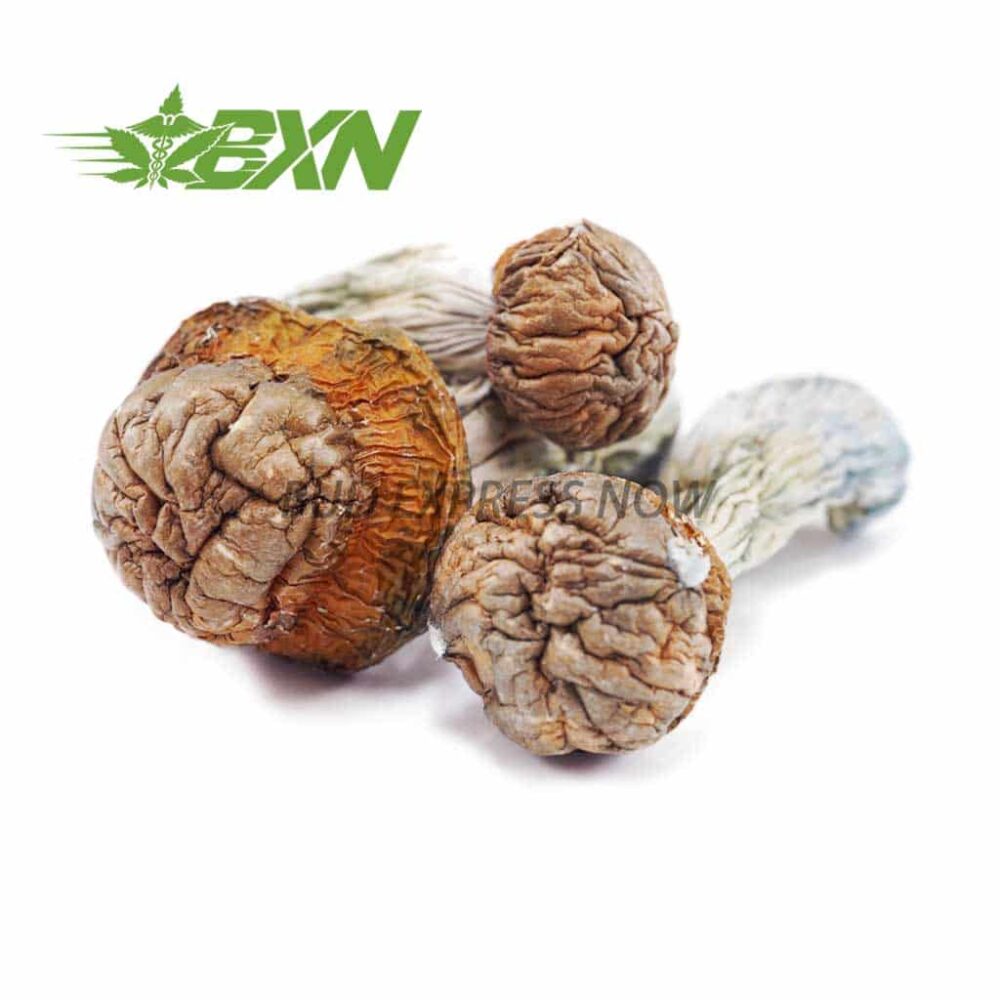
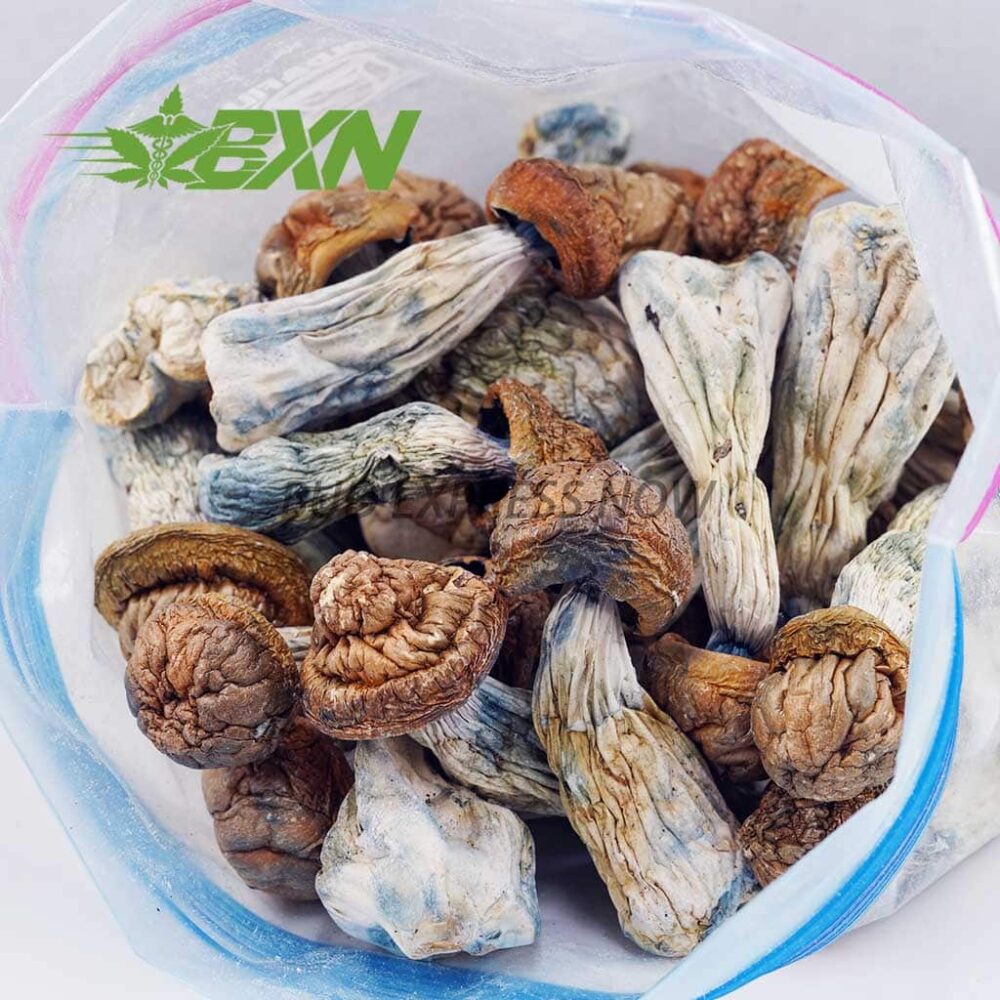
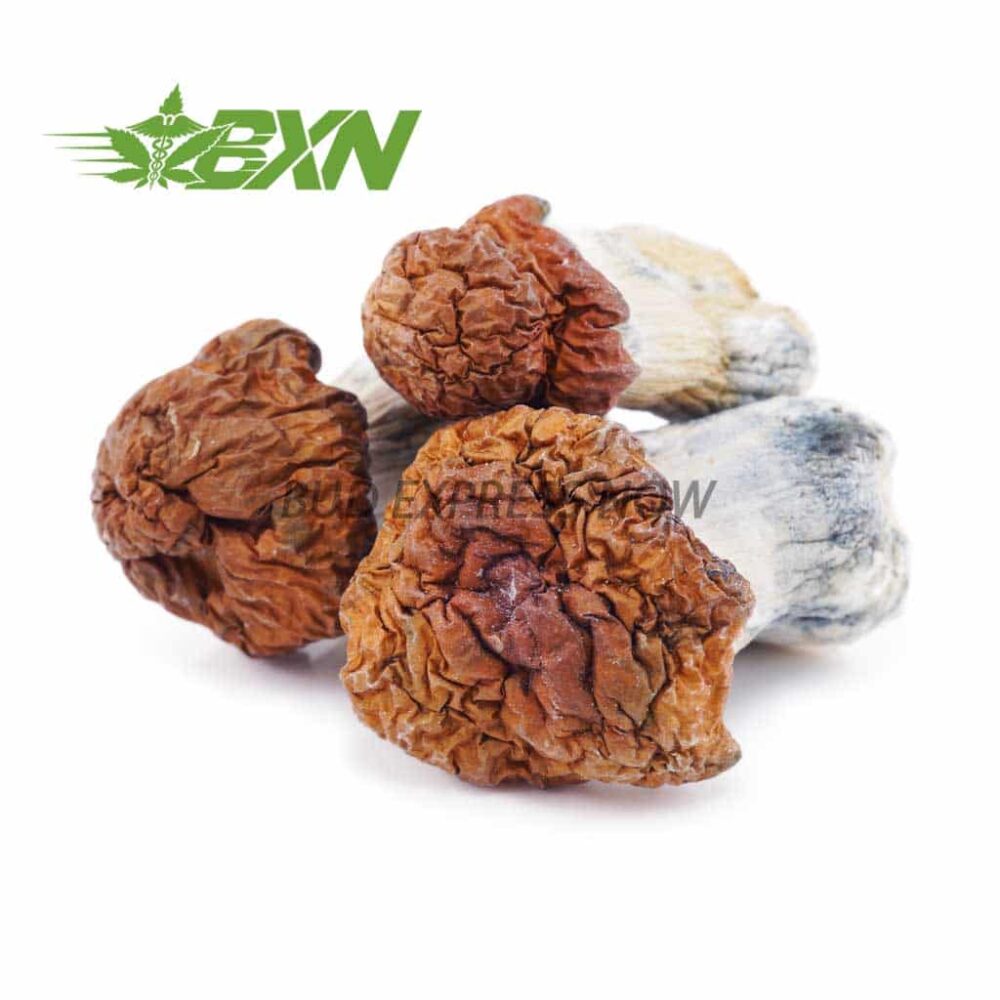
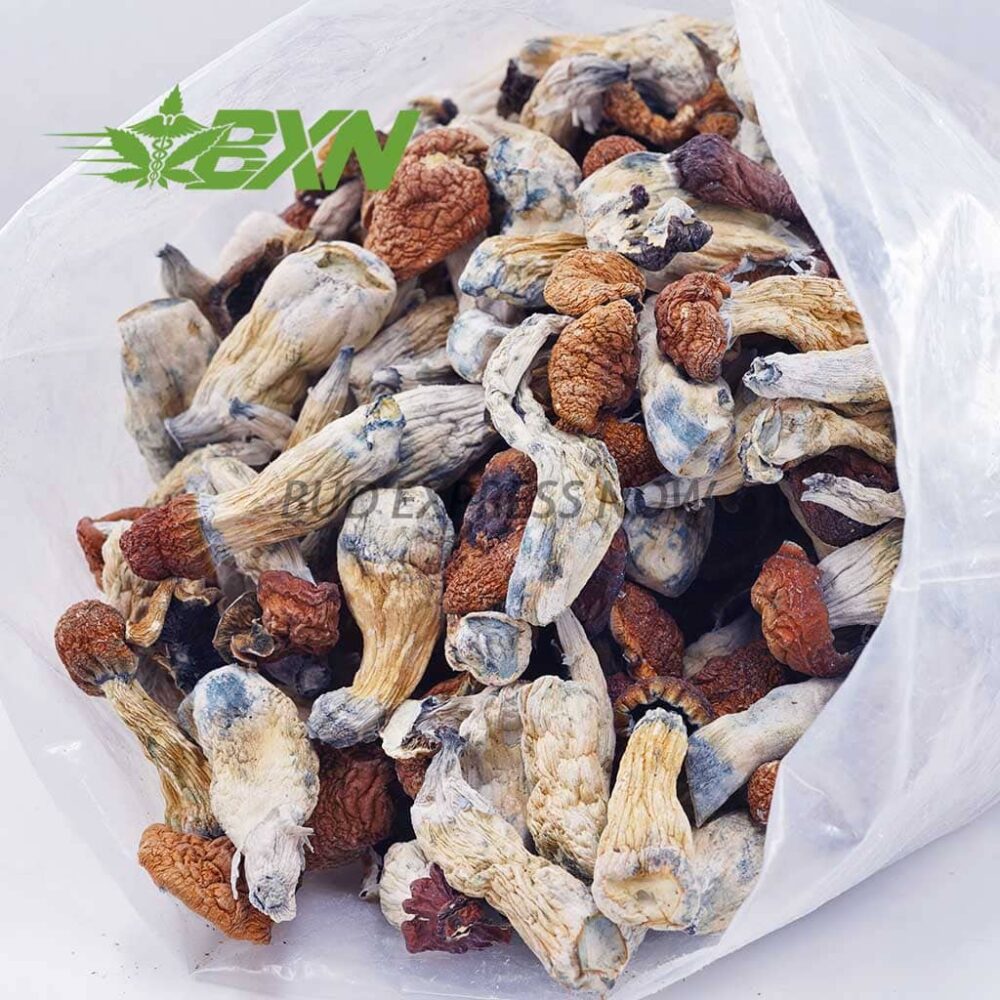
Physical appearance can vary. Tidal Wave mushrooms may show thick stems, broad caps, caramel-to-golden colouring, and noticeable blue bruising after handling. None of those traits proves identity or potency. Blue bruising indicates oxidation of compounds after tissue damage: it isn’t a reliable strength meter.
For a buyer or grower, the key takeaway is simple: the label is a clue, not a guarantee. A carefully selected phenotype can be much stronger than another culture sold under the same name.
Origins & genetics: B+ × Penis Envy, cultivar vs strain, and why names get confusing
Tidal Wave is widely described as a cross between B+ and Penis Envy, two well-known P. cubensis lines. Penis Envy is often associated with dense fruits and high potency, while B+ is known for vigorous growth and broad availability. A cross can inherit traits from both, but it doesn’t produce identical mushrooms every time.
In everyday conversation, people use “strain,” “variety,” “cultivar,” “isolate,” and “phenotype” interchangeably. Technically, those terms can mean different things. “Cultivar” is usually the safer word for a named cultivated line. A phenotype is an individual expression selected from genetically related material. Two growers can hence produce noticeably different Tidal Wave mushrooms while both using a legitimate culture.
Tidal Wave vs Tidal Wave Ape (TW/APE) vs APE: what’s confirmed vs marketing
APE generally means Albino Penis Envy, an albino-associated line connected to Penis Envy genetics. Tidal Wave Ape, often shortened to TW/APE, is commonly marketed as a Tidal Wave-related line with APE-like or albino characteristics. The exact lineage depends on the breeder and the culture’s history.
Here’s where caution helps: names such as “TW2,” “TW3,” “Tidal Wave 4,” or “Tidal Wave Ape” may refer to selections, generations, or seller-specific labels, not universally standard genetic categories. Unless a reputable breeder provides documented lineage and testing, treat the name as informal.
Tidal Wave vs Enigma: relationship, similarities, and key differences
Enigma is a distinctive, mutation-like P. cubensis form associated with coral-like, brainy growth rather than typical caps and stems. It is often linked to Penis Envy-related genetics, but the precise relationship between a particular Enigma culture and Tidal Wave isn’t automatically established.
They may be discussed together because both can be reported as potent and unusual. That doesn’t make them the same. Enigma’s appearance is especially distinctive, while Tidal Wave usually resembles a more conventional mushroom. Neither visual style reliably predicts a specific psilocybin percentage.
How potent is Tidal Wave? Records, lab testing, and what potency % actually means
Tidal Wave has a reputation for being stronger than average cubensis, and some cultivated samples may indeed test that way. Online discussions sometimes cite very high results or “record” percentages. Treat those claims carefully: a single fruit, a selected phenotype, or an unusual test result cannot represent every mushroom sold under the name.
Potency percentage usually refers to the amount of psilocybin and/or psilocin relative to dried mushroom weight. A result of 1% means roughly 10 milligrams of active alkaloid per gram of dry material, though laboratory methods, sample preparation, and reporting conventions matter. A number without the lab method, sample identity, and whether it measures psilocybin, psilocin, or total alkaloids is incomplete information.
A proper certificate of analysis should identify the sample and state the measured compounds. Even then, a test from one batch doesn’t guarantee another batch matches it. If you’re buying from an unregulated source, there may be no reliable testing at all.
Why potency varies: phenotype, growing conditions, storage, and dose-by-weight pitfalls
Potency can vary between genetics, individual fruits, flushes, substrate conditions, harvest timing, and drying practices. Heat, light, moisture, and oxygen can gradually degrade compounds during storage. Powdering may make mixing easier, but it also makes it harder to recognize a damaged or misidentified piece.
The classic mistake is assuming that “one gram is one gram.” It isn’t, if one batch is several times stronger than another. Weight-based estimates can create false confidence, especially with a reputedly potent cultivar. Don’t treat an online chart as a promise.
Effects & experience: what people report (visuals, body load, emotions) + duration timeline
Users commonly report visual patterning, brighter colours, altered depth, unusual associations, laughter, introspection, and a changed sense of time. Others describe heaviness, nausea, trembling, anxiety, or an emotionally demanding experience. With stronger material, ordinary thoughts can feel enormous, sometimes beautiful, sometimes frightening.
A rough timeline is often: noticeable onset within about 20–90 minutes: rising intensity over the next hour or two: a peak lasting several hours: and a gradual return toward baseline over another few hours. Residual tiredness or sensitivity can linger into the next day. Food, individual metabolism, preparation method, expectations, and dose all shift that timeline.
Set & setting for higher-potency cubensis: preparation, trip-sitting, and integration basics
With a stronger cultivar, preparation is less about creating a perfect “spiritual” room and more about removing avoidable problems. Choose a familiar, private space where you won’t need to drive, answer work calls, manage children, or deal with unexpected visitors. Put water, simple snacks, comfortable clothing, and a charged phone within reach.
A sober, trusted trip-sitter can be valuable, particularly when potency is uncertain or someone has little experience. Their job isn’t to direct the experience or argue with someone who is frightened. Calm reassurance, a quieter room, and reminders that the effects are temporary are usually more helpful. They should know about any substances taken and have an emergency plan.
Beforehand, agree on boundaries: no driving, swimming, climbing, cooking with open flames, or leaving the property alone. Avoid adding cannabis because it can intensify confusion or anxiety for some people. Music, gentle lighting, and familiar objects often work better than an ambitious playlist and a room full of strangers.
Afterward, integration can be wonderfully ordinary: sleep, eat, hydrate, write down what you remember, and wait before making major life decisions. If difficult emotions persist, speak with a qualified mental-health professional. One intense night doesn’t require an immediate grand interpretation.
Dosage guidance (harm reduction): beginner to experienced ranges and safer starting points
Because Tidal Wave potency varies so widely, giving a confident “correct” amount would be misleading. The safest principle is start substantially lower than you think you need, wait, and don’t redose early. A mushroom sold as average cubensis may be far stronger than expected, and a reputed Tidal Wave sample deserves extra caution.
For someone with no psychedelic experience, avoiding use is the lowest-risk option. If an adult nevertheless chooses to proceed where legal, harm-reduction services commonly advise beginning with a very small amount of dried material rather than jumping into a standard recreational dose. Experienced users should not assume tolerance makes high-potency mushrooms predictable. A break may reduce tolerance, but it doesn’t remove the risks of panic, impaired judgement, or an unexpectedly strong batch.
Don’t combine doses simply because you “don’t feel it yet.” Wait through the full possible onset window, and remember that redosing can make the peak arrive all at once. A milligram scale is more consistent than a kitchen spoon, but precision equipment cannot solve the problem of unknown potency.
Onset and intensity factors: empty stomach, lemon tek, mixing substances, and tolerance
An empty stomach may make onset feel faster or more noticeable, but it can also increase nausea. “Lemon tek” and other acidic preparations are widely reported to produce a quicker, sharper experience: evidence and individual results vary, so don’t assume they make the experience safer. They may simply compress the timeline.
Mixing substances raises uncertainty. Alcohol can impair judgement and worsen dehydration or nausea. Cannabis may amplify visuals, dizziness, or paranoia. Stimulants can increase heart rate and agitation. Avoid combinations, especially if you’re unsure how either substance affects you.
Tolerance can develop quickly after recent psychedelic use, but it isn’t a safety shield. If you’re taking prescription medication or have a health condition, consult a clinician rather than relying on an internet dose calculator.
Identification & look-alikes: physical traits, common confusion, and why ID isn’t enough
Tidal Wave cubensis may have a stout stem, a golden or caramel cap, and blue bruising, but those features overlap with many other P. cubensis varieties. Albino-related versions may be pale or nearly white. Growing conditions can dramatically change shape, colour, and size.
That makes photographs and marketplace descriptions unreliable identification tools. A mushroom can look familiar and still be a different species, contaminated, degraded, or mislabelled. Wild mushroom identification is particularly risky because poisonous species can resemble edible or psychoactive ones. “It bruised blue” is not a universal safety test.
If you’re considering any mushroom, don’t rely on a seller’s strain name alone. In Canada, unregulated psilocybin products may also lack accurate labelling, contamination screening, or consistent dosage information. Never consume an unidentified wild mushroom. When a sample looks mouldy, smells wrong, is slimy, or has been stored damp, discard it rather than trying to rescue it. There’s no bargain worth a trip to the emergency department.
Risks, side effects, and when to avoid: anxiety, HPPD, psychosis risk, and contraindications
Possible short-term effects include nausea, vomiting, dizziness, impaired coordination, increased heart rate, panic, confusion, and frightening perceptual changes. A difficult experience can feel psychologically overwhelming even when it isn’t medically dangerous. Keep the environment calm and seek urgent help if there is chest pain, severe agitation, seizure, loss of consciousness, dangerous behaviour, or suspected poisoning.
People with a personal or family history of psychotic disorders, mania, or bipolar disorder should avoid psychedelics unless a qualified clinician specifically advises otherwise. The same caution applies during pregnancy and breastfeeding, and for people with serious cardiovascular or neurological conditions. Psilocybin is not a proven substitute for prescribed treatment.
HPPD, persistent visual disturbances after psychedelic use, is uncommon but reported. Flashing lights, trails, visual snow, or afterimages that continue when sober deserve medical attention. Don’t drive or operate machinery while affected.
Interactions and red flags: SSRIs/SNRIs, MAOIs, lithium, stimulants, alcohol, and cannabis
Medication interactions are complicated. SSRIs and SNRIs may blunt or alter psychedelic effects for some people, but that doesn’t make combining them safe or justify changing a prescription. Never stop antidepressants abruptly. MAOIs can create more serious interaction concerns, particularly with other drugs, and require professional advice.
Lithium deserves especially strong caution: reports associate psychedelic use with seizures and other severe reactions. Avoid combining them. Stimulants may worsen anxiety, heart strain, overheating, or agitation. Alcohol can impair decisions and increase nausea, while cannabis can make the experience unexpectedly intense.
Tell a clinician exactly what you take, including supplements and recreational drugs. If you’re in immediate danger, call 911 in Canada or contact your local poison centre. Be honest: accurate information helps responders treat you.
Legality & travel considerations: where psilocybin stands and how laws commonly differ
In Canada, psilocybin and psilocin are generally controlled substances under federal law. Legal access is limited and can involve specific exemptions, clinical research, or regulated programs that may change over time. A storefront, website, social-media seller, or “decriminalized” local policy does not automatically make possession, production, or sale legal.
Rules can differ across provinces and municipalities, but local tolerance should not be confused with a broad legal right. Cannabis legalization also does not legalize psilocybin mushrooms. Don’t assume a cannabis retailer is authorized to sell them.
Travel is an especially poor place to test a grey area. Crossing a provincial or international border with mushrooms, capsules, chocolate, or extracts can create serious legal consequences. Customs authorities may treat products differently from local services, and other countries can impose severe penalties. Never mail or carry psilocybin products on a trip without verified legal advice from the relevant authorities.
For current information, check official Canadian government resources and your provincial rules rather than a seller’s FAQ. If you’re buying legal cannabis online, keep that separate in your mind: legal-age cannabis delivery and mushroom possession are different legal questions.
Bottom line: Tidal Wave is a named cubensis cultivar with a reputation for high and inconsistent potency, not a guaranteed laboratory grade. Treat every batch as unknown, avoid risky combinations, prepare carefully, and skip it entirely if you have major mental-health, medication, or medical risk factors. The most responsible decision may be not using it, and that’s a perfectly valid answer.
Frequently Asked Questions about Mushroom Tidal Wave
What is Mushroom Tidal Wave and how does it differ from other Psilocybe cubensis varieties?
Mushroom Tidal Wave, or Tidal Wave cubensis, is a cultivated Psilocybe cubensis cultivar known for its intense effects and strong phenotypes. Unlike other varieties, it is a hybrid between B+ and Penis Envy strains, which may result in variable potency and appearance among different growers’ samples.
How potent is Tidal Wave compared to other cubensis mushrooms?
Tidal Wave has a reputation for higher potency than average cubensis mushrooms, but potency can vary widely due to genetics, growing conditions, and storage. Lab tests showing high psilocybin percentages are not guarantees; each batch can differ significantly, so caution and starting with low doses are advised.
What safety and harm reduction practices should I consider when using Tidal Wave mushrooms?
Use Tidal Wave mushrooms in a safe, private space with no obligations, have a sober, trusted trip-sitter, and avoid combining with other substances like alcohol or cannabis. Start with a small dose, wait fully before redosing, and be prepared for an intense experience. Integration involves rest, hydration, and reflection, with professional help if needed.
Can you identify Tidal Wave mushrooms based on appearance alone?
No, visual traits like thick stems, golden caps, and blue bruising overlap with many cubensis varieties and are unreliable for positive identification. Misidentification risks consuming toxic mushrooms. Never rely solely on appearance or seller labels, especially with wild or unregulated products.
What legal considerations should someone in Canada know about possessing or using Tidal Wave mushrooms?
Psilocybin mushrooms, including Tidal Wave, are controlled substances in Canada and generally illegal outside permitted research or exemption frameworks. Laws vary by province and municipality but local tolerance doesn’t equal legality. Transporting or crossing borders with mushrooms risks serious penalties. Always check official government sources before use.
How do factors like stomach contents and preparation methods affect the onset and intensity of Tidal Wave?
An empty stomach can speed onset but may increase nausea. Methods like lemon tek typically produce quicker, sharper effects by acidifying the mushroom material, though evidence varies. Mixing with substances like alcohol or cannabis can unpredictably amplify effects or anxiety. Never combine substances without understanding risks.
Only logged in customers who have purchased this product may leave a review.
Related products


Reviews
There are no reviews yet.