


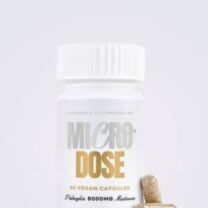
Euphoria Psychedelics – Micro Dose Capsules 6000mg
$80.00
Euphoria Psychedelics Micro Dose Capsules 6000mg are the larger-size pack in the brand’s capsule range. It holds 6000mg of psilocybin in total, divided evenly into pre-measured capsules, so there’s nothing to weigh and no earthy taste. It’s a good value option for regular buyers who want fewer reorders. Follow the serving guidance on the label. It comes in discreet packaging to keep it fresh. Store in a cool, dry place, away from children and pets. For adults only.
Out of stock
NOTIFY ME WHEN AVAILABLE
Curious about euphoria psychedelics micro dose capsules but unsure what’s actually inside, how much is too much, or whether microdosing lives up to the online hype? You’re not alone. Capsules can look refreshingly simple, one bottle, one label, no smoke, but psychedelic products demand more caution than choosing between indica and sativa flower. Potency, ingredients, your mental-health history, medications, and the legal status of the product all matter. This guide explains what these capsules are generally marketed for, how users approach microdosing, what research can and can’t confirm, and how to reduce avoidable risks in Canada. It isn’t medical advice or a recommendation to use psychedelics. Products are for adults of legal age only: 19+ in most provinces, 18+ in Alberta, and 21+ in Quebec. If you’re considering them, think of this as a practical safety checklist, not a permission slip.
Key Takeaways
- Euphoria psychedelics micro dose capsules typically contain very small amounts of psychedelic mushrooms or blends, but contents and potency vary widely and require careful label and testing verification.
- Microdosing effects differ by individual and context, with some users experiencing mood or creativity changes while others may feel anxiety or no benefit, so cautious personal assessment is essential.
- Responsible microdosing involves starting with the lowest labeled dose, avoiding daily use, tracking effects, and not mixing with medications or substances without professional advice.
- Safety is paramount: avoid use if pregnant, underage, with psychosis risk, or cardiovascular issues, and never drive or perform risky tasks after dosing capsules.
- Legal status in Canada is complex; psilocybin remains controlled and online sales are often unregulated, so consumers must verify seller credibility, product quality, and lab testing before purchase.
- Seek immediate medical help for severe reactions and professional support if microdosing causes persistent mental or physical health issues; harm reduction includes secure storage and no sharing of capsules.
What are euphoria psychedelics micro dose capsules?
The phrase “euphoria psychedelics micro dose capsules” usually refers to capsules sold or advertised as containing a very small amount of a psychedelic mushroom preparation, mushroom extract, or a proprietary blend. The exact contents can vary dramatically. Some products may claim to contain Psilocybe material: others may use functional mushrooms, hemp ingredients, or an unclear “proprietary” formula. The name alone doesn’t prove what’s in the capsule.
A microdose is generally described as a dose intended to be below the level that causes obvious visual changes or a full psychedelic experience. That doesn’t mean it’s inactive, risk-free, or consistent from person to person. Capsule strength can be uneven, especially when mushroom material hasn’t been properly tested and mixed. One capsule may feel like nothing: another may make you noticeably anxious or altered.
Before buying, check the ingredient panel, stated amount per capsule, lot information, testing documentation, and seller details. In Canada, a product sold online isn’t automatically legal or quality-controlled simply because it arrives in discreet packaging. Treat vague claims, “legal magic,” “instant creativity,” or “no side effects”, as warning signs.
Euphoria Psychedelics micro dose capsules: product types and how to choose
If you’re comparing products online, don’t choose by the most exciting product name. Choose by transparency. A clear label is more useful than a dramatic promise, particularly when you’re new to psychedelics.
Micro Brain vs Micro Focus vs Micro Calm: intended use cases (focus, mood, calm) and who they’re for
Names such as Micro Brain, Micro Focus, and Micro Calm are typically marketing categories rather than standardized medical formulations. “Brain” or “Focus” may be aimed at people seeking concentration or creative energy, while “Calm” may appeal to someone looking for a gentler, less stimulating experience. Those labels don’t guarantee a particular effect.
Your response depends on dose, sleep, food, stress, expectations, surroundings, and personal sensitivity. A product marketed as calming could feel uncomfortable if it contains a psychedelic amount, or if you’re already worried about trying it. If you’re taking medication, managing anxiety, or have a history of mood instability, choosing by marketing category is especially unreliable. Ask what every active ingredient is, not just what the front label suggests.
Dose formats and labels explained (mg per capsule, capsule count, blends, add-ons)
Look for the amount per capsule, total capsule count, lot number, expiry date, and a complete ingredient list. “500 mg mushroom” does not necessarily mean 500 mg of psilocybin: it may mean 500 mg of dried mushroom material. Those are very different measurements. If the label gives no active-ingredient amount, don’t guess.
Blends and add-ons deserve extra attention. Caffeine, cannabis extracts, kava, herbs, nootropics, and stimulants can change the experience or create interaction concerns. A “two-for-one” bundle also makes it easier to lose track of what you took. Keep the original container, photograph the label, and don’t combine unfamiliar products on your first trial.
Expected effects: what microdosing can and can’t do
Microdosing is often discussed as a productivity shortcut: a little capsule, a clearer head, and suddenly your inbox fears you. Real life is less tidy. Some users report subtle changes in mood, energy, sociability, creativity, or how interesting ordinary tasks feel. Others notice no benefit, or feel restless, distracted, nauseated, or more anxious.
Short-term effects (mood, energy, anxiety, creativity) and variability by set/setting
Your “set” means your mindset: your “setting” is the environment around you. A calm Saturday at home is not the same as a tense workday, crowded concert, or long drive. Expectations can shape what you notice, too. If you’re waiting for a productivity superpower, normal fluctuations in motivation may seem like proof, or disappointment.
Possible unwanted effects include headache, stomach upset, dizziness, increased heart rate, sleep disruption, irritability, panic, or feeling mentally “off.” Never drive, cycle in traffic, operate tools, or make important decisions until you know how a product affects you. A sub-perceptual intention does not guarantee sub-perceptual results.
What research says so far (placebo-controlled findings, limitations, realistic expectations)
Research on psychedelic microdosing remains early and uneven. Observational surveys often find that people report improved mood, focus, or creativity, but self-selection and expectation can influence those results. Placebo-controlled studies have sometimes found that perceived benefits are similar to placebo effects, while other experiments suggest small, context-dependent changes. Studies are generally limited by small samples, short follow-up periods, inconsistent substances, and difficulty verifying what participants actually took.
That means you shouldn’t treat social-media testimonials as clinical evidence. Microdosing hasn’t been established as a treatment for depression, anxiety, ADHD, chronic pain, or substance use. If you’re hoping to replace professional care, pause and speak with a qualified clinician instead.
How to microdose capsules responsibly: beginner dosing and schedules
There is no universally safe beginner dose for an unregulated capsule. Product strength and individual sensitivity can vary too much. The safest approach is not to copy a stranger’s number online: it’s to avoid products with unclear contents and consult a healthcare professional who understands your medications and history.
Common protocols (Fadiman, Stamets) and how to pick a schedule
The Fadiman protocol is commonly described online as dosing one day followed by two days off. The Stamets protocol is often described as several dosing days followed by rest days, sometimes with additional ingredients. These are popular community frameworks, not medically validated prescriptions. Neither schedule removes the risks of mislabelled potency, interactions, anxiety, or psychological distress.
If you proceed even though those uncertainties, avoid daily use and don’t stack doses because you “didn’t feel anything” right away. Capsules can take time to produce effects, especially with food, and taking more can turn a subtle experiment into an unexpectedly intense experience. Choose a low-demand day, stay somewhere familiar, and have a trusted sober person available if you’re inexperienced.
Finding your dose: start-low guidance, tracking, tolerance breaks, when to stop
Use the smallest labelled amount, never open or split a capsule unless the manufacturer explicitly says the contents are evenly mixed, and wait to understand the full response before considering another occasion. Keep a simple log: product and lot, amount, time, food, sleep, mood, medications, effects, and next-day sleep. This is less glamorous than a wellness spreadsheet, but much safer than relying on memory.
Stop if you experience panic, confusion, racing thoughts, persistent insomnia, worsening mood, or unusual beliefs. Don’t use more to push through an unpleasant reaction. Take extended breaks rather than treating microdosing as a daily supplement, and seek help if effects continue after the expected window or interfere with work, relationships, or sleep.
Safety, risks, and harm reduction
Psychedelics can affect perception, emotions, heart rate, and judgment. A capsule may look like an ordinary supplement, but the risk profile isn’t ordinary. Keep products locked away from children, pets, and anyone who could mistake them for medication. Don’t share them: you can’t know another person’s health history or sensitivity.
Who should avoid microdosing (pregnancy, bipolar/psychosis risk, adolescents, cardiovascular concerns)
Avoid psychedelic microdosing during pregnancy or breastfeeding because safety data are inadequate. Adolescents should not use these products. People with a personal or close family history of psychosis, schizophrenia, mania, or bipolar disorder should avoid psychedelics unless specifically advised by a qualified specialist: psychedelic effects may worsen or complicate symptoms.
Use particular caution, or avoid use and seek medical advice, if you have uncontrolled high blood pressure, significant heart rhythm problems, seizure conditions, severe anxiety, or current suicidal thoughts. If you’re in crisis, a capsule is not a treatment plan. Contact emergency services or a Canadian crisis resource instead.
Interactions and mixing risks (SSRIs/SNRIs/MAOIs, stimulants, alcohol, cannabis, other psychedelics)
Don’t stop or change prescription medication to take a psychedelic. SSRIs and SNRIs may alter subjective effects, but that doesn’t make combinations predictable. MAOIs can create serious interaction concerns with many substances. Stimulants, decongestants, ADHD medications, cocaine, and other activating drugs may increase anxiety, heart rate, or blood pressure. Ask a pharmacist or prescriber about your exact medication list.
Avoid mixing with alcohol, cannabis, other psychedelics, or unknown supplements. Cannabis can intensify confusion or anxiety for some people, even if you usually tolerate it well. The safest rule is simple: one variable at a time, no driving, and no redosing to chase an effect.
Legality, quality, and buying considerations (Canada-focused)
Canadian rules around psilocybin and products marketed as psychedelic capsules are not the same as rules for legal cannabis. Psilocybin and psilocin are controlled substances, and ordinary retail sale is not broadly authorized. Limited exemptions, clinical research, or practitioner pathways don’t make general online sales automatically legal. Provincial age rules for cannabis also don’t create a blanket legal age for psychedelic capsules.
Be cautious with websites that imply “shipped anywhere in Canada” means government approval. Consider privacy, import risk, payment security, and whether a seller provides a real business identity. Don’t assume a familiar cannabis storefront has the same authorization for psychedelic products.
Quality checks: lab testing, species/strain transparency, contaminants, storage, and counterfeit red flags
A credible quality document should identify the product and lot, testing date, testing laboratory, active compounds where applicable, and contaminant results. A logo that says “lab tested” is not evidence by itself. Be wary of screenshots with no lot number, copied certificates, spelling errors, missing addresses, or pressure to pay by irreversible methods.
Ask whether the claimed species or strain is identified and whether the product contains dried mushroom, extract, or something else. “Natural” doesn’t guarantee safe, and mushroom products can raise contamination or misidentification concerns. Store any capsule in its original child-resistant container, cool and dry, away from light. If the seal is broken, the capsules smell strange, are discoloured, or don’t match the label, don’t take them.
When to get help: adverse reactions, mental health support, and substance-use resources
Seek urgent help for chest pain, trouble breathing, seizure, severe agitation, collapse, dangerous behaviour, or loss of contact with reality. Call 911 in an emergency. If someone is panicking, stay calm, reduce noise and bright light, remove hazards, and don’t leave them alone. Tell responders exactly what was taken, how much, and when: honesty helps treatment.
Contact a poison centre for suspected poisoning or a product with unknown ingredients. In Canada, provincial poison-centre numbers are available through Health Canada’s poison-centre information. For immediate emotional crisis support, call or text 988. If use is becoming hard to control, reach out to a family doctor, pharmacist, local addictions service, or Canada’s substance-use help resources.
You don’t need to wait for a dramatic crisis. Repeatedly increasing the amount, hiding use, neglecting responsibilities, or feeling unable to take a break are good reasons to ask for support. A confidential conversation early is far easier than repairing a crisis later.
Frequently Asked Questions about Euphoria Psychedelics Micro Dose Capsules
What are euphoria psychedelics micro dose capsules and what do they contain?
Euphoria psychedelics micro dose capsules typically contain a very small amount of psychedelic mushroom material, extracts, or proprietary blends. However, exact ingredients vary widely, including functional mushrooms or hemp, and labels may not clearly specify active psychedelic compounds like psilocybin.
How should beginners approach dosing with euphoria micro dose capsules safely?
Beginners should start with the smallest labeled dose, avoid doubling up, and track effects carefully. It’s important to choose products with transparent ingredient lists and avoid daily use or mixing with other substances. Consulting a healthcare professional is advised before starting microdosing.
Can microdosing euphoria psychedelics capsules enhance creativity or focus?
Some users report subtle mood or focus improvements, but effects vary by individual mindset, environment, and product potency. Scientific studies show mixed results, with many benefits likely influenced by placebo or expectations. Microdosing is not an established treatment for any condition.
Who should avoid using euphoria psychedelics micro dose capsules?
People who are pregnant, adolescents, or have a personal or family history of psychosis, bipolar disorder, or severe anxiety should avoid these capsules. Also, those with heart conditions, seizure disorders, or on certain medications should consult a doctor first.
Are euphoria psychedelics micro dose capsules legal and safe to buy in Canada?
Psilocybin is controlled in Canada, and general retail sale of these capsules isn’t broadly authorized. Products sold online may not be legal or quality-controlled. Buyers should check labels, testing documents, and seller transparency to reduce risk.
What interactions and risks exist when microdosing psychedelics with other substances?
Combining microdose capsules with medications like SSRIs, MAOIs, stimulants, alcohol, or cannabis can lead to unpredictable and potentially harmful effects. Avoid mixing and never alter prescription medications without medical advice.
Only logged in customers who have purchased this product may leave a review.
Related products
Reviews
There are no reviews yet.