
African Transkei is a classic mushroom strain named after the Transkei region of South Africa’s Eastern Cape. It’s known for its golden-brown caps and its balanced reputation, which make it a popular pick for both newer and experienced users. Our African Transkei mushrooms are carefully dried, quality-checked, and sealed in discreet, airtight packaging to keep them fresh. For adults 21+ only. Store in a cool, dry, dark place, away from children and pets.


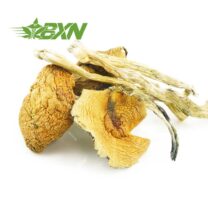
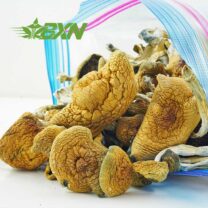
Mushroom – African Transkei
If you’ve searched for mushroom African Transkei, you’ve probably found a tangle of strain names, dramatic potency claims and online listings that treat every batch as identical. They aren’t. “African Transkei” usually refers to a Psilocybe cubensis variety associated with South Africa’s former Transkei region, but its appearance and reported effects can vary with genetics, growing conditions, storage and other factors.
This guide is educational, not a recommendation to possess, grow or consume psilocybin mushrooms. Laws differ sharply across Canada and elsewhere, and products are for adults of legal age only. You’ll find the history, taxonomy, reported effects, risks and practical harm-reduction information here, with special attention to what remains uncertain. This is one product category where avoiding unknown or untested products deserves extra emphasis.
Key Takeaways
- African Transkei is a Psilocybe cubensis mushroom variety linked to South Africa’s Transkei region but varies in potency, appearance and effects due to genetics and growing conditions.
- The name ‘African Transkei’ is informal and not scientifically standardized, so potency and identity can be inconsistent and should not be assumed precise.
- Reported effects include visual changes, altered perception of time and emotional shifts, but can also include nausea and confusion; individual sensitivity and product variability heavily influence these outcomes.
- Psilocybin mushrooms carry legal risks and health considerations; always check local laws and understand potential interactions.
- Harm reduction includes not using alone, avoiding substance combinations and choosing a safe environment with sober support where lawful.
- Mental-health vulnerabilities can increase the risk of adverse psychological reactions; those with such histories should discuss concerns with a healthcare professional.
What Is the Mushroom African Transkei?
“African Transkei” is a common name used for a psilocybin mushroom variety generally identified as Psilocybe cubensis. It’s associated with the Transkei region of South Africa and is often described as producing medium-to-large pale or caramel-coloured caps, sturdy stems and noticeable bruising when handled.
The important catch: a name isn’t a laboratory result. Online sellers and growers may use “Transkei” for visually similar mushrooms, regional genetics or a line that has been selectively cultivated for years. That means potency can differ from one specimen or batch to another. A mushroom that looks like Transkei may not be genetically verified at all.
Users commonly report visual changes, altered time perception, introspection and emotional amplification. Those are subjective reports, not guaranteed effects, and psilocybin can also bring nausea, fear or confusion. A familiar “strain” label does not provide the same certainty as verified testing.
Origin & History: Why It’s Called “Transkei” (South Africa Context)
Transkei was a former territory in southeastern South Africa, along the Eastern Cape, with a warm climate, grasslands and a long history of cattle farming. The name attached to this mushroom variety likely reflects an alleged collection location or regional lineage rather than a formal scientific designation.
That distinction matters. Unlike a registered cultivar with documented breeding records, many mushroom names circulate through enthusiast communities. A label can travel from a spore print to a grow journal, then to a marketplace, picking up assumptions along the way. “African Transkei” may therefore describe a lineage story as much as a proven geographic origin.
Wild mushroom collecting in South Africa also carries real identification risks. The presence of dung-loving P. cubensis does not make every brown or white mushroom safe. Misidentification can cause severe poisoning, and cooking, drying or “testing a tiny piece” isn’t a reliable safety method. Foraging is not a casual extension of shopping for legal cannabis.
Taxonomy & Lookalikes: Psilocybe cubensis vs Other African Psilocybe Species
Most Transkei listings place the variety within Psilocybe cubensis, a dung-associated species found in tropical and subtropical regions worldwide. “Transkei” is best understood as a cultivar or regional label, not a separate species.
Africa contains other Psilocybe species, including mushrooms that may resemble cubensis in photographs. Appearance alone can’t reliably distinguish them. Cap colour changes with age and moisture; bruising can be subtle; and cultivated mushrooms may look unlike their wild counterparts.
A useful comparison is:
| Label | What it usually means | Confidence you should place in the name |
| African Transkei | Claimed P. cubensis variety | Moderate at best without documented genetics |
| Golden Teacher | Common P. cubensis cultivar name | Not a standardized potency grade |
| Penis Envy | Selective P. cubensis lineage | Often reported as stronger, but batches vary |
| Wild African Psilocybe | A broader group of species | High identification risk without expertise |
If accurate species identification matters, rely on qualified mycological testing, not a marketplace photo or a forum comment.
Habitat & Distribution: Where Transkei-Type Cubensis Grows (Dung, Climate, Seasonality)
- cubensis typically favours warm, humid environments and nutrient-rich cattle or other large-herbivore dung. In suitable regions, fruiting is often linked to rainfall, humidity and moderate temperatures rather than a simple calendar month. The Transkei association points to southeastern South African conditions, but cultivated examples now appear far beyond Africa.
For home growers, this section is descriptive, not a cultivation manual. Growing psilocybin mushrooms may be illegal where you live, and contaminated cultures can produce dangerous moulds or bacteria. Spores are sometimes treated differently from active mushrooms under local law, but “spores are legal” is not a universal rule, and germinating them can change the legal situation.
Wild habitat also introduces extra variables: pesticides, heavy metals, animal waste and lookalike fungi. Never treat dung habitat as a safety guarantee.
Potency Profile: How Strong Is African Transkei Compared to Golden Teacher, Penis Envy, Malabar, Trinity?
There is no dependable potency league table for named cubensis varieties. African Transkei is often described by users as moderate to strong, while Penis Envy and Trinity are frequently marketed as especially potent. Golden Teacher and Malabar are commonly portrayed as more approachable. Those comparisons are rough folklore, not a substitute for chemical analysis.
Potency depends on genetics, mushroom age, growing conditions, drying method, storage and whether the material is a whole mushroom, powder, chocolate or extract. Edible products can also be inaccurately labelled or unevenly mixed. A “strain” name cannot tell you the amount of psilocybin in a portion.
| Name | Common reputation | Practical takeaway |
| African Transkei | Moderate to strong | Treat as unpredictable |
| Golden Teacher | Moderate, approachable | Still batch-dependent |
| Malabar | Moderate | No standardized strength |
| Penis Envy | Often stronger | Greater uncertainty and risk |
| Trinity | Often marketed as very strong | Marketing claims need verification |
If a product has no credible testing, assume its strength is unknown, not average.
Effects & Trip Timeline: Onset, Peak, Duration, Aftereffects
People commonly report first effects within roughly 20–90 minutes when swallowed, although food, preparation and individual digestion can shift that window. The most intense period often arrives around two to three hours, with noticeable effects lasting approximately four to six hours. Some people feel mentally or emotionally “afterglowy” for the rest of the day; others feel tired, unsettled or headache-prone.
Reported effects may include brighter colours, pattern movement, altered music appreciation, laughter, introspection and a distorted sense of time. Cannabis can intensify the experience and make anxiety or confusion harder to manage, so combining the two is not a harmless upgrade.
Delayed onset can lead people to take more before the first amount has taken effect, increasing unpredictability and risk. Avoid relying on repeated dosing to chase an onset.
Dosage Guide (Educational): Microdose to High Dose + Factors That Change Intensity
There is no reliable universal dosage guide for untested mushrooms, and providing a target amount could create a false sense of safety. Labels such as “microdose,” “low,” “moderate” and “high” are informal categories, not standardized measurements or guarantees. A product marketed as a microdose may contain more active material than expected, especially if it is unevenly mixed or poorly tested.
- Microdose: commonly intended to produce little or no obvious intoxication, but effects and impairment can still be unpredictable.
- Low dose: may involve noticeable mood, sensory and time changes.
- Moderate dose: may produce clear psychedelic effects, impaired judgement and a greater chance of anxiety.
- High dose: may produce intense perceptual and psychological effects, with substantially higher risks of panic, accidents and loss of orientation.
Do not treat a high-dose category as a target, redose during delayed onset, drive or combine psilocybin with alcohol, cannabis or other drugs. Body size is only one factor: tolerance, sleep, food, mood, medications, mental-health history and product potency all matter. If you take prescription medicines, particularly psychiatric medicines, ask a qualified clinician or pharmacist about interactions rather than relying on internet anecdotes.
Why Some Users Report “Intense Visuals”: Set, Setting, Dose, and Individual Sensitivity
Strong visuals aren’t proof that African Transkei is uniquely powerful. They can reflect an unexpectedly potent product, darkness, music, expectation or individual sensitivity. “Set” means your mindset; “setting” means the physical and social environment. A calm, familiar room with a trusted sober person is generally less risky than a crowded party, unfamiliar house or public space.
Sleep loss, grief, stress and cannabis use can tilt an experience toward confusion. So can treating online trip reports as a promise: if you expect neon geometry, ordinary sensations may feel disappointing, and you may take additional risks.
If someone is affected, reduce hazards by removing car keys, securing balconies and pets, silencing stressful notifications and keeping water and a light snack available. Psychedelics don’t make poor surroundings magically competent.
Short-Term Risks & Side Effects (Physical): Nausea, Heart Rate, Coordination, Serotonin-Related Concerns
Short-term physical effects can include nausea, vomiting, sweating, dizziness, tremor, dry mouth, pupil dilation and a faster heart rate. Coordination and judgement may be impaired, increasing the risk of falls, burns, traffic collisions and unsafe decisions. Don’t drive, cycle in traffic, swim or operate equipment while affected.
Serotonin-related toxicity is uncommon with psilocybin alone but can be serious when substances or medicines that affect serotonin are combined. Potential warning signs include severe agitation, confusion, overheating, heavy sweating, muscle rigidity, shaking or rapid deterioration. Seek emergency help immediately if these appear.
Chest pain, difficulty breathing, seizures, unconsciousness or severe vomiting also warrant emergency services. Tell responders what was taken if you can: accurate information helps them treat you.
Psychological Risks: Anxiety/Panic, Psychosis Vulnerability, HPPD, and When to Avoid Use
A difficult experience can involve panic, paranoia, frightening thoughts or a feeling that reality has permanently changed. Risk is higher with unknown potency, a chaotic setting, personal or family history of psychosis or bipolar disorder, serious current anxiety and mixing substances. People with those vulnerabilities should avoid psilocybin and discuss concerns with a healthcare professional.
Rarely, persistent perceptual changes, often called hallucinogen persisting perception disorder, or HPPD, are reported after psychedelic use. Evidence is still limited, but ongoing visual disturbances deserve medical attention. Seek urgent help for suicidal thoughts, inability to care for yourself, dangerous behaviour or symptoms of psychosis.
A sober support person can help, but they aren’t a substitute for emergency care. If someone may hurt themselves or others, contact local emergency services rather than trying to manage the situation privately.
Safety & Harm Reduction: Preparation, Trip-Sitting, Interaction Risks, and What to Do During a Bad Trip
The safest option is not using an illegal or untested product. If an adult nevertheless chooses to use, harm reduction starts before consumption:
- Check local law and avoid unverified chocolates, capsules or powders.
- Don’t use alone: choose a calm, familiar setting and a sober, trusted sitter.
- Avoid mixing with alcohol, cannabis, stimulants or other psychoactive drugs.
- Keep the session free of driving, swimming, heights and responsibilities.
- Have a charged phone and a plan for emergency help.
During a bad experience, lower lights and noise, speak calmly, remind the person that effects are temporary, and avoid arguing about what they see. Encourage slow breathing and small sips of water. Don’t restrain them unless there is immediate danger, and don’t give more drugs to “balance” the trip. Call emergency services for injury, extreme agitation, overheating, seizures, unconsciousness or risk of self-harm.
Addiction & Dependence: Tolerance, Frequency Risks, and Signs Use Is Becoming a Problem
Psilocybin is not typically associated with the same physical withdrawal pattern as alcohol or opioids, and tolerance can develop quickly with repeated use. That doesn’t make frequent use consequence-free. Chasing stronger experiences, neglecting work or relationships, spending beyond your budget, using despite anxiety or repeatedly breaking personal limits can signal a problem.
Ask yourself: are you using it because you genuinely want the experience, or because ordinary life feels impossible without it? Keeping a simple record of frequency, mood and consequences can reveal patterns that memory politely edits.
If use is becoming difficult to control, speak with a doctor, counsellor or local substance-use service. Support is useful even when the substance isn’t physically addictive in the way people usually mean.
Legal Status: South Africa and International Overview (Psilocybin, Spores, and Cultivation)
Psilocybin and psilocin are controlled substances in many jurisdictions, including Canada. Rules can apply to possession, sale, importation, extraction and cultivation. Canadian cannabis legalization does not legalize psilocybin mushrooms, and ordering them online can create legal, privacy and delivery risks. Provinces and territories may differ in enforcement, but an online storefront is not proof that a product is lawful.
South African law and international rules also distinguish, or sometimes fail to clearly distinguish, between active mushrooms, spores, mycelium and prepared products. Those details change over time and may depend on concentration and intended use. Don’t rely on a forum post, a seller’s “legal” badge or a product page.
Before possessing anything, check current guidance from official government sources or consult a qualified lawyer. For Canadian readers, legal-age cannabis purchases through authorized retailers remain a separate category: don’t assume the same rules cover psychedelic products.
Frequently Asked Questions About Mushroom African Transkei
What is the Mushroom African Transkei and how is it identified?
African Transkei usually refers to a Psilocybe cubensis variety linked to South Africa’s Transkei region. Descriptions include pale to caramel-coloured caps, sturdy stems and noticeable bruising, though genetics and growth conditions can cause substantial variation.
How does the potency of African Transkei compare to other Psilocybe cubensis varieties like Golden Teacher or Penis Envy?
African Transkei is often described as moderate to strong, with potency varying greatly due to genetics and environment. Penis Envy is generally reported as stronger, while Golden Teacher is often described as more approachable, but no standardized potency scale exists.
What are the typical effects and duration of an African Transkei psilocybin mushroom trip?
Effects are often reported within 20–90 minutes, with a more intense period around two to three hours and noticeable effects lasting approximately four to six hours. Visual changes, altered time perception, introspection, nausea and confusion may occur.
What safety precautions should be taken when using African Transkei mushrooms?
The safest choice is not to use illegal or untested products. Where lawful, avoid mixing substances, never drive or operate machinery while affected, use a sober sitter in a calm environment and have a plan for emergency assistance. People with relevant mental-health or medication concerns should consult a clinician beforehand.
Why do some users report intense visual effects with African Transkei mushrooms?
Intense visuals may result from product variability, individual sensitivity, environment, mood or combining with substances such as cannabis, rather than being unique to African Transkei.
What is the legal status of African Transkei mushrooms in South Africa and Canada?
Psilocybin mushrooms, including African Transkei, are controlled substances in many places; possession, sale and cultivation can be illegal, with laws varying across regions. Check current official regulations and consult a qualified legal professional before acquiring or handling them.
Only logged in customers who have purchased this product may leave a review.
Related products
Reviews
There are no reviews yet.