Blue Meanies are one of the most talked-about mushroom strains, known for their distinctive bluish bruising and strong reputation among experienced users. Our Blue Meanies are carefully dried and checked for quality, then sealed in discreet, airtight packaging to keep them fresh. For adults 21+ only. Store in a cool, dry, dark place, away from children and pets.


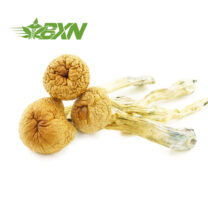
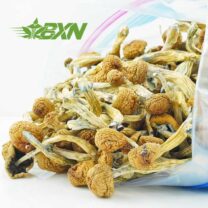
Mushroom – Blue Meanies
If you’ve searched for mushroom blue meanies, you may have noticed something confusing: the name can point to two very different mushrooms. One meaning refers to Panaeolus cyanescens, a naturally occurring species known for intense potency. The other is a trade name used for certain Psilocybe cubensis strains. Same nickname, different fungi, and that difference matters.
This guide explains how the name is used, what experienced foragers look for, why potency can be unpredictable, and how to think about psychedelic mushroom safety. It’s written for adults in Canada, where psilocybin mushrooms remain illegal to possess, produce, or sell outside limited exemptions and authorised research or access pathways. This isn’t a buying guide, cultivation manual, or substitute for professional advice. Think of it as a clear map through a topic full of misleading labels and overconfident internet claims.
Key Takeaways
- The term “mushroom blue meanies” can refer to either the potent species Panaeolus cyanescens or a Psilocybe cubensis strain, making clear identification essential.
- Panaeolus cyanescens typically grows in tropical/subtropical grasslands enriched by grazing animals and is known for blue bruising, but bruising alone doesn’t guarantee safe or psychoactive mushrooms.
- Misidentification risks are high due to similar-looking non-psychoactive or toxic species; expert confirmation is crucial before consumption to avoid poisoning.
- Potency of Blue Meanies varies widely by species, strain, freshness, and individual sensitivity; always approach unknown batches with caution and start with a low dose.
- Safe use includes waiting fully for onset before redosing, avoiding mixing substances, using in a safe environment with a sober sitter, and being ready to seek emergency help if severe symptoms occur.
- In Canada, possession and use of psilocybin mushrooms remain illegal outside authorized contexts, underlining the importance of understanding legal and safety considerations before use.
What Are Mushroom Blue Meanies? (Two Meanings Explained)
Blue Meanies as Panaeolus cyanescens (the species)
In mycology, “Blue Meanies” most commonly refers to Panaeolus cyanescens, a small, delicate mushroom in the Panaeolus genus. It’s associated with tropical and subtropical grasslands, especially areas enriched by cattle or other grazing animals. The species contains psilocybin and psilocin, the compounds responsible for psychedelic effects.
The nickname is linked partly to its tendency to bruise blue when handled. That colour change reflects chemical oxidation, but it isn’t a magic “yes” stamp for identification. Several mushrooms can bruise or stain, and bruising alone can’t tell you whether a specimen is safe, or even psychoactive.
Blue Meanies as a Psilocybe cubensis strain (the marketing name)
Online, “Blue Meanies” is also used as a name for a Psilocybe cubensis variety. This is a completely different species from Panaeolus cyanescens. The label may describe a seller’s selected genetics, a phenotype, or simply a memorable product name. There’s no universal registry controlling what qualifies as a “Blue Meanies” cubensis strain.
That makes the name unreliable for predicting appearance or strength. One seller’s Blue Meanies may not resemble another’s, and a label can’t establish species, laboratory potency, or identity. When you see the term, first ask: Is this supposed to mean Panaeolus cyanescens, or a P. cubensis strain? Without that answer, comparisons become a bit like comparing “house blend” coffee from three different cafés.
How to Identify Blue Meanies (*Panaeolus cyanescens*) in the Wild
Key ID features: cap, gills, stem, bruising, spore print, habitat, season
Panaeolus cyanescens is usually a small to medium mushroom with a thin, tan, grey-brown, or whitish cap. The cap may become paler as it dries and can develop an uneven, cracked, or mottled appearance. Gills are typically darkening with maturity, often showing a mottled look because spores develop unevenly.
The stem is slender and can be fragile, with a pale to brownish colour. Blue-green bruising may appear where the mushroom is damaged, though the timing and intensity vary. A dark, nearly black spore print is consistent with Panaeolus, but a spore print is only one clue, not a complete identification.
Useful field details include:
- Cap: thin, often tan to grey-brown: shape changes with age and moisture.
- Gills: dark, mottled, and attached in a way that requires careful comparison.
- Stem: narrow, delicate, and sometimes fibrous.
- Bruising: blue-green staining may occur after handling.
- Spore print: generally dark: colour alone does not prove species.
- Habitat: grassland and animal dung, particularly cattle pasture.
- Season: warm, humid periods after rain are most favourable.
Photos from a phone screen aren’t enough for a confident identification. Microscopy, expert comparison, and regional knowledge may be necessary, and even then, misidentification remains possible.
Common habitats and distribution (dung/grassland, tropical/subtropical regions)
This species favours warm climates, humid weather, and nutrient-rich grassland. It’s often associated with dung from grazing animals, although mushrooms may appear in nearby soil or grass rather than directly on a dung pat. Reports are common in tropical and subtropical regions, including parts of Central America, the Caribbean, Southeast Asia, and other warm areas.
That habitat makes accidental encounters more plausible while travelling than in much of Canada. Canadian conditions are generally too cold for reliable wild populations, though imported, cultivated, or mislabelled material creates a separate identification problem. If you find an unfamiliar mushroom in a Canadian pasture, don’t assume the nickname applies. Location narrows possibilities: it doesn’t solve the puzzle.
Look-Alikes and Misidentification Risks (What to Watch For)
Non-psychoactive Panaeolus species vs psychoactive Panaeolus cyanescens
The Panaeolus genus includes species that look remarkably similar but contain little or no psilocybin. Colour, size, habitat, and a dark spore print can overlap. Even blue bruising is not exclusive enough to identify Panaeolus cyanescens with confidence.
This is where casual rules such as “small brown mushroom plus blue bruising equals Blue Meanie” fall apart. Age, weather, camera lighting, and handling can change the appearance. A mushroom that looks convincing in a social-media post may be a different species entirely.
Potentially dangerous look-alikes and when to avoid ID attempts
The larger concern is not merely taking a non-psychoactive mushroom. Some toxic mushrooms can grow in similar environments, and early symptoms may be delayed. A specimen that causes stomach upset, sweating, confusion, seizures, severe drowsiness, or repeated vomiting needs urgent medical attention, not an online identification debate.
Avoid consuming any wild mushroom when:
- you haven’t had it confirmed by a qualified local mycologist:
- the specimen is old, waterlogged, insect-damaged, or incomplete:
- you’re relying mainly on bruising, habitat, or a single app:
- multiple species are mixed in one collection: or
- you can’t confidently distinguish it from toxic regional species.
If poisoning is possible in Canada, contact your provincial poison centre or call emergency services for severe symptoms. Keep a sample or clear photos if it’s safe to do so, but don’t delay care while trying to name it. Honestly, no psychedelic experience is worth playing mushroom roulette.
Potency: How Strong Are Blue Meanies Compared to Other Magic Mushrooms?
Why potency varies: species vs strain, freshness, storage, individual sensitivity
When “Blue Meanies” means Panaeolus cyanescens, the species is often regarded as more potent by weight than common Psilocybe cubensis. That reputation is useful as a warning, not as a promise of a specific experience. Individual specimens can vary dramatically, and a particularly strong batch may overwhelm someone who expected ordinary cubensis.
When the name refers to a Psilocybe cubensis strain, potency is even harder to predict. Strain labels aren’t standardised, and names such as “albino,” “exotic,” or “blue” don’t provide a laboratory result. Two samples sold under the same name may differ because of genetics, maturity, growing conditions, and storage.
Other variables include:
- Freshness: active compounds can change as mushrooms age.
- Drying and storage: heat, moisture, light, and oxygen can reduce consistency.
- Individual sensitivity: body size is only one factor: tolerance, sleep, mood, and recent food matter too.
- Interactions: cannabis, alcohol, stimulants, antidepressants, and other drugs may change the experience or risk profile.
A useful rule is to treat an unfamiliar “Blue Meanies” product as potentially stronger than expected. Don’t compare it gram-for-gram with a familiar product, and don’t trust a dramatic potency claim without credible, batch-specific testing. In Canada, unregulated products may also have inaccurate labels or contamination risks.
Effects and Trip Profile: What to Expect
Onset, peak, duration, and after-effects (timeline)
Effects commonly begin somewhere between about 20 and 90 minutes after ingestion, although food, preparation, metabolism, and expectations can shift that window. The experience often builds gradually, reaches its most intense period over the next few hours, and then eases. Many people report a total experience of roughly four to six hours, with lingering stimulation, tiredness, emotional sensitivity, or difficulty sleeping afterward.
The timeline is not a stopwatch. Delayed onset is a common reason people take more too soon, only to discover both amounts arriving together. That’s especially risky with a potent or unknown sample. Clear your schedule, avoid driving, and don’t make important decisions while effects are present or lingering.
Common mental, visual, and body effects (including nausea/anxiety)
People report changes in colour, pattern recognition, music appreciation, time perception, and the sense of self. Thoughts may feel unusually meaningful or loop in unexpected directions. Some users describe laughter, wonder, emotional openness, or a fresh perspective: others experience fear, confusion, paranoia, or a feeling that the experience is taking too long.
Physical effects can include dilated pupils, altered coordination, yawning, tingling, temperature changes, increased heart rate, dizziness, and nausea. Cannabis may intensify visual or mental effects and can make anxiety harder to manage. Alcohol adds impairment and dehydration concerns rather than making the experience safer.
Your mindset matters. A stressful day, unresolved conflict, unfamiliar people, or a noisy setting can turn a manageable experience into a very uncomfortable one. If panic starts, reduce stimulation, use calm reassurance, breathe slowly, and remember that effects usually pass. Severe agitation, chest pain, seizures, unconsciousness, dangerous behaviour, or trouble breathing calls for emergency help.
Dosage Guide for Blue Meanies (Micro to High Dose) + Harm Reduction
Microdose, moderate, strong: safer starting points and why to go low
Because “Blue Meanies” may mean two species, and because unregulated material can be mislabelled, I won’t pretend there’s one dependable dose chart. A microdose is generally described as a sub-perceptual amount, while a moderate dose produces noticeable psychedelic effects and a strong dose can significantly impair judgement and reality-testing. With Panaeolus cyanescens, the margin between “noticeable” and “far too intense” may be much smaller than expected.
For harm reduction, the safest approach is not using an unidentified wild mushroom or an untested product. If an adult nevertheless chooses to use a substance, the core principles are:
- start with substantially less than a familiar amount, especially with a new batch:
- wait through the full onset before considering any additional amount:
- never combine samples from different sources:
- don’t redose because you think “nothing is happening yet”: and
- avoid use if you’re pregnant, have a personal or family history of psychosis or mania, or take medications that may interact, ask a qualified clinician first.
Microdosing isn’t automatically risk-free. It can still worsen anxiety, affect concentration, disrupt sleep, or interact with medication. Claims that it reliably improves productivity, depression, or other health conditions aren’t a reason to self-treat.
Set & setting, sitter, hydration/food, mixing substances, and red flags to stop
Choose a familiar, quiet environment with a sober, trusted sitter who knows what was taken and can call for help. Put away car keys, firearms, and other hazards. Eat a light meal if that suits you, keep water nearby, and avoid trying to “balance” the experience with alcohol or extra cannabis. Don’t use alone in water, near traffic, or outdoors in an unfamiliar place.
A sitter can offer simple reassurance: “You’re safe, this will pass, and I’m staying with you.” Arguing with someone’s perceptions usually backfires. Lower the lights, reduce noise, and move gently, coordination may be impaired.
Call emergency services for chest pain, breathing trouble, seizures, unconsciousness, extreme agitation, dangerously high temperature, repeated vomiting, or behaviour that puts anyone at immediate risk. Be honest with responders about what was taken: accurate information helps them help you.
Bottom line: mushroom blue meanies are not one reliably standardised product. Confirming the name, understanding the legal context, avoiding wild specimens, and starting with caution matter far more than chasing a dramatic trip. Adults of legal age only, and never drive or operate equipment after using psychedelics.
Frequently Asked Questions about Mushroom Blue Meanies
What are the two different mushrooms referred to as Blue Meanies?
Blue Meanies can mean Panaeolus cyanescens, a naturally potent tropical mushroom, or certain Psilocybe cubensis strains sold under the same nickname. They are distinct fungi, making identification and potency highly variable.
How can I identify Panaeolus cyanescens (Blue Meanies) in the wild?
Look for a small to medium mushroom with a thin tan to grey-brown cap, dark mottled gills, slender stem, and possible blue-green bruising. It usually grows in tropical grasslands enriched by cattle dung during warm, humid seasons.
Why is the potency of Blue Meanies unpredictable?
Potency varies due to species differences, strain genetics, freshness, storage conditions, and individual sensitivity. Panaeolus cyanescens is generally stronger than Psilocybe cubensis strains labeled as Blue Meanies, but consistency is not guaranteed.
What effects and duration can I expect from taking Blue Meanies mushrooms?
Effects typically start within 20-90 minutes, peak over several hours, and last about 4-6 hours. Users may experience visual changes, altered thoughts, emotional shifts, and physical symptoms like nausea or increased heart rate.
Are there safety precautions I should consider before using Blue Meanies?
Yes. Use only with confirmed identification, start with a low dose, avoid mixing with alcohol or other drugs, have a sober sitter in a safe environment, and never drive or make important decisions while under the influence.
Where are Blue Meanies mushrooms commonly found, and can I find them in Canada?
Panaeolus cyanescens prefers tropical and subtropical grasslands with cattle dung. It is uncommon in Canada’s cold climate, though imported or cultivated specimens exist. Wild identification in Canada is uncommon and risky without expert confirmation.
Only logged in customers who have purchased this product may leave a review.
Related products
Reviews
There are no reviews yet.