


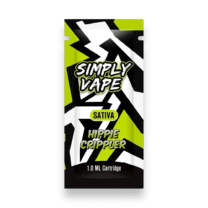
Simply Vapes – THC Cartridge Hippie Crippler 1ML (Sativa)
$25.00
The Simply Vapes Hippie Crippler 1ML THC Cartridge captures the well-known Hippie Crippler sativa strain, which is loved for its zesty citrus flavour with earthy pine undertones. Known for its potency, this sativa delivers an uplifting, energizing head high that’s great for creativity and daytime use. The cart fits standard 510-thread batteries for smooth, discreet hits anywhere. For adults of legal age only. Keep out of reach of children and pets.
Out of stock
NOTIFY ME WHEN AVAILABLE
A sativa cartridge can sound like the perfect companion for a morning walk, a creative afternoon, or simply getting through a long grocery list without feeling glued to the sofa. But names and labels only tell part of the story. With the Simply Vapes THC Cartridge Hippie Crippler Sativa, you’ll want to check the actual batch, cannabinoid numbers, hardware, and certificate of analysis (COA) before deciding whether it suits you. This guide covers what you can reasonably expect, how to use a 1ML 510 cart without scorching it, and the quality checks that matter when buying online in Canada. Product details can vary by province, retailer, and production batch, so treat the packaging and current lab report as the final word. This is an adult-use product guide, not medical advice, and all cannabis products are for adults of legal age only.
Key Takeaways
- The Simply Vapes THC Cartridge Hippie Crippler Sativa is a 1ML 510-thread vape cart known for its uplifting, energizing sativa effects ideal for daytime use.
- Always review the batch-specific Certificate of Analysis (COA) for THC, CBD levels, terpene profile, and safety test results before purchasing a Simply Vapes sativa cartridge.
- Use a compatible 510 battery with a low voltage setting (around 2.4–2.8 volts) and avoid chain vaping to prevent burnt hits and preserve cartridge life.
- Start with a low dose by taking a gentle, short puff and wait 10–15 minutes before another to assess effects safely, especially if you are new to THC cartridges.
- Check packaging authenticity by matching lot numbers, ensuring proper labeling, excise stamps, and sealed packages to avoid counterfeit Simply Vapes products.
- Store the cartridge upright in a cool, dark place and avoid extreme temperatures or leaving it connected to the battery for extended periods to maintain oil quality.
Simply Vapes THC Cartridge Hippie Crippler Sativa at a Glance (Quick Specs)
The Simply Vapes THC Cartridge Hippie Crippler Sativa is generally presented as a 1ML, 510-thread vape cartridge containing cannabis oil. That standard thread makes it compatible with many rechargeable vape batteries, although the cartridge still needs a sensible voltage setting and a properly fitting connection.
What’s in the box: oil type, volume (1ML), 510 thread, typical THC/CBD ranges
Expect the cartridge itself, not necessarily a battery. A 1ML cart holds roughly 1,000 mg of oil by volume, but that doesn’t mean 1,000 mg of THC. Your label should show total THC, total CBD, lot or batch information, packaging date, and legal cannabis identifiers. Sativa-labelled carts commonly contain high THC with very little CBD, but the actual percentage may vary considerably. Don’t rely on a product title or a retailer thumbnail: read the current package.
If you’re ordering online, confirm whether the seller is a provincially authorized retailer. Discreet shipping is useful, particularly in rural areas, but privacy shouldn’t require skipping basic product information.
Strain Overview: Hippie Crippler (Sativa) — What to Expect
Hippie Crippler is usually described as a sativa-leaning strain associated with bright, lively effects. Cannabis effects are personal, though, and the same cart may feel motivating to one person and uncomfortably racy to another. Your tolerance, mood, setting, recent food, and the specific batch all matter.
Commonly reported effects (energy, mood, focus) and best time-of-day use
Users commonly report an upbeat mood, mental stimulation, conversation, and a sense of energy. Some find it useful for daytime activities such as listening to music, tidying the kitchen, or working on a low-stakes creative project. Others notice distraction, racing thoughts, or tension, especially after taking too much.
For a first session, try it when you have no driving, work, childcare, or important decisions ahead. Early afternoon is often a safer testing window than 7 a.m. before a meeting. “Sativa” is a helpful starting label, not a guarantee of a particular experience.
Flavor & Aroma Profile (Terpenes and Taste Notes)
Hippie Crippler carts are often associated with a sharp, fresh profile rather than a dessert-like one. Depending on the oil and terpene formulation, you may notice citrus peel, pine, herbs, pepper, or a slightly earthy finish. A cartridge should taste clean and recognizable, not like burnt toast from the office kitchen.
Likely dominant terpenes and what they contribute (e.g., citrus/pine/spice)
Limonene can contribute lemon or orange notes: pinene may bring pine and a crisp, forest-like impression: and caryophyllene can add peppery spice. Myrcene, when present, may round the profile with earthy or herbal notes. Terpenes don’t determine effects on their own, and flavour isn’t proof of potency or purity.
Check the package or COA for the listed terpene profile. If the cart tastes acrid, metallic, or sharply burnt after a normal draw, stop using it. That can indicate an overheated coil, depleted oil around the intake holes, or a hardware problem, not a “stronger” hit.
Potency, Cannabinoid Profile & Lab Testing (How to Read a COA)
Potency deserves more attention than the word “sativa.” A label might show THC as a percentage, while the package also lists total THC in milligrams. Compare like with like, and remember that vape oil can feel intense because inhaled cannabinoids take effect quickly.
THC %, CBD %, minor cannabinoids, solvents/pesticides/heavy metals, what to verify
A useful COA should identify the product, batch number, test date, laboratory, and results for cannabinoids. Look for THC and CBD, plus any reported minor cannabinoids such as CBG or CBC. More importantly, confirm passing results for residual solvents, pesticides, heavy metals, microbial contamination, and foreign matter. A QR code is only useful if it opens a report matching your exact lot, not a generic company homepage.
Be cautious with dramatic potency claims or missing lab information. Legal Canadian products use regulated packaging and excise details. If the numbers on the cart, box, and COA disagree, pause and ask the retailer for clarification rather than guessing.
Hardware & Compatibility: Batteries, Voltage Settings, and Avoiding Burnt Hits
Most 510 batteries work with a standard threaded cartridge, but “fits” doesn’t always mean “performs well.” A variable-voltage battery gives you more control than a basic buttonless stick. Start low, because high heat can thin oil too aggressively, shorten cart life, and produce a harsh flavour.
Recommended voltage range, preheat use, airflow tips, clog prevention
A practical starting range is about 2.4–2.8 volts, unless the manufacturer specifies otherwise. Use a brief preheat, roughly two to five seconds, only when the oil is cold or a light clog is forming. Don’t chain-vape: give the coil time to cool between draws.
Keep the cartridge upright, avoid covering the airflow holes with your fingers, and take slow, gentle puffs rather than forceful pulls. If oil appears in the mouthpiece, stop and let the cart rest upright. Never use a damaged battery or a cart with a cracked tank. Tiny hardware choices make a surprisingly large difference here.
How to Use: Dosing Guide for Beginners to Experienced Users
Inhaled cannabis can be felt within minutes, which makes a cartridge easier to titrate than an edible, but it also makes overconfidence easy. For a new or infrequent user, take one short puff, then wait at least 10–15 minutes before deciding whether you need more. A long, deep draw is not a beginner-friendly “test.”
Start-low-go-slow puff plan, onset/duration, tolerance and responsible use
A simple plan is:
- Charge the battery and set it low.
- Take a gentle two-second puff without holding your breath.
- Wait 10–15 minutes and assess your mood, heart rate, coordination, and comfort.
- If needed, take one more small puff, then stop and observe.
Effects may begin within a few minutes and commonly last a couple of hours, with lingering impairment sometimes lasting longer. Experienced users may require more, but tolerance is not a race. Keep a quick note of the number of puffs, time, and batch: it’s much more useful than relying on memory after the first hit starts doing its thing.
Safety, Side Effects, and Who Should Avoid Sativa THC Carts
Common unwanted effects include dry mouth, red eyes, dizziness, anxiety, faster heartbeat, drowsiness, impaired coordination, and difficulty concentrating. A stimulating sativa profile can feel especially uncomfortable if you’re already stressed, sleep-deprived, or sensitive to THC. Move to a calm environment, sip water, and avoid taking more if the experience feels too strong.
Common side effects, interactions, driving/impairment, age/legal considerations
Don’t drive, cycle in traffic, operate tools, or combine cannabis with alcohol or other intoxicants. THC can interact with medications and may be unsuitable for people who are pregnant or breastfeeding, have certain heart or mental-health concerns, or are under medical care. Ask a qualified healthcare professional if you’re unsure.
Canadian age rules vary: generally 19+, 18 in Alberta, and 21 in Quebec. Possession, public use, and travel rules also vary. Never cross an international border with cannabis, even if the destination seems permissive. Keep the cart locked away from children and pets.
Authenticity & Quality Checks: How to Spot a Legit Simply Vapes Cart
A legitimate product should arrive sealed, labelled for the Canadian market, and traceable to a legal retailer. Packaging should include the product name, net volume, cannabinoid information, lot or batch number, packaging date, warnings, excise stamp, and licensed producer details where required. Spelling errors and vague health promises are not charming quirks: they’re warning signs.
Packaging cues, batch/lot info, QR/COA matching, oil consistency, red flags
Match the batch number on the outer package with the number on the COA. The oil should generally look uniform and free from visible debris. Colour alone is not a reliable quality test, some oils are naturally pale, amber, or darker, but sudden separation, leaking, crystals, or an unusual chemical smell deserves attention.
Red flags include an unsealed box, no legal excise information, a QR code leading nowhere, impossible THC claims, suspiciously low prices, or a seller encouraging you to skip lab details. If something feels off, don’t “just try one puff.” Photograph the package and contact the retailer.
Storage & Shelf Life: Keeping Your 1ML Cart Fresh
Store the cart upright in a cool, dark, dry place, ideally in its original packaging. Heat, sunlight, and repeated temperature swings can affect oil texture and flavour. A hot car is particularly rough on vape hardware: oil may leak into the mouthpiece or battery connection, turning a tidy cart into a sticky little crime scene.
Temperature/light positioning, leak prevention, travel tips
Avoid refrigerators and freezers unless the manufacturer specifically recommends them: condensation and rapid warming can create problems. Keep the mouthpiece capped, don’t leave the cart attached to a battery for long periods, and check the connection before use. For travel, keep it protected from crushing and extreme heat, and follow local possession and transport rules. Don’t mail cannabis yourself or take it across the border.
There’s no universal “expiry” experience for every cart. Use the package date and retailer guidance, and discard anything with a damaged seal, persistent burnt taste, leakage, or a major change in smell or appearance.
Is it truly sativa? “Sativa” describes a marketing and product category, not a guarantee of effects. Genetics, extraction, terpenes, and your body all contribute.
How long does it last? A 1ML cart may last days to weeks depending on puff length, voltage, frequency, and tolerance. There is no honest universal hit count.
Why is it clogging? Cool temperatures, oil migration, overfilling, hard pulls, or condensation can contribute. Keep it upright, warm it gently in your hands, and use a short preheat, never force a blocked cart.
Can I use any 510 battery? Most standard 510 batteries are compatible, but use one designed for cannabis cartridges, check the connection, and keep voltage modest.
How many hits in 1ML? Draw length changes everything. A short puff uses far less oil than a long inhalation, so treat online hit estimates as rough guesses, not dosing instructions.
Final take
The Simply Vapes THC Cartridge Hippie Crippler Sativa may appeal if you want a portable, flavour-forward cart with commonly reported daytime energy and uplift. Your best buying decision comes from the batch-specific COA, sensible hardware settings, and a slow first session, not the strain name alone. Verify the product, start with one small puff, and give your body time to answer.
Frequently Asked Questions about Simply Vapes THC Cartridge Hippie Crippler Sativa
What is the Simply Vapes THC Cartridge Hippie Crippler Sativa?
It is a 1ML 510-thread vape cartridge containing sativa-leaning cannabis oil, designed for daytime use with reported effects like energy, mood boost, and mental stimulation.
How should I use the Hippie Crippler Sativa cartridge safely?
Start with a low voltage (2.4–2.8 volts), take a gentle 2-second puff, wait 10–15 minutes before more, and avoid chain-vaping. Use it in a safe environment without driving or important tasks afterward.
What does the label and COA tell me about this cartridge?
The label and Certificate of Analysis show total THC and CBD amounts, batch info, packaging date, and test results for solvents, pesticides, and contaminants to verify quality and legality.
Can I use any 510 battery with this Simply Vapes cartridge?
Most standard 510-thread batteries are compatible, but using a variable-voltage battery designed for cannabis carts and starting at a low voltage helps avoid burnt hits and preserves cartridge life.
Why is my Simply Vapes Hippie Crippler cartridge clogging or tasting burnt?
Clogging and burnt taste can result from cold temperatures, oil migration, overuse, or hardware issues. Keep the cart upright, warm it gently if cold, use a short preheat, and avoid deep or forceful draws.
Who should avoid using sativa THC cartridges like Hippie Crippler?
People who are pregnant, breastfeeding, have heart or mental health concerns, or are sensitive to THC should avoid them. Also, don’t use if you plan to drive or operate machinery due to impairment risks.
Only logged in customers who have purchased this product may leave a review.
Related products
Reviews
There are no reviews yet.